Authentic Charro Beans Recipe
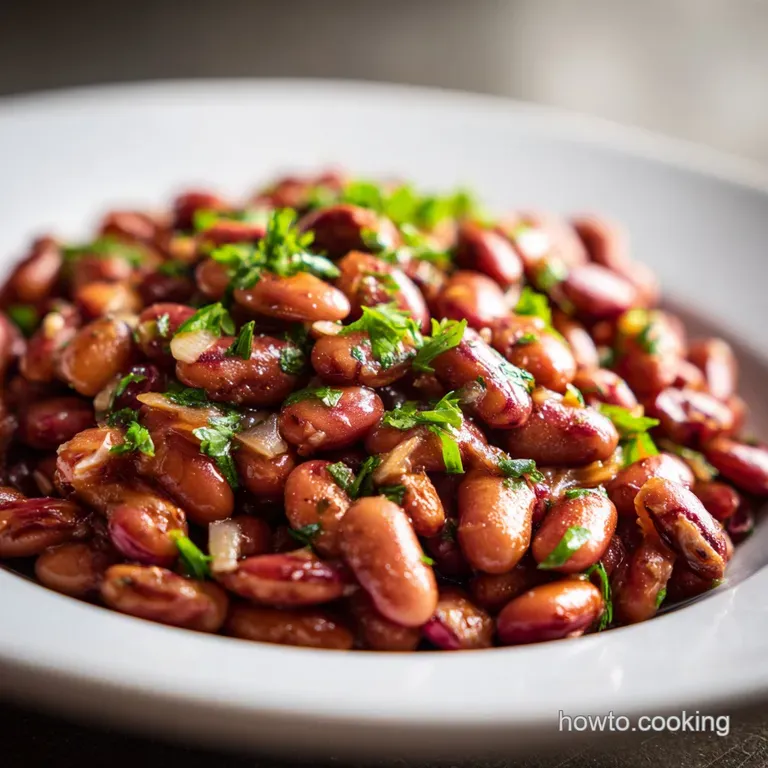
- Time: Active 20 minutes, Passive 2 hours, Total 2 hours 20 minutes
- Flavor/Texture Hook: Smoky, savory, and exceptionally velvety
- Perfect for: Backyard barbecues, hearty family dinners, or meal prepping
- Authentic Savory Mexican Charro Beans Recipe Guide
- The Chemistry of the Creamy Bean Broth
- Essential Recipe Specs and Cooking Times
- Sourcing High Quality Charro Beans Ingredients
- Simple Kitchen Equipment and Minimal Tools
- Precise Step by Step Cooking Instructions
- Fixing Common Texture and Flavor Mistakes
- Flavor Variations and Cooking Method Swaps
- Effective Storage Solutions and Reheating Tips
- Ideal Side Dishes and Main Pairings
- Kitchen Myths Debunked
- Recipe FAQs
- 📝 Recipe Card
Authentic Savory Mexican Charro Beans Recipe Guide
The first time I really understood the soul of this dish, I was standing in a sun drenched backyard in San Antonio. The air was thick with the scent of mesquite smoke and something else something richer.
It was the sizzle of chorizo hitting a heavy pot, the fat rendering out into a bright orange pool of pure flavor. I watched as my friend’s abuela tossed in handfuls of onions and jalapeños, not even looking at a measuring cup, just trusting the sound of the sear.
When those beans finally hit the table, they weren't just a side dish; they were the main event. They had this incredible, velvety broth that coated the back of a spoon, punctuated by salty bits of bacon and ham. It was a revelation in a clay bowl.
Since then, I’ve spent years tweaking my own version to get that exact same balance of smoky, spicy, and earthy notes without needing a culinary degree or a dozen fancy gadgets.
We’re going to walk through how to treat these legumes with the respect they deserve. You don’t need much just a sturdy pot and a bit of patience. This isn't about rushing; it’s about letting the heat do the work for you.
By the time we’re finished, you’ll have a pot of beans so flavorful you might just skip the tacos entirely and eat them straight with a warm flour tortilla.
The Chemistry of the Creamy Bean Broth
Understanding the "how" behind the pot helps you cook with more confidence and adjust on the fly. These aren't just boiled beans; they are a complex emulsion of fats and starches that create a luxurious mouthfeel.
- Lipid Emulsification: When the fats from the chorizo and bacon simmer with the starchy bean liquid, they create a creamy, unified sauce rather than an oily film.
- Pectin Breakdown: The long, slow simmer gently dissolves the pectin in the bean skins, making them tender without letting the insides turn to mush.
- Maillard Reaction: Searing the ham and bacon before adding the liquid creates complex browned sugars that provide the backbone of the smoky profile.
- Acid Interaction: Adding the tomatoes at the right moment provides just enough acidity to balance the heavy fats without toughening the bean skins.
| Method | Total Time | Final Texture | Best For |
|---|---|---|---|
| Traditional Stovetop | 2 hours 20 minutes | Super velvety and deeply infused | Maximum flavor development |
| Pressure Cooker | 55 minutes | Tender but slightly thinner broth | Busy weeknights |
| Slow Cooker | 8 hours | Very soft, almost buttery | Set it and forget it days |
Choosing your method depends entirely on how much time you have to let the aromas fill your house. While the stovetop is my personal favorite for controlling the reduction of the broth, the pressure cooker is a lifesaver when the craving hits on a Tuesday.
Essential Recipe Specs and Cooking Times
Before we get our hands messy, let's look at the numbers. Precision in the early stages like sorting your beans saves you from a literal tooth cracking mistake later. This recipe is designed to feed a crowd or provide a solid week of lunches.
- Yield: 8 generous servings
- Serving Size: approximately 1.5 cups
- Bean Weight: 1 lb (approx. 450g) dried pinto beans
- Liquid Ratio: 6 cups broth to 1 lb beans
- Internal Temperature: Not applicable for beans, but look for a "mashable" consistency with a fork.
Chef's Tip: Always sort your dried beans on a rimmed baking sheet before rinsing. It's much easier to spot a stray pebble or a shriveled bean against a flat surface than in a deep bowl of water.
Sourcing high-quality Charro Beans Ingredients
The magic of this dish lies in the pork trio. Using a mix of bacon, ham, and chorizo provides three different types of savory impact. The bacon brings the smoke, the ham adds salty chew, and the chorizo provides that signature spice and vibrant color. If you're looking for another bean project, the richness here is quite different from the herbal notes in a Tuscan Butter Beans recipe, which uses sage instead of cumin.
- 1 lb dried pinto beans: The classic base. Why this? They hold their shape while producing a creamy interior starch.
- Substitute: Dried navy beans (denser texture).
- 6 cups low sodium chicken broth: Our simmering liquid. Why this? Provides more depth than plain water without over salting.
- Substitute: Vegetable broth or water with a bouillon cube.
- 4 slices center cut bacon: Finely diced for fat rendering. Why this? Provides the foundational smokiness and initial cooking fat.
- Substitute: Pancetta or salt pork (rinse salt pork first).
- 4 oz lean smoked ham: Cubed for texture. Why this? Stays meaty and provides a satisfying bite in every spoonful.
- Substitute: Leftover roast pork or smoked turkey leg.
- 2 oz beef chorizo: The flavor engine. Why this? Distributes spices and oils throughout the entire pot.
- Substitute: Soyrizo (for less grease) or spicy breakfast sausage.
- 1 large white onion: Diced small.
- 4 cloves garlic: Minced fresh.
- 2 jalapeños: Seeded and chopped.
- 2 large Roma tomatoes: Diced for body.
- Spices: 1 tsp dried Mexican oregano, 1/2 tsp ground cumin, 1/2 tsp salt, 1/4 tsp black pepper.
- 1/2 cup fresh cilantro: For a bright finish.
| Ingredient | Science Role | Pro Secret |
|---|---|---|
| Pinto Beans | Starch Provider | Older beans take longer to soften; check the "best by" date. |
| Beef Chorizo | Flavor Emulsifier | Squeeze it out of the casing and break it up finely for better distribution. |
| Roma Tomatoes | Acid Balance | Keep the seeds; they contain glutamates that boost savory "umami" flavors. |
When you're choosing your chorizo, look for the raw, Mexican style version that crumbles, not the cured Spanish style that slices like salami. The raw version is what releases that glorious spiced oil we need to sauté the onions.
| Original Ingredient | Substitute | Why It Works |
|---|---|---|
| Beef Chorizo | Pork Chorizo | Identical spice profile. Note: Pork version is usually higher in fat. |
| Mexican Oregano | Mediterranean Oregano | Similar earthiness. Note: Mexican oregano has citrus undertones; add a tiny lime squeeze. |
| Jalapeños | Serrano Peppers | Similar flavor. Note: Serranos are significantly hotter; use only one. |
Between these tables, it's worth noting that the fat content is what makes this dish so satisfying. While you can use leaner meats, the traditional mouthfeel comes from that rendered pork fat.
Simple Kitchen Equipment and Minimal Tools
You don't need a pantry full of gadgets to make this work. In fact, a minimalist approach usually leads to better results because you're more focused on the pot.
- Large Dutch Oven or Heavy Pot: A 5 quart or 6 quart capacity is perfect. The heavy bottom prevents the beans at the bottom from scorching during the long simmer.
- Chef's Knife: For all that dicing. Ensure it's sharp so you don't crush the tomatoes.
- Wooden Spoon: The best tool for scraping the "fond" (browned bits) off the bottom of the pot.
- Colander: For rinsing and sorting the beans.
Precise step-by-step Cooking Instructions
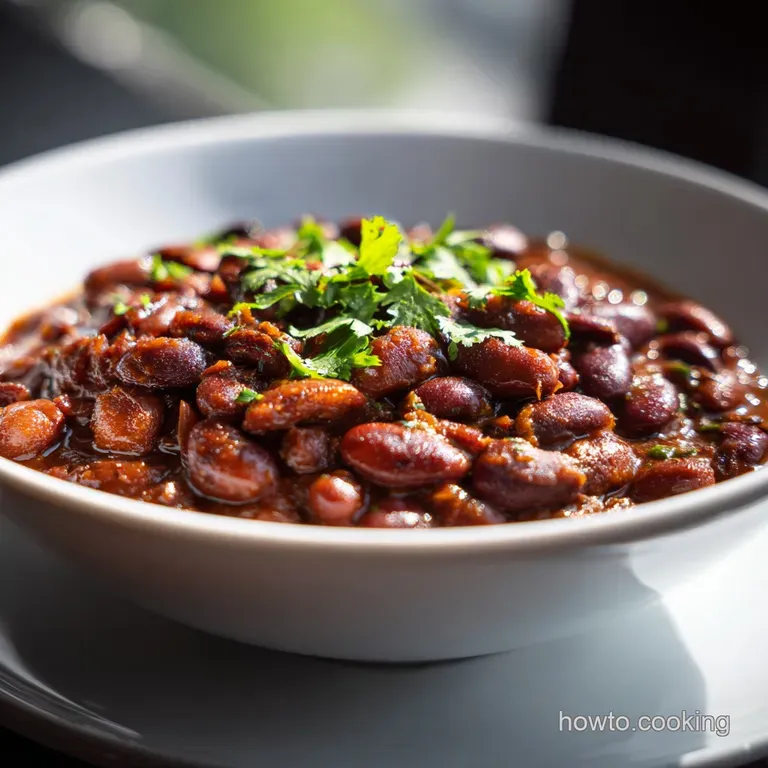
Right then, let's get to the actual cooking. We’re going to build this in stages to ensure no ingredient gets overcooked while the beans take their time.
- Prep the beans. Rinse the 1 lb pinto beans and remove any debris. Place them in your large pot with 6 cups chicken broth. Bring to a boil, then reduce heat to low, cover, and simmer for 1 hour 15 mins. Note: We start the beans first because they take the longest.
- Render the bacon. In a separate skillet over medium heat, add the 4 slices of diced bacon. Cook until crisp and the fat has completely liquefied.
- Brown the meats. Add the 4 oz cubed ham and 2 oz beef chorizo to the bacon skillet. Sauté for 5 minutes until the chorizo is fully cooked and the ham is slightly browned.
- Sauté aromatics. Add the diced white onion, minced garlic, and chopped jalapeños to the meat mixture. Cook until the onion is translucent and soft.
- Add tomatoes and spices. Stir in the 2 diced Roma tomatoes, 1 tsp Mexican oregano, and 1/2 tsp cumin. Simmer for 3 minutes until the tomatoes begin to break down.
- Combine ingredients. Pour the entire meat and vegetable mixture into the pot with the simmering pinto beans. Note: This is where the flavors begin to marry.
- Final simmer. Continue cooking, partially covered, for another 45 minutes until the beans are tender and the liquid has thickened into a silky broth.
- Season and finish. Taste the broth. Stir in the 1/2 tsp salt, 1/4 tsp pepper, and 1/2 cup chopped cilantro. Serve immediately while steaming hot.
Chef's Note: If the liquid is looking too thin near the end, take a ladleful of beans out, mash them into a paste, and stir them back in. This is a classic trick for instant creaminess without adding dairy.
Fixing Common Texture and Flavor Mistakes
Even with the best intentions, beans can be finicky. Most issues stem from water chemistry or temperature control.
Why Your Beans Remain Crunchy
If you’ve been simmering for hours and they still have a "bite," it's usually due to hard water or old beans. Minerals in hard water can prevent the bean skins from softening. Next time, try using filtered water or adding a tiny pinch of baking soda to the pot.
Excessively Salty Broth
Between the bacon, ham, chorizo, and broth, salt can build up quickly. This is why we use low sodium broth and wait until the very end to add extra salt. If it’s already too salty, add a peeled, halved potato to the pot for 15 minutes to soak up some sodium, then discard it.
Thin, Watery Texture
Charro beans should have a "stew like" consistency, not a "soup" consistency. If it's too thin, remove the lid and increase the heat slightly for the last 15 minutes to allow for evaporation.
| Problem | Root Cause | Solution |
|---|---|---|
| Tough Skins | Acid added too early | Add tomatoes only after the beans have softened for at least an hour. |
| Cloudy/Dirty Flavor | Skipping the rinse | Always wash your beans thoroughly to remove dust and field debris. |
| Burst Beans | Boiling too vigorously | Keep the heat at a gentle simmer; high heat physically breaks the beans apart. |
Common Mistakes Checklist
- ✓ Never add salt at the very beginning; it can toughen the skins.
- ✓ Sort through the beans twice; finding a pebble is a mood killer.
- ✓ Don't seed the jalapeños if you want a significant kick of heat.
- ✓ Keep the lid slightly ajar during the final simmer to help the broth thicken.
- ✓ Use fresh garlic; the jarred stuff has a metallic aftertaste that ruins the beans.
Flavor Variations and Cooking Method Swaps
While the stovetop is classic, we can adapt this to your schedule or dietary needs. The soul of the dish remains the same, even if the tool changes.
Charro Beans Instant Pot Version
Follow the meat rendering steps using the "Sauté" function. Add the beans and broth, then seal and cook on High Pressure for 45 minutes. Allow a natural pressure release for 15 minutes before opening. This is great for those days when you forgot to start dinner until 5:00 PM.
Charro Beans Slow Cooker Method
Sauté your meats and aromatics in a skillet first (don't skip this step, or you'll lose the flavor!). Transfer everything to the slow cooker with the beans and broth. Cook on Low for 8 hours. This results in incredibly soft beans that almost melt in your mouth.
The "Charro Lite" Vegetarian Swap
If you're skipping the meat, replace the pork with smoked paprika and a dash of liquid smoke. Use vegetable broth and add extra diced mushrooms during the sauté phase to mimic the "meaty" texture. It won't be traditional, but it's still a wholesome, nutritious meal.
Effective Storage Solutions and Reheating Tips
Beans are actually better the next day. As they sit, the starches continue to thicken the broth and the spices permeate deep into the center of each bean. If you enjoy meal prepping, these are a dream. They have a similar "better with age" quality as The Creamy Red recipe, which relies on a long rest to develop its flavor.
- Fridge Storage: Store in an airtight container for up to 5 days. The broth will turn into a gel when cold this is normal and a sign of high-quality gelatin from the pork.
- Freezing: These freeze beautifully for up to 3 months. Leave about an inch of headspace in your container as the liquid will expand.
- Reheating: Heat on the stovetop over medium low. You may need to add a splash of water or broth to loosen the sauce back up.
- Zero Waste Tip: Have leftover bean liquid but no beans? Use it as a base for a tortilla soup or use it to cook Mexican red rice for an extra flavor boost.
Ideal Side Dishes and Main Pairings
Charro beans are incredibly versatile. They can be a side, a topping, or a standalone meal if you have enough tortillas on hand.
The Backyard BBQ Setup
Pair these beans with grilled carne asada or smoked brisket. The acidity of the tomatoes and the heat from the jalapeños cut through the richness of grilled meats perfectly. Serve with a side of lime wedges and some quick pickled red onions to brighten up the plate.
The Ultimate Breakfast
Trust me on this one: scoop these beans over a couple of fried eggs in the morning. The runny yolk mixes with the smoky bean broth to create something truly magical. It’s a high protein, wholesome way to start the day that will keep you full until dinner.
Scaling the Recipe
- To double it: Use a 10 quart pot. Only increase the salt and spices by 1.5x initially, then taste and adjust. You don't always need double the seasoning when doubling the volume.
- To halve it: Use 1/2 lb beans and 3 cups broth. Cook time remains mostly the same, as the beans still need time to soften regardless of the quantity.
Kitchen Myths Debunked
There is a lot of "old wives' tale" advice surrounding beans. Let's clear up the two biggest ones so you can cook with more confidence.
The Soaking Myth: You do not have to soak pinto beans overnight. While it can reduce cooking time by about 30 minutes, it isn't necessary for texture or flavor. In fact, many people prefer the "no soak" method because it keeps the bean flavor more concentrated in the broth.
The Salt Myth: You might have heard that salting beans early makes them tough. Science shows that a small amount of salt in the soaking or early simmering water actually helps the skins soften by replacing calcium and magnesium ions in the skins.
However, for this specific recipe, we wait until the end because the bacon and chorizo already provide quite a bit of salt, and we don't want to over concentrate it as the liquid reduces.
Making these beans is more of a rhythm than a chore. Once you get that pot simmering, you can just let it go while you handle the rest of your life. It's a reliable, comforting dish that brings a bit of that Texas Mexico border soul into your kitchen every single time.
Recipe FAQs
What is the most crucial step for achieving the velvety broth texture?
Sautéing the meats first to render the fat and brown the chorizo. This fat coats the starch released by the beans during simmering, creating a stable, creamy emulsion rather than a watery soup.
Must I soak dried pinto beans overnight before cooking Charro Beans?
No, soaking is not strictly necessary for flavor or texture. While soaking can reduce the simmering time by about 30 minutes, rinsing thoroughly and starting with a good simmer in broth achieves excellent results.
How to substitute the bacon and ham if I want a vegetarian version?
Incorporate smoked paprika and a dash of liquid smoke into the aromatics. Use vegetable broth as your liquid base and add mushrooms during the sauté phase to replace the savory texture lost from the pork.
Why are my Charro Beans still tough after two hours of simmering?
This is typically caused by adding acidic ingredients, like tomatoes, too early. Acid toughens the pectin in the bean skins; ensure the beans have softened for at least an hour before adding tomatoes or other acidic elements.
How do I ensure the smoky flavor penetrates every bean evenly?
Use low-sodium broth as the initial simmering liquid instead of plain water. This transfers the savory backbone into the bean from the beginning; if you enjoyed mastering this layered flavor, see how the same principle works in our My Favorite Sautéed recipe.
Can I prepare these beans entirely in a slow cooker for convenience?
Yes, you can use the slow cooker, but you must brown the meats and aromatics first. Sauté the bacon, chorizo, onions, and spices in a skillet, then transfer everything to the slow cooker and cook on Low for 8 hours.
What is the ideal way to reheat leftover Charro Beans the next day?
Reheat slowly on the stovetop over medium low heat, adding a splash of water or broth. The broth will solidify when refrigerated, so adding a little liquid helps loosen the sauce back to its original velvety consistency.
Authentic Charro Beans Recipe
Ingredients:
Instructions:
Nutrition Facts:
| Calories | 278 kcal |
|---|---|
| Protein | 18.6 g |
| Fat | 4.8 g |
| Carbs | 38.5 g |
| Fiber | 8.8 g |
| Sugar | 2.4 g |
| Sodium | 685 mg |
