Baked Brie in Puff Pastry: Golden and Molten
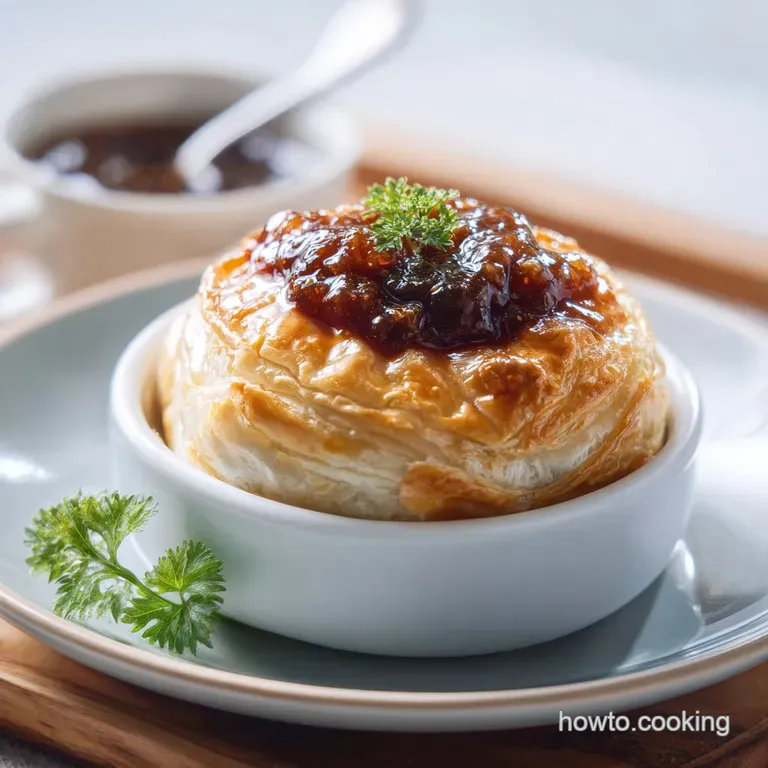
- Time: Active 15 minutes, Passive 20 minutes, Total 35 minutes
- Flavor/Texture Hook: Flaky, buttery pastry encasing nutty walnuts and sweet fig.
- Perfect for: Wholesome family gatherings or an elegant holiday appetizer.
- The Ultimate Baked Brie in Puff Pastry
- Essential Recipe Specifications
- Wholesome Ingredients and Smart Swaps
- Reliable Tools for Kitchen Confidence
- The Precise Cooking Method Explained
- Troubleshooting Common Baking Obstacles
- Flavorful Variations and Substitutions
- Storage and Reheating Best Practices
- Serving Suggestions and Complementary Flavors
- Recipe FAQs
- 📝 Recipe Card
The Ultimate Baked Brie in Puff Pastry
We have all been there. You pull a beautiful tray out of the oven, expecting a masterpiece, only to find a literal lake of grease and a lump of rubbery cheese huddled in a corner of soggy, undercooked dough. The crust should shatter like glass when you touch it with a cracker, but instead, it feels like a wet napkin.
This specific failure happens because the moisture from the cheese and the jam migrates into the pastry before it has a chance to crisp up. It is a heartbreaking waste of good ingredients, but it is entirely preventable with the right technique.
To fix this, we focus on thermal barriers and moisture management. Discover our sensational Baked Brie in Puff Pastry with Honey and Fig, a truly unforgettable dish. By scoring the rind rather than removing it, we create a structure that holds the molten center in place while allowing the heat to penetrate evenly.
This ensures that the cheese reaches that signature velvety consistency at the exact moment the pastry turns a deep, mahogany gold. You can build your confidence in the kitchen by mastering these small, technical details that turn a simple snack into a nutritious, wholesome center piece for your family table.
The secret lies in the contrast. You want that audible crunch followed by the smooth, earthy richness of the Brie. If you skip the chilling phase or rush the oven preheat, you lose that tension between the layers.
We are going for a result that feels intentional and sophisticated, yet uses accessible components that you can feel good about serving to your loved ones. Let us walk through how to ensure your pastry stays crisp and your cheese stays put, every single time you bake.
1. Thermal Insulation
Buffer Zone: The thick rind of the Brie acts as a natural heat shield, allowing the pastry to cook through before the cheese completely liquifies. This prevents the "blowout" effect where the cheese escapes before the dough is golden.
2. Moisture Control
Sugar Stability: The honey and fig jam provide a viscous layer that traps steam, preventing the moisture from the cheese from soaking directly into the bottom layers of the dough.
3. Steam Leavening
Lamination Expansion: As the cold butter in the puff pastry hits the 200°C heat, it evaporates instantly, pushing the thin layers of dough apart to create that characteristic shatter crisp texture.
| Cheese Thickness | Target Texture | Bake Time | Internal Visual |
|---|---|---|---|
| 2 cm (Standard) | Semi firm core | 18 minutes | Soft but holds shape |
| 3.5 cm (Large) | Molten/Flowing | 20-25 minutes | Gooey center |
| 1 cm (Mini) | Fully melted | 12-15 minutes | Liquid gold |
Choosing the right method for your schedule is essential for kitchen confidence. While some prefer a slow bake approach, the over high heat method we use here is what actually creates the structural integrity needed for a clean slice.
| Method | Time | Texture Result | Best For |
|---|---|---|---|
| High Heat (200°C) | 20 minutes | Shifting, flaky layers | Maximum crispness |
| Low Heat (170°C) | 35 minutes | Dense, bread like | Soft crust lovers |
| Air Fryer | 12 minutes | Hard crisp exterior | Small batches |
Essential Recipe Specifications
When we look at the components of this dish, it is clear that each one plays a specific role in the final architecture. The pastry is not just a wrapper; it is a pressurized vessel.
If the pastry is too warm when it goes into the oven, the butter will leak out rather than creating steam, leaving you with a flat, greasy mess. This is why we insist on using chilled dough. It is a small step, but it is the difference between a wholesome, flaky pastry and a heavy, oily one.
The interaction between the fig jam and the walnuts also serves a functional purpose. The walnuts provide a structural "grit" that keeps the jam from sliding off the top of the cheese during the pleating process. It provides a nutritious crunch that cuts through the intense fat of the Brie. If you find yourself enjoying the science of dough, you might find the lamination process in our Bougatsa recipe equally fascinating, as it uses similar principles of fat and flour to achieve crispness.
| Component | Role | Pro Secret |
|---|---|---|
| Puff Pastry (245g) | Structural Vessel | Keep it at 4°C until the second you need to wrap the cheese. |
| Brie Round (300g) | Fat and Protein | Leave the side rinds intact to prevent the cheese from collapsing. |
| Fig Jam (60g) | Moisture Barrier | Use a jam with whole fruit pieces for better heat stability. |
| Egg Wash | Maillard Reaction | Add a pinch of salt to the egg to break down proteins for a more even shine. |
Wholesome Ingredients and Smart Swaps
Selecting high-quality, nutritious ingredients is the foundation of a flavorful meal. For the Brie, look for a "double cream" variety; it has enough fat to be silky but enough structure to stand up to the oven heat.
Wildflower honey is my preferred choice here because it offers a floral depth that complements the earthy notes of the fig and the cheese. Using fresh thyme leaves instead of dried ones makes a world of difference, adding a bright, herbaceous note that cuts through the richness.
If you are looking to be savvy with your grocery list, there are several ways to adapt this recipe without sacrificing the wholesome quality of the dish. I often swap the walnuts for pecans if I have them in the pantry, or even slivered almonds. The key is to maintain that textural contrast.
- 1 sheet (245g) puff pastry: Keep it thawed but very cold.
- Substitute: Phyllo dough (6 layers, buttered) for a more delicate, papery crunch.
- 1 round (300g) Brie cheese: The anchor of the dish. Why this? The rind is edible and provides the necessary structure for baking.
- Substitute: Camembert for a more pungent, intense flavor profile.
- 3 tbsp (60g) fig jam: Adds a deep, fruity sweetness.
- Substitute: Apricot preserves or even a thick cranberry sauce.
- 1 tbsp (15ml) wildflower honey: For that natural, amber sweetness.
- Substitute: Maple syrup (Grade A) for a woodsy, autumnal twist.
- 1/4 cup (30g) crushed walnuts: Adds a nutritious, earthy crunch.
- Substitute: Toasted hazelnuts or pumpkin seeds for a nut free option.
- 1 large egg: The key to a mahogany finish.
- 1 tsp water: Thins the egg for better coverage.
- 1 tsp fresh thyme leaves: For aromatic balance.
- 1/2 tsp flaky sea salt: To pop the flavors.
- 1 tsp extra honey: For the final drizzle.
Reliable Tools for Kitchen Confidence
To bake with confidence, you do not need a kitchen full of gadgets, but a few specific tools will make the process much smoother. A rimmed baking sheet is non negotiable here. As the cheese warms, there is always a slight risk of a small leak, and a rimmed sheet ensures your oven stays clean.
I highly recommend using parchment paper rather than just greasing the pan; it prevents the delicate pastry from sticking and makes the transfer to a serving platter much safer.
A sharp paring knife is essential for scoring the Brie. You want to cut just through the very top layer of the rind in a crosshatch pattern. This allows the honey and jam to seep slightly into the cheese, flavoring it from the inside out, without compromising the side walls that hold everything together.
Finally, a pastry brush (silicone or natural bristle) ensures that your egg wash is applied in a thin, even coat, which prevents "egg pooling" in the creases of the dough.
The Precise Cooking Method Explained
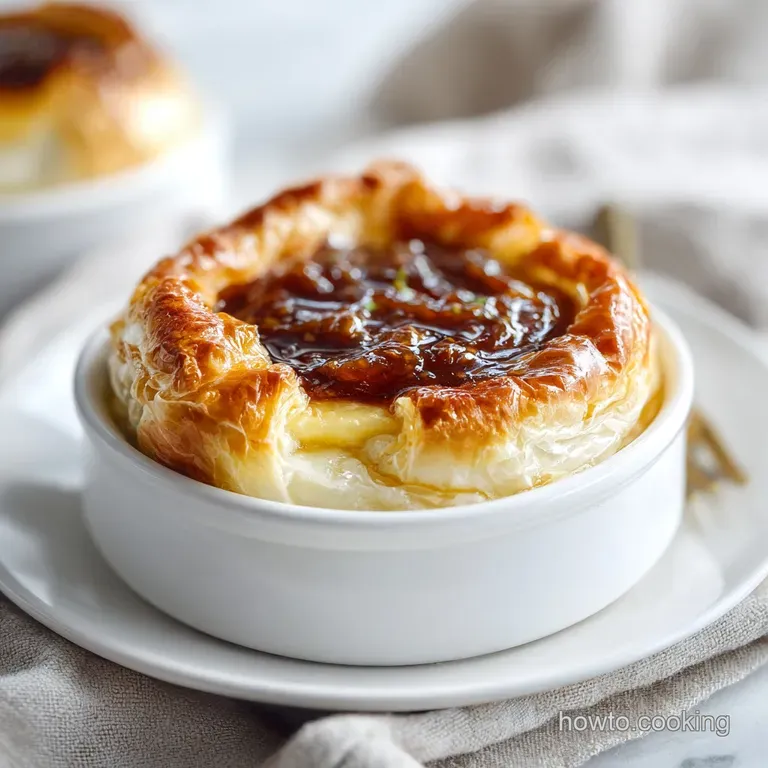
- Preheat and Prepare. Set your oven to 200°C (400°F). This high temperature is vital for the pastry to puff. Line your rimmed baking sheet with a fresh piece of parchment paper.
- Unfold the Pastry. Lay the cold 245g sheet of puff pastry flat on the parchment. Work quickly so the butter does not begin to soften.
- Prepare the Cheese. Center the 300g Brie round on the pastry. Use a sharp knife to lightly score a crosshatch pattern into the top rind. Note: This allows the toppings to penetrate the cheese during the bake.
- Layer the Flavors. Spread 60g of fig jam evenly over the top of the cheese. Sprinkle with 30g of crushed walnuts and drizzle with 15ml of wildflower honey.
- Fold the Parcel. Gather the corners of the pastry and bring them to the center. Pleat the edges as you go, ensuring the cheese is fully enclosed. Press firmly to seal the dough.
- Trim and Flip. Remove any large clumps of excess dough from the top to ensure even baking. Carefully flip the entire parcel over so the seams are hidden on the bottom.
- Apply the Wash. Whisk the large egg with 1 tsp of water. Brush the entire surface of the pastry with a thin, even layer. Look for total coverage to ensure a uniform mahogany color.
- Season and Bake. Sprinkle with the flaky sea salt and fresh thyme leaves. Bake for 20 to 25 minutes. Wait until the pastry is mahogany colored and sounds hollow when tapped.
- The Essential Rest. Remove from the oven and let the Brie rest on the tray for 10 minutes. Note: This allows the molten cheese to "set" slightly so it does not rush out like a flood when cut.
Troubleshooting Common Baking Obstacles
The most common issue I hear about is the "Soggy Bottom." This happens when the oven isn't hot enough or the pastry was too warm before it went in. If the bottom of your pastry feels doughy, it usually means the steam could not escape.
Always bake on the middle or lower middle rack to ensure the bottom gets enough direct heat from the oven floor.
Why Your Pastry Leaked
If you see cheese escaping from the sides, the seams were likely not sealed tightly enough, or the pastry was stretched too thin. When you pleat the dough, make sure there are no visible holes. If a leak does happen, do not panic!
Let it finish baking; the caramelized cheese on the tray often tastes like a delicious savory cracker.
| Problem | Root Cause | Solution |
|---|---|---|
| Pastry is pale and limp | Oven temperature too low | Verify oven with a thermometer; ensure it is at 200°C. |
| Cheese is still hard | Not enough bake time | Extend baking by 5 minutes; cover top with foil if browning too fast. |
| Bottom is wet/greasy | Pastry was too warm | Chill the assembled parcel in the freezer for 10 minutes before baking. |
Common Mistakes Checklist
- ✓ Avoid removing the side rind: It is the "skeleton" that holds the cheese in its circular shape.
- ✓ Do not over fill: Stick to the 60g of jam; too much liquid will cause the pastry to burst.
- ✓ Check your pastry thickness: If you roll it out, keep it at least 3mm thick for structural integrity.
- ✓ Wait for the rest: Cutting in too early results in a puddle rather than a sliceable wedge.
- ✓ Use a rimmed tray: This is your insurance policy against a messy oven.
Flavorful Variations and Substitutions
One of the most empowering things about cooking for your family is the ability to adapt a recipe to what you have on hand. For a savory shift, you can replace the fig jam with caramelized onions and a splash of balsamic glaze. This version feels incredibly wholesome and pairs beautifully with a side of roasted vegetables. If you are looking for a holiday themed variation, similar to the flavors found in a Traditional Pecan Pie, try using maple syrup and pecans instead of honey and walnuts.
If you are following a nut free diet, you can replace the walnuts with toasted sunflower seeds or even a layer of crispy fried shallots for a savory punch. The honey can also be swapped for an agave nectar or a spicy "hot honey" if you want to add a bit of a kick to the finish.
| Servings | Pastry Amount | Cheese Size | Bake Time |
|---|---|---|---|
| 4-6 People | 1/2 sheet | 150g Mini Brie | 15 minutes |
| 9-12 People | 1 full sheet | 300g Standard | 20-25 minutes |
| 20+ People | 2 sheets | 1kg Wheel | 40-45 minutes |
When scaling this recipe up for a large party, remember that a massive wheel of Brie requires significantly more time for the heat to reach the center. If you are baking a 1kg wheel, you will need to lower the temperature to 180°C after the first 20 minutes to prevent the pastry from burning while the middle of the cheese melts.
Storage and Reheating Best Practices
Baked Brie is best enjoyed immediately while the cheese is at its peak silkiness. However, if you find yourself with leftovers, they can be stored in the refrigerator for up to 3 days. Wrap the cooled pastry tightly in foil or place it in an airtight container.
To use up any scraps of puff pastry that you trimmed off, you can sprinkle them with cinnamon and sugar and bake them alongside the cheese for a tiny, nutritious treat for the cook!
To reheat, avoid the microwave at all costs. It will turn your beautiful, shatter crisp pastry into a rubbery, sad mess. Instead, place the leftovers in a 175°C (350°F) oven for 10 to 12 minutes.
This will recrisp the fat in the pastry and gently remelt the Brie without overcooking it. You can also freeze the unbaked, assembled parcel for up to 2 months. Bake it directly from frozen, adding an extra 10 to 15 minutes to the total time.
Serving Suggestions and Complementary Flavors
To round out this wholesome appetizer, I love serving it with a variety of textures. Sliced tart apples (like Granny Smith) or crisp pears provide a refreshing acidity that balances the heavy fat of the cheese.
A selection of whole grain crackers or a toasted sourdough baguette offers the perfect vessel for scooping up the molten center.
Myth: You Must Remove the Rind
Many people believe the rind will not melt or that it tastes "dusty." In reality, the rind is perfectly edible and is essential for the structure of this dish. Without it, the cheese would lose its shape instantly. Once baked, the rind becomes soft and subtle, blending into the velvety interior.
Myth: Frozen Pastry is Inferior
Actually, for a dish like this, a high-quality frozen puff pastry (made with real butter) is often more consistent than homemade. The key is the "thaw." Always thaw it in the fridge overnight rather than on the counter to keep those butter layers distinct.
For the beverage pairing, a crisp, dry white wine or a sparkling apple cider works beautifully. The bubbles and acidity help "cleanse" the palate between bites of the rich, honey drenched cheese.
If you're serving this as part of a larger spread, it provides a sophisticated, flavorful anchor that makes any gathering feel like a special occasion. Building your kitchen confidence starts with these reliable, nutritious recipes that never fail to impress.
Once you see the look on your family's faces as they break into that first flaky layer, you'll know exactly why this dish is a staple in our home.

Recipe FAQs
How to avoid a soggy bottom on the puff pastry?
Bake on the middle or lower middle rack to increase direct heat exposure. Ensure your pastry remains cold until the exact moment it enters the 400°F oven, as the sudden temperature shift is what creates the necessary steam for a crisp, flaky bottom.
Is it necessary to remove the Brie rind before baking?
No, the rind is completely edible and helps the cheese hold its structure. Scoring a crosshatch pattern into the top rind allows the fig jam and honey to penetrate the cheese while it softens.
How to ensure the pastry achieves a deep mahogany color?
Brush the entire surface thoroughly with a whisked egg and water wash before baking. This mixture promotes even browning and creates that signature glossy finish; if you enjoyed perfecting this browning technique, you can apply the same principle to our classic French croissants.
How long should the brie rest before serving?
Allow the pastry to rest for exactly 10 minutes. This short pause allows the cheese to set slightly, preventing it from turning into a runny puddle the moment you cut into the crust.
Is it possible to reheat leftovers in the microwave?
No, avoid the microwave entirely. It ruins the texture of the pastry, turning it rubbery instead of crisp; always use an oven to gently warm the leftovers back to their original state.
How to store leftover baked brie?
Wrap the cooled parcel tightly in foil or place it in an airtight container. It will stay fresh in your refrigerator for up to 3 days, though the pastry will lose some of its initial crunch over time.
Is it okay if the puff pastry gets warm during prep?
No, always keep the dough cold until it hits the hot oven. If the pastry feels soft or sticky while you are pleating the edges, pop it back into the refrigerator for 5 to 10 minutes before applying the egg wash and baking.
Baked Brie Puff Pastry
Ingredients:
Instructions:
Nutrition Facts:
| Calories | 321 kcal |
|---|---|
| Protein | 10.0 g |
| Fat | 22.3 g |
| Carbs | 20.4 g |
| Fiber | 0.9 g |
| Sugar | 7.2 g |
| Sodium | 255 mg |
