Meltinyourmouth Baked Lobster Tails a Recipe | Succulent Seafood
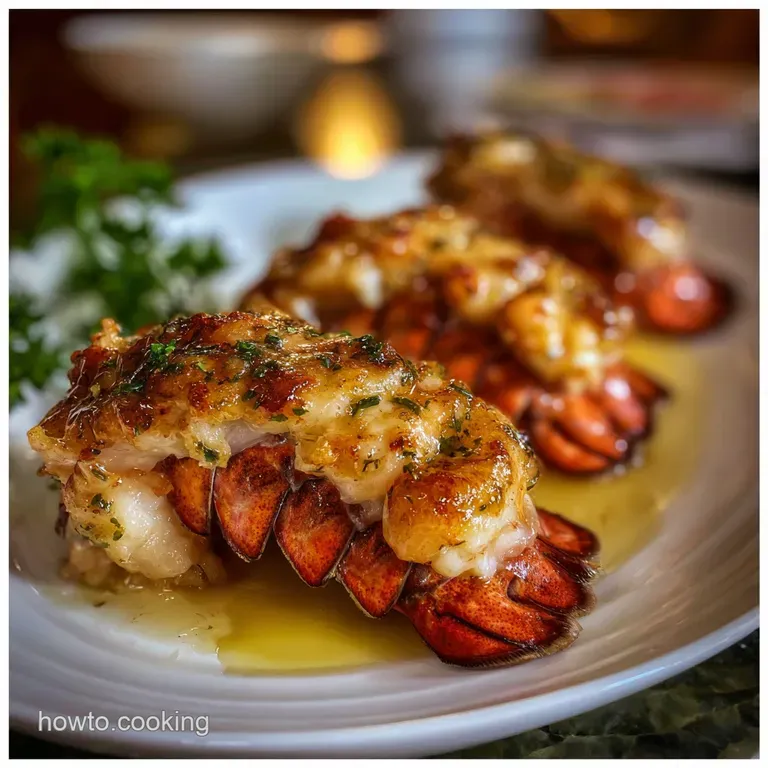
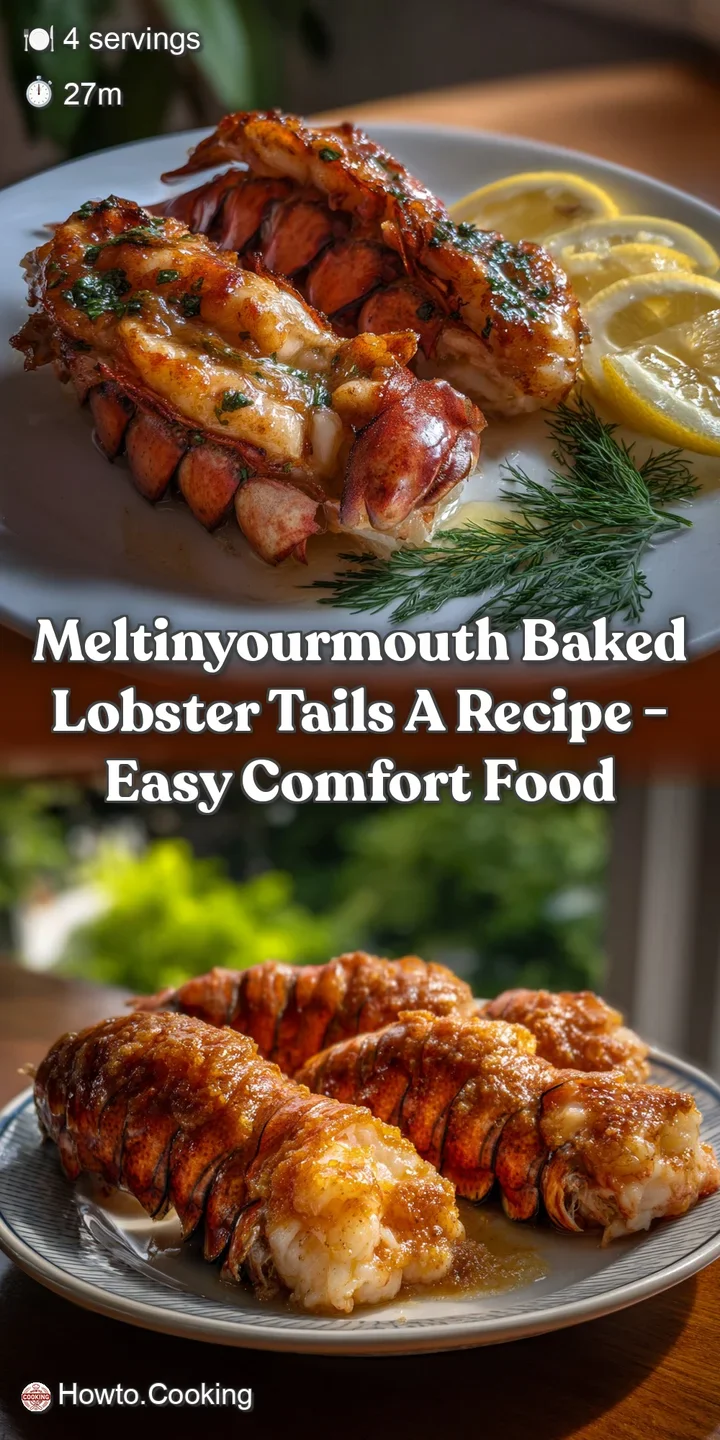
- Effort/Time: Low-effort, high-reward / 27 minutes total.
- Flavor Hook: Rich, oceanic sweetness balanced by a smoky, citrus-forward garlic butter.
- Perfect for: High-stakes date nights, celebratory dinners, or a luxe-at-home treat.
- The Thermodynamics of Tenderness: Why This Technique Wins
- Precision Metrics for Your MeltinYourMouth Baked Lobster Tails A Recipe
- The Alchemy of the Sea: Sourcing Your Elements
- Essential Culinary Tools for High-Performance Roasting
- The Masterclass Protocol: Step-by-Step Culinary Execution
- Diagnosing Texture Issues and Flavor Imbalances
- Flavor Architecture and Functional Ingredient Swaps
- ⚗️ The Scaling Lab: The Physics of Quantity
- Preserving Structural Integrity During Storage and Recovery
- Common Myths
- Curating the Perfect Context for Your Seafood Masterpiece
- Recipe FAQs
- 📝 Recipe Card
There is nothing worse than pulling $80 worth of premium seafood out of the oven only to find the meat has shrunken into a tight, rubbery knot that feels like chewing on a pencil eraser.
I’ve been there staring at a tray of expensive failures while the emotional cost of a ruined celebratory dinner stings more than the financial loss. The frustration of overcooked lobster is a universal culinary heartbreak, often caused by the deceptive speed at which crustacean proteins denature.
In my early days, I destroyed several batches of MeltinYourMouth Baked Lobster Tails A Recipe by assuming "more heat equals better sear." I once cranked my oven to a screaming broil, only to have the delicate tail meat seize up before the butter even had a chance to bubble.
It was a humbling lesson in the physics of gentle heat; I realized that rushing the process destroys the very texture that makes lobster a delicacy.
The scientific revelation came when I stopped treating lobster like steak and started treating it like a delicate custard. The secret to this MeltinYourMouth Baked Lobster Tails A Recipe is the butterfly technique combined with a controlled thermal environment.
By elevating the meat above the shell, we allow air to circulate evenly, preventing the "steaming" effect that happens when meat sits trapped in its own moisture. This results in a velvety, buttery finish that shatters any previous expectations of home cooked seafood.
The Thermodynamics of Tenderness: Why This Technique Wins
- Elevated Heat Circulation: Lifting the meat atop the shell subjects it to convective heat from all sides, ensuring even protein denaturation without cold spots.
- Capillary Basting: The butterfly cut creates deep crevices where the melted Kerrygold Unsalted Butter pools, creating a continuous basting effect during the 12 minutes of cooking.
- Controlled Thermal Momentum: Baking at a steady temperature rather than aggressive broiling prevents the actin and myosin filaments in the lobster from contracting too violently.
- Aromatic Infusion: Minced garlic and chives undergo a gentle fat-solubilization in the butter, depositing flavor deep into the muscle fibers of the MeltinYourMouth Baked Lobster Tails A Recipe.
Precision Metrics for Your MeltinYourMouth Baked Lobster Tails A Recipe
To achieve the "Masterclass" results expected of MeltinYourMouth Baked Lobster Tails A Recipe, precision is non-negotiable. We are operating within a narrow window of success where a single minute can be the difference between a velvety texture and a fibrous mess.
| Metric | Value |
|---|---|
| Prep Time | 15 minutes |
| Cook Time | 12 minutes |
| Total Time | 27 minutes |
| Recipe Yield | 4 servings |
| Calories per Serving | 364 kcal |
| Protein Content | 32.6 g |
The Alchemy of the Sea: Sourcing Your Elements
Selecting the right components for MeltinYourMouth Baked Lobster Tails A Recipe is the foundation of the entire experience. If you start with inferior, mushy lobster, no amount of technical skill can save the dish.
- 4 cold water lobster tails (approx. 6 oz / 170g each): Why this? Cold water varieties grow slower, resulting in firmer, sweeter, and more nutrient dense meat.
- 1/2 cup (115g) Kerrygold Unsalted Butter, melted: Why this? Higher butterfat content provides a richer mouthfeel and more stable emulsion for the herbs.
- 1/2 tsp (2.5g) Diamond Crystal Sea salt: Why this? Flaky salt dissolves evenly, providing a clean oceanic lift without the harshness of table salt.
- 1/4 tsp (1.2g) Smoked paprika: Adds a subtle mahogany hue and a hint of char like depth without a grill.
- 3 cloves Garlic, minced: Use fresh cloves only; pre-minced jars contain citric acid which alters the lobster's pH.
- 1 tbsp (15ml) Fresh lemon juice: Essential for breaking through the heavy lipid profile of the butter sauce.
- 1 tbsp (4g) Fresh parsley, finely chopped: Adds a vibrant, herbaceous finish.
- 1 tsp (2g) Fresh chives, minced: Provides a delicate onion like aromatic that doesn't overpower the seafood.
Ingredient Chemistry Breakdown
| Ingredient | Chemical/Physical Role (Science) | The Pro Secret (Why This Matters) |
|---|---|---|
| Lobster Protein | Rapid protein denaturation at 140°F | Pulling at 135°F allows carryover heat to reach the "sweet spot" without toughening. |
| Fresh Lemon Juice | Acid induced protein "cooking" (denaturation) | Adds brightness and balances the pH of the heavy butter emulsion. |
| Unsalted Butter | Lipid based flavor carrier | Fat coats the tongue, prolonging the perception of the garlic and salt. |
| Smoked Paprika | Natural carotenoid pigment | Provides the "visual sizzle" of a high end restaurant dish. |
Essential Culinary Tools for High Performance Roasting
Using the right tools ensures that your MeltinYourMouth Baked Lobster Tails A Recipe is executed with surgical precision.
- Lodge Cast Iron Skillet or heavy duty Rimmed Baking Sheet: Provides the thermal mass needed to keep the oven temperature stable when you open the door.
- OXO Good Grips Kitchen Shears: Critical for a clean cut through the calcified shell without splintering the bone like material into the meat.
- ThermoPro Digital Meat Thermometer: The only way to guarantee your MeltinYourMouth Baked Lobster Tails A Recipe is pulled at exactly 135 140°F.
- Small Stainless Steel Saucepan: For gently melting the butter without browning the milk solids prematurely.
- Pastry Brush: For even distribution of the garlic herb mixture into every crevice of the butterfly cut.
The Masterclass Protocol: step-by-step Culinary Execution
Follow these steps with focus. Any deviation in the butterflying process can lead to uneven cooking in your MeltinYourMouth Baked Lobster Tails A Recipe.
- Preheat the oven to 425°F (218°C) until the internal thermometer confirms stability.
- Cut the top of the lobster shell lengthwise using OXO Kitchen Shearsuntil you reach the base of the tail. Note: Do not cut through the bottom shell.
- Grasp the shell halves and pull them apart slightly until you can see the meat clearly.
- Lift the meat upward through the slit until it rests on top of the shell. Note: Keep the base attached to the tail end for stability.
- Devein the lobster by removing the dark line until the flesh is pristine white.
- Whisk the melted Kerrygold Butter, minced garlic, lemon juice, salt, and paprika until a cohesive emulsion forms.
- Arrange the tails on a Lodge Baking Sheetuntil they are spaced 2 inches apart for airflow.
- Brush the butter mixture generously over the meat until every fold is saturated.
- Bake for 12 minutes until the meat is opaque and the internal temp hits 135°F.
- Garnish with parsley and chives until the vibrant green contrasts the red shell.
Chef's Note: If you find the meat is sticking to the shell during the "lift," use the handle of a spoon to gently pry the protein away from the calcified interior. This prevents tearing the delicate muscle.
Diagnosing Texture Issues and Flavor Imbalances
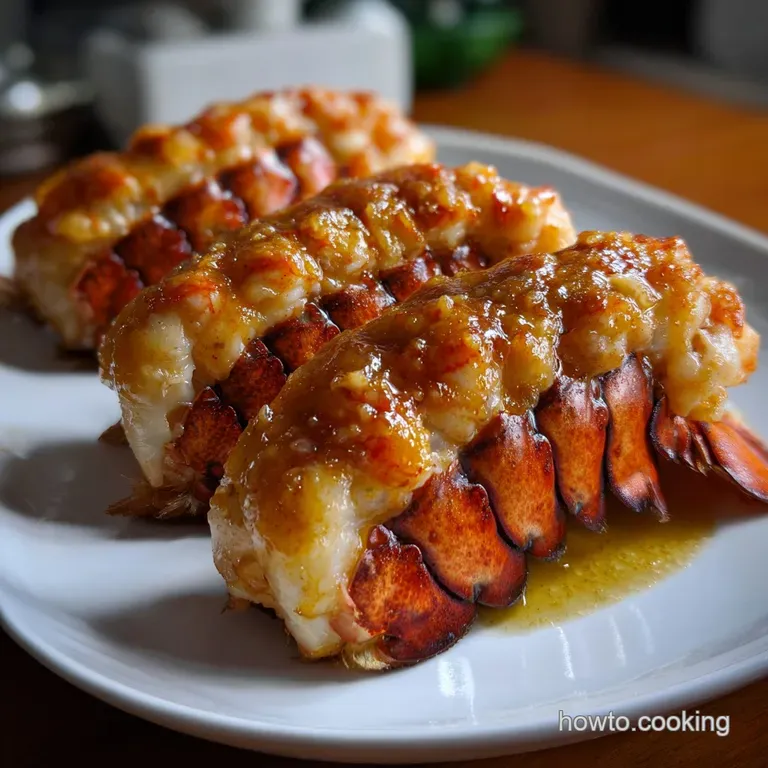
If your MeltinYourMouth Baked Lobster Tails A Recipe doesn't turn out quite right, it's usually a matter of temperature or timing.
Why Your Lobster is Rubbery
This is almost always a result of over denaturation. When lobster protein exceeds 145°F, the fibers contract so tightly that they expel all intracellular moisture. It's the same principle used in making Homemade Heavy Cream recipe — once you break the structure, you can't easily go back.
| Problem | Root Cause | The Fix | Pro Protocol |
|---|---|---|---|
| Rubbery Texture | Overcooked (internal temp >145°F) | Use a digital thermometer. | Pull at 135°F; let carryover finish the job. |
| Bitter Garlic | Garlic burned in the oven | Reduce garlic size or tuck into meat. | Mince finely so it melts into the butter. |
| Soggy Bottom | Steam trapped in shell | Better butterfly lift. | Ensure meat is completely on top of the shell. |
Flavor Architecture and Functional Ingredient Swaps
While the original MeltinYourMouth Baked Lobster Tails A Recipe is a classic, you can tweak the profile to suit your pantry.
| Original Ingredient | Substitute | Why It Works |
|---|---|---|
| Unsalted Butter | Ghee (Clarified Butter) | Higher smoke point and intense nutty flavor. |
| Smoked Paprika | Cayenne Pepper | Increases heat; adds a sharp bite instead of smokiness. |
| Fresh Chives | Dried Tarragon | Provides a classic French "anise" profile that pairs with seafood. |
| Sea Salt | Old Bay Seasoning | Adds celery salt and mustard notes for a Maryland style finish. |
Spicy Cajun Twist
For a bolder MeltinYourMouth Baked Lobster Tails A Recipe, replace the paprika with a tablespoon of Cajun seasoning. The salt in the seasoning will draw out more moisture, so reduce the added sea salt by half to maintain osmotic balance.
Lemon Dill Infusion
If you prefer a brighter, more Scandinavian profile, swap the parsley for fresh dill. Dill contains carvone, which provides a cooling sensation that works beautifully with the rich lipids of the Baked Lobster Tails.
⚗️ The Scaling Lab: The Physics of Quantity
When you decide to double or triple this A Recipe, the thermodynamics of your oven change significantly.
- The Evaporation Paradox: If you double the butter sauce in a small pan, it will take longer to emulsify. Reduce the lemon juice by 10% to ensure the sauce stays thick enough to cling to the meat.
- Pan Crowding: Adding 8 tails to a single sheet pan significantly increases the "thermal mass." This will drop your oven temp by 15 20°F immediately. Mandatory instruction: Space the tails across two pans or increase initial preheat to 450°F to compensate for the drop.
- Carry Over Cooking: A larger tray of MeltinYourMouth Baked Lobster holds more residual energy. Pull the tails at 132°F instead of 135°F, as the collective heat will continue to cook the meat for 4 5 minutes while resting.
Preserving Structural Integrity During Storage and Recovery
Lobster is best enjoyed immediately, but if you have leftovers of this Baked Lobster Tails: A Recipe You'll Love, follow these strict guidelines to avoid turning it into leather.
- Storage: Place in an airtight container for up to 2 days. The high fat content in the butter helps prevent the meat from oxidizing.
- Freezing: Not recommended once cooked. The ice crystals will puncture the delicate cell walls, leading to a mushy "A Recipe" upon thawing.
- Reheating: Avoid the microwave at all costs. It vibrates water molecules too fast, toughening the protein instantly. Instead, place the tail in a foil pouch with a teaspoon of water and bake at 300°F for 10 minutes.
💡 ZERO WASTE PHILOSOPHY
Don't discard the shells! Transform: Simmer the empty shells with onion scraps and celery for 45 minutes to create a concentrated seafood stock. Science: The shells contain chitin and residual protein that provide a deep umami base for a future bisque or a batch of Egg Noodles recipe.
Common Myths
Myth: Lobster must be boiled before baking. Truth: Boiling is a "wet" heat method that can dilute the natural sweetness. Baking provides "dry" heat that concentrates the oceanic flavor and allows for Maillard adjacent browning on the garlic.
Myth: Frozen lobster is always inferior. Truth: Most "fresh" lobster in grocery stores was previously frozen. Flash frozen tails (frozen at sea) often have better texture than "fresh" tails that have sat in a display case for 3 days.
Curating the Perfect Context for Your Seafood Masterpiece
Your MeltinYourMouth Baked Lobster Tails A Recipe deserves a supporting cast that highlights its decadence.
- The Classic Pairing: Serve with a side of clarified butter and steamed asparagus. The snap of the asparagus provides a textural counterpoint to the velvety lobster.
- Surf and Turf: Pair one tail with a 6 oz filet mignon. The rich, earthy beef fat complements the sweet, light fats of the Baked Lobster Tails.
- Starch Balance: A simple lemon zest risotto or even a side of Peanut Butter Cookies recipe (wait, maybe save those for dessert!) works well. Actually, stick to a crusty baguette to mop up the garlic butter.
Making MeltinYourMouth Baked Lobster Tails A Recipe is about more than just following steps; it's about respecting the ingredient. By understanding the science of the butterfly cut and the thermodynamics of your oven, you're not just "making dinner" you're mastering a classic.
Trust the thermometer, watch the sizzle, and enjoy the most luxurious A Recipe in your repertoire.
Recipe FAQs
What is the target internal temperature for perfectly cooked lobster?
Pull the tails at 135°F for carryover cooking. The ideal temperature ensures proteins remain succulent before carryover heat reaches the final 140°F safety/doneness mark. Overcooking past 145°F rapidly tightens muscle fibers, causing toughness.
Can I use salted butter instead of unsalted butter for the basting emulsion?
Unsalted butter for precision control. Salted brands vary widely in sodium content, making it difficult to standardize the final seasoning level of the delicate seafood. Unsalted butter allows you to control salt addition based on the natural brininess of the lobster meat.
Why did my garlic butter turn grainy when I mixed it?
Cold butter added too fast causes fat separation. When cold solids hit hot liquids too quickly, the emulsified structure breaks down, resulting in a grainy, separated sauce rather than a homogeneous blend.
- Melt butter gently in a separate small saucepan
- Remove pan from heat before incorporating lemon juice
- Whisk vigorously to rebuild the emulsion structure
Is the butterfly cut strictly necessary for this recipe?
No. Butterflying ensures even thermal exposure. This technique elevates the meat above the shell, maximizing surface area for the basting emulsion while preventing the bottom meat from steaming in its own juices.
Can I substitute the lemon juice with vinegar for acidity?
Lemon juice provides superior aromatic balance. While vinegar offers acidity, its acetic acid profile clashes harshly with the delicate sweetness of cold water lobster protein. Lemon's citric acid provides the needed lift without the sharp bite, similar to how we balance the sweet tart in our Homemade BBQ Sauce: The Tangy, Smoky Pitmaster Recipe.
Myth: Lobster tails should be completely submerged in butter while baking.
Myth: Submerging ensures moisture retention. Reality: Excess butter pools and insulates the meat, causing steaming rather than direct thermal conduction, leading to a less developed texture.
What is the best way to reheat leftover baked lobster tails?
Bake gently in a foil packet with added moisture. Microwaving violently denatures the protein upon reheating, but baking at 300°F inside a sealed pouch with a teaspoon of water gently coaxes the internal temperature up without drying the meat.
Baked Lobster Tails Recipe
Ingredients:
Instructions:
Nutrition Facts:
| Calories | 364 kcal |
|---|---|
| Protein | 32.6 g |
| Fat | 24.8 g |
| Carbs | 1.2 g |
| Fiber | 0.1 g |
| Sugar | 0.4 g |
| Sodium | 926 mg |
