Buffalo Chicken Spaghetti Squash Casserole: Zero Watery Squash
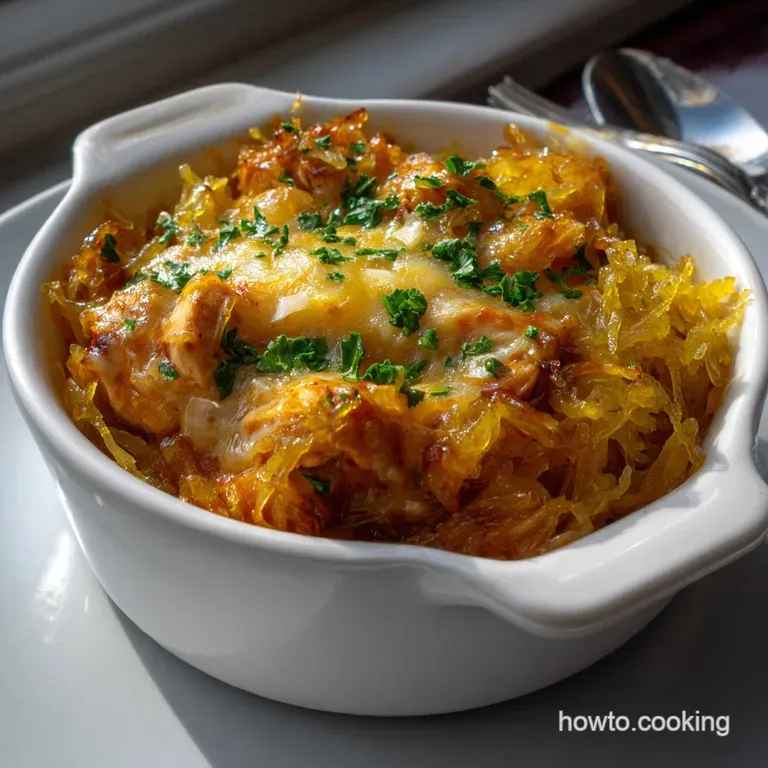
- Effort/Time: Moderate effort; 1 hour total.
- Flavor Hook: Piquant buffalo heat balanced by cooling Greek yogurt and molten mozzarella.
- Perfect for: Low-carb meal prep and weeknight family dinners.
- Mastering the Textural Balance of Buffalo Chicken Spaghetti Squash Casserole
- The Scientific Synergy of Acid, Fat, and Low-Carb Fiber
- Yield, Timing, and Precision Thermal Metrics for Optimal Results
- The Alchemy of Umami: Selecting High-Performance Elements
- Technical Tools for Efficient Prep and Heat Distribution
- The Phase-Based Execution Protocol for Maximum Flavor Depth
- Solving Structural Instability and Moisture Retention Challenges
- Adapting the Profile Without Compromising Emulsion or Texture
- Preserving Integrity Through Strategic Cooling and Thermal Recovery
- ⚗️ The Scaling Lab: The Physics of Quantity
- Enhancing the Sensory Experience with Strategic Pairings and Garnishes
- Recipe FAQs
- 📝 Recipe Card
Mastering the Textural Balance of Buffalo Chicken Spaghetti Squash Casserole
There is nothing more discouraging than spending forty minutes roasting a vegetable only to have it collapse into a bland, watery puddle the moment it hits the plate. I once served a version of this that was so liquid heavy it resembled a spicy soup rather than a structured bake, wasting three pounds of perfectly good produce and an afternoon of prep.
The financial sting of throwing away high-quality protein because the vegetable base wasn't handled with technical respect is a mistake you only make once.
I spent months trying to rush the cooling process or skipping the "squeeze" step, convinced that the oven would eventually evaporate the excess moisture. I was wrong every single time. It wasn't until I looked at the physics of the cell walls in Cucurbita pepo that I understood why my casseroles were failing.
If you don't address the internal hydration of the squash before adding the sauce, the heat of the second bake will rupture the remaining cell structures, releasing a flood of water that breaks your cheese emulsion.
The secret to a robust Buffalo Chicken Spaghetti Squash Casserole isn't found in adding more cheese; it’s found in the science of osmotic pressure. By using Diamond Crystal Kosher Salt to draw out moisture and roasting the squash until the pectin just begins to soften, we create a stable, "al dente" strand that holds onto the sauce.
The result is a velvety, piquant interior with a mahogany colored cheese crust that shatters under the fork.
The Scientific Synergy of Acid, Fat, and Low-Carb Fiber
Osmotic Dehydration: Salt applied to the raw squash flesh draws moisture out of the vacuoles via osmosis, preventing the "soup effect" during the final bake.
Emulsion Stability: The lactic acid in Fage Total 0% Plain Greek Yogurt and the stabilizers in cream cheese prevent the buffalo sauce from "breaking" or separating under high heat.
Maillard Reaction: Shredded mozzarella and sharp cheddar undergo protein browning at 300°F (150°C), creating a complex, nutty flavor profile on the top layer.
Chef's Tip: For the most noodle like texture, use a fork to scrape the squash strands horizontally (from side to side) rather than vertically. This follows the natural growth pattern of the fibers, resulting in longer, more resilient "spaghetti" that won't turn into mush.
Yield, Timing, and Precision Thermal Metrics for Optimal Results
This recipe is calibrated for a standard 9x13-inch Pyrex Glass Baking Dish to ensure even heat distribution across the surface area.
- Recipe Yield: 5 servings
- Prep Time:15 minutes
- Cook Time:45 minutes
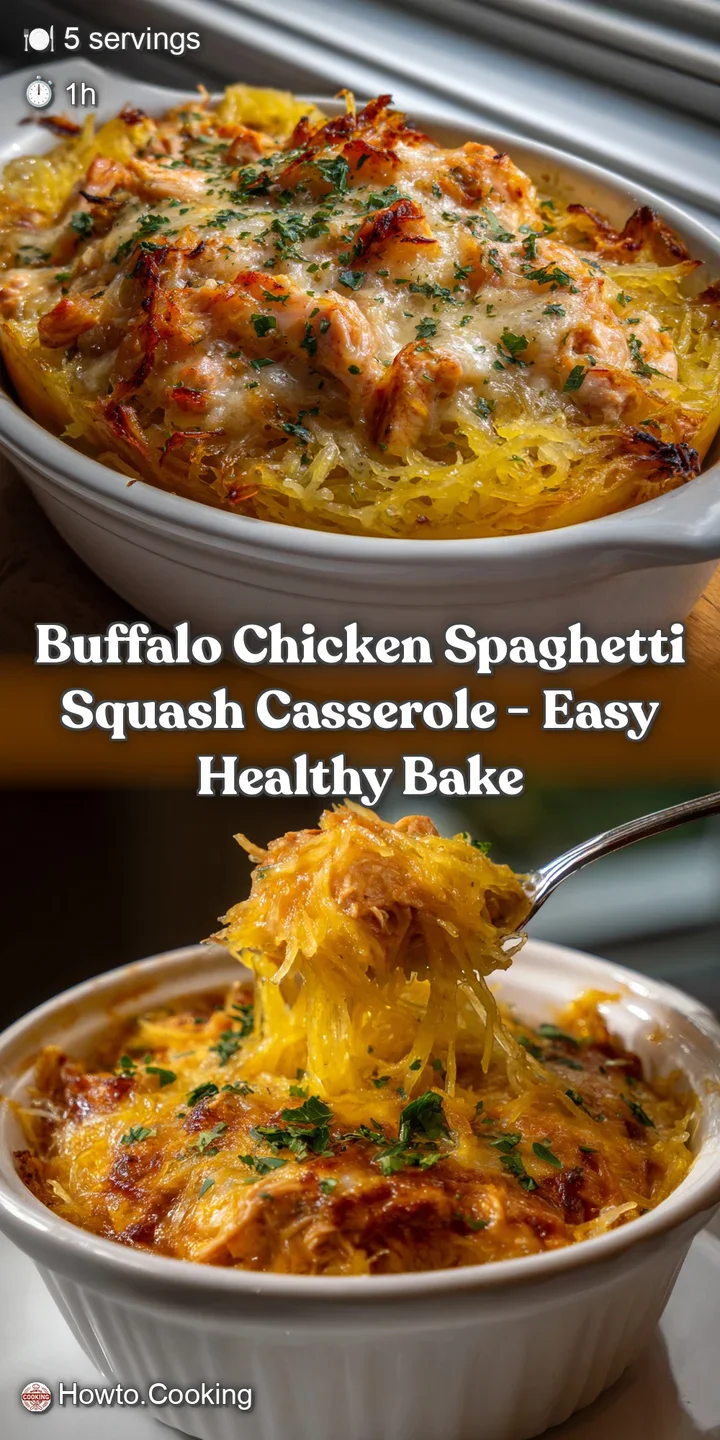
- Total Time: 1 hour
- Oven Temperature:400°F (205°C) for roasting; 350°F (175°C) for the final bake.
The Alchemy of Umami: Selecting High Performance Elements
Selecting the right components for your Buffalo Chicken Spaghetti Squash Casserole determines whether the dish remains stable or becomes a greasy mess. Use the following guide to understand the physical role of each ingredient.
| Ingredient | Chemical/Physical Role (Science) | The Pro Secret (Why This Matters) |
|---|---|---|
| Spaghetti Squash | Provides structural cellulose and insoluble fiber | Acts as the "pasta" base; requires moisture control to maintain bite. |
| Cream Cheese | Acts as a high fat emulsifier and thickener | Creates a velvety mouthfeel and binds the spicy sauce to the squash. |
| Greek Yogurt | Provides acidity to denature proteins and add tang | Cuts through the heavy fat content and stabilizes the buffalo emulsion. |
| Buffalo Sauce | Vinegar based acid profile for flavor brightness | The acetic acid breaks down protein fibers in the chicken for tenderness. |
- 1 medium spaghetti squash (approx. 3 lbs):Why this? Larger squash have thicker cell walls, providing better structural integrity after roasting.
- 1 tbsp extra virgin olive oil: Used for thermal conductivity during the initial roast.
- 0.5 tsp Diamond Crystal Kosher Salt: Essential for osmotic moisture extraction.
- 0.25 tsp black pepper: Adds pungent piperine for a slow burn heat.
- 3 cups cooked chicken breast, shredded (420g): Use a rotisserie chicken for ease, or follow this How to Cook recipe if you prefer dark meat for higher fat content.
- 0.5 cup buffalo pepper sauce: I recommend Frank’s RedHot for the classic vinegar-to-cayenne ratio.
- 4 oz Philadelphia Cream Cheese, softened:Why this? High gum content ensures the sauce doesn't separate at 350°F.
- 0.5 cup Fage Greek Yogurt: Adds a probiotic tang and protein boost.
- 1 tsp garlic powder: Provides sulfurous aromatics without the moisture of fresh garlic.
- 2 green onions, thinly sliced: Essential for fresh enzyme crunch against the soft bake.
- 1 cup shredded mozzarella cheese: Low melting point for the "pull" factor.
- 0.5 cup shredded sharp cheddar cheese: High oil content for a golden, bubbly crust.
Technical Tools for Efficient Prep and Heat Distribution
To achieve "Masterclass" results, the tools you use are as important as the ingredients.
- Lodge Cast Iron Skillet or Heavy Baking Sheet: For the initial squash roast; heavy metal retains heat better for a faster sear.
- KitchenAid Stand Mixer (optional): Use the paddle attachment to shred the 3 cups of cooked chicken breast in under 30 seconds.
- 9x13-inch Ceramic or Glass Casserole Dish: Provides the surface area needed for moisture evaporation during the second bake.
- Fine Mesh Strainer: Critical for draining the squash after shredding to ensure your Buffalo Chicken Spaghetti Squash Casserole stays firm.
The Phase Based Execution Protocol for Maximum Flavor Depth
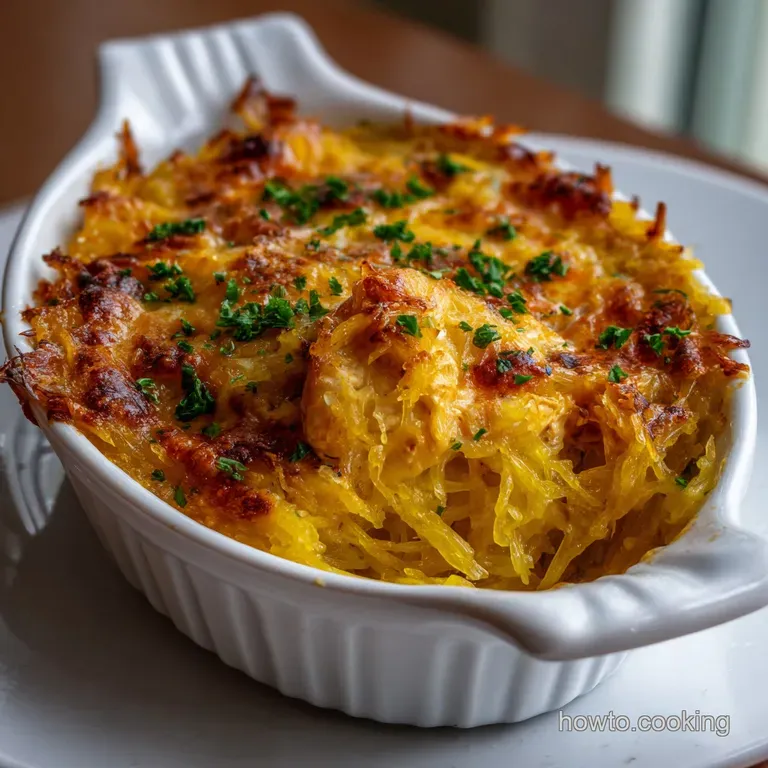
Phase 1: Roasting the Squash
- Preheat oven to 400°F (205°C).
- Slice the spaghetti squash in half lengthwise. Note: Use a sharp chef's knife and a stable cutting board to avoid slipping on the hard rind.
- Scoop out the seeds and fibrous innards using a large metal spoon.
- Brush the interior with 1 tbsp extra virgin olive oil and sprinkle with 0.5 tsp salt and 0.25 tsp black pepper.
- Roast face down for 35 minutes until the rind is easily pierced with a fork and the edges are mahogany brown.
Phase 2: The Buffalo Blend
- Shred the warm squash using a fork into long strands. Note: Transfer strands to a colander and let sit for 5 minutes to allow steam to escape.
- Combine 4 oz softened cream cheese, 0.5 cup Greek yogurt, 0.5 cup buffalo sauce, and 1 tsp garlic powder in a large bowl.
- Whisk vigorously until the mixture is a homogenous, pale orange color with no visible white streaks of cheese.
- Fold in 3 cups shredded chicken and the drained spaghetti squash strands.
Phase 3: Assembly and The Final Bake
- Transfer the mixture into your 9x13-inch baking dish.
- Layer 1 cup mozzarella and 0.5 cup sharp cheddar evenly across the top.
- Bake at 350°F (175°C) for 20 minutes until the cheese is bubbling at the edges and the center springs back slightly when pressed.
- Garnish with sliced green onions and serve immediately.
Solving Structural Instability and Moisture Retention Challenges
Even experienced cooks struggle with the high water content of squash. If your casserole looks more like a stew, the science of heat and pressure can explain why.
Why Your Squash Casserole is Watery
When squash is overcooked during the first roasting phase, the cellulose and hemicellulose in the cell walls break down completely. This turns the strands into a mushy pulp that cannot hold the sauce.
On top of that,, if you don't drain the squash after shredding, the residual "vegetable water" will dilute your Buffalo Chicken Spaghetti Squash Casserole sauce.
| Problem | Root Cause | The Fix | Pro Protocol |
|---|---|---|---|
| Separated Sauce | Temperature too high; cream cheese curdled | Lower bake temp to 350°F | Use full fat dairy for higher emulsion stability |
| Bland Flavor | Squash wasn't seasoned before roasting | Salt the squash before the first roast | Add a dash of the Buffalo Sauce Recipe to the raw squash |
| Rubbery Chicken | Overcooked during initial prep | Use carryover cooking to pull chicken early | Shred chicken while warm to absorb more buffalo sauce |
Adapting the Profile Without Compromising Emulsion or Texture
Substituting ingredients in a Buffalo Chicken Spaghetti Squash Casserole requires careful attention to fat ratios and moisture levels.
| Original Ingredient | Substitute | Why It Works |
|---|---|---|
| Greek Yogurt | Sour Cream (full fat) | Similar acidity and fat content; slightly richer mouthfeel. |
| Mozzarella | Monterey Jack | Excellent meltability; adds a mild, buttery flavor. |
| Cream Cheese | Neufchâtel | Lower fat but similar texture. Note: Sauce may be slightly thinner. |
| Spaghetti Squash | Zucchini Noodles | Low-carb alternative. Note: Must be sautéed and squeezed dry or result will be very watery. |
The dairy-free Swap: If you need to avoid dairy, use a cashew based cream cheese and a coconut milk based yogurt. Be warned that the lack of casein means the cheese won't "brown" in the same way, and the flavor will be significantly nuttier.
Preserving Integrity Through Strategic Cooling and Thermal Recovery
Fridge Storage
Store leftovers in an airtight glass container for up to 4 days. Because this is a Spaghetti Squash Casserole, the squash will continue to release a small amount of moisture over time.
Freezing Protocol
You can freeze this dish for up to 3 months. However, the freezing process creates ice crystals that rupture the squash's cell walls. When thawed, the texture will be significantly softer. Pro Tip: Freeze in individual portions to minimize "freeze thaw" cycles.
Reheating
To recover the texture, reheat in the oven at 350°F for 15 minutes. Avoid the microwave if possible, as it vibrates water molecules rapidly, which can cause the sauce to break and become greasy.
⚗️ The Scaling Lab: The Physics of Quantity
When you decide to double this recipe for a party, the physics of your oven changes entirely.
- The Square Cube Law: A double batch of Buffalo Chicken Spaghetti Squash Casserole in a single deeper dish has less surface area relative to its volume. This means the center will stay cold while the edges burn. Solution: Use two separate 9x13 dishes rather than one deep one.
- Evaporation Paradox: With more mass in the oven, there is more steam being released. This increases the humidity in the oven, which slows down the browning of the cheese. Open the oven door for 5 seconds every 10 minutes to vent the steam.
- Flavor Saturation: Do not double the salt. Scale the salt and buffalo sauce by 1.5x initially, then taste. Spices and salts accumulate non-linearly in larger volumes of food.
Enhancing the Sensory Experience with Strategic Pairings and Garnishes
To round out the piquant heat of this dish, consider the "Flavor Architecture." The heavy fats and capsaicin heat benefit from a hit of fresh acid or a cooling crunch.
- The Cooling Component: Serve with a side of celery sticks or a crisp blue cheese slaw.
- The Umami Boost: Sprinkle crumbled blue cheese over the top 5 minutes before the bake ends to add a pungent, salty depth.
- The Perfect Pairing: This piquant casserole pairs beautifully with the earthy tones of a Green Bean Casserole recipe, providing a textural contrast between the soft squash and the crunchy shallots.
Common Myths:Myth: You must boil the squash first. Truth: Boiling introduces massive amounts of water into the vegetable fibers. Roasting is the only way to ensure a concentrated flavor and firm texture.
- Myth: You can't make this Whole30.
- Truth: You can, provided you swap the dairy for compliant nut-based creams and ensure your buffalo sauce contains no sugar or additives.
Zero Waste Philosophy: Don't discard the squash seeds. Transform: Rinse, dry, and roast them with smoked paprika and salt. Science: They are high in zinc and healthy fats, providing a nutritious snack with a satisfying "shatter" when bitten.
The Buffalo Chicken Spaghetti Squash Casserole is more than just a low-carb alternative; it's a study in moisture management and flavor layering. By respecting the science of the squash and the stability of the dairy emulsion, you'll produce a dish that is velvety, piquant, and structurally sound every single time.
Let's crack on!
Recipe FAQs
What internal temperature should the casserole reach for doneness?
165°F (74°C). This temperature ensures safety and activates the full melt capacity of the mozzarella and cheddar topping. The final bake focuses on structural integrity rather than raw pathogen kill, which occurred during initial chicken cooking.
Can I use store-bought shredded squash instead of roasting fresh?
No. Pre-shredded squash is always too wet. Fresh roasting allows for the initial osmotic dehydration necessary to prevent a watery casserole base. If you skipped that initial salt/roast step, the sauce will break.
What is the best way to achieve long, noodle like strands?
Scrape the squash horizontally across the flesh. Scraping perpendicular to the squash's growth axis causes fibers to snap, creating short pieces. This principle of respecting the fiber direction is key to texture control, similar to how you would handle delicate dough layers in our Ultimate Creamy Chicken Lasagna with White Sauce Recipe.
Is cream cheese essential, or can I substitute Greek yogurt entirely?
Cream cheese is crucial for fat stabilization. Greek yogurt provides acidity, but cream cheese supplies the high fat emulsifiers necessary to bind the vinegar based buffalo sauce to the squash without separating during baking.
Myth: Adding baking soda neutralizes the buffalo sauce spice.
Myth: Adding baking soda neutralizes the buffalo sauce spice. Reality: Baking soda (a base) raises the pH, but it chemically alters the flavor profile, often creating a soapy, metallic aftertaste rather than just cooling the heat.
Should I use salted or unsalted butter if I decide to add butter?
Unsalted butter allows for precise sodium control. The sodium level in salted butter varies widely by brand, making it impossible to standardize the final flavor when relying on other salty elements like cheese and buffalo sauce.
Why does my topping look greasy instead of golden brown?
The sauce broke due to excessive localized heat exposure. If the casserole base is too wet, the oil separates from the cheese proteins instead of browning cleanly, resulting in a slick layer. Ensure you salted the squash thoroughly and used a 350°F final bake setting.
Buffalo Chicken Squash Bake
Ingredients:
Instructions:
Nutrition Facts:
| Calories | 429 kcal |
|---|---|
| Protein | 38 g |
| Fat | 23 g |
| Carbs | 16 g |
| Fiber | 3 g |
| Sugar | 6 g |
| Sodium | 980 mg |
