Mousse
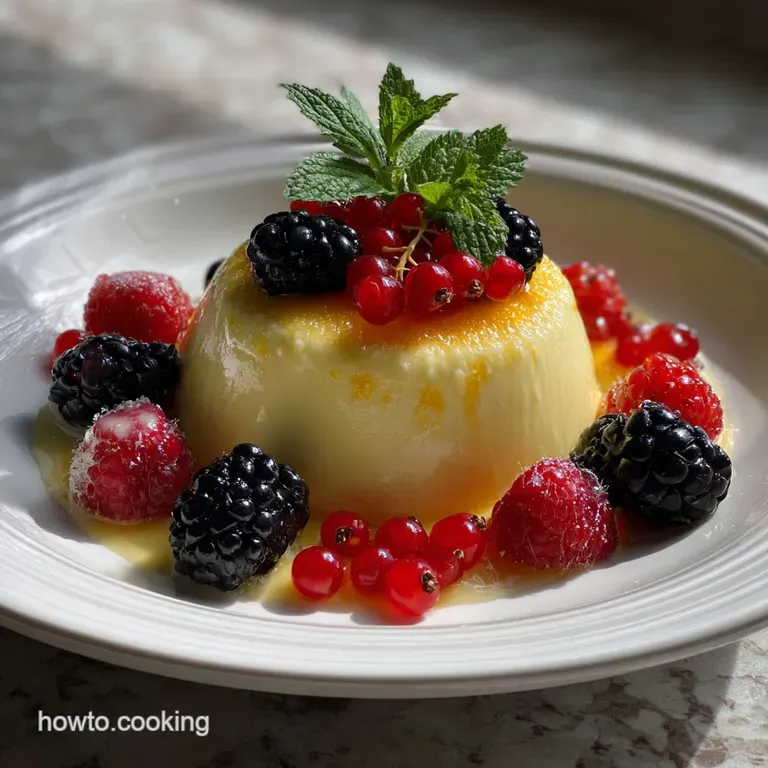
- Effort/Time: 35 minutes active / 4 hours setting
- Flavor Hook: Crisp, acidic champagne notes balanced by rich, fatty cream
- Perfect for: Midnight toasts, black-tie dinners, and elegant-yet-simple hosting
- Elevate Your Celebration with This Velvety New Year Party Dessert Recipe with Champagne
- Molecular Aeration and the Physics of Effervescence: Why This Works
- Precision Metrics for the Ultimate Celebration Treat
- The Chemistry of Celebration: Sourcing Your Elements
- Culinary Engineering: Essential Tools for Structural Integrity
- The Phase-Shift Protocol: Assembling Your Mousse
- Breaking the Surface Tension: Fixes for Common Failures
- Flavor Architecture: Adapting the Profile for Every Guest
- Preserving the Network: Storage and Structural Longevity
- Visual Geometry: Presenting Your Masterpiece for the Party
- Recipe FAQs
- 📝 Recipe Card
Elevate Your Celebration with This Velvety New Year Party Dessert Recipe with Champagne
There is nothing more disheartening than investing in a bottle of Moët & Chandon only to have the flavor disappear into a sugary, bland puddle. Most celebratory sweets fail because the alcohol evaporates or the texture becomes cloyingly dense, masking the very luxury you paid for.
This is the perfect New Year Party Dessert Recipe with Champagne! It relies on precise lipid-to-air ratios to ensure every spoonful carries the crisp, sharp bite of the bubbly.
I’ll admit, my first attempt at a "Year Party Dessert Recipe with Champagne" was a disaster. I rushed the gelatin hydration and ended up with rubbery pellets in what was supposed to be a smooth cream. I was so focused on the party start time that I ignored the physics of protein blooming.
That failure taught me that patience in the first ten minutes saves the entire evening's reputation when making this intricate New Year Party Dessert Recipe with Champagne.
The secret to this Masterclass level result isn't just the wine; it's the science of the protein lipid matrix. By reducing the champagne, we concentrate the esters and acids without adding excess water.
When folded into high fat heavy cream, you create a stable emulsion that holds its shape under the pressure of a New Year's countdown. The result is a texture that doesn't just sit on the tongue it shatters softly into a cloud of citrus and cream.
Molecular Aeration and the Physics of Effervescence: Why This Works
- Ethanol Reduction: Boiling the champagne to a syrup concentrates flavor compounds while removing the alcohol's tendency to "break" cream proteins.
- Gelatin Hydration: Blooming the gelatin in cold water ensures the granules swell evenly, preventing "grainy" mouthfeel during the setting phase.
- Lipid Stabilization: Heavy cream with at least 36% fat provides the structural wall necessary to trap air bubbles.
- Acid Balancing: Fresh lemon juice lowers the pH slightly, which tightens the protein network and cuts through the richness of the dairy.
Precision Metrics for the Ultimate Celebration Treat
| Metric | Value | Checkpoint Cue |
|---|---|---|
| Reduction Volume | 120ml (approx.) | Liquid is syrupy and coats the back of a spoon |
| Cream Temp | 4°C | The bowl feels icy to the touch before whipping |
| Setting Time | 4 hours | Surface resists a light touch with a "jiggle" center |
The Chemistry of Celebration: Sourcing Your Elements
The success of this Party Dessert Recipe with Champagne depends on the quality of your lipids and the dryness of your wine.
- 1 cup (240ml) Champagne or Brut Sparkling Wine: Why this? High acidity and fine bubbles create a cleaner, more sophisticated flavor profile than sweet wines. I recommend using a crisp Veuve Clicquot or a dry Freixenet Cava for the best result.
- 1.5 cups (360ml) Heavy whipping cream, chilled: Why this? High fat (36%+) is mandatory for creating a stable, airy foam structure. Using a high-quality brand like Horizon Organic ensures a richer mouthfeel.
- 1/2 cup (100g) Granulated white sugar: This provides sweetness without altering the color of the mousse.
- 1 packet (7g) Unflavored gelatin powder: The structural "rebar" of our dessert.
- 1/2 cup (125g) Fresh raspberries: Their tartness provides a vital counterpoint to the creamy base.
- 1 tbsp (15ml) Fresh lemon juice: Sharpens the champagne notes.
- 3 tbsp (45ml) Cold water: To bloom the gelatin.
- 1 tsp (5ml) Pure vanilla extract: Adds aromatic depth.
- 1 pinch fine sea salt: Suppresses bitterness and enhances sweetness perception.
- 1 tsp Edible gold leaf: For the visual "wow" factor.
Ingredient Chemistry Breakdown
| Ingredient | Chemical/Physical Role (Science) | The Pro Secret (Why This Matters) |
|---|---|---|
| Gelatin | Hydrocolloid protein network formation | Provides a "melt-in-mouth" feel that fats alone can't achieve |
| Heavy Cream | Lipid-in-water emulsion | Traps air via partially coalesced fat globules during whipping |
| Champagne | Acid driven flavor concentration | The tartaric acid tightens cream proteins for better stability |
| Sugar | Hygroscopic sweetener | Binds water molecules to prevent the mousse from weeping over time |
Culinary Engineering: Essential Tools for Structural Integrity
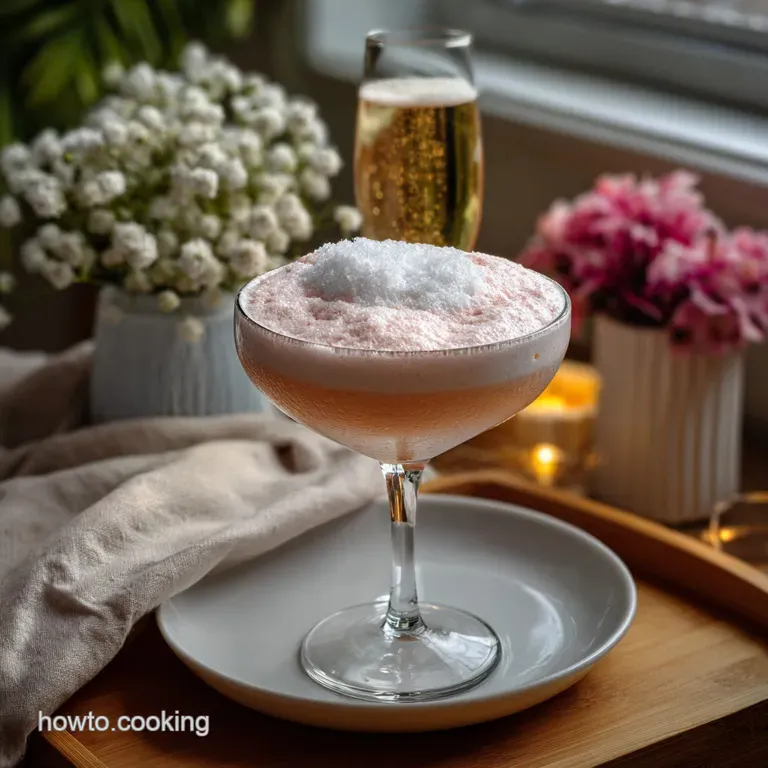
To achieve a "Masterclass" texture for this Dessert Recipe with Champagne, your tools must be as cold as your ingredients.
- KitchenAid Stand Mixer: The planetary mixing action ensures even aeration without over working the fats.
- Lodge 1.5 quart Saucepan: A heavy bottomed pan prevents the champagne reduction from scorching.
- Fine mesh Sieve: Crucial for straining the champagne gelatin mixture to ensure zero lumps.
- Thermoworks Thermapen: Used to check that the reduction hasn't exceeded the point of burning.
- Silicone Spatula: Essential for the delicate folding process where air bubbles are most vulnerable.
The Phase Shift Protocol: Assembling Your Mousse
Follow these steps exactly to master this New Year Party Dessert Recipe with Champagne. If you find yourself short on dairy, you can use this Homemade Heavy Cream recipe as a quick fix, though fresh 36% cream is preferred for maximum volume.
- Bloom the 1 packet of gelatin in 3 tbsp cold water for 5 minutes until it forms a thick, translucent gel.Note: Hydration prevents lumps.
- Simmer 1 cup of champagne with 1/2 cup sugar in a saucepan over medium heat for 8 minutes until the liquid reduces by half and smells intensely fruity.
- Whisk the bloomed gelatin into the hot champagne reduction until the granules completely vanish and the liquid is clear.
- Stir in 1 tbsp lemon juice, 1 tsp vanilla, and a pinch of salt until fully incorporated.
- Cool the champagne mixture to room temperature until it is slightly thickened but still pourable.Note: Adding hot liquid to cream will melt the fat.
- Whip 1.5 cups of chilled heavy cream in a cold bowl until soft, velvety peaks form that hold their shape for 3 seconds.
- Fold one-third of the whipped cream into the cooled champagne base until the streaks disappear and the texture lightens.
- Incorporate the remaining cream by gently folding in a figure eight motion until the mixture is uniform and airy.
- Divide the mousse into 6 glasses and refrigerate for 4 hours until the surface springs back when touched lightly.
- Garnish with fresh raspberries and gold leaf until the presentation looks professional and celebratory.
Breaking the Surface Tension: Fixes for Common Failures
Why Your Mousse is Rubbery or Chunky
This usually happens due to thermal shock. If you add cold cream to a gelatin base that has cooled too much, the gelatin seizes instantly into "worms." Conversely, if the base is too hot, it melts the fat, destroying the aeration.
This is a crucial step to master in any New Year Party Dessert Recipe with Champagne.
| Problem | Root Cause | The Fix | Pro Protocol |
|---|---|---|---|
| Grainy Texture | Gelatin not bloomed | Melt gently over a water bath | Always use cold water first, never warm |
| Liquid at Bottom | Improper folding | Stir the bottom layer gently | Use a "cut and fold" motion, not a stir |
| Flat/No Rise | Over whipped cream | Add a splash of fresh cream | Stop whipping when the whisk leaves a trail |
Flavor Architecture: Adapting the Profile for Every Guest
While the "Year Party Dessert Recipe with Champagne" is a classic, you can adjust the profile based on your budget and palate. If you have leftovers and it’s a snowy night, you might even pair this with a small side of Snow Ice Cream recipe for a fun texture contrast.
Comparison: Fresh vs. Shortcut Methods
| Feature | Fresh Champagne Reduction | Pre-made Champagne Flavoring |
|---|---|---|
| Aroma | Complex, floral, crisp | One-dimensional, candy like |
| Texture | Silky and light | Can be sticky or oily |
| Cost | Higher (Price of bottle) | Lower |
Variations and Substitutions
| Original Ingredient | Substitute | Why It Works |
|---|---|---|
| Champagne | Sparkling Apple Cider | Same acidity and bubbles. Note: Sweeter, reduce sugar by 20% |
| Gelatin | Agar Agar (2g) | Seaweed based thickener. Note: Sets firmer and requires boiling to activate |
| Raspberries | Pomegranate Seeds | Adds a crunch and tartness. Note: Visually stunning for NYE |
Preserving the Network: Storage and Structural Longevity
This Party Dessert Recipe with Champagne is a prime candidate for make-ahead hosting.
- Fridge: Store for up to 48 hours. Cover with plastic wrap directly touching the surface to prevent a "skin" from forming due to oxidation.
- Freeze: Not recommended. The freezing process creates ice crystals that puncture the delicate fat bubbles, causing the mousse to "weep" and collapse upon thawing.
- Zero Waste Tip: Don't discard the remaining champagne in the bottle. Transform: Simmer it with extra sugar and citrus peels to make a champagne syrup. Science: The sugar acts as a preservative, allowing you to use the syrup for cocktails or over pancakes the next morning.
Visual Geometry: Presenting Your Masterpiece for the Party
The Dessert Recipe with Champagne deserves a stage. Use tall, narrow flutes to emphasize the height of the mousse, or wide coupes for a vintage aesthetic.
⚗️ The Scaling Lab: The Physics of Quantity
- The Evaporation Paradox: If doubling the recipe, use a wider pot for the reduction. If you use a small pot with double the liquid, the surface area stays the same, and it will take 20 minutes instead of 10 to reduce, potentially scorching the sugars. Achieving the correct concentration is key to this New Year Party Dessert Recipe with Champagne.
- Flavor Saturation: Scale the salt and lemon juice to 1.5x, not 2x. Acids and salts become disproportionately sharp in larger volumes of dairy.
- Thermal Mass: A double batch of mousse takes roughly 6 7 hours to set in the center. Do not attempt to serve it earlier, or the core will be liquid.
- Pan Crowding (Maillard Killer): While not applicable to the mousse itself, if you are making a larger batch of the champagne syrup, do it in batches to maintain a steady simmer and prevent boiling over.
Decision Shortcut: If you want a sharper taste, add 1 tsp extra lemon juice. If you want it sturdier for a buffet, add 1/4 tsp extra gelatin. If you want it richer, use cream with 40% fat (Heavy Manufacturer's Cream).
Common Myths
Myth: You must use expensive Vintage Champagne for the flavor to shine. Truth: The nuances of a $200 bottle are lost once boiled and mixed with cream. Use a high-quality "Non-Vintage" Brut or Cava.
Myth: Whipping cream longer makes it more stable. Truth: Past a certain point, the fat globules merge too much, turning the cream into butter and buttermilk, which ruins the emulsion.
By following this protocol, you aren't just making a "Year Party Dessert Recipe with Champagne" you are mastering the delicate balance of dairy, alcohol, and air. This wholesome and flavorful approach ensures your New Year's guests experience the true confidence of a home cook who understands the science behind the shimmer of this ultimate New Year Party Dessert Recipe with Champagne.
Recipe FAQs
Must the champagne be boiled?
Yes, always boil the champagne first. Boiling rapidly reduces the ethanol content, which prevents the alcohol from denaturing the milk proteins during mixing. This ensures a smooth, stable emulsion rather than a curdled texture.
What fat percentage is required for the heavy cream?
Use cream with at least 36% milkfat. Higher fat content provides the structural walls necessary to trap air during whipping, creating the essential airy volume. Lower fat content results in a weeping, dense foam.
Can I substitute Prosecco for the Brut Champagne?
Prosecco is acceptable but less balanced. Prosecco generally has higher residual sugar than Brut Champagne, leading to a sweeter, less acidic final product. You must reduce the added granulated sugar by 20% if using Prosecco to maintain the tart flavor balance.
My gelatin dissolved but the mousse is grainy. Why?
Rapid cooling of the gelatin mixture caused uneven setting. When the hot liquid cools too quickly, the gelatin molecules precipitate into small, isolated networks instead of forming one continuous matrix.
If you nail the stable folding technique here, you can apply that same gentle incorporation principle when making Sausage Stuffing: The Butchers Best Sage Sourdough Recipe.
- Ensure reduction cools to room temp
- Use a wide, shallow container for cooling
- Gently temper the base with a small amount of cream first
What is the best substitution for raspberries?
Pomegranate seeds provide superior textural contrast. While raspberries offer complementary acidity, pomegranate seeds resist moisture absorption and maintain a satisfying, sharp pop against the soft mousse structure. This principle of textural layering is also key when perfecting the topping on our Green Bean Casserole Recipe: The Ultimate Version with Homemade Crispy Shallots.
How long can this dessert safely sit out before serving?
Maximum one hour at room temperature is recommended. As a dairy heavy, gelatin set product, the fat and protein structure degrades quickly once above 20°C, leading to deflation and potential spoilage. Chill until the moment you are ready to garnish.
Myth: Using sparkling grape juice works just as well.
Myth: Using sparkling grape juice works just as well. Reality: Grape juice lacks the necessary organic acids (tartaric, malic) found in wine to properly tighten the gelatin matrix. This results in a flabbier, less stable mousse structure.
Champagne Mousse Party Dessert
Ingredients:
Instructions:
Nutrition Facts:
| Calories | 314 kcal |
|---|---|
| Protein | 2.6 g |
| Fat | 22.2 g |
| Carbs | 21.5 g |
| Fiber | 1.4 g |
| Sugar | 19.2 g |
| Sodium | 45 mg |
