Baked Potato: the Ultimate Crispy Skin Recipe
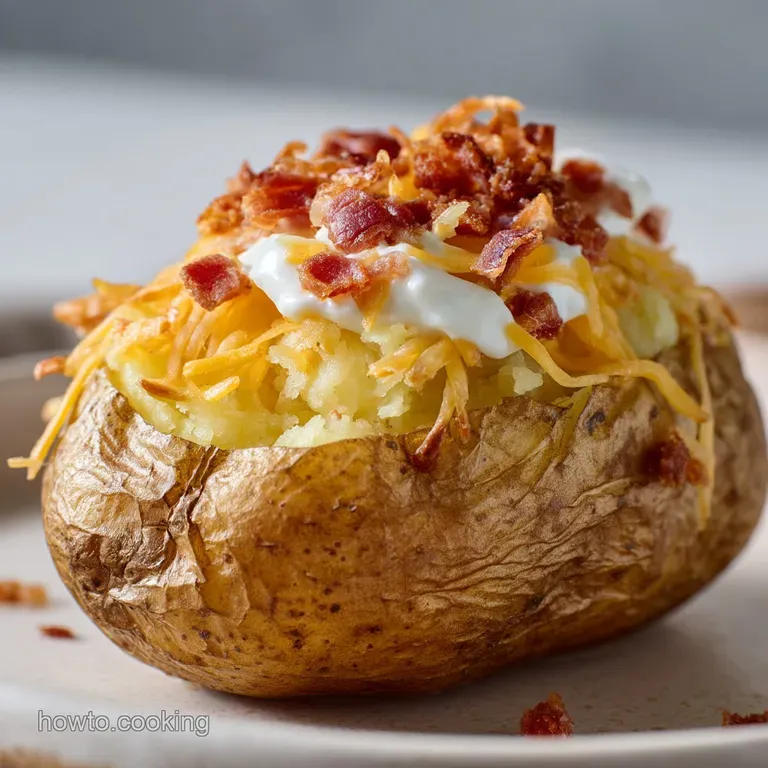
- Achieving the Perfect Jacket Spud: An Oven-Baked Guide
- The Science of the Crisp: Why This Technique is Superior
- Essential Ingredients for the Ultimate Spud
- Step-by-Step: Mastering the Crispy Skin Method
- Troubleshooting and Expert Secrets for Baking Success
- Prep Ahead and Storage: Keeping Your Potatoes Perfect
- Versatile Toppings and Serving Suggestions for Your Baked Potato
- Recipe FAQs
- 📝 Recipe Card
Achieving the Perfect Jacket Spud: An Oven Baked Guide
That incredible smell of roasting starch and salt hitting the air? The satisfying crunch when you finally break the skin, giving way to a cloud of steamy fluff? That, my friend, is the joy of the perfect Baked Potato .
It’s comfort food that requires nearly zero skill, but getting that texture contrast the shattering exterior and the airy interior takes a few specific tricks.
Look, we all need those reliable, cheap, and ridiculously easy meals. The Baked Potato is pure weeknight alchemy; it only asks for three ingredients and patience, but the comfort reward is massive.
It’s also incredibly versatile, holding its own as a side dish or becoming the main event with ambitious toppings.
I spent years making soggy versions that always seemed to stick to the foil, but I finally cracked the code and it’s all about high heat, proper fat application, and maximizing drying time.
Let’s ditch the shortcuts and learn how to make the best, crispiest Baked Potato known to man.
The Science of the Crisp: Why This Technique is Superior
A perfect Baked Potato is a study in culinary contrasts. The skin must be robust, shattery, and deeply seasoned almost like a thick chip. Meanwhile, the interior needs to be light, airy, and fluffy, ready to absorb butter and toppings without turning into a dense, wet paste.
We achieve this texture by controlling steam, utilizing high temperatures, and employing a specific two-stage fat application that you won't want to skip.
What Defines a 'Perfect' Baked Potato (Skin vs. Fluff)
The best Baked Potato achieves simultaneous perfection on two fronts. The skin must be completely free of moisture, allowing the fat and salt to fuse into a delicious, crunchy crust.
The high starch content of the potato variety we choose is crucial, as it allows the internal moisture to quickly evaporate, turning the starch cells into those desirable light, fluffy clouds.
Equipment Checklist for Optimal Results
You don't need fancy tools, but one piece of gear is absolutely non-negotiable: the wire rack.
- Wire Cooling Rack: This sits inside your baking sheet. It lifts the potato completely off the flat surface. No flat surface means no steam trapped underneath, which means zero soggy bottoms . Trust me, this $10 investment changes everything.
- Fork or Metal Skewer: Essential for piercing the skin correctly.
- Pastry Brush or Clean Hands: For evenly applying the oil and salt mixture.
Quick Guide to Preparation and Total Cook Time
While the prep is fast (under 10 minutes), a truly large, fluffy Baked Potato takes time in the oven. You are cooking out moisture, not just heating it up.
Expect a total bake time of 75– 90 minutes for a potato weighing around 300 350g. Rushing it results in a hard, dense centre.
The Importance of Pricking (And How Much)
This step prevents two bad outcomes. If you skip pricking the skin, steam builds up inside, and the skin acts like a balloon. At best, you get a dense, wet interior. At worst? The potato explodes in your oven (I learned that the messy way, requiring a two-hour oven scrub).
Eight to ten deep pokes per spud using a fork or metal skewer is enough.
High Heat vs. Low Heat: Debunking Baking Myths
We start hot (425°F or 220°C) to blast the skin dry and render the fat instantly. This initial high heat rapidly creates the external crust we crave. Then, we drop the temperature slightly to 400°F (200°C) to finish cooking the core without incinerating the crust we just established.
This two-stage bake is non-negotiable for a superior Baked Potato .
The Role of Air Circulation During Baking
Air circulation is the quiet hero of the Crispy Skin Method. By placing the potatoes on a wire rack, we ensure that hot, dry air can reach every surface area, including the bottom. If the spuds are too close or touching, they will steam each other.
Give your Baked Potato its personal space for even crisping.
Essential Ingredients for the Ultimate Spud
The recipe for a perfect Baked Potato is short and sweet, which means the quality of each ingredient truly matters.
Choosing the Best Potato Variety (Starchy vs. Waxy)
You need high starch. In the US, this means Russets (Idaho). In the UK, look for King Edwards or Maris Pipers. These starchy heroes break down into fluffy, almost cotton like clouds when baked.
Waxy potatoes (like new potatoes or reds) hold their shape too well; they are fantastic for roasting, but terrible for a fluffy Baked Potato .
Substitute Note: If Russets are truly unavailable, aim for the largest Idaho variety you can find.
Fat Selection: Olive Oil vs. Rendered Fat for Crisping
Olive oil is excellent and convenient. It’s light, widely available, and has a high smoke point perfect for the task. However, if you want next level flavour and a truly earth shattering crunch, try duck fat or goose fat.
It renders a crust that is truly unmatched, making this the single best Baked Potato you've ever tasted.
Substitute Note: Swap olive oil for avocado oil or bacon grease if duck fat feels too ambitious.
Notes on Kosher Salt and Coarse Sea Salt
Flaky sea salt (like Maldon) is best here. The large, uneven crystals provide texture and crunch right on the surface. Fine salt tends to dissolve too quickly into the oil and risks over salting the interior flesh. Coarse salt adheres perfectly to the oiled skin.
Simple Substitutions for dairy-free Crisping
The crisping fat (olive oil or duck fat) doesn't contain dairy, so that part is easy. If you are serving the Baked Potato dairy-free, simply skip the internal butter or use a good vegan butter substitute stick before adding your toppings.
| Ingredient | Substitution | Why it Works |
|---|---|---|
| Russet Potato | Idaho, King Edward, Maris Piper | High starch content for fluffiness. |
| Olive Oil | Avocado Oil, Duck Fat, Bacon Grease | High smoke point, excellent flavour transfer. |
| Flaky Sea Salt | Coarse Kosher Salt (use slightly less) | Provides exterior crunch and texture. |
| Butter (Interior) | Vegan Butter or Truffle Oil | For internal richness without dairy. |
step-by-step: Mastering the Crispy Skin Method
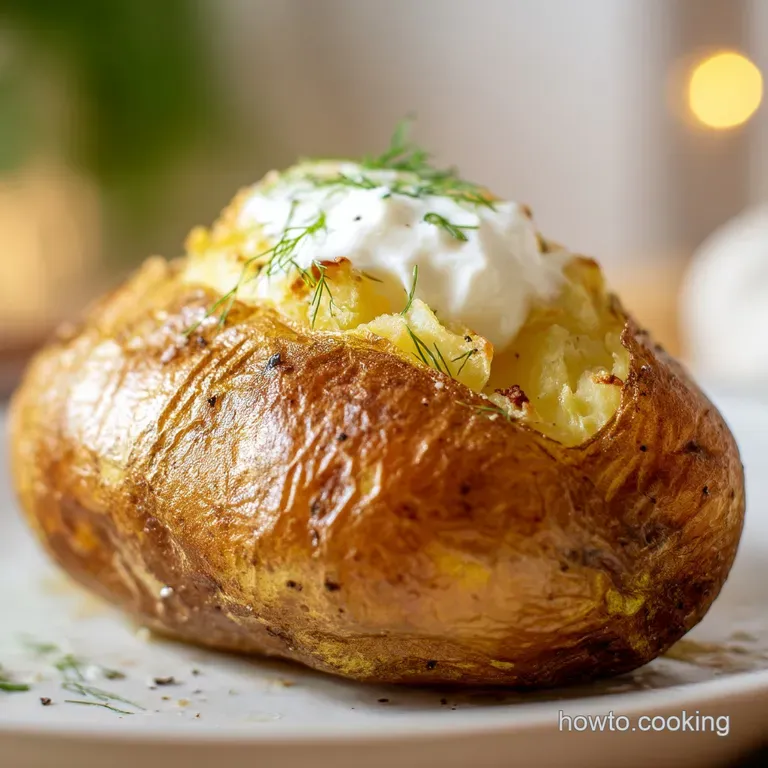
Let's crack on and get the oven roaring! This is the double bake, double seasoning method that guarantees a perfect result every time you make a Baked Potato .
Prepping the Potatoes for Maximum Crispness
Remember the mantra: scrub and dry. Scrub the potatoes thoroughly under cold water. I cannot stress the importance of a fully bone dry surface before you apply the oil residual water turns to steam, which instantly softens the skin texture. Then, pierce them 8 to 10 times.
Toss the dry spuds with about half of the oil and a light pinch of salt and pepper.
Initial Bake at High Temperature
Set your oven to a blistering 425°F (220°C). Place the oiled and pierced potatoes onto the wire rack set over the baking sheet. Bake for 45 minutes straight.
This stage is about rapid water loss; the high heat seals the surface and begins the dehydration process necessary for a cracking crust.
The Critical Mid-Bake Brush (The Secret Step)
Remove the potatoes from the oven and carefully inspect them. The skin should look matte, dry, and slightly wrinkled. This is where we win the game. Use your hands or a pastry brush to rub the remaining oil and the rest of the flaky sea salt directly onto the hot, dry skin.
The hot skin instantly absorbs the fat and salt, locking in the crispness. This double dip method is key to the best Baked Potato .
Determining Doneness and Achieving Fluffiness
Return the potatoes to the oven, reducing the heat slightly to 400°F (200°C). Bake for another 30– 45 minutes. The potato is done when you can easily squeeze the centre and it gives way without resistance.
If you’re being extra precise, the internal temperature should reach 205°F (96°C) or higher.
Chef's Note: Don't worry about the high oil and salt content being overwhelming. Most of it stays on the skin, which many people choose not to eat. For those of us who eat the skin (and you should!), that is exactly where the flavour needs to be concentrated.
Troubleshooting and Expert Secrets for Baking Success
Why Is My Potato Skin Soggy? (Common Mistakes)
If your Baked Potato skin is rubbery or sad, it usually happens for one of three reasons:
- You used foil (see below).
- You didn't thoroughly dry the skin before the initial oil rub.
- You baked it directly on a flat tray, trapping steam underneath.
Fix those three issues, and you are guaranteed a killer Baked Potato every time.
The Best Way to Slice and Fluff the Interior
Don't just cut a single line! As soon as the spud comes out of the oven, use a sharp knife to cut a large ‘X’ deep into the top. Then, gently push the ends of the potato inward, forcing the fluffy flesh to burst upwards.
This immediately releases trapped steam and prevents the interior from becoming a wet, gummy mess.
Achieving Even Browning on All Sides
Ovens are often inconsistent, particularly toward the back. If you notice one side of the potatoes browning faster than the others, simply rotate the baking sheet halfway through the second bake. Also, ensure the spuds aren't touching each other; they need that crucial space for even crisping.
Should I Wrap My Potato in Foil? (Answered)
Absolutely not, if your goal is crispy skin. Foil traps moisture and essentially steams the potato, which results in a soft, sad jacket. The only time you should consider wrapping a Baked Potato in foil is if you are trying to hold it hot for a very long period after it has already finished cooking, but this sacrifices texture.
Prep Ahead and Storage: Keeping Your Potatoes Perfect
Safely Cooling Baked Potatoes
Potatoes are notorious for bacteria growth (specifically botulism) if cooled improperly. This is very serious. You MUST cool a Baked Potato rapidly. Immediately after fluffing (Step 10), place the individual spuds on a wire rack at room temperature for no more than 60 minutes before refrigerating them in a shallow, airtight container.
Reheating Strategies for Retaining Crispness
Do not microwave a leftover Baked Potato . Seriously, please don't! It will be gummy and wet inside, and the skin will turn into rubber. Reheat the refrigerated spuds in a 400°F (200°C) oven or, even better, in an air fryer for 10- 15 minutes until the skin feels rock hard and the interior is hot throughout.
This retains the integrity of the crisp skin.
Versatile Toppings and Serving Suggestions for Your Baked Potato
I could write a whole novel about Baked Potato toppings. This simple starch is the perfect canvas for almost any flavour profile you can imagine.
The Ultimate Comfort Classics
My personal favourite is always sharp mature cheddar, a generous dollop of sour cream (or Greek yogurt), fresh chives, and plenty of cracked black pepper. For a fun, warming side dish option, you can pair this perfectly crispy Baked Potato with a rich bowl of Crock Pot Potato Soup: The Ultimate Creamy Slow Cooker Recipe (yes, double potato night!).
If you are looking for other great potato ideas, you should check out my recipe for Sweet Potato Fries: Crispy Oven Baked Perfection if you have some starchy alternatives on hand.
Modern and Fresh Topping Ideas
Consider a Mediterranean twist: sun-dried tomato pesto, crumbled feta, and fresh basil, maybe drizzled with a balsamic glaze. For something lighter, a scoop of tuna salad mixed with corn and a little mayonnaise is a classic UK Baked Potato filling.
No matter how you top it, mastering the dry and crisp technique is the foundation. Every single Baked Potato you serve using this method will be worthy of centre stage. Now go bake some brilliant spuds!
Recipe FAQs
Why is my baked potato skin soggy instead of shatteringly crispy?
Soggy skin is almost always caused by trapped moisture; the skin must be completely dry and oiled before baking. Furthermore, ensure you never wrap the potato in foil during baking and always let air circulate by placing the potato directly on the oven rack, not in a deep baking dish.
If you let the potato sit covered after cooking, steam will condense and quickly ruin the achieved crispness.
What is the best type of potato for achieving a fluffy interior and crispy jacket?
Russet potatoes (known regionally as baking potatoes like Maris Piper or King Edward) are the ideal choice due to their high starch and low moisture content. This high starch structure allows the interior cells to fully expand and dry out as they bake, resulting in a perfectly light, fluffy, and floury texture.
Avoid waxy potatoes, as they retain moisture and become dense.
Should I wrap my baked potato in aluminum foil while it cooks?
No, wrapping the potato in foil traps all the escaping steam, effectively boiling the skin and guaranteeing a soft, damp texture rather than a crisp jacket. Foil should only be used after the potato is fully cooked if you need to hold it warm for an extended period, which will sacrifice some crispness for warmth.
Always bake potatoes naked for the best texture.
My baked potato flesh turned out dense or gummy. What went wrong?
Gummy or dense flesh typically occurs if the potato is undercooked or, if once cooked, it cools too slowly before serving, allowing the released starch granules to reabsorb moisture.
To prevent this, ensure the potato reaches an internal temperature of 210°F (99°C), and immediately after removing it from the oven, slice it open or squeeze it to release all the remaining steam.
How essential is piercing the potato before baking, and why?
Piercing the potato is absolutely essential because it allows steam generated inside the potato during cooking to escape gradually and safely. If the steam cannot escape, pressure builds up and the potato may rupture explosively in the oven, causing a significant mess.
Use a fork or sharp knife to pierce the skin a dozen times, ensuring the holes go deep into the flesh.
Can I use the microwave or air fryer to speed up the process?
While you can par-cook a potato in the microwave for 5-8 minutes to reduce overall oven time, this method introduces significant moisture and compromises the final crispy texture. For truly ultimate crispy skin, commit to oven baking the entire time.
An air fryer can produce excellent results comparable to a convection oven, typically baking the spud faster at a high heat.
How should I store leftover baked potatoes, and what is the best way to reheat them?
Leftover baked potatoes must be stored immediately in the refrigerator within two hours of cooking to prevent the growth of bacteria associated with cooling starches. To reheat while retaining some crispness, bake the potatoes at 350°F (175°C) for 15-20 minutes until hot throughout.
Alternatively, split them and pan-fry the halves face down in a small amount of oil for renewed crispness.
Crispy Baked Potato Perfection
Ingredients:
Instructions:
Nutrition Facts:
| Calories | 342 kcal |
|---|---|
| Protein | 6.2 g |
| Fat | 12.8 g |
| Carbs | 53.9 g |
