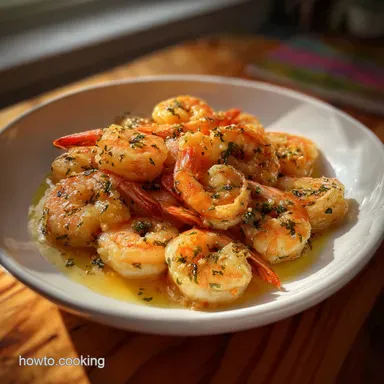
Pan-Seared Garlic Shrimp in 15 Minutes

- Total15 Mins
- Servings3
- Calories318 kcal
Garlic Shrimp stays tender because it gets a fast sear and leaves the heat before it can tighten. The garlic butter sauce comes together in the same skillet, so the browned bits from the shrimp end up in every spoonful.
- Time: 10 min active + 5 min cooking
- Texture: Plump, slightly springy shrimp under a thin, glossy garlic butter sauce
- Serve with: Steamed white rice or spaghetti, with crusty bread for the leftover sauce
Garlic Shrimp Techniques That Keep It Tender
- Patted Dry: Surface water turns to steam first, so dry shrimp sizzle and brown instead of going pale and soft.
- One Hot Minute: About a minute on medium-high firms the bottoms and turns them pink. Each extra minute squeezes out moisture, so you flip early and pull them at a loose C.
- Garlic Goes In Last: Minced garlic turns bitter fast over high heat. It joins the butter only after the heat drops to medium-low.
The table shows how the two common kinds of shrimp behave in the pan.
| Shrimp Type | Pan Heat | Time in the Pan | Done When |
|---|---|---|---|
| Raw large shrimp (16/20) | Medium-high | About 1 min, then 30 to 60 sec after the flip | Loose C shape, opaque all the way through |
| Pre-cooked frozen shrimp | Medium | Only until heated through, depending on size | Reaches 165°F (74°C) inside |
Pre-cooked shrimp only need warming, so the sauce steps stay the same while the pan time drops. Start with less time, check one shrimp, then adjust, because size changes the clock.
Recipe Details
This recipe makes 3 servings and takes 15 minutes total: 10 minutes of prep and 5 minutes of cooking. Nothing needs chilling or resting. Three checkpoints tell you it's on track:
- Butter foams, and the foam begins to subside, before the shrimp touch the pan.
- Shrimp sit about 1 minute undisturbed, then cook 30 to 60 seconds after the flip.
- Garlic stirs for 30 to 60 seconds and stays pale gold.
What Goes Into the Pan
Each ingredient has a job, so the swaps below say what changes when you make them.
- 1 lb large shrimp (16/20 count), peeled and deveined, tails on or off (450 g). Why this? Larger shrimp give you room to sear before they overcook.
- ½ tsp fine sea salt, divided (3 g). Half goes on the shrimp, half goes into the sauce.
- ¼ tsp black pepper (1 g)
- ½ tsp smoked paprika (1 g). Regular sweet paprika works in the same amount, but you lose the smoky edge.
- 1 tbsp olive oil (15 ml). Avocado oil handles this heat the same way.
- 4 tbsp unsalted butter, divided (57 g). Why this? Unsalted keeps the salt under your control, and butter carries the garlic flavor.
- 6 cloves garlic, finely minced (18 g). Jarred minced garlic works in the same amount but tastes softer.
- ¼ tsp red pepper flakes (0.5 g). Leave these out for a mild sauce.
- ¼ cup low-sodium chicken broth or shrimp stock (60 ml). Shrimp stock adds more shrimp flavor. Water works in a pinch but gives a thinner, plainer sauce.
- 1 tbsp fresh lemon juice, about ½ lemon (15 ml). Bottled lemon juice tastes flatter.
- 2 tbsp chopped fresh parsley (8 g). About 2 tsp dried parsley stands in, approximately. Start with less and taste.
Tools You'll Need
A 12-inch skillet matters most. Its width keeps the shrimp in one layer, and the sauce comes together in the same pan. You also need a mixing bowl, paper towels, tongs, and a plate set near the stove.
An instant-read thermometer is optional, since the loose C shape and opaque flesh tell you most of what a reading would.
Cooking the Shrimp step by step

Step 1: Prep the Shrimp
- Pat the shrimp completely dry with paper towels. Toss them in a bowl with ¼ tsp of the sea salt, the black pepper, and the smoked paprika.
- Mince the garlic and measure the broth, lemon juice, and parsley so they are ready by the stove. Note: The sauce moves quickly once the shrimp are out of the pan.
Step 2: Sear the Shrimp
- Heat the olive oil and 1 tbsp of the butter in a 12-inch skillet over medium-high heat until the butter foams and the foam begins to subside.
- Place the shrimp in a single even layer. Cook undisturbed for about 1 minute until the bottoms turn pink and the edges start to curl. Cook in batches if they don't fit in one layer.
- Flip each shrimp and cook for another 30 to 60 seconds. They're done when they form a loose C shape and are opaque all the way through, and they reach 145°F (63°C) inside if you check with a thermometer. Transfer them to a plate right away.
Chef's Note: Use a cold plate for the shrimp, not a hot one. Their juices go back into the pan with the shrimp in the final toss.
Step 3: Build the Sauce
- Lower the heat to medium-low. Add the remaining 3 tbsp of butter and the red pepper flakes.
- Once the butter melts, add the garlic. Stir constantly for 30 to 60 seconds until it smells sweet and just starts to turn pale gold. Do not let it brown.
- Pour in the broth and scrape up the browned bits from the pan. Simmer for 30 seconds to thicken slightly.
Step 4: Finish the Dish
- Return the shrimp and any juices on the plate to the skillet. Sprinkle with the remaining ¼ tsp salt. Toss for 15 to 30 seconds until heated through and coated in the sauce.
- Remove the pan from the heat, stir in the lemon juice and parsley, and serve immediately while the sauce is glossy. Note: Lemon goes in off the heat so its brightness stays sharp instead of cooking flat.
What Can Go Wrong
Fixing Rubbery Shrimp
Shrimp turn rubbery when they stay in the pan past the loose C shape. Pull them the moment they reach that shape and look opaque in the center. Surface water causes the other problem, because it steams instead of searing, so pat the shrimp dry and cook in batches if the pan is crowded.
When the Sauce Stays Thin
A 30-second simmer gives a light, brothy sauce, not a thick one. If it looks watery, simmer another 30 seconds at medium-low before the shrimp go back in, and keep an eye on the garlic. Flour or cornstarch is not needed here, since the butter and reduced broth should coat the shrimp.
Fixing a Salty Finish
Salt builds up when regular broth stacks on top of the two salt additions. Use low-sodium broth or shrimp stock, measure the full ½ tsp, and taste before you serve. If the batch still tastes salty, spoon it over plain rice to spread the sauce thinner.
Thawing Frozen Shrimp
Frozen shrimp carry extra water from their ice glaze, and that water steams in the pan. Thaw them in the fridge or in a sealed bag under cold running water, then pat them very dry. Pre-cooked frozen shrimp only need warming, so follow the table above.
What to Serve With It
Plain white rice is the easiest match, because it soaks up the garlic butter so none goes to waste. Toss the shrimp with cooked spaghetti or linguine for garlic shrimp over pasta. Crusty bread works for mopping up what's left in the pan, and a green salad with a little lemon cuts through the butter.
How to Store and Keep Fresh
Refrigerate any remaining portions within 2 hours, as per USDA guidance on perishable food. Use a container with an airtight seal. Because shrimp tend to become tougher over time, it is best to enjoy your leftovers quickly.
Avoid freezing cooked shrimp, as thawing often leaves them with a mushy texture. To reheat, place them in a pan over low heat with 1 to 2 tbsp of water or broth. Stir for 1 to 2 minutes until they are piping hot; a thermometer should read 165°F (74°C) to ensure they are heated through.
Using a microwave on high for over 30 seconds will make them rubbery.
Easy Swaps and Add-Ins
- Shrimp stock in place of the broth gives a deeper shrimp flavor.
- Leave out the red pepper flakes for a mild sauce, then add more at the table if you like heat.
- Regular paprika in the same amount is the simplest swap for smoked paprika.
- As written, the recipe is gluten-free as long as your broth is labeled gluten-free.
Your Questions, Answered
What do I do if the sauce won't thicken before the shrimp are done?
Simmer the broth for the full 30 seconds in step 8, and let the butter bind with it. The sauce only thickens slightly.
Tip: the sauce is meant to be light and glossy, so don't keep reducing it past that point or the garlic will darken.
How do I keep the shrimp from overcooking while the sauce reduces?
Move the shrimp to a plate as soon as they form a loose C and turn opaque all the way through, then leave them there while the garlic and broth cook.
Tip: they only go back into the sauce for 15 to 30 seconds, and the juices on the plate return with them, so they stay moist.
Can I use pre-cooked frozen shrimp, and how should I thaw them?
Pre-cooked shrimp can work, but they will turn rubbery during the 1-minute sear, so raw shrimp give better results. Thaw frozen shrimp completely before you start, then pat them dry as in step 1.
Tip: if you use pre-cooked shrimp, skip the sear and toss them in the sauce for 15 to 30 seconds until they reach 165°F (74°C) inside.
Why does the finished dish turn out too salty?
Most often the salt is added twice too heavily, or the broth is not low-sodium. The recipe splits the salt into ¼ tsp on the shrimp and ¼ tsp at the end.
Tip: use low-sodium broth only, and taste the sauce before adding the final ¼ tsp salt in step 9.
Garlic Shrimp