Baked Potato: the Crispy King Oven Masterclass
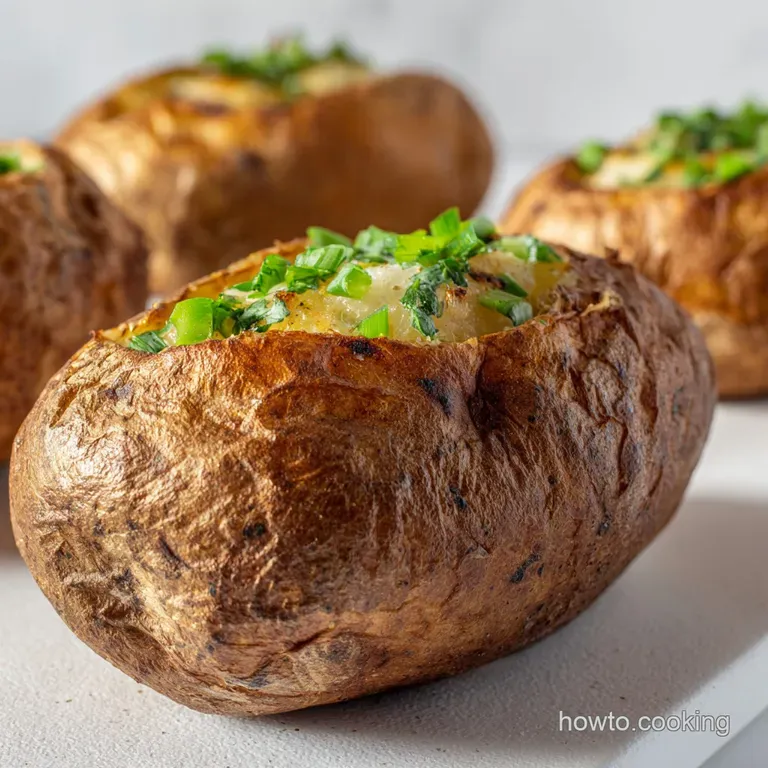
- The Crispy King: Perfectly Fluffy Oven-Baked Potatoes (A Masterclass)
- Elevating the Humble Spud: Why Texture Matters in a Classic Jacket Potato
- The Science of Crisp: Achieving Maximum Airflow and Steam Release
- Essential Elements: Ingredients for the Perfect Baked Potato
- The Master Method: Step-by-Step Guide to Oven-Baked Perfection
- Troubleshooting Your Spud: Common Baked Potato Mistakes and How to Avoid Them
- After the Bake: Storing, Reheating, and Repurposing Leftover Potatoes
- Creating a Meal: Expert Pairing Ideas for Oven-Baked Spuds
- Recipe FAQs
- 📝 Recipe Card
The Crispy King: Perfectly Fluffy Oven Baked Potatoes (A Masterclass)
When you pull a perfect baked potato from the oven, it should whisper secrets to you. That deep, comforting aroma of roasted earth and salt is just the start. The skin should feel dry, crunchy, and almost shatter when you touch it, yielding instantly to an internal core of pure, steaming fluffiness.
This isn't just a side dish, friends; this is comfort food royalty.
If you’ve ever had a long week or a moment where you absolutely cannot be bothered with complicated techniques, the humble baked potato is your lifeline. It’s ludicrously cheap, fantastically filling, and requires so little active time that you can basically forget about it while it turns into magic in the oven.
It is the definition of minimal effort, maximum return.
But let’s be real: not all spuds are created equal. I've eaten too many gummy, soggy, or dry potatoes in my life. I’ve made those mistakes, so you don’t have to. We are going beyond the mediocre jacket potato today and aiming for the perfect one crackling skin, light as air inside.
This classic Baked Potato recipe guarantees satisfaction.
Elevating the Humble Spud: Why Texture Matters in a Classic Jacket Potato
Texture is everything when we talk about a proper Baked Potato . Anyone can cook a potato until it’s soft, but we are aiming for two conflicting textures that must coexist: the crisp, almost brittle exterior, and the fully dehydrated, airy interior.
This isn't accidental; it’s a controlled reaction between high heat, air circulation, and steam management.
The secret weapon here is the cooling rack. Trust me on this one. By lifting the potato off the solid baking sheet, you allow the high heat to circulate completely around the skin. This prevents the bottom side from steaming itself soggy, which is the most common crime against the Baked Potato.
The difference is revolutionary, resulting in a superior spud every time.
The Science of Crisp: Achieving Maximum Airflow and Steam Release
This is where we nerd out a little, but the concepts are simple. We need to prevent moisture from condensing back onto the skin, and we need to use the high oven temperature to turn the internal water into rapidly expanding steam.
That steam is what pushes the starches apart, making the inside fluffy, but it needs an exit route.
Moving Beyond the Mediocre: The Quest for Crackling Skin
I used to just poke them a bit, smear on some oil, and hope for the best. Big mistake. The key to that glorious crackling skin is twofold: fat and salt. You need a high smoke-point oil (or fat) to start the deep crisping process, and you need coarse, flaky salt to create texture and draw out moisture from the skin during the bake.
The resulting crust on this simple Baked Potato is intensely savoury and structural.
High Heat vs. Low & Slow: Deciphering Baking Temperature
For years, I followed recipes that told me to bake potatoes at a lower temperature for hours. You get a soft potato, sure, but you don't get crisp . We need heat to rapidly evaporate the surface moisture. I prefer a consistent, high heat 425°F (220°C).
This allows the skin to quickly achieve structural integrity while the potato slowly steams from the inside out.
Selecting the Starch King: Best Varietals for Fluffiness
When choosing your potato, you need a high starch, low-moisture variety. Russets (or Idaho potatoes in the US, or sometimes Maris Piper in the UK) are the undisputed kings of the Baked Potato world.
They break down beautifully when heated, leaving huge, separated starch cells that create that cloud like texture we are dreaming of. Waxy potatoes, conversely, hold their shape and result in a dense, disappointing interior.
The Critical Role of Puncturing and Prepping
You absolutely must pierce your potatoes. Use a fork or a skewer and give each potato 8 10 deep stabs, spaced evenly. This isn't just to stop them from exploding though that's a fun consequence it’s primarily to allow the internal steam to escape steadily.
If the steam can't get out, it stays trapped, leading to a denser, sometimes watery core. Proper preparation is essential for a truly great Baked Potato .
The Salty Crust Mechanism: Oil Application vs. Dry Baking
I’ve tried dry-baking and oiling halfway through, but nothing beats oiling and salting before they even hit the heat. The oil acts as a binder for the flaky salt, creating a rough, flavourful exterior.
The salt then works its magic, drawing out the last bits of moisture from the skin, ensuring maximum crunch. Without oil, the salt tends to just fall off, wasting that potential crust.
Controlling Moisture for That Signature Fluffy Interior
The fluffiness of a finished Baked Potato is directly related to moisture control. We dry the exterior completely (pat them until they squeak!), then we pierce the skin to vent the steam.
Once they are done, the final step is crucial: slice them open immediately and pinch the ends to expose the flesh. This allows the remaining steam to escape instantly, setting the starches in a beautifully fluffy state.
Crucial Chef’s Note: Never wrap raw potatoes in foil. Foil traps moisture, essentially steaming the potato, not baking it. It destroys any chance of developing that phenomenal, crackling crust we are aiming for.
Essential Elements: Ingredients for the Perfect Baked Potato
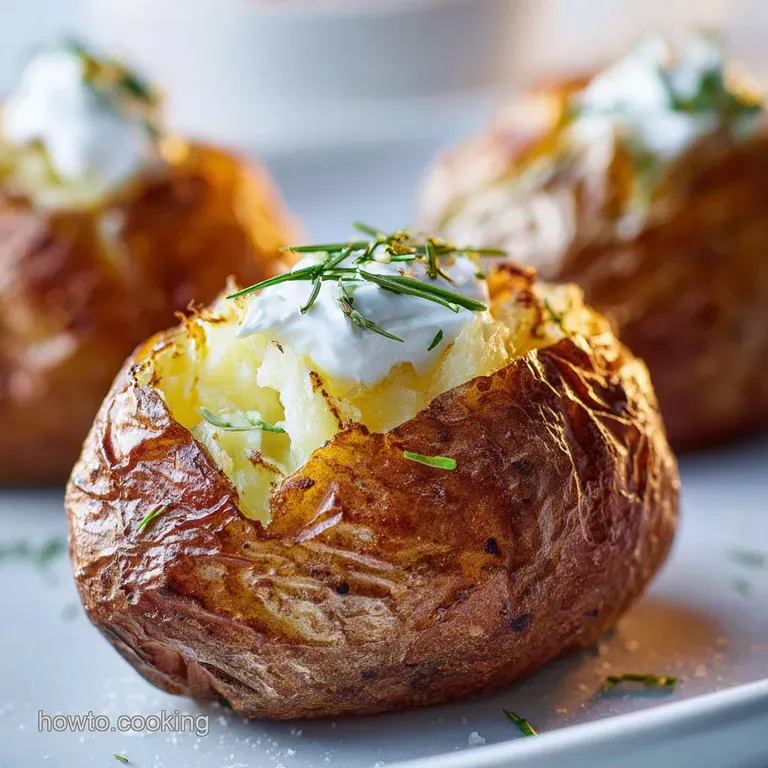
You don't need a lot of ingredients to execute the perfect Baked Potato , but you do need the right ones. Quality matters here, especially when dealing with such a simple, focused dish.
Russets, Idaho, or Maris Piper? Choosing Your Potato Type
As mentioned, look for high starch varieties. If you can’t find Russets, any potato labeled specifically for baking will work best. Just ensure they are similar in size so they cook uniformly.
| Ingredient | My Recommendation | Substitution |
|---|---|---|
| Potatoes | Russet/Idaho | King Edward, Maris Piper |
| Fat | Olive Oil or Avocado Oil | Rendered duck fat (for flavour!) or Vegetable Oil |
| Salt | Flaky Sea Salt (Maldon) | Coarse Kosher Salt (use slightly less) |
Best Oils for over High heat Baking: Olive Oil vs. Avocado Oil
I love the subtle fruity flavour that a good olive oil imparts to the skin. However, if you are concerned about smoke point (or have a slightly inaccurate oven), avocado oil is a fantastic neutral alternative that handles the 425°F heat beautifully.
For a total splurge, sometimes I use rendered duck fat instead it makes the exterior intensely savoury, almost like a giant roast potato.
The Importance of Coarse Salt for Superior Crust Formation
Don't settle for table salt here! The geometry of coarse, flaky salt (like Maldon) is essential. It provides surface area and structure to the crust. It’s what gives you that perfect little crunch when you bite into the skin.
When seasoning, you need to be generous; it should look visibly salty before it goes into the oven.
The Master Method: step-by-step Guide to Oven Baked Perfection
Cleaning, Scrubbing, and Preparing the Skins
This step is non-negotiable. Scrub the potatoes under cold running water to remove all soil residue. My ultimate rookie mistake was thinking a quick rinse was enough I ended up with gritty bites, which is just tragic.
After scrubbing, the most critical step: pat them bone dry using a clean kitchen towel or paper towels. Moisture removal equals crispier skin. Then, pierce them deeply, 8 10 times.
Setting the Oven Temperature and Initial Bake Time
Preheat your oven to a robust 425°F (220°C). Place a cooling rack inside a baking tray. Brush the potatoes liberally with oil, ensuring they are coated end-to-end, then season heavily with flaky salt and pepper. Place the potatoes directly onto the cooling rack this separation is vital.
Bake for a full 60 minutes before checking.
The Final Five Minutes: Maximizing the Crisp
After about 60– 75 minutes, the potato should yield slightly when squeezed (carefully, with tongs!). If it still feels stiff, give it another 10– 15 minutes.
For the most scientifically accurate approach, use an instant read thermometer: the centre should be between 205°F and 212°F (96°C and 100°C). Once cooked, resist the urge to leave them in the warm oven.
Pull them out, let them rest 3 minutes, then slice and fluff immediately to prevent the interior from condensing. This final touch makes all the difference to your finished Baked Potato .
Troubleshooting Your Spud: Common Baked Potato Mistakes and How to Avoid Them
The Myth of Foil Wrapping: Why It Ruins the Skin
Seriously, stop wrapping your potatoes in foil! I mentioned it earlier, but it bears repeating because it’s the number one mistake people make when attempting a crispy Baked Potato . Wrapping traps all the steam the potato releases, turning the beautiful potential crust into a grey, leathery mess. If you insist on wrapping, you are essentially boiling the potato in its own steam, which is great for texture if you're making something like my Potato Soup: Silken Spud Leek Recipe (Easy Comfort Food) , but terrible for a baked spud.
The Squeeze Test: Knowing Exactly When Your Potato is Done
You know a perfectly cooked Baked Potato by the feel. After the initial hour, put on an oven mitt and gently squeeze the potato lengthways. If it is done, the skin will crackle and the interior will feel soft, almost hollow, yielding easily under gentle pressure.
If it feels solid or resistant, it needs more time. If you insert a thermometer and it’s under 200°F (93°C), the starches haven’t fully expanded, and the result will be dense.
Fixing a Dense or Watery Interior
A dense, gluey centre means one of two things: either you didn't cook it long enough (the starch molecules didn't fully gelatinize), or you didn't pierce it enough, and the trapped steam condensed back into the flesh.
The fix: If it’s still cooking, pierce it immediately and return it to the heat. If it’s already out of the oven, slice it open immediately and use a fork to fluff it aggressively to release any residual moisture.
After the Bake: Storing, Reheating, and Repurposing Leftover Potatoes
Cooling Techniques to Avoid Bacterial Growth
Potatoes are starchy, and starchy foods (when kept warm for long periods) can develop bacteria. Once cooked, do not leave your Baked Potato sitting at room temperature for hours. You must cool it down quickly.
Separate the potatoes so air can circulate, and once they are cooled to room temperature, transfer them to an airtight container in the fridge. They last well for 3 4 days.
Best Way to Recrisp the Skin (Microwave vs. Oven)
Do not, under any circumstances, reheat a baked potato in the microwave if you want any semblance of crispness. The microwave traps moisture and turns the perfect crust rubbery. To reheat, preheat your oven to 400°F (200°C).
Place the potatoes directly on a rack (or a lightly oiled sheet) and bake for 15– 20 minutes until piping hot and the skin is re-crisped.
Utilizing Leftovers in Hash or Twice Baked Spuds
Leftover baked potatoes are gold! The scooped out flesh is the perfect base for incredible twice baked potatoes (mixed with cheese, chives, and cream, then rebaked in the shells). The cooled, firm flesh is also amazing diced up and fried into a quick breakfast hash. If you are looking for other potato inspiration, sometimes I just make simple Sweet Potato Fries: Crispy Oven Baked Perfection to use up spuds quickly.
Creating a Meal: Expert Pairing Ideas for Oven Baked Spuds
The absolute best thing about a perfectly cooked Baked Potato is how wonderfully versatile it is. It can truly hold its own as the main course, depending on what you load onto it.
- The Chili Champion: Nothing beats a huge scoop of slow cooked beef or veggie chili dumped right on top of a fluffy spud, topped with cheddar and sour cream. Pure comfort.
- Simple & Savoury: Serve it alongside a hearty steak or some grilled sausages and a crisp salad. The high fat, high salt crust contrasts beautifully with lean protein.
- The Sidekick: A lighter option is to serve a small Baked Potato alongside a bowl of thick, creamy soup perfect for dipping!
This specific Baked Potato technique is not hard, but it requires patience and a commitment to high heat. Master the drying, the piercing, and the fluffing, and you will never eat a mediocre spud again. Seriously, go make this now!

Recipe FAQs
Why is the skin on my baked potato soggy instead of crispy?
Soggy skin usually results from insufficient air circulation or moisture trapping, often caused by baking on a solid tray or wrapping in foil. Ensure you pierce the potato adequately, use a light oil coating, and bake directly on the oven rack or a wire rack to allow moisture to escape completely.
What is the best type of potato to use for a fluffy interior?
Russet (Idaho) potatoes are overwhelmingly the best choice for baking due to their high starch content and low moisture. The starch granules swell during high heat baking, creating that highly desired light, dry, and airy texture inside the crispy shell.
Should I wrap my baked potato in aluminum foil to speed up the cooking process?
Using foil traps steam, which essentially steams the potato, preventing the skin from drying out and crisping. While this might keep the inside very moist, it completely defeats the purpose of achieving a crackling, crispy exterior, which is the hallmark of a masterfully baked potato.
How should I store leftover baked potatoes, and can I reheat them?
Leftover potatoes should be cooled quickly and stored in the refrigerator within two hours for safety, where they keep for up to four days. To reheat, slice them open and place them in a 400°F (200°C) oven for 10 15 minutes until the skin re-crisps; avoid the microwave, which turns them tough.
Why is my potato interior dense or gluey instead of fluffy?
A dense interior happens when the potato is sliced open too early or when the flesh is mixed aggressively before the moisture has fully evaporated. As soon as they are removed from the oven, slice them open immediately and gently fluff the insides with a fork to allow trapped steam to escape.
Can I prepare the potatoes ahead of time?
You can certainly wash and thoroughly dry the potatoes up to 24 hours in advance and keep them at room temperature. However, wait to pierce or coat them until just before baking, as piercing too early causes the potato flesh to oxidize and can create gray discoloration beneath the skin.
Can I bake potatoes without oil or use a different type of fat?
Yes, you can bake them without oil, but the skin will be much harder and drier, lacking the desired crackling crispness that fat provides. For alternatives, rendered bacon fat or duck fat creates an incredibly flavorful crust, while ghee or clarified butter serves as an excellent non-vegan substitute.
Perfect Fluffy Baked Potato Recipe
Ingredients:
Instructions:
Nutrition Facts:
| Calories | 267 kcal |
|---|---|
| Protein | 5.1 g |
| Fat | 7.9 g |
| Carbs | 46.7 g |
