Southern Thanksgiving Menu Must-Have: Proper Cornbread Dressing (Jobs a Good Un!)
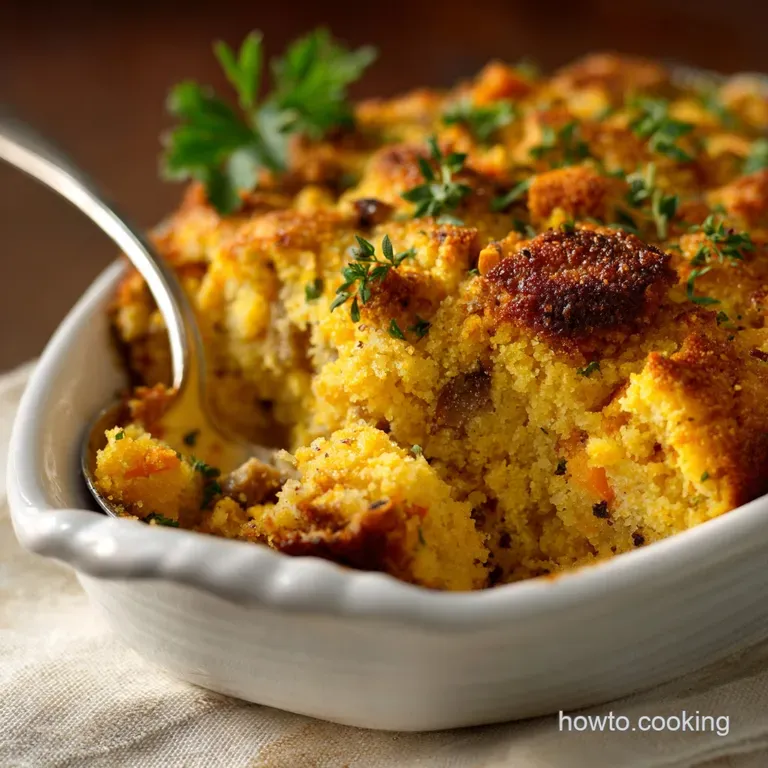
- "Job’s a Good ‘Un" Southern Cornbread Dressing: The Heart of the Southern Thanksgiving Menu
- The Science of Fluff: Why Buttermilk Cornbread is Superior to Northern Stuffing
- Essential Pantry Checklist for True Southern Dressing: Ingredients & Substitutions
- Mastering the Cornbread Dressing Method: A Step-by-Step Guide
- Troubleshooting the Texture: Secrets from a Southern Kitchen
- Making Ahead: Planning Your Southern Thanksgiving Menu Safely
- Perfect Pairings for Classic Cornbread Dressing: Completing Your Holiday Table
- Recipe FAQs
- 📝 Recipe Card
"Job’s a Good ‘Un" Southern Cornbread Dressing: The Heart of the Southern Thanksgiving Menu
That smell. The second the oven door opens, you get hit with sage, butter, and that deep, earthy cornmeal scent that just screams holiday cheer. It’s the official perfume of Thanksgiving, instantly taking me back to my grandmother’s kitchen, even when I’m miles away from the Delta.
And honestly, this iconic dish is a massive holiday lifesaver, especially when that turkey is demanding all your attention and you're hosting the entire crew. Since the cornbread base must be made days ahead, the actual assembly takes less than an hour, letting you focus on the gravy or the family drama unfolding in the living room.
This is truly a make-ahead champion that reduces stress significantly.
Forget those dry, boxed mixes and those overly wet, bread heavy Northern creations for a minute. We are diving deep into the definitive, fluffy, and perfectly crisp cornerstone of any self respecting Southern Thanksgiving Menu : Buttermilk Cornbread Dressing.
This is one of the essential Thanksgiving Side Dishes Southern cooks can’t skip. Let’s crack on.
The Science of Fluff: Why Buttermilk Cornbread is Superior to Northern Stuffing
We don't do things halfway when planning our southern thanksgiving dinner ideas . The reason this dressing is so superior isn't magic; it’s texture science. We are aiming for something moist enough to be cohesive but light enough that it doesn't feel like a brick sitting in your stomach.
The Difference Between Dressing and Stuffing (Location Matters)
Let’s settle this argument right now. A stuffing is traditionally cooked inside the turkey cavity. A dressing, which is central to all good southern thanksgiving recipes , is cooked separately in a baking dish.
This separation is crucial for food safety, which is always my number one priority, and it’s how we guarantee that incredibly crispy top crust. If you want to see how the other half lives, check out my recipe for [Thanksgiving Stuffing with Sausage: Crispy Sourdough and Sage], but know that down here, we dress the table, we don't stuff the bird.
Why Buttermilk is Non-Negotiable for Authentic Southern Texture
Buttermilk works twofold in this recipe. First, it makes your initial cornbread base incredibly tender and slightly tangy. Second, that cornbread base is naturally coarse and porous, making it an excellent sponge for absorbing the stock without collapsing into a dense paste.
This high absorption ability is the secret to getting that perfect fluffy, airy texture we crave.
Introducing the Holy Trinity of Aromatics (Celery, Onion, Bell Pepper)
In Cajun and Creole cooking, this savory triad is mandatory, and it’s equally important here. While many cooks only use onion and celery, the bell pepper adds a crucial layer of deep, savory sweet flavor and a gorgeous bit of color that cheapens the richness.
Don't skip the pepper; trust me on this classic Southern nuance.
Achieving the Golden Crust Without Drying Out the Interior
This is a balancing act, my friend. We cover the dressing for the first 45 minutes of the bake, essentially steaming it so the internal temperature rises slowly and the binder sets without losing moisture.
Then, we remove the foil for the final blast of heat, allowing that top layer to dry out and crisp up beautifully, giving you that lovely contrast when you scoop it.
The Role of Fresh Sage vs. Dried for Maximum Aromatic Impact
For a Thanksgiving Must Haves Food item like this dressing, you simply must use fresh sage. Dried sage is fine in a pinch, but it tends to be dusty and flat.
Fresh sage, chopped finely, releases its oils while baking, penetrating the cornbread with that iconic holiday scent that cannot be replicated. I always buy extra.
Balancing Fat and Stock for Maximum Moistness and Binding
The butter we melt for sautéing the aromatics does more than just cook the veggies. The rendered fat coats the cornbread crumbs, helping to repel some of the stock, which prevents sogginess. Meanwhile, the stock and whisked eggs create a rich custard binder.
You must ensure you add enough stock so the mixture looks slightly too wet; the stale cornbread will drink it all up in the resting period.
Essential Pantry Checklist for True Southern Dressing: Ingredients & Substitutions
You don't need fancy tools, but you do need the right foundation. If you follow this checklist, your southern thanksgiving dishes will be the star of the show.
Choosing the Right Cornmeal (No Sugar Added!)
Always, always choose fine yellow cornmeal for the cornbread base. Crucially, ensure your cornbread recipe does not include sugar. Southern cornbread is savory, not sweet; the sugar would throw off the entire flavor profile of the dressing.
Clarifying Stock vs. Broth for Depth of Flavor
Use low-sodium chicken or turkey stock or even better, homemade stock. Broth is lighter and thinner; stock has body and gelatin, which adds incredible mouthfeel and depth to the final dressing.
If you’re using store-bought, always check the sodium content, because dressing needs a lot of stock, and too much salt will ruin it.
Suggested Binder Liquids (Eggs and Additional Buttermilk)
The eggs are the primary binder, creating the custard that holds everything together. If you find your cornbread is super dry and has absorbed all 4 cups of stock, a splash of heavy cream or extra buttermilk adds richness and helps ensure the dressing stays moist and luscious.
Best Practices for Sourcing Fresh Herbs
Buy your fresh sage and thyme only a day or two before you plan to cook. Store them loosely wrapped in a damp paper towel in the fridge. Bruised, old herbs are useless here.
| Ingredient | Viable Substitution |
|---|---|
| Buttermilk | Milk + 1 Tbsp White Vinegar (let stand 5 mins) |
| Yellow Cornmeal | White Cornmeal (Texture changes slightly) |
| Unsalted Butter | high-quality Margarine or Rendered Turkey Fat |
| Green Bell Pepper | Skip it, though you lose some essential Southern flavor. |
| Turkey/Chicken Stock | Vegetable Stock (for vegetarian version) |
Chef's Note: I once tried to use sweet cornbread leftover from a breakfast bake. Disaster! The resulting dressing tasted like a strangely savory cake. Use true, unsweetened Southern cornbread for authenticity.
Mastering the Cornbread Dressing Method: A step-by-step Guide
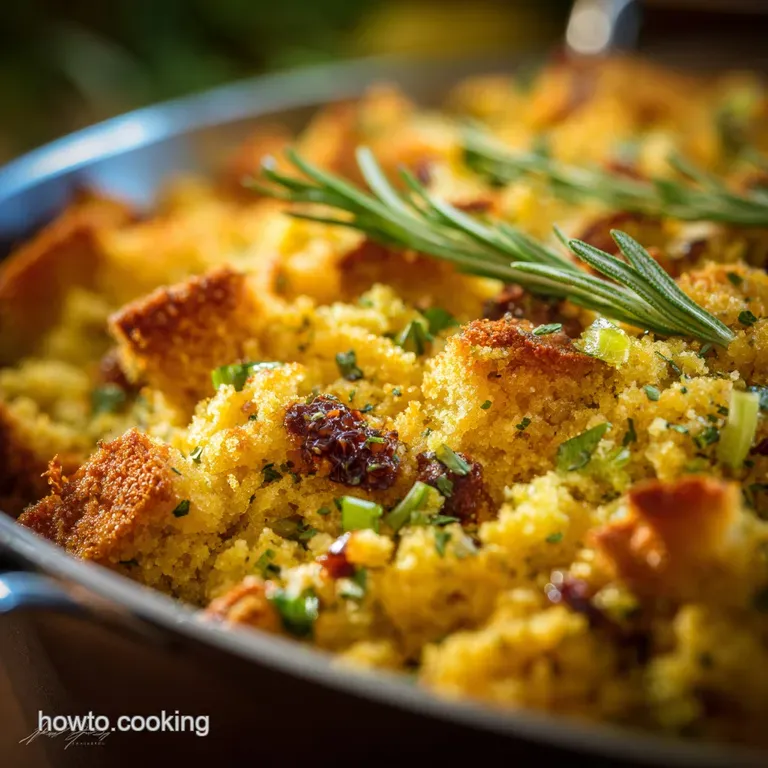
This process is split into three easy stages, allowing you to manage your time effectively, which is vital on Turkey Day.
Prepping the Cornbread Base for Optimal Stock Absorption
First, crumble your day-old cornbread into a giant bowl. Make sure the pieces are uneven some bigger, some smaller to create interesting texture in the final bake. Do not skip the staling step; it's what prevents the dreaded gummy dressing.
Sautéing Aromatics to the Perfect Softness and Fragrance
Melt the butter and olive oil together over medium heat. Add the diced onion, celery, and bell pepper, sautéing them gently for about 10 minutes until they are soft and translucent, smelling absolutely glorious.
Stir in the fresh herbs and poultry seasoning, cooking for only one minute until they are fragrant and their oils are released.
The Final Mix: Ensuring Even Coating and Proper Consistency
Pour the cooled aromatic mixture over the cornbread crumbs and toss everything thoroughly. In a separate bowl, whisk your eggs and 4 cups of stock together, seasoning this liquid generously before pouring it over the crumbs. Mix it all gently with a spatula, making sure every crumb is saturated.
Now, walk away for 10 minutes; this allows the cornbread to completely absorb the liquid. If it still looks dry afterward, add the remaining stock until it's very moist, almost sloppy.
Baking to the Internal Target Temperature
Transfer the mixture to a buttered 9x13 dish and smooth the top lightly don't pack it down, or you’ll lose the fluffiness. Bake covered with foil at 180°C (350°F) for 45 minutes to set the interior.
Remove the foil and bake for another 15– 20 minutes until the top is golden brown and a probe thermometer hits 75°C (165°F).
Troubleshooting the Texture: Secrets from a Southern Kitchen
We all make mistakes, but the key is knowing how to fix them before guests arrive.
Addressing a Soggy or Overly Dense Dressing
If the dressing looks soupy before baking, you added too much liquid, or your cornbread wasn't stale enough. If you catch it early, stir in a few more toasted cornbread crumbs or a handful of dried plain bread cubes to soak up the excess.
If it’s already baked and feels dense, you likely packed the mixture too tightly in the pan remember, we only smooth it gently.
Preventing a Dry or Crumbling Bake
This usually means you didn't use enough stock, or your oven runs too hot. The mixture must look extremely moist before baking, almost like thick oatmeal. If you find it drying out during the uncovered baking period, lightly brush the top with melted butter or a little extra stock.
Making Ahead: Planning Your Southern Thanksgiving Menu Safely
Preparing this amazing side dish ahead of time is absolutely essential for a smooth Thanksgiving day. It’s what allows you to serve a complete, stress free Southern Thanksgiving Menu .
The Key Temperature for Resting Before Serving
When it comes out of the oven, it's still cooking. Let the dressing rest for 10– 15 minutes before serving or slicing; this allows the binder (the egg custard) to fully set, ensuring your scoops hold their shape perfectly.
Refrigerator Prep Times and Food Safety
You can fully assemble the dressing (through step 9) up to 24 hours in advance. Cover it tightly and refrigerate. When ready to bake, let it sit on the counter for 30 minutes to take the chill off before placing it in the oven.
Never assemble it more than one day ahead due to the raw eggs and stock.
Freezing Baked vs. Unbaked Dressing
Baked dressing freezes beautifully! Cool it completely, wrap it tightly in foil, and place it in a freezer bag. It keeps for up to 3 months. I don't recommend freezing it unbaked, as the cornbread texture can suffer when the stock thaws.
Reviving the Dressing on Turkey Day (Reheating Guide)
To reheat frozen, baked dressing, thaw it overnight in the fridge. Place the dish (still covered in foil) in a 160°C (325°F) oven for about 20- 30 minutes until warmed through. Uncover for the last 5 minutes if you need to re-crisp the top.
Perfect Pairings for Classic Cornbread Dressing: Completing Your Holiday Table
This dressing deserves excellent company. It pairs best with rich sauces and sweet acidic sides to balance its savory depth.
The most traditional accompaniment is Giblet Gravy, made using the turkey drippings; the two are simply inseparable. You’ll also want a little tang from homemade Cranberry Sauce to cut through the richness.
For the required Southern sweetness, nothing beats a classic baked sweet potato dish. Try my [Southern Sweet Potato Pone: Molasses and Ginger Custard Bake Recipe] for a fantastic molasses heavy alternative to the marshmallow casserole.
And of course, no proper southern thanksgiving dinner ideas are complete without dessert! Finish strong with a slice of my incredibly rich and deeply caramelized [Southern Pecan Pie: Deep Caramel Filling Flaky Pie Crust Edges]. Your guests will be asking for seconds of everything.
Recipe FAQs
Why did my dressing come out dry and crumbly?
This often happens if the cornbread was too dry initially or if insufficient broth was added to the mixture. Ensure the mixture is very wet before baking; it should resemble a thick, wet oatmeal consistency, not just moist crumbs.
Adding an extra 1/4 cup of melted butter also helps retain moisture during the baking process.
Should I use sweet or savory cornbread for this traditional Southern recipe?
Authentic Southern dressing requires unsweetened cornbread, as the recipe relies on complex savory flavours from the sage and aromatics. Using a sweet cornbread (often called "Northern style") can disrupt the traditional savory balance of the dish.
If you must use a slightly sweeter box mix, balance it out with an extra teaspoon of poultry seasoning.
How far in advance can I prepare this cornbread dressing?
You can assemble the dressing completely (mixing all ingredients) up to 24 hours ahead of time and keep it tightly covered in the refrigerator. If making it ahead, allow the dish to sit at room temperature for about 30 minutes before baking to ensure even heat distribution and a proper bake time.
Can I incorporate meat, like sausage, into this dressing?
Absolutely; adding sausage is a popular Southern variation. Cook 1 pound of breakfast sausage (mild or hot, depending on your preference) until thoroughly browned and drain off all excess grease completely.
Add the cooked sausage directly to the sautéed "holy trinity" of vegetables before mixing them into the cornbread base.
My dressing is dense and heavy. How do I achieve a fluffier texture?
Over mixing the wet ingredients or using an excessively dense type of cornbread can lead to a heavy dressing. Ensure you crumble the cornbread gently and fold in the liquid just until combined, avoiding vigorous stirring.
Also, make sure you incorporate the required amount of eggs, as they provide essential lift and structure.
What is the best way to store leftovers, and is freezing recommended?
Store leftover dressing tightly covered in an airtight container in the refrigerator for up to four days. While it can be frozen, the texture might degrade slightly upon thawing due to the moisture content. For best results, freeze in airtight, single serving portions for no longer than two months.
Can this recipe be adapted to be gluten-free or dairy-free?
Yes, this modification is relatively simple. Substitute the buttermilk cornbread with a high-quality gluten-free cornbread, ensuring it still provides a good crumbly texture. For a dairy-free version, replace the buttermilk with non-dairy milk (like almond or oat) mixed with a tablespoon of vinegar, and use a plant based butter alternative.
Proper Southern Thanksgiving Cornbread Dressing
Ingredients:
Instructions:
Nutrition Facts:
| Calories | 981 kcal |
|---|---|
| Protein | 21.3 g |
| Fat | 58.5 g |
| Carbs | 53.2 g |
