Thanksgiving Stuffing with Sausage and Brown Butter is the Ultimate Holiday Side
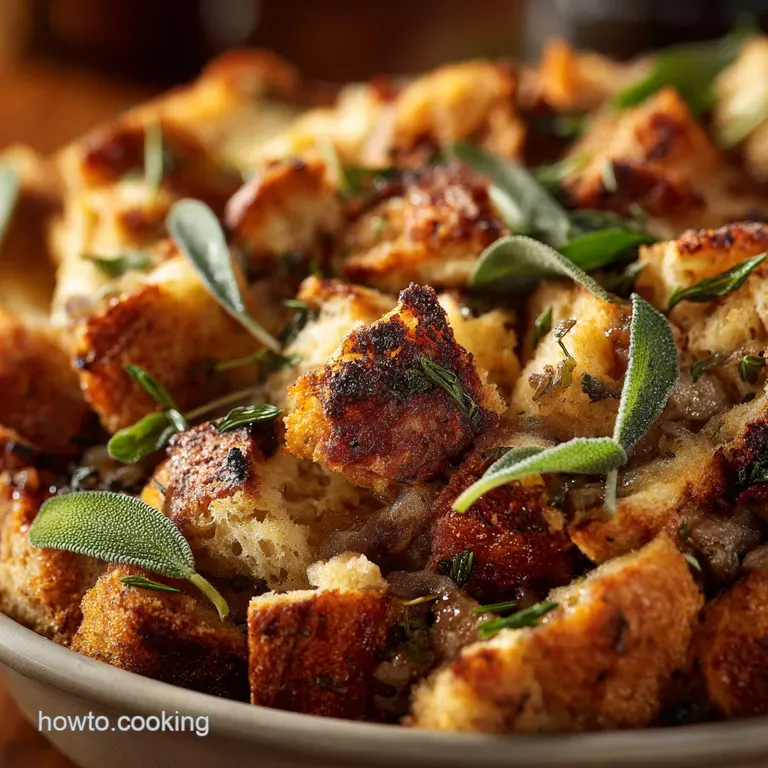
- The Merry Baker’s Rustic Sourdough Stuffing: Brown Butter, Sausage, and Fresh Herbs
- The Ultimate Holiday Stuffing Strategy: From Soggy Side to Centerpiece
- Why This Sourdough Thanksgiving Stuffing Excels (The Texture Science)
- Ingredients Checklist for the Rustic Sourdough Stuffing
- Expert Notes and Ingredient Substitutions
- Step-by-Step: Crafting Your Signature Thanksgiving Stuffing
- Chef’s Troubleshooting: Avoiding the Five Most Common Stuffing Mistakes
- Planning Ahead: Storage, Freezing, and Reheating
- Pairing Your Holiday Stuffing: Beyond the Turkey
- Recipe FAQs
- 📝 Recipe Card
The Merry Baker’s Rustic Sourdough Stuffing: Brown Butter, Sausage, and Fresh Herbs
This is it. The big one.
The Ultimate Holiday Stuffing Strategy: From Soggy Side to Centerpiece
Can we agree that the aroma of sage, thyme, and deeply browned butter is the defining smell of Thanksgiving? Seriously, nothing signals "holiday comfort" quite like the sharp, nutty, herbaceous steam rising from a casserole dish overflowing with Thanksgiving Stuffing .
We are aiming for something transcendent here: a buttery, deeply savory interior that holds together perfectly, topped by a shatteringly crisp, golden brown crust.
I know, I know. Stuffing feels intimidating because, for years, mine was basically seasoned bread pudding. But this recipe is genuinely a lifesaver, designed to minimize effort on the big day while maximizing flavor impact.
It’s also incredibly flexible, letting you do most of the heavy lifting like chopping vegetables and drying the bread up to 48 hours in advance.
If you want proper holiday satisfaction without the stress, you have to nail the sides, and this Thanksgiving Stuffing Recipe is your secret weapon.
We’re skipping the bland, overly moist boxed versions and going straight for the gold standard: Sourdough, rich pork sausage, and the incomparable depth of flavor only brown butter can deliver. Get ready to ditch the mediocre side dish and make this savory casserole the centerpiece it deserves to be.
Let’s crack on!
Why This Sourdough Thanksgiving Stuffing Excels (The Texture Science)
The Magic of Brown Butter and Sage: Building Flavor Depth
The secret to why this particular recipe tastes so much better than standard versions lies in the initial cooking fat. We don't just melt the butter; we brown it until it takes on a rich, nutty, caramelized flavor this process is called beurre noisette .
You use this Brown Butter Stuffing Recipe technique right at the beginning to sauté the onions and celery, which instantly infuses the aromatics with incredible depth that plain melted butter simply cannot match. It’s a tiny step with enormous payoff.
Why Baking Outside the Turkey is Non-Negotiable
Please, listen to me: Stuffing belongs beside the turkey, not inside the turkey. Baking the stuffing separately ensures you achieve a safe internal temperature (165°F / 74°C) without having to overcook your beautiful bird.
More importantly, baking it in a casserole dish allows for maximum surface area, guaranteeing that coveted crispy crust we all fight over. The texture is superior every single time when you bake this Thanksgiving Stuffing Casserole independently.
Preparing Your Sourdough: The Secret to a Crispy Crust
The foundation of any great stuffing is the bread, and it absolutely must be dry. If you use soft, fresh bread, it acts like a sponge, absorbing all the liquid and collapsing into a thick, gloopy mess.
We use stale Sourdough bread because its hearty, open crumb structure stands up beautifully to the soaking liquid, maintaining its shape while still becoming tender inside. This structured bread base is what gives the stuffing its lovely, light chew.
The Crucial Role of the Egg and Stock Binder
The liquid binder does two jobs: it hydrates the dry bread and binds the ingredients together. We use a combination of low-sodium chicken stock, a splash of tangy cider, and lightly beaten eggs.
The eggs emulsify with the stock, acting like glue to hold the sausage, herbs, and bread cubes in a cohesive, sliceable form after baking.
Balancing Moisture Retention vs. Crisp Exterior
This recipe is all about managing moisture. We start the bake covered with foil to trap steam and ensure the bread interior becomes moist and tender. Then, we remove the foil and crank the heat to 400°F (200°C) for the last 15– 20 minutes.
This two-stage baking process is the foolproof path to a soft, flavorful center and a perfectly golden brown, crispy top .
Chef's Note: If you prefer a stuffing that is primarily uniform in moisture, you can skip the over high heat blast, but you will sacrifice the beautiful golden crust!
Ingredients Checklist for the Rustic Sourdough Stuffing
We are keeping this focused on rich, Classic Stuffing Recipes flavors: excellent sausage, loads of fresh herbs, and that nutty brown butter.
| Ingredient Category | Ingredient | Why it Matters |
|---|---|---|
| Bread Base | Sourdough, cubed and dried | Sturdy structure, tangy flavor |
| Fat/Aromatics | Unsalted Butter, Onion, Celery, Garlic | Creates the foundational savory flavor |
| Protein | Mild Italian Pork Sausage | Adds richness, fat, and seasoning |
| Binder | Chicken Stock, Large Eggs | Hydration and binding power |
| Acidity/Sweetness | Dried Cranberries, Apple Cider | Balances the savory richness |
| Seasoning | Fresh Sage, Thyme, Salt, Pepper | The quintessential holiday flavor profile |
Expert Notes and Ingredient Substitutions

Pantry Essentials: Spices and Rich Chicken Stock
Always use low-sodium chicken stock so you can control the final seasoning. If you happen to have rich, homemade turkey stock saved up, use it it's the perfect substitution! For the salt, use Kosher salt; its texture distributes more evenly than fine table salt.
The Aromatics: Celery, Onion, and Fresh Herbs
Finely dice your celery and onion so they completely melt into the stuffing, becoming part of the texture rather than crunchy chunks. Don't be shy with the herbs; we use generous amounts of fresh sage and thyme, which really define this stuffing.
If you can't find fresh sage, you can substitute 1 tbsp of dried rubbed sage, but please try to stick to fresh if possible!
Protein Power: Selecting the Best Breakfast or Italian Sausage
I highly recommend using a high-quality bulk pork sausage, either mild or spicy Italian. The fat rendering from the sausage provides essential flavor and moisture. Substitution Tip: If pork is off the table, ground turkey mixed with 1 teaspoon of fennel seed and a pinch of paprika makes a very viable, though slightly leaner, substitute.
Choosing the Right Sourdough Loaf (Stale Bread is Key)
You want a hearty, rustic loaf with a thick crust. The crust is important! If you skip the necessary drying time, you risk instant mush. If you forgot to dry the bread cubes overnight, toss them in a 275°F (135°C) oven for 15 minutes, stirring once, until they feel rock hard.
| Ingredient | Substitution/Alternative |
|---|---|
| Sourdough Bread | Cubed Challah, French Boule (well dried) |
| Pork Sausage | Ground turkey + fennel seed, or bulk breakfast sausage |
| Chicken Stock | Vegetable Stock or homemade Turkey Stock |
| Dried Cranberries | Dried Apricots or Golden Raisins |
| Unsalted Butter | Ghee or high-quality salted butter (adjust salt) |
Clarifying the Difference: Salted vs. Unsalted Brown Butter
Always start with unsalted butter when making brown butter. Browning the butter concentrates its solids, and if you start with salted butter, the salt flavor can become intensely concentrated and potentially too dominant. By using unsalted, we control the seasoning later in the process.
Sage and Thyme: Adjusting Fresh Herb Ratios
The flavor profile here is dominated by sage, so we use more of it than thyme. If you absolutely adore thyme, feel free to use a 50/50 ratio, but remember that sage is the quintessential flavor for Thanksgiving Stuffing with Sausage .
step-by-step: Crafting Your Signature Thanksgiving Stuffing
This process ensures every cube of bread is coated in flavor before it hits the oven.
Stage 1: Browning the Butter and Sautéing the Sausage
- Dry the Bread! (Seriously, don't skip this). Cube the bread and let it sit out or toast it briefly until bone dry.
- Cook the Sausage: Brown the pork sausage in a large pan over medium high heat, breaking it up as you go. Cook until crispy. Remove the sausage to the mixing bowl, leaving about 2 tablespoons of rendered fat behind.
- Brown the Butter: Add the remaining 8 tablespoons of unsalted butter to the pan. Cook until it smells nutty and toasted brown bits form at the bottom. Watch it closely! This happens fast.
- Sauté Aromatics: Add the celery and onion to the brown butter. Cook for about 8 minutes until soft. Stir in the minced garlic, fresh sage, and thyme for the last minute until you get a blast of that incredible nutty, herbaceous aroma.
Stage 2: Hydrating the Bread Cubes (The Chicken Stock Soak)
- Flavor Transfer: Pour the hot aromatic mixture (onions, celery, brown butter) over the dry bread and sausage. Add the dried cranberries. Gently toss until the bread is coated in the fragrant fat.
- Mix the Binder: Whisk the 4 large eggs, 3 ½ cups of chicken stock, and the apple cider.
- Moisten Carefully: Pour the liquid over the bread mixture. Gently fold with a spatula. Stop when the bread looks damp and spongy, but still holds its shape. You should not have liquid pooling at the bottom. If it seems dry, add the remaining stock 1/4 cup at a time.
Stage 3: The Assembly and Resting Period
- Prepare for Bake: Transfer the mixture into a buttered 9x13-inch baking dish. Crucially: Do not press it down! Keep it light and loose.
- Rest: If baking immediately, let it rest for 10 minutes so the bread fully absorbs the stock. If making ahead, cover it tightly and refrigerate. (See make-ahead notes below).
Stage 4: Achieving the Perfect Golden Crust
- Bake Covered: Cover the dish tightly with foil. Bake at 375°F (190°C) for 30 minutes. This steams the interior for guaranteed moisture.
- Achieve Crispness: Remove the foil and increase the oven temperature to 400°F (200°C). Bake for another 15– 20 minutes until the topping is deeply golden and deliciously crisp. Let it rest 10 minutes before serving.
Chef’s Troubleshooting: Avoiding the Five Most Common Stuffing Mistakes
Stuffing is deceptively easy to mess up. Here are the crucial points where people fail, and how you fix them.
- Mistake 1: Using Soft Bread. If the bread is not completely dry and hard, it will instantly turn to paste. The Fix: Dry it overnight or bake it at a low temperature until crunchy before adding any fat or liquid.
- Mistake 2: Over Mixing. Once the stock is added, folding gently is key. Aggressive stirring will break down the bread cubes, ruining the texture and making the stuffing heavy. The Fix: Use a spatula, not a whisk, and fold from the bottom up only until the liquid is absorbed.
- Mistake 3: Under Seasoning the Base. Bread dilutes seasoning dramatically, so your sausage and vegetable base must taste very salty and flavorful before the raw bread and liquid are added. The Fix: Taste the cooked sausage/aromatic mixture before removing it from the pan, and add more salt and pepper until it tastes slightly intense.
- Mistake 4: Packing the Casserole Dish. A tightly packed stuffing turns into a dense block and inhibits the formation of a crisp top. The Fix: Spoon it gently into the pan; think of it as lightly fluffed.
- Mistake 5: Not Hitting the Internal Temperature. For food safety, especially when using sausage, the stuffing must hit 165°F (74°C). The Fix: Always use a thermometer to check the center of the casserole dish before pulling it out of the oven.
Planning Ahead: Storage, Freezing, and Reheating
Thanksgiving Dressing: The make-ahead Recipe for a Crisp, Moist Interior is essential for holiday sanity. This recipe is designed to be made largely in advance!
Preparing Stuffing 24 Hours in Advance
You can fully assemble the stuffing (through Step 9: Assembly and Resting) and put it into the casserole dish. Cover it tightly with plastic wrap and aluminum foil and refrigerate for up to 24 hours.
Crucial: Pull the dish out of the refrigerator 30 minutes before baking to let the ceramic warm up slightly, preventing oven shock. Add about 5– 10 minutes to the covered baking time since you are starting from a cold base.
Freezing Baked vs. Unbaked Stuffing
Baked is better for freezing. Stuffing, once baked, holds its texture better when frozen than the raw, wet ingredients.
- To Freeze Baked: Let the finished stuffing cool completely. Cut into serving portions (or leave whole), wrap tightly in heavy duty foil, and place in a freezer bag. It keeps well for up to 3 months.
- To Freeze Unbaked: The bread can become oddly mushy after thawing from raw. I don't recommend this approach.
Reheating Leftovers Without Drying Them Out
Leftover stuffing will keep well in the fridge for up to 4 days. To reheat, wrap small portions tightly in foil and bake at 350°F (175°C) for 15– 20 minutes until piping hot throughout.
If you want to revitalize the crispy top, unwrap it for the last 5 minutes of reheating. A splash of extra stock over the top before reheating also works wonders!
Pairing Your Holiday Stuffing: Beyond the Turkey
This bold, herbaceous Buttery Stuffing Recipe deserves equally powerful partners. This stuffing, featuring the rich Italian sausage, pairs beautifully with tart, acidic sides. You might even prefer the simplicity of this version over the classic Homemade Stuffing: The Proper Sausage Sage Recipe for Thanksgiving if you love a crunchy sourdough crust.
Too Soggy? How to Fix Excess Moisture Mid-Bake
If you discover your stuffing is too wet after the initial 30 minutes of covered baking, you have a few options. Remove the foil and immediately increase the temperature to 400°F (200°C) to encourage evaporation.
You can also carefully scoop the stuffing onto a preheated, ungreased baking sheet and spread it thinner, which significantly increases the surface area for drying out.
Ensuring Even Seasoning: Tasting Before the Bake
If you realize after assembly that the final product tastes bland, don't panic. Gently sprinkle a bit more salt and pepper over the top surface before the covered bake. This salt will dissolve into the moisture released by the heat, helping the flavor permeate the dish.
Temperature Control for a Safe and Delicious Bake
Always preheat your oven properly. Starting with a slightly lower temperature (375°F / 190°C) allows the interior to cook through before the surface burns, and the final over high heat blast gives us that perfect golden finish.
If you are struggling to keep the edges from burning, you can place thin strips of foil around the perimeter of the dish during the last 10 minutes.
Recipe FAQs
Why did my stuffing turn out dry and crumbly?
Dryness typically occurs if the bread cubes were not fully saturated with the stock mixture or if the stuffing was over baked. Ensure you let the bread soak the liquid for at least 20 minutes before baking to achieve the necessary moisture equilibrium.
If the top crust begins to look too dark while baking, tent the dish loosely with foil to help trap steam and prevent further moisture loss.
Can I prepare this stuffing a day in advance?
Absolutely; stuffing is excellent for make-ahead preparation. Assemble the entire mixture, including the sausage and liquid binder, and store it tightly covered in the refrigerated baking dish for up to 24 hours.
Allowing it to sit at room temperature for about 30 minutes before baking will help ensure even, successful cooking.
I don't eat pork. What is a good substitute for the sausage?
You can successfully replace the pork sausage with ground turkey or chicken, but you will need to add extra seasoning to build back the flavor depth lost from the pork fat. We recommend incorporating extra dried sage, fennel, and perhaps a pinch of red pepper flakes into the ground poultry.
For a vegetarian option, replace the meat with toasted walnuts and sautéed mushrooms.
Do I really need to dry out the sourdough bread?
Yes, drying the bread is the most crucial step for avoiding soggy stuffing. If you skip this, the bread will absorb too much liquid and turn into a dense, wet mass rather than a light, structured stuffing.
If you don't have time to air-dry the bread overnight, toast the cubes on a sheet pan in a 300°F (150°C) oven for 15 minutes until fully dry and firm.
How can I make this recipe completely vegan or dairy-free?
For a dairy-free version, replace the brown butter with high-quality olive oil or a vegan butter substitute and use vegetable stock instead of chicken stock. To make it fully vegan, swap the sausage for mushrooms and lentils, and replace the egg binder with a flax egg (3 tablespoons ground flaxseed mixed with 9 tablespoons water).
My stuffing has a great crust, but the bottom layer is soggy. How can I fix this?
A soggy bottom often means the dish was too low in the oven or the density of the mixture held too much moisture near the base. Try using a wider, shallower baking dish to maximize the surface area exposed to heat and airflow.
For the last 15 minutes of baking, move the dish to the upper rack to ensure the entire mixture is properly evaporated and crisp.
Can I freeze leftover stuffing?
Yes, since this recipe is baked outside the turkey, it freezes very well. Ensure the leftovers are completely cooled before transferring them into an airtight, freezer safe container, where they will last for up to three months.
To reheat, thaw overnight and warm slowly in a 350°F (175°C) oven, covered with foil, until heated through.
Rustic Sourdough Thanksgiving Stuffing

Ingredients:
Instructions:
Nutrition Facts:
| Calories | 475 calories |
|---|---|
| Fat | 25 g |
| Fiber | 3 g |
