Salmon Meatloaf Recipe with Lemon and Dill
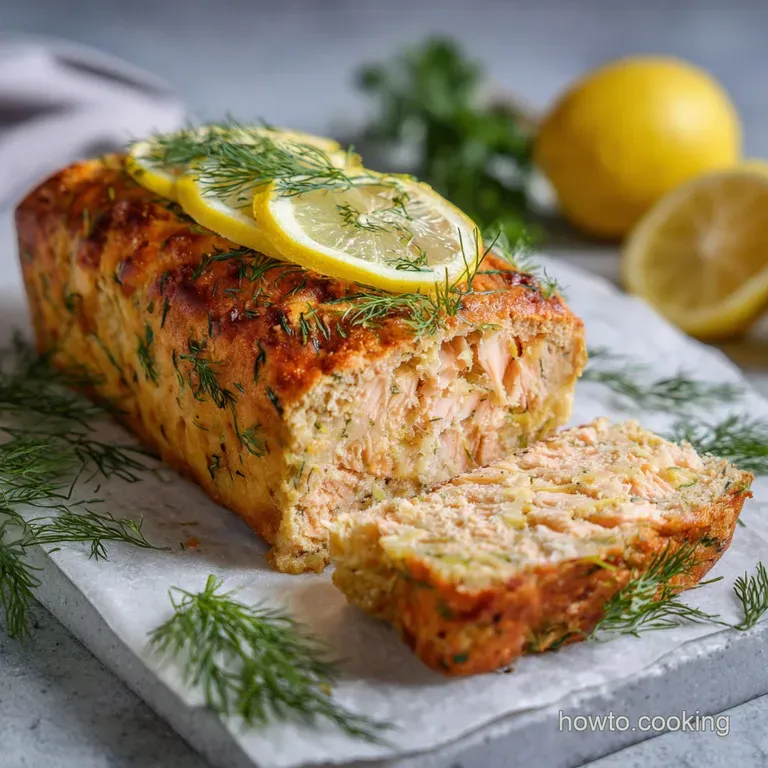
- Time: Active 15 minutes, Passive 35 minutes, Total 50 minutes
- Flavor/Texture Hook: Zesty lemon brightness with a tender, flaky crumb and savory shallot undertones.
- Perfect for: A wholesome weeknight dinner that feels fancy but uses pantry staples.
- Mastering This Healthy Salmon Meatloaf Recipe with Lemon and Dill
- Why This Zesty Salmon Bake Always Stays Moist
- Essential Timing and Yield for Your Seafood Loaf
- Wholesome Elements for a Savory Protein Packed Dinner
- Simple Kitchen Tools for a Flawless Salmon Bake
- Step by Step Flow for Your Salmon Masterpiece
- Troubleshooting Common Salmon Loaf Mishaps and Errors
- Adjusting Portions for Larger or Smaller Crowds
- Busting Common Myths About Canned Seafood Baking
- Storing and Reheating Your Salmon Leftovers Correctly
- Beautiful Ways to Serve Your Finished Salmon Loaf
- Recipe FAQs
- 📝 Recipe Card
Mastering This Healthy Salmon Meatloaf Recipe with Lemon and Dill
The sizzle of minced shallots hitting the warm olive oil is my favorite way to start this prep. It fills the kitchen with a sweet, oniony aroma that signals a wholesome meal is on the way.
I used to think canned salmon was just for sandwiches, but after one too many dry tuna melts, I started experimenting with a proper seafood loaf. This Salmon Meatloaf Recipe with Lemon and Dill will become your new go to seafood bake because it solves the "dry loaf" problem forever.
Honestly, the first time I tried this, I didn't drain the salmon well enough and it was a bit of a soggy mess. I learned the hard way that you really have to press that liquid out. But once you nail the balance of the panko and the fresh herbs, it's a total game changer for your weeknight rotation.
The dill provides a grassy freshness that cuts right through the richness of the fish, while the lemon zest adds a high note that makes everything pop.
Why This Zesty Salmon Bake Always Stays Moist
The Physics of the Panko Bind
When you mix whole milk with panko breadcrumbs, the starch molecules swell and create a gel like matrix that traps moisture between the protein fibers of the salmon. This prevents the loaf from becoming dense or "bouncy," ensuring a flaky texture that holds its shape.
- Thermal Buffering: The milk soaked crumbs act as tiny heat shields, preventing the salmon from overcooking and becoming tough.
- Aromatic Infusion: Sautéing the celery and shallots before mixing them in ensures the essential oils are released and the vegetables are tender, not crunchy.
- Emulsion Stability: The eggs and milk work together to create a light emulsion that binds the lean salmon without adding heavy fats.
- Acid Balance: The lemon juice and Worcestershire sauce provide a chemical "brightness" that balances the savory notes of the pink salmon.
| Method | Time | Texture | Best For |
|---|---|---|---|
| Standard Oven | 35 minutes | Flaky and tender throughout | Traditional family dinner |
| Muffin Tin | 20 minutes | Crispy edges on all sides | Fast prep and kids' lunches |
| Air Fryer | 15 minutes | Firm crust, very moist center | Small batches for two |
This comparison shows how flexible the recipe is. If you find yourself in a rush, the muffin tin method is a brilliant shortcut. It's similar to the technique I use when I want a Crispy Canned Salmon recipe but don't want to stand over a frying pan.
Essential Timing and Yield for Your Seafood Loaf
To get the most out of this dish, you need to watch the clock and the temperature closely. Seafood is less forgiving than beef, so precision is your friend here.
| Component | Science Role | Pro Secret |
|---|---|---|
| 14.75 oz Pink Salmon | Primary Protein | Drain thoroughly and remove any large bone fragments for a silky texture. |
| 1 cup Panko Breadcrumbs | Structural Matrix | Use Panko specifically; the large surface area absorbs more moisture than fine crumbs. |
| 2 Large Eggs | Binding Agent | Whisk them until frothy before adding to ensure even distribution through the loaf. |
| 1 tbsp Lemon Zest | Volatile Oil Carrier | Zest directly over the bowl to catch the oils that spray out that's where the flavor lives. |
The key to success is keeping your ingredients at room temperature before mixing. This allows the panko to hydrate faster and ensures the loaf cooks evenly from the center out. If you're looking for a different flavor profile, you might enjoy a Salmon with Garlic recipe for those nights when you want a more buttery, restaurant style finish.
Wholesome Elements for a Savory Protein Packed Dinner
You likely have most of these ingredients in your pantry right now. I always keep a few cans of pink salmon on hand for this exact reason.
- 14.75 oz canned pink salmon, drained, skin and bones removed
- 1 cup panko breadcrumbs Why this? Provides a lighter, airier texture than standard breadcrumbs.
- 2 large eggs, lightly beaten
- 1/4 cup whole milk
- 1/2 cup finely diced celery
- 1/4 cup minced shallots Why this? Offers a milder, more sophisticated flavor than white onions.
- 3 tbsp fresh dill, chopped
- 1 tbsp lemon zest
- 1 tbsp fresh lemon juice
- 1 tsp Worcestershire sauce
- 1/2 tsp sea salt
- 1/4 tsp freshly cracked black pepper
- 1 tsp olive oil
- 2 tbsp unsalted butter, melted (for the glaze)
- 1 tbsp lemon juice (for the glaze)
- 1/2 tsp dried dill (for the glaze)
| Original Ingredient | Substitute | Why It Works |
|---|---|---|
| 1 cup Panko | 1 cup Crushed Crackers | Adds a buttery saltiness but will be slightly denser than Panko. |
| 1/4 cup Shallots | 1/4 cup Red Onion | Provides a sharper bite. Note: Sauté longer to mellow the flavor. |
| 1/4 cup Whole Milk | 1/4 cup Coconut Milk | Same fat content. Note: Adds a subtle nutty note to the finish. |
Simple Kitchen Tools for a Flawless Salmon Bake
Don't overcomplicate things here. You really just need a few basics to get this onto the table. I prefer using a standard 9x5 loaf pan, but if you want more "crust," you can free form the loaf on a rimmed baking sheet.
- Standard Loaf Pan: A 9x5 inch metal or glass pan works best.
- Small Skillet: For softening the celery and shallots (essential for texture).
- Large Mixing Bowl: Plenty of space to fold the ingredients without mashing them.
- Microplane: For that fresh lemon zest don't use the bottled stuff!
- Parchment Paper: Line your pan to make lifting the loaf out a breeze.
Chef's Tip: Freeze your butter for 10 minutes before melting it for the glaze. It sounds weird, but very cold butter that is quickly melted retains more of its milky solids, which makes the lemon dill glaze cling to the salmon much better.
step-by-step Flow for Your Salmon Masterpiece
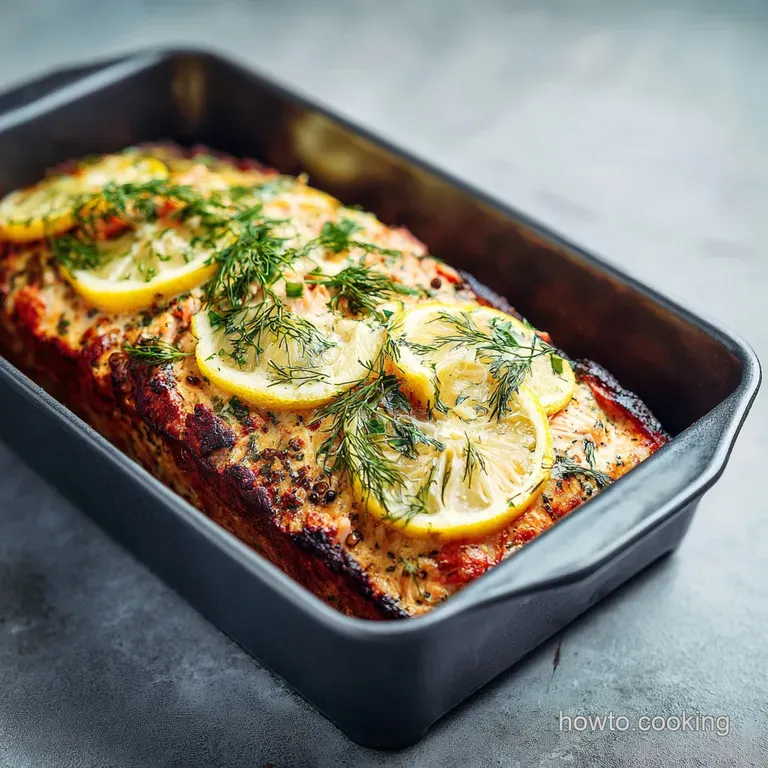
Phase 1: Prep and Sauté
- Preheat your oven to 375°F (190°C) and grease a loaf pan with olive oil.
- Heat 1 tsp olive oil in a skillet over medium heat.
- Add 1/2 cup diced celery and 1/4 cup minced shallots.
- Sauté 4-5 minutes until translucent and soft, then set aside to cool slightly.
Phase 2: The Gentle Fold
- In a large bowl, whisk 2 eggs and 1/4 cup milk.
- Stir in 1 cup panko and let it sit for 2 minutes to hydrate.
- Add the drained salmon, 3 tbsp fresh dill, 1 tbsp lemon zest, 1 tbsp lemon juice, 1 tsp Worcestershire, salt, and pepper.
- Fold gently until just combined so you don't break the salmon into a paste. Note: Over mixing leads to a rubbery loaf.
Phase 3: The Golden Bake
- Press the mixture into the prepared pan and bake for 25 minutes.
- Whisk the melted butter, extra lemon juice, and dried dill together.
- Brush the glaze over the top and bake for another 10 minutes until the top is golden and the edges pull away.
| Fresh Salmon | Canned Salmon | Impact on Recipe |
|---|---|---|
| Needs poaching first | Ready to use | Canned saves 20 mins of prep time. |
| Richer flavor | More "savory" | Fresh is milder; canned has more umami. |
| Higher cost | Budget friendly | Canned makes this a $15 family meal. |
Troubleshooting Common Salmon Loaf Mishaps and Errors
Why Your Salmon Loaf is Crumbly
If the loaf falls apart when you slice it, the most common culprit is either too much moisture or not enough "soak time" for the panko. The breadcrumbs need those few minutes with the milk and eggs to turn into a binder. If you skip that step, they just stay dry and won't hold the fish together.
Why Your Salmon Loaf is Soggy
This usually happens if the salmon wasn't drained properly or if the celery wasn't sautéed long enough. Raw celery releases water as it bakes, which can pool at the bottom of the pan. Always make sure your aromatics are soft and most of their moisture has been cooked off before they hit the bowl.
| Problem | Root Cause | Solution |
|---|---|---|
| Loaf is too dry | Overbaked or low-fat | Check at 30 mins; use whole milk instead of skim. |
| Top isn't browning | No fat on surface | Ensure the butter glaze is applied generously at the 25 min mark. |
| Metallic taste | Skin/bones left in | Take an extra 2 mins to pick through the canned salmon thoroughly. |
Common Mistakes Checklist: ✓ Drain the canned salmon through a fine mesh sieve and press with a fork. ✓ Let the panko and milk sit for at least 2 minutes before adding the fish. ✓ Do not over mix; stop as soon as there are no dry panko streaks.
✓ Use fresh dill whenever possible; dried dill is much more potent and less bright. ✓ Allow the loaf to rest for 5 minutes after baking so the juices redistribute.
Adjusting Portions for Larger or Smaller Crowds
Scaling this recipe is fairly straightforward, but you have to be careful with the seasonings. If you are doubling the recipe to feed 10 people, use two separate loaf pans rather than one giant one. This ensures the center cooks through before the outside burns.
When halving the recipe, use a smaller vessel like a mini loaf pan or even ramekins. You'll want to reduce the baking time by about 20%. For the spices and salt, don't just double them increase them by 1.5x first, then taste a tiny bit of the sautéed mixture to see if it needs more.
Liquid amounts should be reduced by about 10% when doubling to keep the structure sound.
Decision Shortcut: If you want a crunchier exterior, swap half the panko for crushed buttery round crackers. If you want a lighter meal, serve it cold over a bed of arugula with a dollop of Greek yogurt.
If you want maximum flavor, add 1 tsp of Dijon mustard to the salmon mix.
Busting Common Myths About Canned Seafood Baking
One big myth is that you have to leave the bones in for "extra calcium." While they are soft and edible, they ruin the velvety texture of a gourmet loaf. It’s worth the five minutes to pick them out. Another misconception is that canned salmon is "unhealthy" compared to fresh.
In reality, canned salmon is a powerhouse of Omega-3s and is often wild caught, making it a very nutritious choice for family meals. Finally, people think seafood loaves are inherently "fishy." If you use plenty of lemon zest and fresh dill, the result is bright and clean, not heavy or overwhelming.
Storing and Reheating Your Salmon Leftovers Correctly
You can store this salmon loaf in the fridge for up to 3 days in an airtight container. It actually makes incredible cold sandwiches the next day! If you want to freeze it, I recommend slicing it first. Wrap individual slices in plastic wrap and then foil; they will stay fresh for up to 2 months.
To reheat, avoid the microwave if you can it tends to make the salmon rubbery. Instead, heat a skillet with a tiny bit of butter and sear the slices for 2 minutes per side. This revives the texture and gives you a lovely little crust on the outside.
For a zero waste tip: if you have leftover fresh dill, chop it up and freeze it in an ice cube tray with a bit of olive oil. You can drop these cubes into soups or sauces later. The lemon peel you zested? Toss it into a jar of white vinegar for a week to make a natural, citrus scented kitchen cleaner.
Beautiful Ways to Serve Your Finished Salmon Loaf
Presentation is what turns a "meatloaf" into a center piece. I love serving this on a white platter to make the pink color of the salmon and the green of the dill really stand out.
The Steakhouse Pairing: Serve thick slices alongside roasted asparagus and a baked potato with plenty of chives. The creaminess of the potato balances the acidity of the lemon perfectly.
The Bistro Salad Style: Place a warm slice of the loaf over a bed of mixed greens tossed in a light champagne vinaigrette. Top the salmon with a quick "tartar" sauce made of Greek yogurt, capers, and more fresh dill.
- 1. Weight
- The canned salmon should weigh exactly 14.75 oz before draining.
- 2. Temperature
- The internal temp of the loaf should reach 145°F (63°C).
- 3. Time
- Sauté the aromatics for exactly 4-5 minutes to ensure they don't stay crunchy.
Always garnish with a few extra sprigs of fresh dill and a couple of lemon wedges on the side. It invites your guests to add that extra hit of acid right before they take their first bite, which makes the flavors shatter across the palate in the best way possible.

Recipe FAQs
Can I substitute fresh salmon for canned salmon in this recipe?
Yes, but adjust the initial preparation time significantly. If using fresh salmon, you must poach or steam it until just cooked through, then drain and flake it before mixing. Using canned saves approximately 20 minutes of prep time, which is great if you are looking for quick Dinner Recipes Healthy.
How do I prevent my salmon meatloaf from turning dry or rubbery?
Ensure you fully drain the canned salmon and allow the panko to soak adequately. The milk soaked panko acts as a moisture buffer, preventing the lean protein fibers from seizing up during baking. Also, never bake past the internal temperature of 145°F (63°C).
How long should I sauté the shallots and celery for optimal flavor?
Sauté the aromatics for 4 to 5 minutes until soft and translucent. This step releases their essential oils and cooks off excess water, which prevents the final loaf from becoming soggy. If you enjoyed mastering the flavor extraction here, see how the same principle of oil release works when building a base for our Silky Lemon Chicken recipe.
What is the best way to ensure a flaky texture instead of a dense loaf?
Gently fold the ingredients together rather than aggressively mixing them. Overmixing develops the proteins, leading to a tough texture. Stop folding as soon as you no longer see dry panko streaks; this gentle handling preserves the flaky structure of the fish.
Is it true that using breadcrumbs other than Panko results in a heavier meatloaf?
Yes, standard breadcrumbs yield a denser result. Panko’s larger, airier flakes absorb more moisture from the milk and eggs without turning mushy. This results in a lighter crumb that complements the delicate salmon protein better.
How should I glaze the meatloaf for the crispiest, most flavorful top layer?
Brush the melted butter and dill glaze onto the loaf after the initial 25-minute bake. Return it to the oven for the final 10 minutes. The high heat on the butter solids creates that appealing golden crust.
What is the safest internal temperature I should cook the salmon meatloaf to?
Cook the meatloaf until a thermometer inserted into the center reads 145°F (63°C). Seafood cooks quickly, and hitting this precise temperature ensures it is safe while minimizing the risk of a tough, overcooked product.
Salmon Meatloaf With Lemon Dill
Ingredients:
Instructions:
Nutrition Facts:
| Calories | 254 kcal |
|---|---|
| Protein | 21.1 g |
| Fat | 13.1 g |
| Carbs | 11.7 g |
| Fiber | 0.8 g |
| Sugar | 2.1 g |
| Sodium | 605 mg |
