Sausage Herb Stuffing: the Ultimate Sourdough Dressing (Crisp Edges Guaranteed)
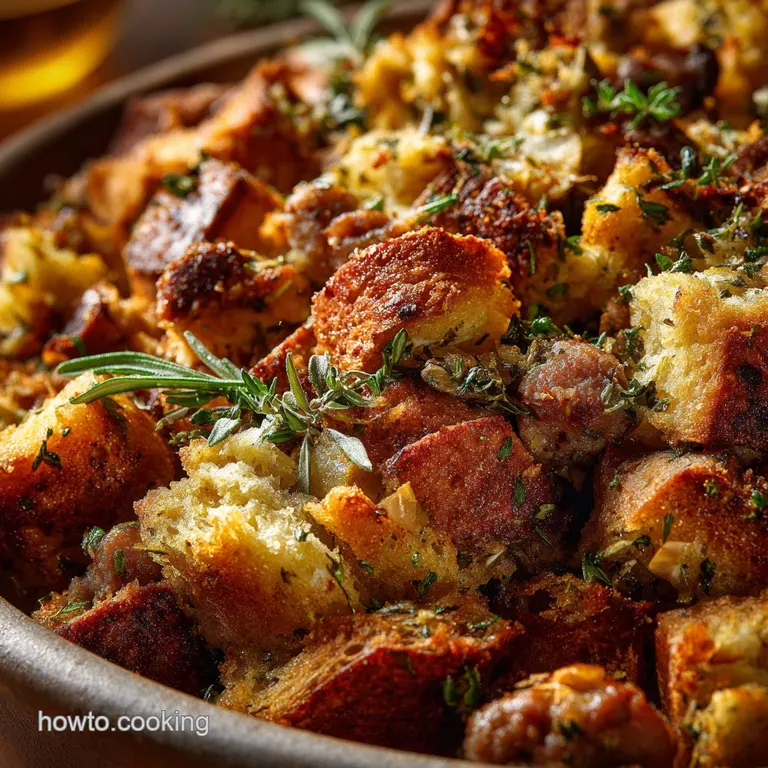
- The Ultimate Sage, Sausage, and Sourdough Dressing: Crisp Edges, Moist Centre
- The Foundation of Flavour: Why Great Stuffing Starts with Quality Sausage
- Achieving the Perfect Stuffing Paradox: Crisp Top, Velvety Interior
- Essential Ingredients for Superior Sausage Herb Stuffing (And Smart Swaps)
- Step-by-Step Guide: How to Construct and Bake Your Sausage Stuffing
- Stuffing Troubleshooting: Expert Tips for a Perfect Finish
- Make-Ahead Mastery and Safe Storage for Sausage Herb Stuffing
- Perfect Pairings: Completing Your Holiday Plate
- Recipe FAQs
- 📝 Recipe Card
The Ultimate Sage, Sausage, and Sourdough Dressing: Crisp Edges, Moist Centre
The Foundation of Flavour: Why Great Stuffing Starts with Quality Sausage
Seriously, the smell of this Sausage Herb Stuffing baking is Thanksgiving itself. It fills your kitchen with the deepest, richest aroma of toasted bread, browned sage, and savory pork. We are talking about true comfort food, the kind that creates instant warmth and makes everyone immediately happy.
I know holiday cooking can be ridiculously stressful, but this particular recipe is my secret weapon against panic. It’s simple to scale up or down, and it manages to taste unbelievably complex despite the short ingredient list.
Plus, since we bake it outside the bird (making it technically a dressing!), you don't have to worry about timing or sad, soggy bread cubes.
Forget those dried out, sad boxes from the store; we are making the real deal today. This recipe combines the satisfying tang of sourdough with the unmatched richness of good pork sausage and heaps of fresh herbs.
Trust me when I say this is the one side dish people will talk about long after the dinner plates are cleared.
Achieving the Perfect Stuffing Paradox: Crisp Top, Velvety Interior
The goal of elite stuffing is to be simultaneously crisp and deeply moist. It’s a texture dance. We achieve this paradox by focusing on two critical things: using tough, dried bread and controlling the two-stage bake.
Dressing vs. Stuffing: Defining the Difference for This Recipe
The word "stuffing" is usually used interchangeably with "dressing," but technically, they are different dishes. Stuffing is cooked inside the turkey cavity, which makes it incredibly moist (but takes longer and requires higher safety temperatures).
We are making dressing , cooked in a casserole dish outside the bird, which guarantees those glorious, crunchy corners that everyone fights over.
The Critical Role of Sourdough Bread in Texture
You simply cannot use soft, squishy sandwich bread here. Sourdough or any hearty, rustic artisan loaf provides the necessary structure to absorb the stock without dissolving into mush. It's the integrity of the crust and the dense crumb that allows the bread pieces to remain individual, soaking up flavor like tiny, perfect sponges. This sturdy structure is key to why the Thanksgiving Stuffing: Sourdough Dressing with Crispy Sage Butter Crust is so popular.
An Overview of Our Ultimate Sausage Herb Stuffing Method
Our method is sequential and flavour driven. First, we develop deep savoury flavor by properly browning the sausage and fat. Next, we slowly sweat the aromatics in that rendered fat, ensuring maximum sweetness.
Finally, we hydrate the bone dry bread just enough to steam it moist, but not so much that it turns soup like.
Browning the Sausage: Extracting Flavour and Rendering Fat
This step is non-negotiable and where most people rush. You aren't just cooking the sausage; you are browning it. Break the raw sausage apart into small crumbles and cook it until the edges are dark brown and crispy, not grey. That deep, caramelised colour is pure umami.
The rendered fat left behind is liquid gold, which we use to cook the celery and onion, infusing them with savory pork flavour right from the start.
Calculating Stock Absorption for Zero Soggy Stuffing
Stuffing failure usually happens because of mismatched liquid absorption. How much stock you need depends entirely on how dry your bread is. We start with three cups, but you need to use the "squish test." Mix everything gently, wait five minutes, and then grab a handful.
If it feels hydrated and holds its shape but isn't dripping, you’ve nailed it.
Activating the Aromatics: Sautéing Sage and Thyme
Once the vegetables are soft, we throw in the garlic, fresh sage, and fresh thyme. You only need to cook these for about sixty seconds, just until you smell that intense, nutty aroma. Cooking them gently in the sausage infused butter releases their essential oils and prevents the herbs from tasting raw or bitter.
This small step makes the finished Sausage Herb Stuffing taste profoundly complex.
Essential Ingredients for Superior Sausage Herb Stuffing (And Smart Swaps)
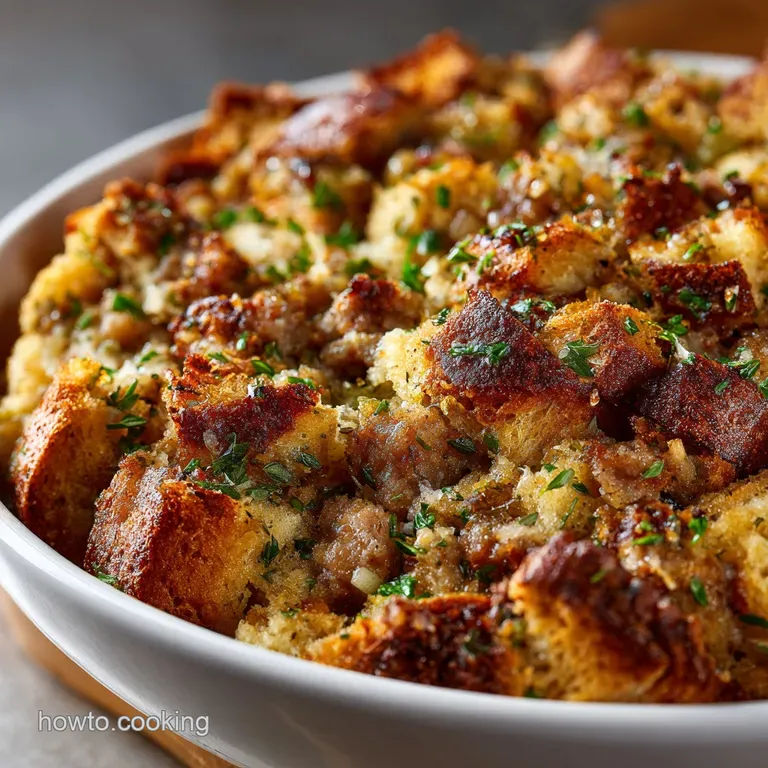
I always prioritize fresh herbs and good quality sausage for this recipe. If you start with excellent foundations, the rest is pretty easy.
Mild Italian vs. Breakfast Sausage: Selecting the Right Pork Base
I prefer a good quality mild Italian sausage (casings removed, please!) because it already has fennel, salt, and pepper built right in, giving instant depth. You can absolutely use a standard breakfast pork sausage if that’s easier to find, but you’ll need to increase the salt and perhaps add a pinch of dried fennel and red pepper flakes for complexity.
Always read the label some brands are excessively salty.
The 'Holy Trinity' of Celery, Onion, and Garlic Prep
These three aromatics must be finely diced and cooked slowly . We are looking for sweetness, not crunch. You don't want giant, raw chunks of onion in your perfect stuffing.
Take your time during the sweating phase (about 10 minutes) so they are practically melting before you add the bread.
Liquid Logic: Broth, Stock, or Water?
Stick to a rich, low-sodium chicken or turkey stock here. It provides depth and moisture without dominating the flavor profile. Water is a hard pass; it just makes wet bread, not flavourful dressing.
If you happen to be cooking a large turkey, save those simmering giblets and use that homemade stock it’s always better.
Why Sourdough Must Be Properly Dried (Not Just Stale)
Stale bread is slightly firm. Dry bread is rock hard. We need rock hard. If you don't fully dry your bread, the final texture will be gummy and dense, kind of like an awful bread pudding.
I bake mine at a low temperature for an hour, but you can also leave the cubes out on a sheet pan overnight just keep the dog away!
| If you don't have... | Try using... | Notes |
|---|---|---|
| Sourdough | Challah or Brioche | These are richer and absorb more liquid; start with less stock. |
| Mild Italian Sausage | Lincolnshire sausage or Chorizo (mild) | Adjust seasoning, especially salt, if using a pre-seasoned British sausage. |
| Celery | Diced Leeks (white and light green parts) | Wash the leeks very thoroughly, as they retain grit. |
| Chicken Stock | Vegetable Stock or Bone Broth | Choose low-sodium options to control seasoning yourself. |
step-by-step Guide: How to Construct and Bake Your Sausage Stuffing
Stuffing Troubleshooting: Expert Tips for a Perfect Finish
Phase I: Preparing and BROWNING the Pork Sausage
Start by preheating the oven to 375°F (190°C) and prepping your dried bread cubes in the largest bowl you own. Next, brown the sausage over medium high heat, breaking it up completely. This is not a quick sizzle. Cook it until it looks truly delicious and caramelized.
Remove the browned sausage to the bowl, leaving the rendered fat behind in the skillet. Reduce the heat and melt the butter into the remaining fat. Sweat the diced celery and onion gently for a full 8 to 10 minutes until they turn translucent and sweet.
Stir in the garlic and fresh herbs for 60 seconds until fragrant, then transfer this aromatic mixture into the bowl with the bread and sausage.
Phase II: Gently Tossing the Sourdough and Herb Mixture
Whisk the eggs into the stock in a separate bowl and season generously. Pour the liquid over the solids in your mixing bowl. Now, here's the crucial part: Use your hands or a spatula to gently fold and toss the mixture. We aren't making dough, so don't press or compress it.
Just fold until every piece of bread looks hydrated. Let it sit for five minutes, perform the squeeze test, and add another splash of stock if necessary.
Phase III: Achieving Internal Moisture and External Crust (The Foil Method)
Lightly butter your 9x13 inch pan and spread the mixture loosely do not pack it in! Cover the dish tightly with foil. This cover is what creates the perfect steamy environment needed for the bread to soften throughout. Bake for 30 minutes covered.
Remove the foil and bake for another 10 to 15 minutes to let the top crisp up into a beautiful, golden brown crust.
The Danger of Over Packing the Baking Dish
If you press the stuffing too tightly into the casserole dish, all the pieces merge, trapping too much moisture and preventing steam release. The result is a dense, heavy brick of dressing rather than a light, fluffy stuffing with crunchy edges. Resist the urge to compress it; spread it lightly and evenly.
When to Use Dried Herbs Instead of Fresh
Never, if you can avoid it. But if you truly can't find fresh sage or thyme, use about one-third of the amount called for in the recipe (i.e., 1 tablespoon dried sage instead of 3 tablespoons fresh). Dried herbs are exponentially stronger, so you must scale back.
However, the flavour profile won't be as bright or complex.
The Secret Ingredient: A Splash of Wine or Apple Cider
Want to amp up the depth? Instead of using only stock, reserve about 1/2 cup (120ml) of the stock volume and replace it with dry white wine or unsweetened apple cider. Add this liquid after the vegetables are softened, letting it simmer down for a minute to reduce slightly before mixing everything together.
This adds a beautiful, subtle acidity that cuts through the richness of the sausage and butter.
Chef's Note: If you want a truly spectacular crust, brush the exposed top of the stuffing with 2 tablespoons of melted butter or leftover sausage fat right before the final uncovered bake. It makes all the difference!
make-ahead Mastery and Safe Storage for Sausage Herb Stuffing
Holiday cooking demands planning. Luckily, Sausage Herb Stuffing is extremely forgiving and holds up beautifully when prepped in advance.
Prepping Components Up to 48 Hours in Advance
You can complete Phase I and Phase II (cooking the sausage and aromatics, and drying the bread) completely, two days before serving. Store the dried bread cubes in an airtight container and keep the cooked sausage/herb mixture covered in the fridge.
On the day of, combine the cooled mixture with the stock and eggs, let it hydrate for 15 minutes, and then bake as directed.
Reviving Leftovers: Maintaining Crispness in the Oven
Leftovers keep well in the fridge for up to 4 days. When reheating, avoid the microwave it kills the crust. Instead, spread the leftover stuffing loosely on a baking sheet and cover lightly with foil.
Bake at 350°F (175°C) until warmed through (about 15 minutes), then remove the foil and flash the uncovered stuffing for 5 minutes to restore that crunch.
Freezing Baked vs. Unbaked Stuffing (And Thawing Safely)
You can freeze this stuffing either baked or unbaked! If freezing unbaked , assemble the whole dish in a disposable aluminum tray, cover tightly with foil, and freeze for up to 3 months. Thaw overnight in the fridge and then bake as directed.
If freezing baked , let it cool completely, slice it into portions, wrap, and freeze. Reheat directly from frozen (covered) until piping hot.
Perfect Pairings: Completing Your Holiday Plate
Stuffing is not a standalone dish (unless you are me on the day after Thanksgiving). It needs balance.
The Ideal Savoury Gravy for Stuffing
Stuffing demands a generous river of gravy. Since this dressing is already rich with sage and pork fat, choose a smooth, savory gravy made from drippings. This stuffing pairs beautifully with my recipe for Roast Turkey: The Ultimate Herb Crusted Recipe for Crispy Skin , and the pan drippings from that method make the perfect partner gravy.
Balancing Richness with Bright Acidic Side Dishes
Because the Sausage Herb Stuffing is so savory, creamy, and fatty, you need something acidic and sharp to cleanse the palate. Think tart cranberry sauce, bright pickled onions, or a crisp, lemon dressed green salad. This contrast makes every bite of stuffing taste even better.
Serving Single Portions vs. Family Style
I prefer serving family style, straight out of the casserole dish, because it allows everyone to dig into the crunchy corner pieces. However, if you are hosting a formal dinner, you can scoop the stuffing into individual muffin tins for the last 10 minutes of baking.
This ensures every single serving gets a crisp, attractive crust!

Recipe FAQs
Why is my sausage stuffing dry and crumbly instead of moist?
Stuffing often becomes dry because the bread cubes were not fully saturated with broth and fat before baking, or because it was baked too long. Ensure that your bread is well toasted and then generously bathed in the liquid mixture until thoroughly moistened.
If it looks dry halfway through cooking, try adding a quarter cup of extra warmed broth over the top before continuing the bake.
How do I prevent my stuffing from becoming soggy and heavy?
Sogginess usually occurs when the bread is too fresh or the mixture is oversaturated. For the perfect texture, always use stale or lightly toasted bread cubes, which absorb liquid without collapsing into a paste.
Additionally, ensure the sausage and vegetables are properly drained of excess grease before incorporating the broth.
Can I use regular white bread or cornbread instead of sourdough?
Absolutely. While sourdough offers a pleasant tang and robust structure, crusty white bread, brioche, or cornbread all work splendidly. If opting for cornbread, slightly reduce the liquid volume, as cornbread absorbs moisture differently than yeast breads and can quickly become mushy.
I don't eat pork. Can I substitute the sausage?
Yes, high-quality ground chicken or turkey sausage makes an excellent alternative, offering a leaner yet still flavourful result. If using plain ground turkey or chicken, be sure to significantly increase the fresh sage, thyme, and maybe a pinch of fennel seed to achieve that signature herbaceous depth.
What is the difference between "stuffing" and "dressing," and does it affect cooking?
The distinction lies in where it is cooked: 'stuffing' is cooked inside the cavity of the poultry, while 'dressing' is baked separately in a casserole dish. When cooking stuffing inside the bird, it must reach an internal temperature of 165°F (74°C) for food safety, which generally requires a longer cooking time than baking dressing on its own.
What additions can I make to enhance the flavour profile?
For a richer, more complex taste, consider adding dried fruit like cranberries or apricots, or toasted nuts such as pecans or walnuts to the mixture. A splash of dry sherry or port stirred into the chicken broth base can also introduce a subtle, warming note that complements the herbaceous sausage wonderfully.
Can I prepare this sausage stuffing ahead of time, and how should I store leftovers?
You can assemble the stuffing mixture completely (stopping before adding the final liquid) up to two days in advance and store it tightly covered in the refrigerator. Leftovers should be transferred promptly to an airtight container and can be stored in the refrigerator for up to four days or frozen for up to three months.
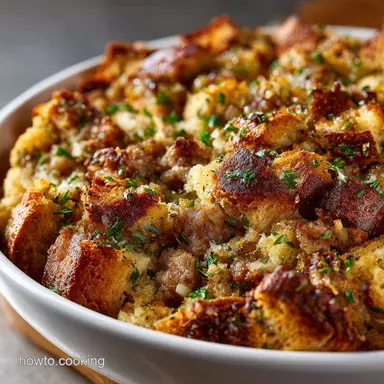
Sausage Herb Stuffing With Crisp Sourdough
Ingredients:
Instructions:
Nutrition Facts:
| Calories | 549 kcal |
|---|---|
| Protein | 22.7 g |
| Fat | 39.8 g |
| Carbs | 25.0 g |
