Thanksgiving Stuffing with Sausage and Sourdough: the Ultimate Classic Recipe

- The Essential Sage and Sausage Thanksgiving Stuffing
- What You'll Need: Ingredients for the Best Thanksgiving Stuffing
- Method: Step-by-Step Guide to Baking Perfect Stuffing
- Troubleshooting and Expert Thanksgiving Stuffing Tips
- Make Ahead, Storage, and Reheating Guide
- What to Serve With Your Classic Stuffing
- Recipe FAQs
- 📝 Recipe Card
The Essential Sage and Sausage Thanksgiving Stuffing
A Heritage Dish That Steals the Show
The smell of good stuffing is the absolute essence of the holidays, isn't it? It’s that deep, savory cloud of toasted sourdough, fragrant sage, and sizzling sausage fat that hits you the moment you open the oven.
That perfect stuffing, with its crispy, crunchy top layer and the impossibly moist, rich center, is what we’re aiming for.
People stress out about roasting the turkey, but honestly, the biggest flavor win on the table is always the stuffing. This recipe is straightforward, relies on standard pantry staples, and absolutely delivers maximum impact for minimum fuss.
It’s cheap, it’s fast (especially if you prep the bread ahead), and everyone always asks for the leftovers.
Ready to ditch the mushy, boring version you grew up with? I’m going to walk you through the precise steps I use every single year to create a classic Thanksgiving Stuffing that is foolproof and deeply satisfying. Let’s crack on.
Why Sourdough is the Superior Bread Base
You might be tempted to use soft sandwich bread, but don't do it. Sourdough or even a sturdy French boule is your secret weapon here. Soft breads turn to instant mush when they absorb liquid, giving you that gluey texture nobody wants.
Sourdough holds its shape, even after soaking up all that incredible sausage fat and savory chicken stock. The structure of the crusty bread cubes gives the stuffing bounce, while the interior remains wonderfully soft.
It also has a natural tanginess that cuts through the richness of the sausage and butter, giving you a perfectly balanced bite.
The Secret to Achieving a Perfectly Crispy Top
Everyone agrees the crispy top is the best part, right? It’s a two-part hack. First, we cover the dish for the first 30 minutes to steam and cook the interior thoroughly, ensuring moisture retention.
Second, we take the foil off for the last 15- 20 minutes, giving the top time to brown beautifully. Pro Tip: Dotting the exposed top with tiny little flakes of butter right before that final uncovered bake is a game changer.
The butter melts into the top layer, encouraging extreme caramelization and crispiness.
What You'll Need: Ingredients for the Best Thanksgiving Stuffing
I’m obsessed with using the best ingredients I can find, especially when we’re leaning into such a classic, simple flavor profile. Good sage makes all the difference, trust me.
| Ingredient | Substitution/Alternative |
|---|---|
| Sourdough Bread | Cubes of crusty Challah or sturdy French bread. |
| Pork Sausage Meat | Ground Italian turkey sausage (mild) or ground pork shoulder. |
| Unsalted Butter | Use half bacon fat and half butter for incredible smokiness. |
| Low-Sodium Chicken Stock | high-quality vegetable stock. |
| Fresh Sage | Dried sage works in a pinch, but reduce the amount to 1.5 teaspoons. |
Selecting the Right Sausage (Fat Content Matters)
We are looking for mild pork sausage, without casings, or you can use high-quality bulk breakfast sausage meat. The fat rendered from the sausage is absolutely essential. It’s what we use to sauté our aromatics, and that fat carries massive flavor throughout the dish. Don’t drain the fat!
That fat is liquid gold for flavor and moisture.
Essential Aromatics: Onion, Celery, and Garlic Prep
The foundation of every great stuffing is the mirepoix (or soffritto ). We are using a simple mix of onion, celery, and garlic, cooked until they are sweet and translucent. Make sure you chop these vegetables quite finely.
They need to soften completely and melt into the background, not remain crunchy chunks that interrupt the stuffing texture.
Preparing the Sourdough Base (Drying Technique)
This is the most critical step for avoiding mush. The bread must be stale or dried. If you cube fresh bread, it will immediately soak up liquid and disintegrate. Cut the cubes (about 1 inch) the day before and leave them out on a sheet pan to air dry.
If you forgot (we’ve all been there), toast them in a 300°F oven for 15 minutes until they feel stiff and crunchy.
Swapping Stock for Broth: What You Need to Know
You might see recipes call for broth, but I specifically recommend using low-sodium stock . Stock, which is made with bones, has a richer mouthfeel and more gelatin, contributing better body and depth to the final product.
Using low-sodium means you get to control the seasoning, which is crucial when working with salty sausage and butter. Always warm the stock slightly before adding it to the bread; this helps the bread absorb the liquid evenly.
Method: step-by-step Guide to Baking Perfect Stuffing
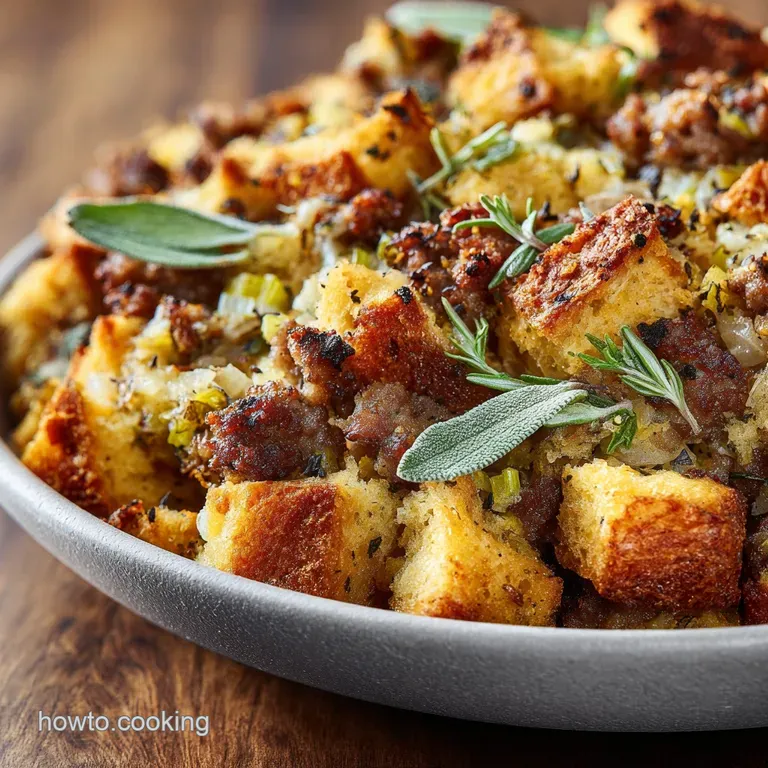
Step 1: Browning the Sausage and Building the Flavor Base
In a large, heavy skillet, cook the sausage over medium high heat, breaking it up into small pieces. Cook it until it’s beautifully browned and crispy bits (fond) start forming on the bottom of the pan.
Transfer the cooked sausage to your large mixing bowl using a slotted spoon, leaving all that glorious rendered fat behind.
Step 2: Hydrating the Bread Cubes (The Liquid-to-Solid Ratio)
Now, add the butter to the reserved sausage fat and melt it down. Sauté the onions and celery until they are completely softened, about 8 to 10 minutes. Stir in the garlic, fresh sage, thyme, and rosemary.
Cook for just one minute until the herbs smell incredibly nutty and fragrant; that’s when you know the oils have been released. Pour this entire aromatic mixture, including all the melted fat, over the dried bread and sausage, tossing gently to coat.
Step 3: Combining, Seasoning, and Tasting the Mix
Whisk the warm chicken stock together with the lightly beaten eggs. Pour this liquid slowly over your bread mixture, tossing carefully as you go. You want every piece of bread to be saturated, but you absolutely don't want a soup in the bottom of the bowl.
Add the fresh parsley, check the seasoning, and adjust the salt and pepper. Trust me, taste it now! If it tastes a bit bland before baking, it will taste bland afterward.
Chef’s Note: The goal here is saturation without sogginess. Give the mix 5 minutes to soak after the first pour. If you squeeze a handful and it feels dry or falls apart, add another quarter cup of stock.
Step 4: Baking Instructions for Ultimate Texture
Lightly butter your 9x13 inch baking dish. Gently transfer the stuffing mixture into the dish, spreading it evenly but do not compact it firmly . Baking the stuffing loosely packed allows the heat to circulate, which is essential for that light interior texture.
Cover the dish tightly with foil and bake at 375°F (190°C) for 30 minutes. Then remove the foil, dot the top with the remaining butter flakes, and bake uncovered for another 15– 20 minutes until the top is golden and crunchy.
Troubleshooting and Expert Thanksgiving Stuffing Tips
Avoiding a Dry Stuffing Disaster (Overbaking vs. Undercooking)
Stuffing dries out primarily for two reasons: not enough fat/stock used initially, or simply overbaking. The internal temperature needs to reach 165°F (74°C) for safety, but checking it with a thermometer means you can pull it the second it hits that temp.
If the top is getting too dark but the middle isn’t done, just loosely tent the foil back over the top.
The Difference Between Stuffing and Dressing (Safe Temperatures)
Technically, if it’s cooked inside the bird, it’s stuffing; if it’s cooked separately, it’s dressing. We are cooking ours separately for safety and superior texture, so you could call this a dressing if you’re being pedantic.
The key safety point is that stuffing MUST reach 165°F (74° C). Never rely on the turkey's thermometer, as the center of the stuffing takes much longer to heat up.
make-ahead, Storage, and Reheating Guide
Want to get ahead of the game? Of course you do. The holidays are chaotic! This recipe is incredibly adaptable, whether you’re making it hours or days ahead of time.
Prepping Components Ahead of Time
The best hack is prepping the dry ingredients and the wet mixture separately. You can cube and dry your bread days ahead. You can also cook the sausage and sauté the aromatics up to two days in advance and store the mixture (without the eggs or stock) in the fridge.
Refrigerating the Unbaked Mixture
You can fully assemble the stuffing, minus the baking, up to 24 hours in advance. Combine everything (stock and eggs included) and place it in the buttered baking dish, covered tightly with plastic wrap.
When you are ready to bake, pull it out while the oven preheats, add an extra 5- 10 minutes to the total covered baking time since it’s starting cold. For a delicious shortcut, check out my recipe for Thanksgiving Dressing: The make-ahead Recipe for a Crisp, Moist Interior .
How to Freeze Baked Stuffing for Later Use
Yes, it freezes beautifully! Bake the thanksgiving stuffing casserole fully, cool it completely, and then cut it into individual thanksgiving stuffing muffins or portions. Wrap them tightly in foil and then place them in a freezer bag or container.
It will last for up to 3 months.
To reheat, thaw the frozen portions overnight in the fridge. Reheat in a 350°F (175°C) oven, still wrapped in foil, until warmed through (about 20 minutes). Then unwrap and bake for 5 minutes to crisp the top again.
What to Serve With Your Classic Stuffing
Stuffing is the ultimate centerpiece side, meaning everything else should complement its savory richness.
Best Sauces and Gravies for Pairing
A simple, pan-dripping turkey gravy is non-negotiable. If you don't have enough drippings, a quick brown sauce made from sautéed herbs and chicken stock works brilliantly. The key is serving something saucy to mix with those dry, crispy top bits.
Pair this perfectly balanced stuffing with the smooth, rich texture of my Thanksgiving Side Dishes: Ultimate Brown Butter Mashed Potatoes Recipe . And since we need some acid and brightness to cut through all the richness, don’t forget a side of sharp, sticky greens like those amazing Thanksgiving Side Dishes: Sticky Maple Balsamic Brussels Sprouts Recipe . Seriously, they are the best combination.
Recipe FAQs
Why is my stuffing too dry and crumbly?
Dryness is usually due to insufficient stock or overbaking. Ensure you add enough liquid so the bread is fully moist before baking, or cover the pan loosely with foil halfway through cooking to trap steam.
If it's already dry, warm additional chicken stock and gently drizzle it over the cooked stuffing just before serving.
Should I cook the stuffing inside the turkey?
Culinary experts strongly recommend baking stuffing separately for both food safety and better texture. Stuffing cooked inside the cavity must reach a core temperature of 165°F (74°C), which often means overcooking the surrounding turkey meat.
Baking it outside ensures a consistently crispier top and controlled moisture.
How do I prevent the bottom layer from becoming soggy?
Sogginess occurs when the bread cubes are too small or the stock is added to bread that is not properly dry. Always use thoroughly dried or toasted sourdough cubes, and ensure you do not add the stock until the mixture is ready to go into the oven.
The sturdy nature of sourdough helps maintain structure against the added moisture.
Can I prepare the stuffing mixture ahead of time?
Yes, you can mix all the dry ingredients, including the sautéed vegetables and cooked sausage, and store them covered in the refrigerator for up to 24 hours. However, do not add the stock or eggs until just before baking, as adding liquids too early will result in a mushy, structureless texture once baked.
I don't have sourdough. What is the best substitution?
While sourdough provides the best structure and tangy flavour profile for this recipe, you can substitute it with other sturdy, rustic loaves like ciabatta or French baguette. The key is ensuring the replacement bread is cut into large cubes and thoroughly dried out, either overnight or baked lightly in the oven.
How do I ensure the top layer gets golden brown and crispy?
To achieve a truly crispy top, dot the surface of the unbaked stuffing generously with small pieces of butter before it goes into the oven. If you start the bake covered with foil, be sure to remove it entirely for the last 10 to 15 minutes to allow the exposed surface to brown, crisp up, and slightly desiccate.
Can I make this recipe suitable for vegetarians?
Absolutely. Substitute the sausage with 1.5 pounds of finely chopped, sautéed mushrooms focusing on deeply browned cremini or shiitake for intense umami flavour. You must also swap out the chicken stock entirely for a high-quality, full bodied vegetable stock to maintain the required moisture level.
Sausage Sage Thanksgiving Stuffing
Ingredients:
Instructions:
Nutrition Facts:
| Calories | 335 calories |
|---|---|
| Fat | 19 g |
| Fiber | 2.5 g |
