Southern Black Eyed Peas Recipe A: Creamy Umami Depth
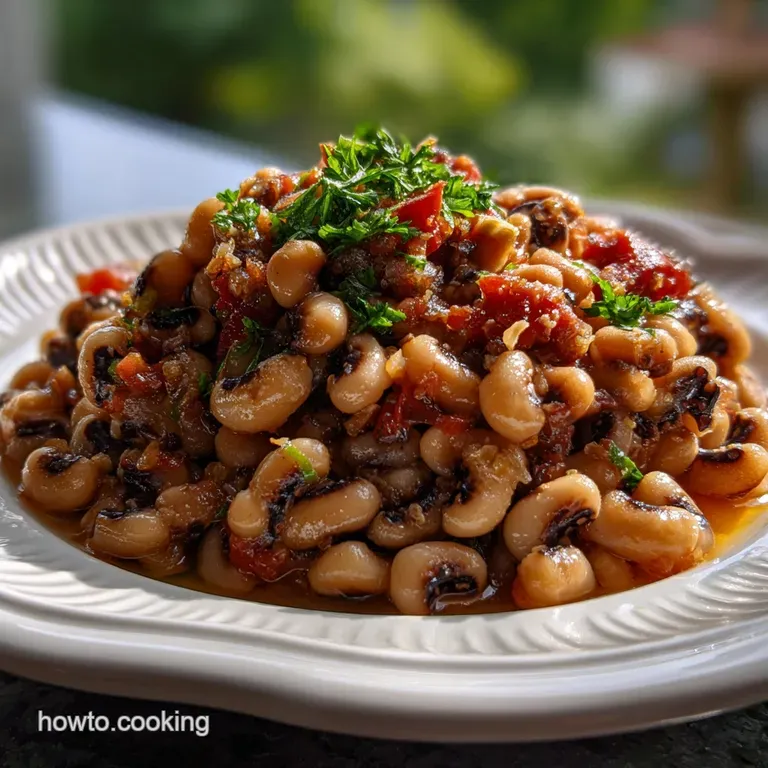
- Effort/Time: Moderate effort / 2 hours
- Flavor Hook: Smoky-savory depth with a bright vinegar finish.
- Perfect for: New Year's Day traditions or make-ahead Sunday suppers.
- Master the Ultimate Southern Black Eyed Peas Recipe A
- The Molecular Magic of Smoked Proteins and Legumes
- Thermal Dynamics and Time Management for the Perfect Pot
- The Alchemy of Umami: Selecting Your Elements
- Precision Tools for Optimal Heat Distribution
- Step-by-Step Execution: From Sizzle to Simmer
- Why Your Peas Burst: Science-Backed Solutions
- Flavor Architecture: Creative Variations and Swap-Outs
- ⚗️ The Scaling Lab: The Physics of Quantity
- Preserving Texture: Storage and Zero-Waste Protocols
- The Art of the Plate: Pairing and Presentation
- Recipe FAQs
- 📝 Recipe Card
Master the Ultimate Southern Black Eyed Peas Recipe A
There is nothing more frustrating than investing two hours into a pot of beans only to end up with a watery, bland mess where the skins have exploded and the centers remain chalky.
I’ve seen home cooks dump $30 worth of high-quality organic ingredients into a pot, only to have the seasoning fail to penetrate the legumes, resulting in a dish that looks like a muddy puddle. It’s an emotional and financial waste that usually ends with a bowl of "poverty peas" that no one wants to finish.
I’ll be the first to admit I’ve ruined my share of batches by rushing the simmer or skipping the aromatic base. I once tried to shortcut the process by using un-smoked meat and no acid, thinking the peas would carry the flavor on their own they didn't.
The result was a flat, one-dimensional bowl of starch that lacked any of the soul warming complexity we expect from a true Southern Black Eyed Peas Recipe A.
The scientific breakthrough came when I stopped treating this as a "boil" and started treating it as a "controlled extraction." By utilizing the principle of collagen hydrolysis from smoked ham hocks and managing the osmotic pressure with specific salt timing, you create a liquid that isn't just water it’s a silken emulsion.
This Southern Black Eyed Peas Recipe A works because we balance the heavy fats of the bacon and ham with the bright acidity of apple cider vinegar, ensuring a "velvety" mouthfeel and a "robust" flavor profile that hits every part of the palate.
The Molecular Magic of Smoked Proteins and Legumes
- Collagen Hydrolysis: Slow simmering the smoked ham hocks breaks down tough connective tissue into gelatin, which provides the "velvety" body of the pot liquor.
- Starch Gelatinization Control: Maintaining a gentle simmer prevents the rapid expansion of starch granules, which is what causes peas to "shatter" or blow out their skins.
- Lipid Emulsification: The diced bacon releases rendered fats that, when agitated by a light simmer, emulsify with the chicken broth to create a rich, opaque sauce.
- Acid Base Balancing: Apple cider vinegar acts as a chemical "brightener," cleaving through the heavy lipids to ensure the savory notes don't become cloying.
Thermal Dynamics and Time Management for the Perfect Pot
| Metric | Value | Technical Context |
|---|---|---|
| Prep Time | 15 minutes | Mise en place for aromatics and bacon rendering. |
| Cook Time | 1 hour 45 mins | Required for ham hock tenderization and pea hydration. |
| Total Time | 2 hours | Cumulative duration for flavor marriage and texture set. |
| Yield | 8 servings | Optimized for a standard 6 quart Lodge Enamel Dutch Oven. |
The Alchemy of Umami: Selecting Your Elements
Selecting the right components for this Southern Black Eyed Peas Recipe A is a study in flavor architecture. We aren't just tossing things in a pot; we are layering textures and chemical compounds.
- 1 lb Dry Black Eyed Peas (Sorted and rinsed): Why this? Dried legumes provide superior texture control compared to canned versions.
- 2 Small Smoked Ham Hocks (approx. 1 lb): Why this? The bone-in marrow and smoked skin provide essential gelatin and depth.
- 4 Strips Thick cut Bacon (diced): Why this? Provides immediate rendered fat for sautéing aromatics.
- 6 Cups Chicken Broth: Why this? Adds a foundational savory protein base more complex than water.
- 2 Cups Water: Used to balance the sodium concentration of the broth.
- 1 Large Yellow Onion (finely diced): Provides sulfurous depth and natural sweetness.
- 1 Green Bell Pepper (diced): Adds a subtle vegetal "snap" and bitterness to counter the fat.
- 2 Stalks Celery (diced): The final pillar of the holy trinity for aromatic complexity.
- 4 Cloves Garlic (minced): Adds pungent aromatics that mellow into sweetness during the simmer.
- 1 tsp Smoked Paprika: Enhances the "mahogany" color and reinforces the wood smoke profile.
- 1/2 tsp Cayenne Pepper: Provides a background heat that stimulates the taste buds without overwhelming.
- 2 Dried Bay Leaves: Releases herbal notes that cut through the heavy starch.
- 1 tbsp Apple Cider Vinegar: Essential for pH balance and "opening up" the savory flavors.
- 1/2 tsp Salt & 1/2 tsp Black Pepper: Final seasoning adjustments to taste.
Ingredient Chemistry Breakdown
| Ingredient | Chemical/Physical Role (Science) | The Pro Secret (Why This Matters) |
|---|---|---|
| Smoked Ham Hocks | Collagen hydrolysis into gelatin | Creates the "velvety" texture in the pot liquor (pot likker). |
| Dry Black Eyed Peas | Starch gelatinization | Gradual water absorption prevents "shattering" of the pea skins. |
| Apple Cider Vinegar | Acidity lipid balancing | The acetic acid cuts through the heavy bacon fat for a clean finish. |
| Chicken Broth | Umami rich solute | Provides a high concentration of glutamates for a savory foundation. |
Precision Tools for Optimal Heat Distribution
To execute this Southern Black Eyed Peas Recipe A properly, you need tools that manage thermal mass effectively. I recommend a Lodge 6 quart Enameled Cast Iron Dutch Oven.
The heavy walls provide consistent heat, preventing the "hot spots" that cause peas at the bottom to scorch while the top remains hard.
You will also need a sharp Global G-2 Chef's Knife for the precision dicing of your "Holy Trinity" (onion, pepper, celery). Uniform pieces ensure that the aromatics sweat at the same rate, preventing bitter, burnt garlic or crunchy, raw onions in the final dish.
step-by-step Execution: From Sizzle to Simmer
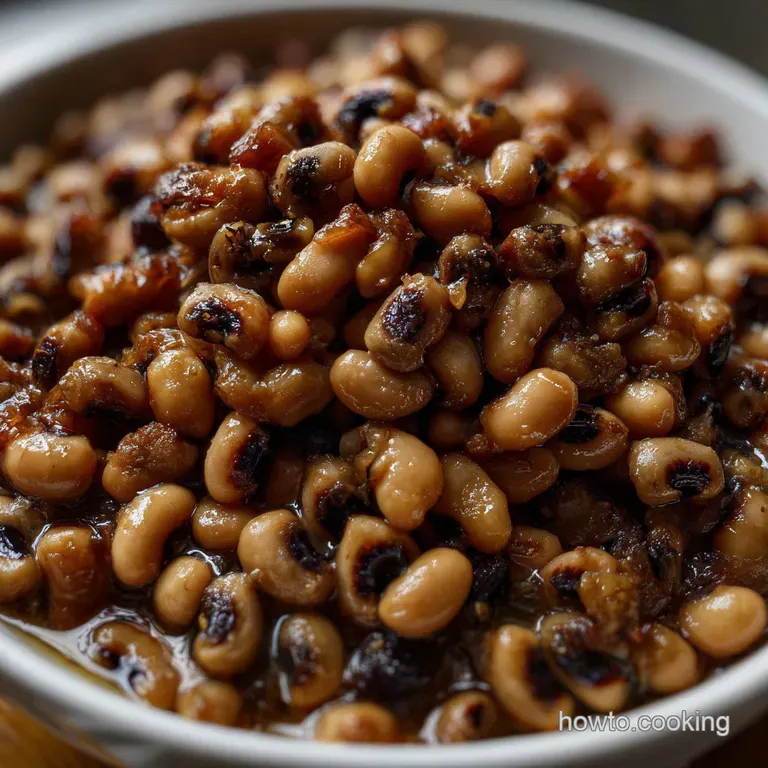
- Render the 4 strips of diced thick cut bacon in your Dutch oven over medium heat for 8 minutes until the fat has liquefied and the bits are crisp and mahogany colored.
- Sauté the diced yellow onion, green bell pepper, and celery in the bacon fat for 6 minutes until the onion is translucent and the "green" smell of the pepper shifts to a sweet fragrance.
- Incorporate the 4 minced garlic cloves, 1 tsp smoked paprika, and 1/2 tsp cayenne pepper, stirring for 60 seconds until the spices are toasted and aromatically pungent.
- Deglaze the pot with 6 cups of chicken broth and 2 cups of water, scraping the bottom with a wooden spoon until all brown bits (fond) are integrated into the liquid.
- Submerge the 1 lb of sorted/rinsed black eyed peas, 2 smoked ham hocks, and 2 bay leaves into the liquid.
- Boil the mixture briefly over high heat until large bubbles break the surface, then immediately reduce to a low simmer.
- Simmer the pot, partially covered, for 1 hour 30 mins until the peas are tender but still hold their shape and the ham hock meat begins to pull away from the bone.
- Extract the ham hocks, shred the meat from the bones, and return the meat to the pot, discarding the bones and bay leaves.
- Stir in 1 tbsp of apple cider vinegar, 1/2 tsp salt, and 1/2 tsp black pepper.
- Rest the pot for 10 minutes off the heat until the liquid thickens slightly and the flavors reach equilibrium.
Why Your Peas Burst: Science Backed Solutions
Why Your Peas Are Mushy
When the Southern Black Eyed Peas Recipe A results in a "smeared" texture, it’s usually due to a vigorous boil. High agitation cooking physically breaks the delicate skins of the peas before the starch in the center has fully hydrated.
| Problem | Root Cause | The Fix | Pro Protocol |
|---|---|---|---|
| Blown out Skins | Excessive heat/boiling | Reduce heat to a "lazy" simmer | Keep liquid temp between 185°F and 200°F. |
| Bland Broth | Insufficient salt/acid | Add vinegar and adjust salt at the end | Use a final splash of ACV to "wake up" the umami. |
| Tough Centers | Old dried beans | Extend simmer time or use a pinch of soda | A 1/8 tsp of baking soda can help soften stubborn pectin. |
The Broth is Too Thin
If your pot liquor looks more like tea than a rich gravy, you likely have low starch release. This often happens if the peas are very fresh or the simmer was too cold.
Pro Tip: Take a ladle of the peas (about 1/2 cup), mash them into a paste against the side of the pot or in a small bowl, and stir them back in. This releases instant starch and creates a "velvety" thickness without needing a flour based roux.
This technique is a staple when crafting a savory delight for comfort food lovers.
Flavor Architecture: Creative Variations and Swap Outs
This Southern Black Eyed Peas Recipe A is a master template. While the base is traditional, you can adapt it to fit various regional styles or dietary needs.
| Original Ingredient | Substitute | Why It Works |
|---|---|---|
| Smoked Ham Hocks | Smoked Turkey Wings | Provides a similar smoky profile with lower saturated fat content. |
| Bacon | Liquid Smoke (1 tsp) | Mimics the wood fired flavor if you are avoiding pork. |
| Chicken Broth | Vegetable Stock | Shifts the flavor profile toward a lighter, more vegetal base. |
| Apple Cider Vinegar | Lemon Juice | Provides a sharper, citrusy acidity that pairs well with seafood sides. |
For those looking for a "Southern black eyed peas recipe african bites" variation, consider adding a tablespoon of tomato paste and a teaspoon of ginger to the aromatic base. This introduces a subtle West African influence that complements the natural earthiness of the peas.
If you want a "spicy Cajun variation," swap the smoked paprika for a heavy dose of Creole seasoning and double the cayenne.
If you find the heat level too high, pairing this dish with a side of cornbread drizzled with a Hot Honey Recipe can balance the spice with a floral sweetness.
⚗️ The Scaling Lab: The Physics of Quantity
When you double this Southern Black Eyed Peas Recipe A for a crowd, standard kitchen math fails because of the Square Cube Law.
- The Evaporation Paradox: If you use a wider pot to double the batch, you have more surface area. However, if you use a taller pot with the same diameter, you must reduce the added liquid by 15%. Otherwise, the lack of proportional evaporation will leave your peas swimming in a diluted broth.
- Flavor Saturation: Do not double the salt or cayenne immediately. Scale them to 1.5x and adjust at the 90 minute mark. Spices often concentrate non-linearly in larger volumes of liquid.
- Thermal Mass: Doubling the beans and ham hocks adds significant cold mass to the pot. It will take roughly 30% longer to return to a simmer. Mandatory instruction: Bring your broth to a rolling boil before adding the room temperature peas to minimize the "danger zone" time.
- Carry Over Softening: A larger pot retains heat much longer. Pull the peas off the heat when they are "al dente," as they will continue to soften for 20 minutes in the residual thermal energy of the large volume.
Preserving Texture: Storage and Zero Waste Protocols
This Eyed Peas Recipe: A Savory Delight for Comfort Food Lovers is actually better on day two. As the mixture cools, the starches and proteins undergo retrogradation, further thickening the sauce and allowing the spices to penetrate the very center of the legumes.
- Fridge: Store in airtight containers for up to 5 days. The "pot liquor" will likely turn into a jelly like consistency due to the gelatin; this is a sign of a successful Southern style black eyed peas and ham recipe.
- Freeze: These peas freeze beautifully for up to 6 months. Pro Tip: Freeze them in flat silicone bags to maximize surface area for faster thawing.
- Reheating: Always reheat on the stovetop over low heat. Add 1/4 cup of water or broth to loosen the gelatinous broth back into a silken liquid.
💡 ZERO WASTE PHILOSOPHY Don't discard the ham hock bones after shredding the meat. Transform: Simmer the spent bones in 4 cups of water for 2 hours to create a secondary "smoke stock." Science: The marrow and deep connective tissue still contain residual collagen and smoke compounds that are perfect for a future split pea soup or for cooking collard greens.
This is a key element of a Southern black eyed peas and greens recipe.
The Art of the Plate: Pairing and Presentation
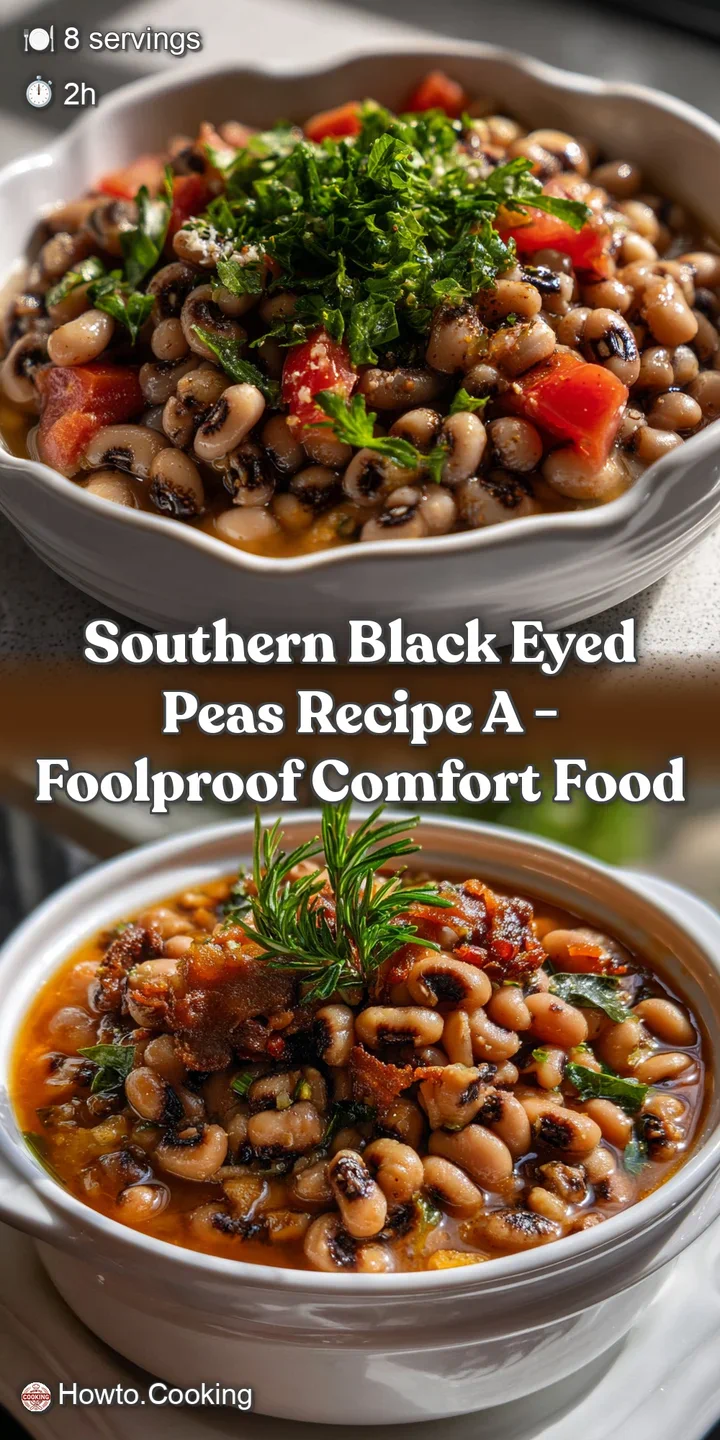
To serve this Southern Black Eyed Peas Recipe A, ladle it into shallow bowls, ensuring each serving gets a generous portion of the shredded ham and crispy bacon bits. This dish is the quintessential savory delight for comfort food lovers.
Common Myths Debunked:Myth: You must soak black eyed peas overnight. Truth: Unlike kidney beans, black eyed peas are small and relatively thin skinned.
A long simmer (1 hour 45 mins) is more than enough to hydrate them fully without the mushy risk associated with pre-soaking.
- Myth: Adding salt at the beginning makes beans tough.
- Truth: This is a half truth. While high salt can slow hydration slightly, it actually strengthens the skin's pectin, preventing the peas from falling apart. We use broth (which contains salt) from the start for deep flavor penetration.
For a complete meal, serve this alongside a Southern black eyed peas and rice recipe commonly known as Hoppin' John. The rice acts as a neutral canvas for the intense, smoky pot liquor.
If you're feeling adventurous, try a Southern black eyed peas and okra recipe by sautéing fresh okra separately and folding it in at the very end to maintain its crisp texture.
This Southern Black Eyed Peas Recipe A represents the pinnacle of comfort food engineering. It balances the physics of heat, the chemistry of salt and acid, and the deep, soulful flavors of the American South.
Whether you're making a Black Eyed Peas Recipe: A Savory Delight for Comfort Food Lovers for a holiday or a simple Tuesday night, this technical approach ensures a "velvety," "smoky," and "shatter free" result every single time. Enjoy the savory delight for comfort food lovers that you have just created!
Recipe FAQs
southern black eyed peas recipe african bites?
The core recipe can be adapted by adding tomato paste and ginger to the aromatics, suggesting a West African influence. If you enjoyed mastering the savory balance in this pot liquor, see how we apply acid based flavor brightening in our Buffalo Sauce Recipe: Proper Buttery Classic Homemade Sauce.
how to make southern black eyed peas?
Render bacon, sauté the trinity, bloom spices, then simmer peas with smoked ham hocks in broth. This slow extraction method yields gelatinous body from the collagen. Finish with apple cider vinegar for flavor activation.
What is the secret to thick pot liquor?
Mash a ladle of cooked peas against the pot side to release starch. This technique utilizes starch gelatinization principles, bypassing the need for added thickeners like flour. The resulting slurry emulsifies rapidly with the rendered bacon fat.
Should I soak the peas overnight?
No. Soaking small legumes like black eyed peas risks skin separation. The necessary 1 hour 45 minute simmer provides ample time for complete hydration without structural breakdown.
Can I substitute the ham hocks with something else?
Smoked turkey wings are an excellent low-fat swap for ham hocks. Both ingredients provide the necessary smoked connective tissue that hydrolyzes into rich gelatin during the long simmer process.
Why are my peas exploding and turning to mush?
Rapid boiling causes starch granules to expand too fast, rupturing the skins. High agitation cooking physically stresses the legume structure, leading to texture failure instead of smooth hydration.
- Maintain a gentle simmer (185°F 200°F)
- Avoid stirring vigorously post boil
- Ensure broth covers all legumes completely
Is it true that adding salt early makes peas tough?
Myth: Adding salt at the start guarantees tough, unyielding peas. Reality: While excessive sodium slows hydration, salt actually helps stabilize the pectin in the pea skins, preventing premature structural breakdown during the long cook time.
Smoky Southern Black Eyed Peas
Ingredients:
Instructions:
Nutrition Facts:
| Calories | 312 kcal |
|---|---|
| Protein | 21.5 g |
| Fat | 8.4 g |
| Carbs | 39.2 g |
| Fiber | 10.8 g |
| Sugar | 4.1 g |
| Sodium | 795 mg |
