Heavy Whipping Cream: Perfectly Stabilized Whip
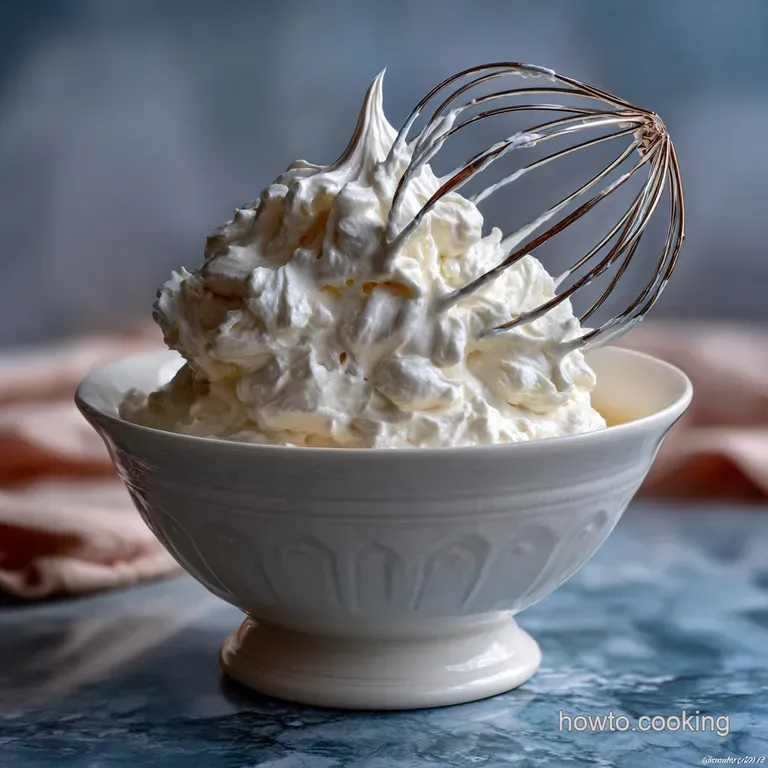
- The Cornerstone Whip: Perfectly Stabilized Heavy Cream
- Why This Works: The Science Behind the Perfect Peak
- Essential Ingredients and Perfect Substitutions
- Step-by-Step: Whipping Heavy Cream to Stiff Perfection
- Troubleshooting Common Mistakes and Expert Tips
- Maximizing Shelf Life: Storage and Uses For Heavy Whipping Cream
- Recipe FAQs
- 📝 Recipe Card
The Cornerstone Whip: Perfectly Stabilized Heavy Cream
You know the sound that glorious, high pitched whirr of the mixer transforming cold liquid dairy into cloud like fluff. That’s the magic of Heavy Whipping Cream at work.
But thirty minutes later, when you see that beautiful topping start to weep and melt into a sad, sugary puddle over your pie, the magic is gone.
We are done with weeping cream. I spent years messing this up, rushing the process, or using the wrong sugar, only to watch my gorgeous dessert deflated and soggy. This is the simple, definitive guide to stabilizing Heavy Whipping Cream so it holds those stiff, gorgeous peaks not just for an hour, but for days.
This is a true Homemade Whipped Cream Easy recipe. You need three ingredients, five minutes, and a refrigerator that is doing its job. Get ready to pipe, layer, and frost like a pro, because we’re about to turn humble Heavy Whipping Cream into a structural dessert masterpiece.
Why This Works: The Science Behind the Perfect Peak
The secret to stability isn't a kitchen spell; it’s food science centered on fat and air.
Understanding Fat Content and Aeration
The carton labeled Heavy Whipping Cream must contain at least 36% butterfat. When you whip this cold liquid, the mechanical action of the whisk forces tiny air bubbles into the liquid.
The super cold fat molecules which are solid and rigid then align themselves around these air bubbles. Think of the fat molecules as structural scaffolding, locking the air in place.
When you make heavy whipping cream this way, the key is temperature. The colder the cream and the equipment, the firmer the fat molecules are, and the stronger the resulting structure will be.
If the cream warms up, the fat softens and can’t hold the air, causing the structure to collapse (weeping).
The Role of Powdered Sugar as a Stabilizer
We don't just use powdered sugar for sweetness; we use it for stability. Unlike granulated sugar, which only dissolves, powdered sugar contains a tiny amount of cornstarch. That starch is a fantastic binder.
When the cream begins to thicken, the starch helps absorb any excess moisture, reinforcing the fat scaffolding and ensuring the final whip stays rigid. This simple trick is what turns a quick whip into a long lasting dessert topping.
Essential Ingredients and Perfect Substitutions
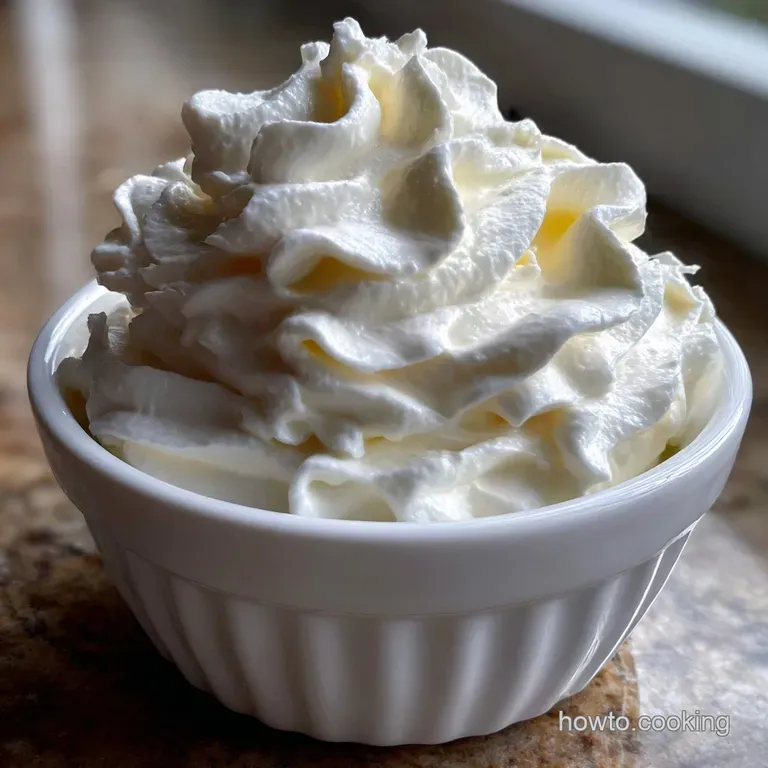
The beauty of this heavy whipping cream recipe is its simplicity. If you don't have true Heavy Whipping Cream on hand, don't panic! You have options.
| Ingredient | Role | Why it Matters | Smart Swaps / Heavy Whipping Cream Substitute |
|---|---|---|---|
| Heavy Whipping Cream (Cold) | The Structure | Must have 36%+ fat content. Cold is non-negotiable. | Heavy Cream Substitute: Mix 2/3 cup whole milk and 1/3 cup melted unsalted butter. Whip immediately. (Or check out my detailed guide: Heavy Cream Substitute: Make Rich Cream Instantly ) |
| Powdered Sugar | Sweetener & Stabilizer | The cornstarch content prevents weepage. | Granulated Sugar: Use 1/4 cup, but the final cream will be less stable and slightly gritty. |
| Vanilla Extract | Flavor Depth | Adds necessary aroma. | Almond/Maple Extract: Use sparingly (1/2 tsp) as the flavor is intense. |
| Pinch of Salt | Balance | Counteracts the intense sweetness. | Optional, but highly recommended for flavor rounding. |
step-by-step: Whipping Heavy Cream to Stiff Perfection
This is a Quick Whipped Cream Recipe that requires laser focus for the last 60 seconds. Do not walk away!
1. Preparation and Chill
You must chill everything. Put your metal mixing bowl and whisk attachment into the freezer for at least 15 minutes. Ensure your Heavy Whipping Cream is right out of the fridge the colder, the better.
2. Initial Whip and Flavor Addition
Pour the cold Heavy Whipping Cream and vanilla extract (if using) into the chilled bowl. Start your mixer on the lowest speed (1 or 2). This prevents splashing and incorporates air slowly and evenly. Whip for about 30 seconds.
3. Incorporate Dry Ingredients
Stop the mixer. Add the powdered sugar and the pinch of salt. Restart the mixer immediately on medium speed (4 or 5) until the sugar is just incorporated.
4. Increase Speed and Monitor for Peaks
Increase the speed to medium high (6 or 7). Whip consistently. You will start to see tracks forming in the cream. When the mixer starts sounding slightly muffled and the cream begins clinging to the whisk, stop and scrape down the sides.
5. Achieving Stiff Peaks (The Finish Line)
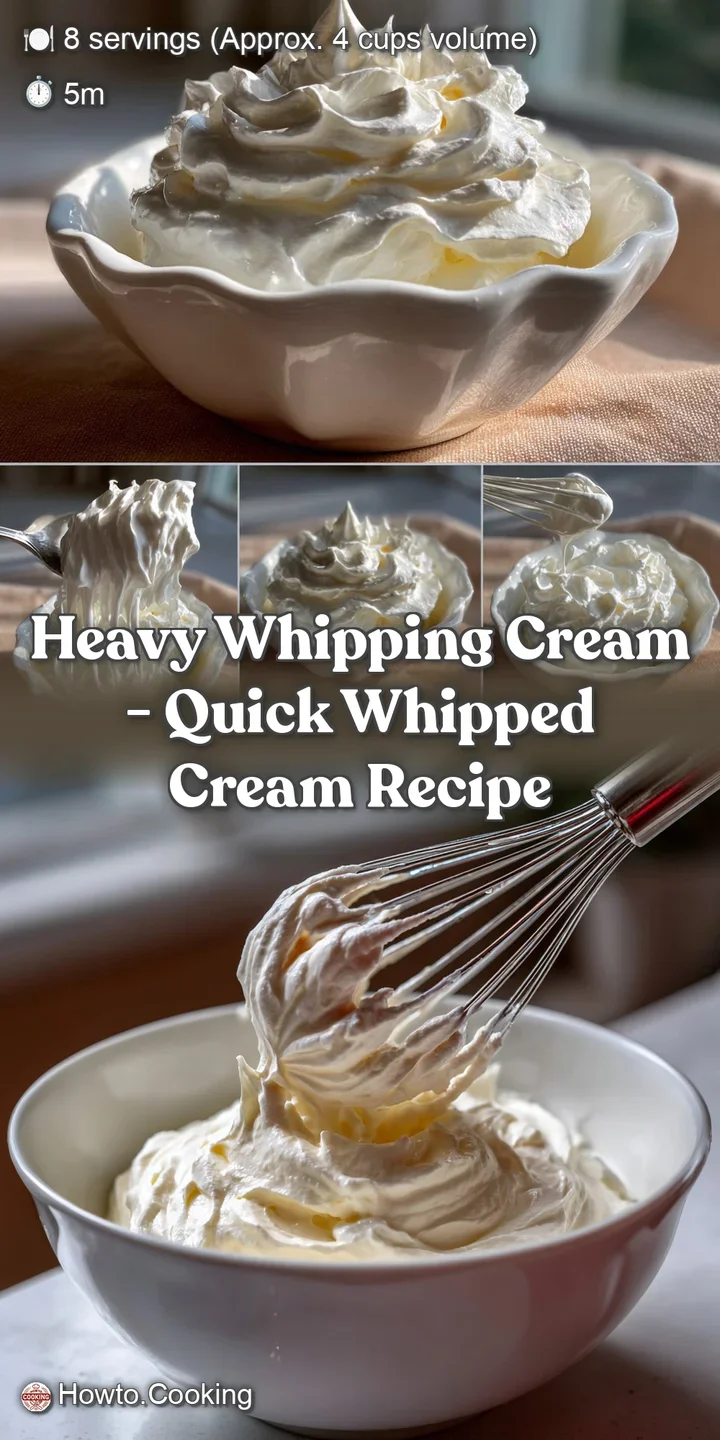
This is the critical stage. Keep whipping until the cream forms soft peaks when you lift the whisk, the peak holds for a second, then softly curls over like a wizard’s hat. Continue whipping for 15 30 seconds more. The texture should transform from glossy liquid to a velvety, opaque foam.
Stop the second the cream forms stiff peaks (when the cream stands perfectly straight up when you lift the whisk). It should look smooth and utterly luxurious.
Troubleshooting Common Mistakes and Expert Tips
The road from liquid cream to butter is short and paved with good intentions. Here are the pitfalls I fell into so you don't have to.
| Mistake | The Fix | Why It Happens |
|---|---|---|
| Over Whipping | Stop immediately! Whisk in 2 tablespoons of liquid, unwhipped Heavy Whipping Cream by hand until the texture is smooth again. | You whipped past the stiff peak stage, causing the fat molecules to clump too tightly, turning the velvety cream grainy (it’s on the way to butter). |
| Cream Won't Thicken | Place the entire bowl back into the freezer for 10 minutes. Then resume whipping at a medium speed. | The cream or the environment was too warm, melting the fat structure before it could hold the air. Temperature is vital for this Heavy Whipping Cream preparation. |
| Weeping After Storage | The stabilization method failed (or you used granulated sugar). Use the cream in a cooked recipe instead (like soup or sauce). | The temperature fluctuated too much, or the liquid sweetener you used broke down the structure over time. Use powdered sugar for the best stability. |
Maximizing Shelf Life: Storage and Uses For Heavy Whipping Cream
This stabilized cream is fantastic because it holds up! You won't have the stress of making it five minutes before the guests arrive.
Refrigerating Freshly Whipped Cream
If properly stabilized, whipped Heavy Whipping Cream can be stored airtight in the refrigerator for up to 3 days. Use it as a classic dollop on pie, or pipe it onto festive treats. For another excellent use for stabilized cream, this mixture works wonderfully as a frosting base! If you are a fan of rich, creamy toppings, you should definitely check out my recipe for Cinnamon Roll Icing: The Ultimate Creamy Tangy Glaze .
Can You Freeze Stabilized Whipped Cream?
Yes! You absolutely can. Freeze the whipped cream by piping rosettes or dollops onto a parchment lined baking sheet. Freeze solid (about 2 hours), then transfer the frozen shapes to a freezer bag or container. They hold beautifully for up to 2 months.
You can place the frozen dollop directly onto a piece of hot chocolate or a warm slice of pie it will thaw quickly while keeping its shape!
Creative Uses and Variations
The possibilities are endless once you know how to make heavy whipping cream that stays put.
- Chocolate Whip: Add 2 tablespoons of high-quality cocoa powder when you add the sugar. This is divine paired with fresh raspberries.
- Cheesecake Swirl: For a light, fluffy filling, fold this stabilized cream into cream cheese. If you love that texture, this is the exact principle I use when I make heavy whipping cream for my filling in my popular Pumpkin Cream Cheese Cookies: The Softest, Easiest Autumn Treat .
- Savory Touch: Omit the sugar and vanilla entirely. Use the plain, stiffly whipped cream (Crème Chantilly) as a cooling dollop atop rich, spicy soups or chili. It adds a marvelous mouthfeel.
Mastering Heavy Whipping Cream is a cornerstone skill in the kitchen, turning everyday desserts into luxurious indulgences. Now go forth and whip!
Recipe FAQs
What is the optimal temperature for whipping heavy cream?
Heavy cream whips best when very cold, ideally around 40°F (4°C) or below. Ensure the cream itself, the mixing bowl, and the whisk attachments have been thoroughly chilled in the freezer for 15-20 minutes before you begin.
Why did my whipped cream collapse or become runny quickly?
Collapse is typically due to insufficient fat content or lack of stabilization, especially in warm environments. If the cream wasn't stabilized, it will naturally deflate as air escapes and moisture separates; using a stabilizer helps trap this moisture and ensures the structure holds for hours.
What common stabilizers can be used besides gelatin to ensure maximum height and stability?
Excellent stabilizers include powdered sugar (which contains cornstarch), meringue powder, or commercial stabilizers like cream cheese or mascarpone mixed into the base. These ingredients absorb excess liquid, preventing weepage and maintaining a firm structure perfect for intricate piping or layering.
How do I know when the cream is perfectly whipped, and what happens if I over whip it?
The cream is perfectly whipped when it holds firm peaks that curl slightly at the tips (medium firm peaks). Over whipping incorporates too much air, causing the fat molecules to bind too tightly; this results in a grainy texture that quickly separates into butter and buttermilk.
How long will stabilized whipped cream hold its structure in the refrigerator?
Stabilized whipped cream, when stored in an airtight container in the refrigerator, can maintain its structure beautifully for 24 to 48 hours. While it remains safe to eat for longer, the structural integrity will gradually diminish after the second day.
What is the best type of sweetener to use when preparing whipped cream?
Powdered sugar (confectioners' sugar) is highly recommended because the fine texture dissolves instantly and the added cornstarch acts as a minor stabilizer. Granulated sugar can leave a gritty texture if it does not fully dissolve during the short whipping time.
What is the difference between heavy cream and whipping cream?
Heavy cream must contain a minimum of 36% milk fat, while whipping cream often ranges from 30% to 35%. Although both can be whipped, heavy cream yields a richer flavor, greater volume, and holds its shape significantly longer due to its higher fat content, making it ideal for stabilization.
Stabilized Heavy Whipping Cream Recipe
Ingredients:
Instructions:
Nutrition Facts:
| Calories | 135 kcal |
|---|---|
| Protein | 1 g |
| Fat | 13 g |
| Carbs | 5 g |
| Fiber | N/A |
