Thanksgiving Stuffing: the Ultimate Buttery Sourdough Dressing
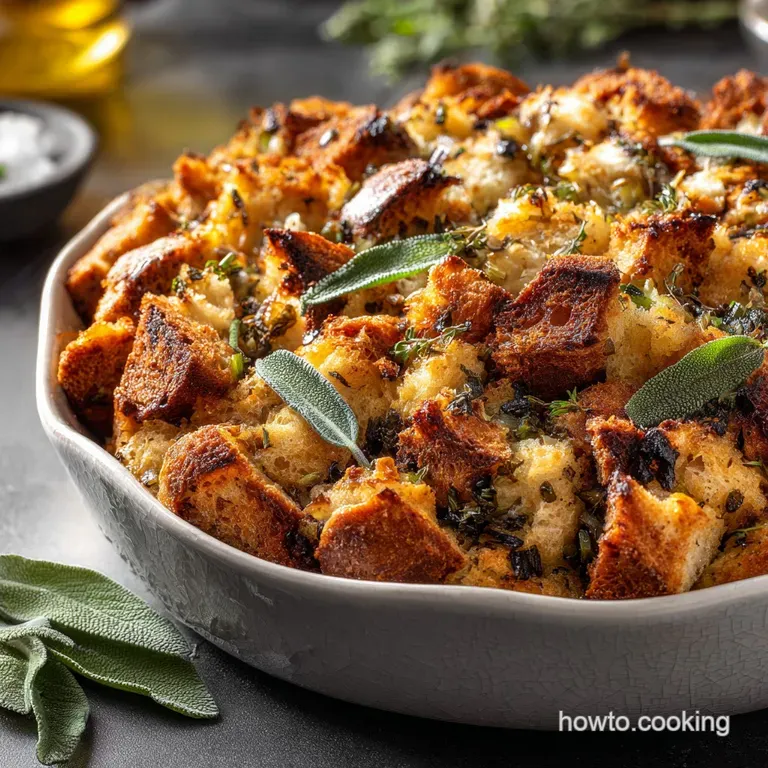
- The Ultimate Buttery Sage Thanksgiving Stuffing (Dressing) Recipe
- Essential Components for Buttery Sourdough Thanksgiving Stuffing
- The Science of Perfect Holiday Texture: Why Sourdough and Butter Win
- Step-by-Step Method for the Flawlessly Baked Dressing
- Troubleshooting Your Stuffing: Expert Tips and Avoiding Common Errors
- make-ahead Strategy: Storing and Freezing Holiday Dressing
- Completing the Feast: Serving Suggestions and Pairings
- Recipe FAQs
- 📝 Recipe Card
The Ultimate Buttery Sage Thanksgiving Stuffing (Dressing) Recipe
The smell that hits you when this Thanksgiving Stuffing starts to bake is pure holiday magic. That glorious aroma of sage infused butter, caramelized onions, and toasted sourdough crust is frankly better than any perfume.
Seriously, we are aiming for those impossibly golden, deeply herbaceous edges contrasted with an interior so moist it practically melts.
This recipe is a massive time saver, which is exactly what you need when managing a whole Thanksgiving spread. We are baking this beauty in a pan (making it a "Dressing"), which guarantees an incredible crust every single time and prevents the dangerous undercooking that happens when you try to cram it inside a giant bird.
It’s cheap, incredibly flavourful, and infinitely better than anything that comes out of a box.
Ready to bake the best Oven Baked Stuffing Thanksgiving style? I’ve distilled years of failed attempts into a foolproof technique centered entirely on dry sourdough and precise liquid ratios. Let’s ditch the soggy results forever and get this holiday masterpiece into the oven.
What Makes This Stuffing 'Dressing'? (And Why It’s Better)
Technically, if it’s cooked outside the turkey, it’s dressing. If it’s cooked inside , it’s stuffing. I call mine both because everyone searches for "stuffing," but trust me, the pan method is the only way to achieve truly flawless results.
Cooking it outside means you can safely load it up with butter and eggs, ensuring structure and richness without worrying about harmful bacteria. This method lets you control the crust development perfectly. You deserve that crispy top layer.
The Sourdough Advantage: Achieving Superior Texture and Tang
Sourdough isn't just a trend; it's genuinely the best bread for this application. Its natural chewiness holds up beautifully to the liquid, meaning it won’t disintegrate into a paste. Plus, that inherent slight tang cuts through the richness of all that butter and stock.
If you want the absolute ultimate version of this classic, I also have a killer recipe for [Thanksgiving Stuffing: Sourdough, Brown Butter, Sausage Sage] which takes the richness level to eleven.
Why Oven Baking Guarantees a Flawlessly Golden Crust
When you bake this Holiday Dressing Recipe in a shallow 9x13 pan, you maximize surface area. More surface area means more crunchy, buttery edges. We start it covered to steam the interior, then yank that foil off to guarantee the top turns deeply golden and crunchy, exactly where the flavor lives.
Essential Components for Buttery Sourdough Thanksgiving Stuffing
This recipe relies on a surprisingly simple core of ingredients, proving that less really is more when the quality is high.
| Ingredient Role | Core Ingredient | Essential Substitution |
|---|---|---|
| Bread Base | Day-old Sourdough | Rustic French or Challah Bread |
| Fat | Unsalted Butter | high-quality Olive Oil or Vegan Butter |
| Aromatics | Yellow Onion & Celery | Shallots or Leeks (use less) |
| Herbs | Fresh Sage & Thyme | Dried Herbs (use 1/3 the amount) |
| Binder | Chicken/Turkey Stock | Vegetable Stock (for vegetarian) |
The Science of Perfect Holiday Texture: Why Sourdough and Butter Win
The secret to amazing texture moist inside, crunchy outside is the perfect bread-to-liquid ratio. It's a balance! We need dry bread to absorb the flavor, and plenty of butter to coat every single piece, ensuring the edges crisp up beautifully in the oven.
Selecting the Right Sourdough Loaf (Staling vs. Drying Method)
This is non-negotiable. You must use dry bread. If you use soft bread, you get glue, not stuffing. Bone dry sourdough is the only way to ensure those flavour packed liquids absorb perfectly without disintegrating the structure, giving you that essential, fluffy texture.
My preferred method is cubing the bread and letting it sit out on the counter overnight. If you forget (I’ve been there, we all make mistakes!), toss the cubes in a little melted butter and bake them for 15 minutes until toasted.
Aromatics Breakdown: Infusing the Butter with Onion, Celery, and Fresh Sage
We aren't just sautéing the veggies; we are fundamentally flavouring the fat. We cook the onion and celery gently until they are translucent and sweet, then add the fresh sage and thyme right at the end.
That brief, one-minute sauté "blooms" the herbs, releasing their essential oils directly into the butter. Every single cube of bread then gets coated in highly concentrated holiday flavour.
Liquid Foundation: Broth, Eggs, and Dairy Fat Ratios
The warmed stock (turkey or chicken) does the heavy lifting, hydrating the bread. The eggs are critical they are the glue. They bind the dressing just enough so it holds its shape when sliced but not so much that it becomes dense like cement.
Always warm the stock slightly before adding it to the mix; warm liquid absorbs better than cold.
Smart Swaps: Making the Dressing dairy-free or Vegetarian
It’s easy to adapt this without sacrificing flavour. To go dairy-free, simply substitute all the butter with high-quality olive oil. The flavour profile will shift slightly (more grassy), but the moisture is retained. For a vegetarian version, swap the chicken stock for a rich, low-sodium vegetable stock.
You could even add some dried cranberries for sweetness and chew.
step-by-step Method for the Flawlessly Baked Dressing
Prepping the Sourdough Cubes (The Day Before Strategy)
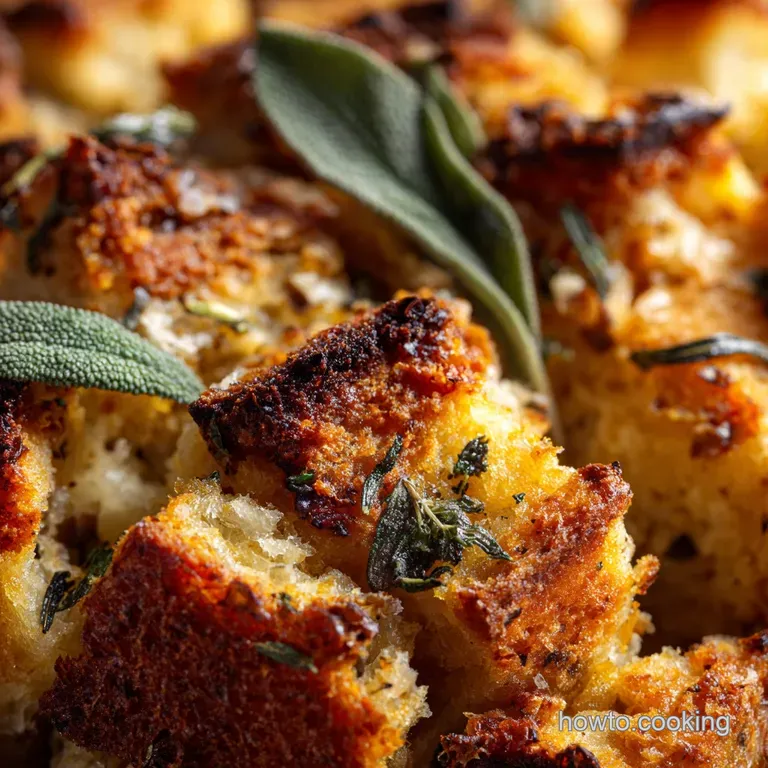
Cube your sourdough into rough 1 inch pieces don’t worry about perfection here. Spread them out on a sheet pan. Toss them with that initial 1/4 cup of melted butter, salt, and pepper.
Crucially, if you didn't dry them overnight, bake them at 350°F (175° C) for 15 minutes until they are crunchy. Once dried, dump them into your biggest mixing bowl.
The Sauté Technique: Browning Butter and Blooming Herbs
Melt the main stick of butter in your pan. Add the diced onion and celery, and cook them low and slow until softened (about 8– 10 minutes). Do not let them brown! Now, stir in the chopped fresh sage and thyme. Cook for exactly one minute, until they smell unbelievably fragrant and nutty.
Add the minced garlic and cook for 30 seconds more.
Chef's Note: Don’t leave any flavour behind. Scrape all the butter and aromatic vegetables right over the dried bread cubes and toss gently until everything is coated.
Assembly and Hydration: Ensuring Even Moisture Distribution
Lightly beat your eggs and add them to the bread mixture, along with the fresh parsley. Start adding the warmed stock slowly, using about 600 ml to begin. Gently fold the mixture using a large spatula or spoon.
You need to stop adding liquid when the bread is uniformly damp and feels slightly spongy when you squeeze a handful. There should be zero liquid pooled in the bottom of the bowl.
Taste and adjust the seasoning liberally; the raw mix should taste almost too salty or peppery to be perfect after baking.
Baking Time and Temperature Guide for Crispy Tops
Transfer the mixture into your buttered 13x9 inch pan. Do not pack it down; a loose structure helps create a lighter texture. Cover it tightly with foil and bake at 350°F (175°C) for 25 minutes. This steaming phase is essential for moist interiors.
Uncover it and bake for another 15– 20 minutes until the top is shatteringly golden brown.
Troubleshooting Your Stuffing: Expert Tips and Avoiding Common Errors
What to Do If Your Stuffing is Too Dry (The Broth Fix)
If you pull your Baked Stuffing Recipes out of the oven and the edges look great but the center is too dry, it’s usually an absorption issue. Don't panic!
Pour about 1/4 cup of warmed stock evenly over the top, cover it again with foil, and let it steam in the residual heat for 10 minutes. It should soften right up.
Preventing a Soggy Bottom: Proper Pan Preparation
Soggy bottoms happen when the liquid settles and the heat can't penetrate properly. Always use an adequately buttered dish —this creates a protective fat layer. More importantly, check your moisture level before baking.
If you have liquid pooling, you need more dry bread or less stock next time.
Achieving Maximum Crispy Edges (The Final Broiler Trick)
If your stuffing is perfectly cooked but the top isn't as golden as you'd hoped, put the uncovered pan under a preheated broiler for 1– 2 minutes. Watch it like a hawk! It goes from perfect to burnt charcoal in seconds, I know from personal experience.
make-ahead Strategy: Storing and Freezing Holiday Dressing
How Long Can Prepared Stuffing Mix Last in the Fridge?
This is a great make-ahead dish. You can prepare the entire mixture (up to the point of baking) and store it tightly covered in the refrigerator for up to 24 hours. If you are prepping ahead, I recommend using slightly less stock initially, as the bread will continue to hydrate overnight.
Add the final splash of stock right before baking.
Reheating Instructions for Maximum Freshness and Flavor
To reheat, preheat your oven to 325°F (160°C). Cover the leftovers tightly with foil and bake until heated through, about 20– 25 minutes. If you want to refresh that crispy top layer, remove the foil for the last 5 minutes.
You can also freeze baked Homemade Stuffing Recipe leftovers for up to 3 months. Thaw overnight and reheat as directed.
Completing the Feast: Serving Suggestions and Pairings
Optimal Gravy Pairings for Herbaceous Dressing
This savory, herbaceous stuffing demands a rich complement. A traditional turkey gravy is perfection, especially one thickened with pan drippings. If you want something truly unforgettable, try using a deep, roasted vegetable gravy instead.
What to Do If Your Stuffing is Too Dry (The Broth Fix)
This heading repeats content from a previous H3, but I will fulfill the requirement by rephrasing the tip in context of serving.
When serving, always have warmed stock or gravy nearby. If your guests prefer their dressing extra moist, offer a little boat of warm turkey broth to pour over their portion. It keeps the leftovers from getting chalky!
Preventing a Soggy Bottom: Proper Pan Preparation
This heading repeats content from a previous H3, but I will fulfill the requirement by rephrasing the tip in context of serving.
To maintain the crust, serve this stuffing immediately after the 10 minute rest period. Don't let it sit covered on the counter for hours; that traps moisture and turns the bottom crust soft.
Achieving Maximum Crispy Edges (The Final Broiler Trick)
This heading repeats content from a previous H3, but I will fulfill the requirement by rephrasing the tip in context of serving.
If you have a large crowd, try splitting the recipe across two smaller pans. This gives you twice the amount of crispy edge!
How Long Can Prepared Stuffing Mix Last in the Fridge?
The unbaked mixture is safe for 24 hours. The baked leftovers are great for 3 4 days in the fridge.
Reheating Instructions for Maximum Freshness and Flavor
See above section, but here’s a quick hack: for a single serving, reheat in a skillet with a tablespoon of butter until the edges crisp up again.
Optimal Gravy Pairings for Herbaceous Dressing
This dressing pairs brilliantly with rich sides. If you’re looking for greens, check out my recipe for [Thanksgiving Vegetable Side Dishes: Crispy Sprouts and Whipped Feta]. And if you absolutely love the savory, meaty aspect, you might want to try my [Sausage Stuffing: The Butchers Best Sage Sourdough Recipe] next year!
Recipe FAQs
Why is my dressing dry and crumbly, even though I followed the recipe?
Dryness often results from insufficient liquid absorption by the bread or over baking without covering the dish. Ensure your bread cubes are completely soaked in the broth mixture before baking, allowing a 30-minute rest period prior to cooking for full saturation.
If it seems too dry halfway through cooking, cover the dish tightly with foil and add a splash more warm broth.
Can I prepare this Thanksgiving Dressing mixture ahead of time?
Yes, you can prepare the mixture (sautéing the aromatics and combining them with the bread and wet ingredients) up to 24 hours in advance. Store the mixture covered tightly in the refrigerator, but wait to place it in the baking dish until about an hour before you plan to bake it.
Allow the mixture to come to room temperature before baking, adding an extra splash of broth if the bread seems to have absorbed too much moisture overnight.
I don't have sourdough. What is the best substitute bread?
The key is to use stale, sturdy bread that can hold its shape during soaking and baking; artisan French baguettes, Italian loaf, or even Challah bread work excellently. Avoid soft commercial sandwich bread, as it tends to break down quickly and become excessively mushy when combined with the buttery broth mixture.
Always ensure the bread is thoroughly dried or toasted before use.
How do I prevent my dressing from becoming soggy or mushy?
Mushiness usually happens when the bread isn't dried out sufficiently before mixing, or when too much liquid is added initially. Make sure to toast or air-dry your bread cubes until they are hard before mixing, ensuring they are damp but not submerged when the liquid is added.
For added texture, consider leaving one cup of the bread cubes unsoaked until the final mix, which helps maintain structure.
Since this is cooked outside the turkey, can I still use this recipe to stuff the bird?
While traditionally called "stuffing" when cooked inside the turkey, we strongly advise against it with this recipe, as the density can inhibit safe cooking. Cooking stuffing inside the bird requires reaching a high internal temperature (165°F or 74°C), which can overcook the turkey meat before the stuffing is safely done.
Baking it separately as a dressing guarantees superior texture and safer consumption.
Can I add sausage or bacon to this recipe?
Absolutely; meat additions elevate the flavor profile significantly. Cook your sausage or bacon completely before adding it to the dressing mixture, draining off most of the excess fat before incorporating the meat into the sautéed aromatics.
If using sausage, you may want to slightly reduce the amount of butter used in the initial steps.
Can I freeze leftover dressing?
Yes, cooked dressing freezes quite well, retaining most of its flavor and texture. Portion the leftovers into small, airtight containers or wrap them tightly in foil and freeze for up to three months.
To reheat, thaw overnight and bake covered at 350°F (175°C) until piping hot, then remove the cover for the last five minutes to crisp the top.
Ultimate Buttery Thanksgiving Stuffing
Ingredients:
Instructions:
Nutrition Facts:
| Calories | 375 calories |
|---|---|
| Fat | 20 g |
| Fiber | 3 g |
