The Ultimate Hearty Beef and Barley Soup a Sunday Dinner Classic

Capturing the Soul of Winter: Why This Beef Barley Soup Stands Alone
There are countless recipes for cold weather comfort, but few possess the profound, restorative depth of a truly great bowl of Beef Barley Soup . This isn't just a simple weeknight meal; it is a culinary project designed to fill your home with an aroma that speaks of time and tradition.
Unlike thin, rushed broths, this recipe focuses on developing complex, layered flavors from the very beginning, ensuring every spoonful delivers a rich, satisfying experience that anchors a chilly evening.
This focus on depth is what transforms a basic meal into the celebrated classic that is often called an Old Fashioned Vegetable Beef Barley Soup .
The Secret to a Restorative Broth: Low and Slow Simmering
The heart of any exceptional soup is its broth, and for this recipe, the liquid must be given the time it deserves. Our goal is not just to cook the ingredients, but to extract every last bit of savory goodness from the beef and aromatics, concentrating the essence into a foundational, deeply flavored stock.
The process begins with aggressive searing and is followed by a prolonged, gentle simmer (lasting upwards of two hours). This low-and-slow approach guarantees the tough collagen in the beef breaks down completely, enriching the liquid with gelatin and resulting in a mouthfeel that is luxurious and thick, without relying purely on starch.
This careful simmering phase is the non-negotiable step that distinguishes a good soup from a truly incredible one.
Defining 'Hearty': The Essential Textural Balance
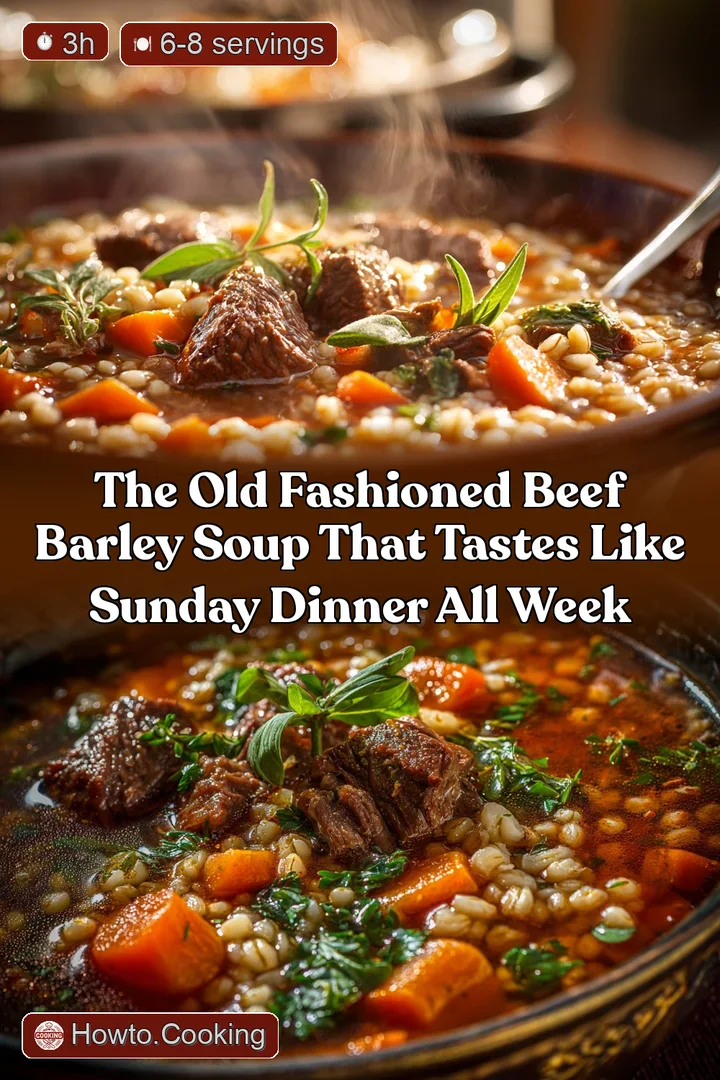
The term "hearty" applies not only to the robust flavor profile but also to the satisfying textures within the dish. We look for a perfect contrast: the beef must be absolutely fork tender practically dissolving while the pearl barley should remain slightly chewy and plump.
The 1 cup of pearl barley is critical here; as it slowly cooks, it releases just enough starch to lend body to the broth, transforming it from a thin liquid into a substantial, unified meal.
This natural thickening agent helps create a deeply comforting texture characteristic of a truly Healthy Beef And Barley Soup that sustains you through the coldest months.
A Proper British Isles Essential: Culinary Heritage in a Bowl
This dish carries significant weight in its culinary heritage, serving as a staple in the cold climates of the British Isles and beyond. Historically, recipes like this were designed to utilize tough, inexpensive cuts of meat and seasonal root vegetables, maximizing nutrition and flavour with minimal cost.
The resulting meal is nutrient dense and remarkably satisfying, making it the definition of a restorative, Simple Beef Barley Soup . It is comfort food at its most honest, a testament to how patient cooking can transform humble ingredients into a world class dish.
Laying the Foundation: Essential Ingredients and Substitutions

Success in making Beef Barley Soup begins long before the pot hits the hob; it starts with meticulous ingredient selection. Quality inputs, especially when dealing with such an extended cook time, directly translate to superior final flavor.
Choosing the Right Cut: Chuck, Shank, or Round?
To achieve that meltingly tender texture that defines a great beef soup, you must select a cut rich in connective tissue. Chuck roast is the undisputed champion for this recipe. We use approximately 3 lbs of trimmed chuck, cut into uniform 1 inch cubes.
During the long simmer, the abundant collagen in the chuck dissolves into gelatin, lubricating the muscle fibers and fortifying the broth. While alternatives like beef shank or short ribs also work well, they all share the requirement for long, moist cooking; leaner cuts like sirloin will dry out and turn tough.
If you prefer to skip the lengthy braising process, using Beef barley soup with ground beef is an option, though it significantly changes the textural outcome and reduces the need for the deep, initial searing step.
The Barley Question: Pearl vs. Hulled (And Why It Matters)
For the classic consistency of this Vegetable Beef Barley Soup , pearl barley is the preferred grain. Pearl barley has had its bran layer removed, allowing it to cook much faster (around 90 minutes) and release more starch compared to hulled barley.
We insist on thoroughly rinsing the 1 cup of pearl barley before adding it to the pot. This crucial step removes surface starch that would otherwise cause the soup to become overly cloudy and porridge like, ensuring the final broth remains clear yet well bodied.
Preparing the Aromatics: Building the Flavor Base
The flavor base relies on a generous mirepoix of finely diced yellow onion, carrots, and celery. These three vegetables, sautéed until softened, sweeten the soup and provide a foundational layer of savory depth.
After the mirepoix has softened, we introduce minced garlic and, critically, 1 tablespoon of tomato paste. The tomato paste is a low-key hero ingredient; cooking it briefly with the aromatics concentrates its acidity and develops potent umami , lending a necessary complexity to the broth that no single spice can replicate.
Necessary Gear: Tools for the Ultimate Beef Barley Soup
While the recipe is simple, the equipment should be robust. A heavy bottomed Dutch oven or stockpot (minimum 6-quart) is essential. A heavy vessel maintains stable heat, which is vital for achieving a proper sear on the beef without scorching the surface, and ensuring the long, gentle simmer proceeds without dangerous hot spots.
You will also need a slotted spoon for safely removing the seared meat and for skimming any impurities that rise to the surface during the initial cooking phase.
Related Recipes Worth Trying
- Our Ultimate SlowSimmered Beef Vegetable Soup Recipe — Forget flimsy broth This Easy Homemade Vegetable Beef Soup features forktender chuck and a deeply rich concentrated broth The ultimate Comfort Food Recipe
- Silky Lemon Chicken Soup Avgolemono Classic Comfort Food — Our simple Avgolemono Soup recipe delivers a rich silky Lemon Chicken Soup without any cream Sunshine in a bowl perfect for feeling healthier and brighter
- Classic Greek Lemon Chicken Soup Avgolemono The Foolproof Tempering Method — Master this Classic Greek Avgolemono Recipe Our detailed steps guarantee a foolproof temper yielding the silkiest creamiest Greek Lemon Chicken Soup without...
The Slow Cooked Method: step-by-step Flavor Development
The quality of this Beef Barley Soup is defined entirely by the active cooking techniques employed in the first stage. This method prioritizes flavour concentration and browning, maximizing the potential of every ingredient before the long simmer begins.
Achieving the Deep Maillard Crust: Searing the Beef Properly
The first step is arguably the most important: searing the beef. Pat the 1 inch beef cubes very dry, season generously, and lightly dust them with flour. This dusting is a chef’s secret; it promotes a deep, dark crust and acts as a binder, helping the meat release less moisture when it hits the hot oil.
Sear the beef in small batches over medium high heat. Do not overcrowd the pot overcrowding drops the temperature and results in steaming, not searing. We are looking for a dark, mahogany brown crust; this intense browning, known as the Maillard reaction, creates hundreds of complex savory flavor compounds that form the backbone of the finished soup.
Deglazing and Layering: Scrape Up the Fond
Once the beef is seared and removed, the bottom of the pot will be coated with delicious, caramelized brown bits known as fond . This fond is pure flavor gold. We capture it by sautéing the aromatics directly in the pot, allowing their moisture to naturally loosen some of the fond.
For an even deeper flavor profile, we then introduce 1/2 cup of dry red wine (Merlot or Cabernet). As the wine bubbles and reduces slightly, use a wooden spoon to vigorously scrape the bottom of the pot, dissolving all the caramelized solids into the liquid.
This deglazing step integrates the concentrated flavor from the searing into the broth before the stock is even added.
The Long Wait: Simmer Time and Checking Tenderness
Return the seared beef to the pot, add the stock, the rinsed barley, and the tied bundle of thyme and bay leaves. Bring the mixture to a rapid boil, then immediately reduce the heat to the lowest possible setting to maintain a slow, gentle simmer.
The cooking time requires patience between 1 hour 45 minutes and 2 hours 15 minutes. The low heat prevents the meat from tightening up and ensures the barley cooks thoroughly.
Monitor the soup and periodically skim any grey foam or excess fat that rises, especially during the first half hour. The soup is ready only when the beef yields absolutely no resistance and can be easily shredded with a fork.
Finishing Touches: Adjusting Seasoning and Consistency
Once the beef is tender, remove and discard the herb bundle. The final step is crucial: tasting and adjusting the seasoning. Because the liquid has reduced and the flavors have concentrated over hours, the salt and pepper balance may need adjustment.
Add the 1 teaspoon of Worcestershire sauce for a final, subtle layer of complex umami. If the soup has thickened too much due to the barley, a splash of hot stock can correct the consistency.
Allow the finished soup to rest off the heat for 10 minutes before ladling; this resting period allows the beef to fully reabsorb moisture and ensures peak flavor integration.
Troubleshooting and Recipe Customization
One of the great joys of cooking this traditional soup is its versatility and resilience. It lends itself well to adaptation, both for different appliances and for accommodating specific dietary needs.
Storage, Freezing, and Reheating Leftovers
This recipe, like most great stews, tastes even better on the second day, once the flavours have fully married. Store cooled leftovers in airtight containers in the refrigerator for up to four days. Beef Barley Soup freezes exceptionally well, making it ideal for batch cooking.
Simply cool completely, transfer to freezer safe containers, and freeze for up to three months. When thawing, note that the pearl barley will have absorbed a substantial amount of liquid.
Upon reheating, whether on the stovetop or in the microwave, plan to add an extra cup or two of hot beef stock or water to restore the desired soup consistency.
Pressure Cooker and Slow Cooker Adaptations (Speed vs. Depth)
While the stovetop method delivers the deepest, most nuanced flavor, modern appliances offer convenient alternatives. For the busy cook seeking a quick fix, the Beef barley soup instant pot method is excellent: Sear the beef and sauté the aromatics as directed on the stovetop, then transfer everything to the pressure cooker.
Cook under high pressure for 35 minutes, followed by a natural pressure release (NPR). Add the barley after the pressure cooking is complete and simmer gently for 15– 20 minutes until tender.
For those who prefer the unattended simplicity, the Beef barley soup slow cooker method is perfect: After searing and deglazing, transfer all ingredients to the cooker.
Cook on low for 6 to 8 hours, adding the rinsed barley only during the final 90 minutes of cooking to prevent it from turning to mush. These methods allow you to enjoy the restorative qualities of the soup with less active cooking time.
Enriching the Final Dish: Fresh Herbs and Acid Balance
Even after a long, slow simmer, a rich dish can sometimes benefit from a final lift. Just before serving, ensure you have plenty of freshly chopped parsley as a garnish; the green herb adds a burst of freshness that cuts through the savory richness.
Plus,, a final hint of acid whether a dash of red wine vinegar or a squeeze of fresh lemon juice can brighten the concentrated flavors dramatically, providing necessary contrast and balance to the heavy, meaty broth.
Making it Your Own: Vegetarian and gluten-free Beef Barley Soup Variations
The beauty of this soup lies in its structure, which can easily accommodate dietary modifications. For a gluten-free Beef Barley Soup variation, simply swap the pearl barley for a gluten-free grain such as brown rice or quinoa, being sure to add them later in the cooking process (typically during the last 30 minutes).
If you are looking for an equally hearty vegetarian take, you can omit the beef entirely and substitute with an equal weight of meaty mushrooms (like shiitake or oyster) and firm root vegetables like parsnips and turnips, using vegetable stock instead of beef stock.
Finally, if time or specific sourcing requires, you can certainly use Beef barley soup with ground beef ; just remember that ground beef browns much faster and should only be cooked until no longer pink, significantly reducing the overall simmer time needed.
Recipe FAQs
My beef is still a bit tough, even after simmering for hours. What’s the catch?
Tough beef usually means you need more time, mate! Chuck roast and similar cuts are working muscles and require a long, slow cook (often 2+ hours) to properly break down the stubborn collagen.
Don't rush it like a commuter train; if it's still resistant, simply let it simmer gently, covered, until it shreds easily with a fork patience is the secret ingredient for this proper Sunday dinner classic.
I need to make a gluten-free version of this hearty Beef Barley Soup. What's the best swap for the barley?
Pearl barley is the star here, offering that signature, comforting chew and natural starch for thickening the broth. For a gluten-free swap, brown rice or quinoa work well, added about 30 minutes before the end of cooking, but bear in mind they won't thicken the broth quite as much.
If gluten isn't an issue, ensure you are using pearl barley, as hull barley takes significantly longer to cook.
I skipped the wine is there a simple way to add that missing depth and umami now?
That little splash of wine helps scrape up the flavour bits (the fond) and adds a necessary acidic brightness to cut through the richness. If you skipped it, try stirring in a teaspoon of good quality balsamic vinegar or an extra dash of Worcestershire sauce right before serving.
However, the deepest flavour comes from that initial, proper dark sear on the beef never skip that crucial browning step!
My leftovers thickened up into a proper porridge! How should I store the soup?
That’s perfectly normal barley continues to absorb liquid like a hungry sponge as the soup cools down! Store the soup tightly sealed in the fridge for up to four days; remember, it often tastes even better the next day.
When reheating, simply ladle in a splash of extra hot beef stock or even water to bring the soup back to a desirable, ladle able consistency.
Can I freeze this Beef Barley Soup for later, or will the texture be ruined?
Absolutely, Beef Barley Soup freezes like a dream, making it a brilliant solution for batch cooking and meal prep. It keeps well for up to three months in an airtight container. While the barley and vegetables might soften slightly upon thawing, the flavour profile remains robust and deeply comforting perfect for a quick, warming supper on a particularly blustery day.
Ultimate Hearty Beef Barley Soup
Ingredients:
Instructions:
Nutrition Facts:
| Calories | 874 kcal |
|---|---|
| Protein | 11.9 g |
| Fat | 23.5 g |
| Carbs | 70.9 g |
| Fiber | 18.8 g |
| Sodium | 361 mg |
