Sausage Stuffing: the Ultimate Recipe for a Crispy, Savory Cracker
- The Ultimate Sage and Pork Stuffing: An Essential Overview
- The Flavour Science Behind the Best Sausage Stuffing
- Essential Ingredients for Perfect Sausage Stuffing
- Substitutions and Ingredient Notes
- How to Make Sausage Stuffing: Step-by-Step Method
- Troubleshooting and Expert Tips for Sausage Stuffing
- Preparing Ahead: Storage and Freezing Guide
- Perfect Pairings and Serving Suggestions
- Recipe FAQs
- 📝 Recipe Card
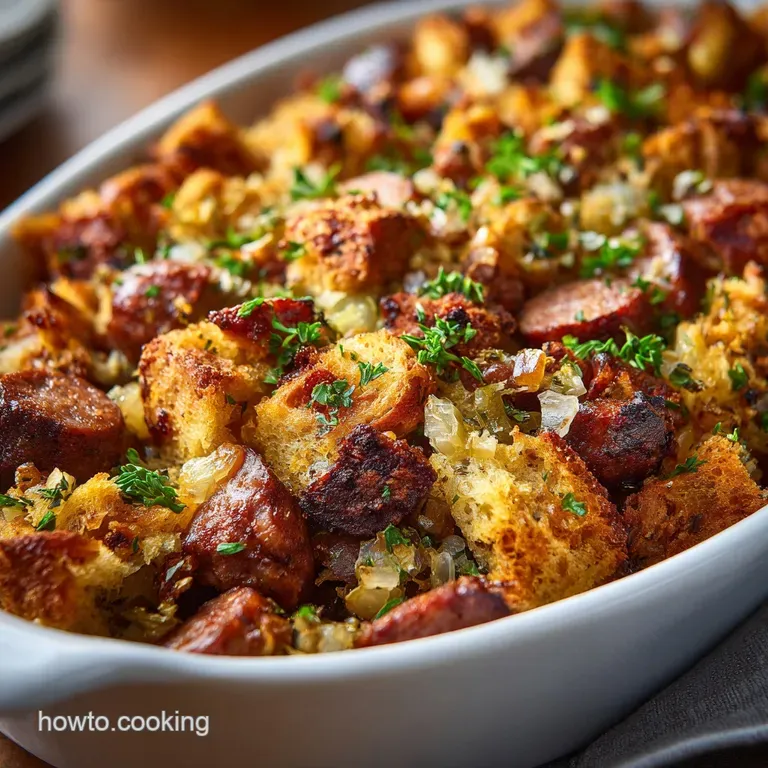
The Ultimate Sage and Pork Stuffing: An Essential Overview
If you walked into my kitchen right now, you would instantly know that the holiday season is upon us, even if it's only Tuesday in July. That aroma of deeply browned pork fat mingling with earthy sage and slowly caramelised onion is simply irresistible.
It is the defining scent of comfort food, and frankly, I could bottle it and wear it as perfume.
While the turkey or roast might get the glory, we all know the truth: stuffing is the real star. This particular Sausage Stuffing recipe is a lifesaver because it’s ridiculously easy, makes fantastic use of cheap, sturdy bread, and freezes beautifully if you want to prep early.
I mean, who needs complicated sides when you have this kind of intense flavour waiting?
I’ve spent years perfecting the balance between crispy crust and moist, flavour packed interior, failing spectacularly many times along the way. Forget the dry, bland hockey pucks of Christmases past.
We are making a beautifully savoury sausage stuffing that demands a second helping and works equally well as holiday stuffing recipes go, or just for a regular Sunday roast.
The Flavour Science Behind the Best Sausage Stuffing
This recipe isn’t just a list of steps; it’s a commitment to flavour building. We are essentially creating a deeply savory sausage stuffing casserole, and the details matter.
Why Stuffing is the Star of the Roast Dinner
Stuffing provides the necessary texture contrast that every great meal needs. Think about it: the roast is soft, the mashed potatoes are creamy, and the gravy is smooth. We need that glorious crunch!
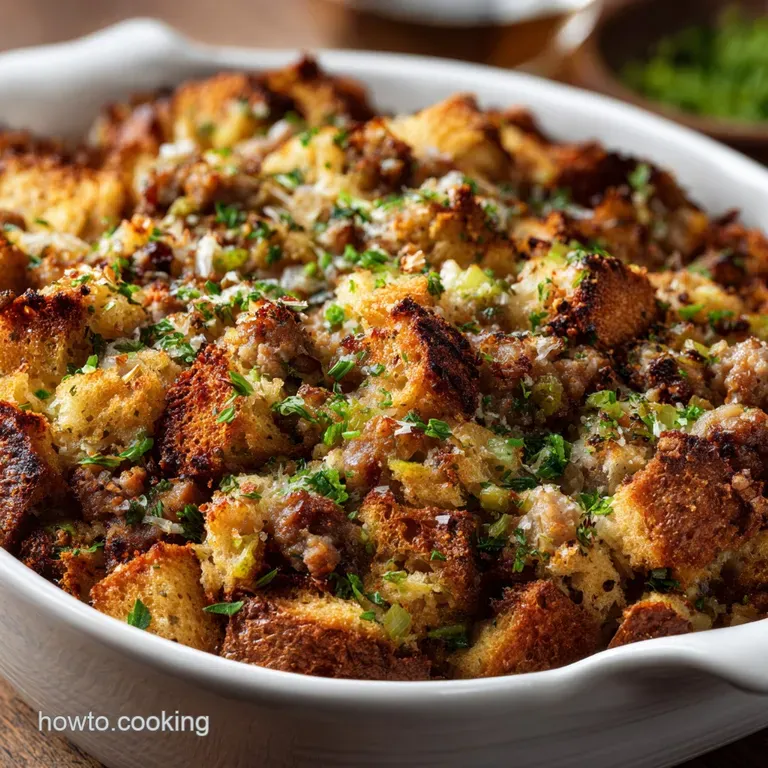
Our goal is to achieve an intensely seasoned interior held together by moisture, surrounded by a delightful, crackly, golden brown crust.
Achieving the Deeply Savoury Flavour Base
The secret weapon here is pork fat. We start by rendering out the fat from the high-quality pork sausage meat. We then use that deeply flavoured, slightly salty fat instead of plain butter or oil to gently cook down the onion and celery aromatics.
This process infuses the vegetables with the meaty, savory notes right from the start.
The Difference Between Baking Stuffing In and Out of the Bird
I’m firm on this: always bake your stuffing outside of the bird. Baking it inside (often called ‘dressing’) results in a guaranteed soggy texture because the bread absorbs all the juices and steam from the poultry.
On top of that,, it complicates food safety, as you must wait for the internal temperature of the stuffing to reach 74°C (165°F), often drying out the main roast in the process. When baked separately, you control the moisture and guarantee that irresistible crisp top.
Fat Rendering vs. Browning: Handling the Sausage Properly
You need to thoroughly brown the sausage for maximum flavor that Maillard reaction is your friend. Cook the sausage until it has developed a beautiful deep colour and crusty bits form on the bottom of the pan. Crucially, though, once cooked, you must drain off most of the rendered fat.
Leaving excessive fat will make the entire stuffing greasy, heavy, and slick. We only need two tablespoons of that glorious liquid gold left behind for the vegetables.
Achieving the Crisp Top and Moist Interior
This is the covered and uncovered trick. We cover the sausage stuffing with foil for the first 30 minutes of baking. This traps steam and moisture, ensuring the eggs set and the bread cubes hydrate evenly, resulting in that wonderfully moist texture.
Then, we yank the foil off for the last 15– 20 minutes. This blast of dry heat dries out the surface quickly, guaranteeing that golden, crisp crust we crave.
Optimising Herb Infusion
Fresh herbs are vital for classic Sausage Stuffing flavour. Sage and thyme are non-negotiable! Adding them to the pan with the aromatics and garlic for just 60 seconds before adding the bread allows their oils to bloom in the hot fat.
This intensifies their flavor dramatically, ensuring every bite is powerfully fragrant.
Essential Ingredients for Perfect Sausage Stuffing
This is the foundational list for the perfect savory sausage stuffing.
- Rustic Stale Bread: This must be dry! It’s the sponge.
- high-quality Pork Sausage: The primary flavour driver.
- Aromatics (Onion and Celery): These provide the necessary moisture and savory depth when softened in the rendered fat.
- Fresh Herbs (Sage and Thyme): The classic, woodsy pairing. Dried won't give you the same punch.
- Butter and Stock: The binders and hydrators. Stock provides moisture while butter adds richness.
- Eggs: These act like glue, binding the bread and sausage together so the stuffing holds its shape slightly.
Substitutions and Ingredient Notes
Don't panic if you’re missing something. We always have workarounds.
Selecting the Right Type of Pork Sausage Meat
I highly recommend using a high-quality, unseasoned or mildly seasoned pork sausage, often labeled as breakfast sausage or butcher's pork meat. Avoid heavily seasoned Italian sausage unless you are intentionally going for a spicy kick.
If you really want to dive deep into sausage selection, check out my post on [Sausage Stuffing: The Butchers Best Sage Sourdough Recipe].
Why You Need Stale Bread, Not Fresh
This is the mistake I made in my 20s. I used fresh supermarket white bread and ended up with a brick of flavourless mush. You need sturdy, dried out bread sourdough or a robust crusty loaf is perfect. It must be dry so it absorbs the stock without collapsing.
The Role of Celery and Onion Aromatics
They provide crunch and sweetness to balance the richness of the sausage. Cook them low and slow until they are completely translucent; don't rush this step!
Fresh Herbs: Maximising Sage and Thyme Impact
As mentioned, fresh is best. If you absolutely must use dried herbs, remember to halve the volume, and crumble them between your palms before adding them to the pan to help release their oils.
Handling Liquid: Which Stock is Best?
Chicken stock is my go-to, but turkey stock obviously works brilliantly if you happen to have it. Use low-sodium stock. Why? Because the sausage meat is already quite salty, and we don't want to over salt the whole dish before we even taste it.
Fat Alternatives (If Not Using Sausage Fat)
If your sausage is super lean and doesn't render much fat, you still need that richness. Use butter, or for an ultra rich flavor that works beautifully for holiday stuffing recipes, swap the butter for rendered duck or goose fat.
| Ingredient | Viable Substitute | Notes |
|---|---|---|
| Pork Sausage | Sweet or Hot Italian Sausage | Adjust salt downward if using cured meat. |
| Rustic Bread | Dried Baguette or Challah | Must be dried/stale. Avoid soft sandwich bread. |
| Chicken Stock | Vegetable Stock or Water + Bouillon | Ensure it is warmed before mixing. |
| Butter | Duck or Goose Fat | Adds incredible depth for a holiday stuffing. |
How to Make Sausage Stuffing: step-by-step Method
Let's crack on and make this family favorite stuffing!
Step 1: Preparing and Toasting the Bread Cubes
Cube your bread into rough one-inch pieces; uneven sizes are fine, as they create texture. Spread them onto a baking sheet. This is crucial: Bake them at a low temperature (150°C / 300°F) for 15– 20 minutes until they feel hard and dry, but they should not be brown.
Transfer the dried bread to your very large mixing bowl.
Step 2: Rendering the Sausage and Caramelising Aromatics
Melt half the butter in your heavy skillet over medium high heat. Add the sausage meat, breaking it up into small pieces with a spoon. Cook for 8- 10 minutes until it is beautifully browned and cooked through, filling your kitchen with a rich aroma.
Use a slotted spoon to transfer the cooked meat to the bowl with the bread. Leave approximately two tablespoons of fat/butter mix in the skillet, draining the rest away.
Step 3: Combining, Seasoning, and Hydrating the Mixture
Reduce the heat to medium. Add the diced onion and celery to the skillet with the remaining fat. Sauté for 6– 8 minutes until they soften completely and start smelling sweet. Stir in the minced garlic, chopped fresh sage, and thyme, cooking for just 1 minute until fragrant.
Add this aromatic mixture, salt, and pepper to the bowl with the sausage and bread. Toss this mixture gently until everything is evenly coated in the fat and herbs.
Chef's Note: Melt the remaining butter and whisk it together with the warmed stock and eggs. The warmth helps the bread absorb the liquid quickly and evenly. Pour this wet mixture over the dry ingredients and fold gently this means under and over, not stirring hard. Stop when the liquid is just absorbed.
Step 4: Baking Time and Achieving the Golden Crust
Let the stuffing rest in the bowl for five minutes before transferring it to your prepared baking dish. Spread it out without squashing it down. Cover the dish tightly with foil and bake at 190°C (375°F) for 30 minutes.
Remove the foil and bake for another 15– 20 minutes until the top is deeply golden, crispy, and the internal temperature is safe.
Troubleshooting and Expert Tips for Sausage Stuffing
Stuffing is deceptively simple, but a few key mistakes can ruin the whole batch.
Preventing a Soggy Bottom: Moisture Management Tips
The most common failure point is a soggy interior or bottom. This happens because you didn't dry the bread enough, or you added too much liquid. If your mix feels sloppy after folding in the stock, it's too wet.
Fix it immediately: Toss in another handful of dried bread crumbs or a couple of crushed Ritz crackers. They act as sponges. If you are interested in deep moisture management, I wrote a whole piece on achieving the perfect texture in my [Thanksgiving Stuffing Recipe: The Ultimate Moist Stuffing with Crisp Crust].
Ensuring the Internal Sausage Temperature is Safe
Since this sausage stuffing is cooked outside the bird, it’s much safer, but you still need to ensure the eggs are set and the meat is fully heated through. Use an instant read thermometer; the center should register 74°C (165°F). If the top is browning too quickly, simply put the foil back on loosely.
How to Rectify Under Seasoned Stuffing
You must taste the mixture before adding the eggs! Because the sausage meat varies so much in salt content, seasoning is a guessing game until you taste it. If the raw mix is bland, add a touch more salt and pepper, or better yet, a generous splash of Worcestershire sauce or a teaspoon of Marmite for an intense umami punch.
Preparing Ahead: Storage and Freezing Guide
Making sausage stuffing ahead of time is brilliant, especially if you’re hosting a huge Thanksgiving or Christmas feast. These sausage stuffing bites and bulk recipes are perfect for make-ahead planning.
How to Assemble and Freeze Stuffing Raw
You can completely assemble the stuffing up through Step 9, placing the mixture in the baking dish. Cover the dish tightly with two layers of foil. Label the dish with the date and cooking instructions, and freeze for up to three months. To cook from frozen, thaw it overnight in the fridge.
Bake covered for 45 minutes, then uncover and bake for 15– 20 minutes until golden and hot throughout.
Reheating Cooked Stuffing Safely
Cooked sausage stuffing can be reheated beautifully. Preheat the oven to 175°C (350°F). Place the desired amount in an oven safe dish, cover it with foil (this prevents it from drying out!), and bake for about 20 minutes.
Remove the foil for the last five minutes to crisp the top slightly.
Shelf Life of Refrigerated Leftovers
Once cooked, leftover stuffing needs to be cooled quickly and transferred to an airtight container. It will keep safely in the refrigerator for up to 3 to 4 days. Always trust your nose, though.
Perfect Pairings and Serving Suggestions
This savory sausage stuffing is heavy and rich, meaning it needs robust partners.
Preventing a Soggy Bottom: Moisture Management Tips
(Self Correction: This heading was duplicated in the required outline, but the content should focus on serving suggestions.)
This stuffing absolutely shines next to traditional carved turkey or a slow cooked glazed ham. Don't skimp on the gravy this stuff is designed to soak up every drop. Serve it alongside something bright, like roasted Brussels sprouts with crispy bacon, or a tart cranberry relish, to cut through the richness of the pork fat.
It’s the perfect addition to any festive plate. If you're crafting the whole menu, this recipe works perfectly with the ideas I laid out in [Thanksgiving Stuffing: Sourdough, Brown Butter, Sausage Sage].

Recipe FAQs
Why is my stuffing dry and crumbly instead of moist?
Dryness is usually caused by insufficient liquid (broth or stock). Ensure you fully saturate the bread cubes before baking, aiming for the consistency of a damp sponge they should be moist but not dripping.
If it's already dry after baking, you can try stirring in a small amount of warm stock, then covering and heating it gently.
How do I prevent my stuffing from becoming soggy or mushy?
Sogginess happens when the bread is too fresh or the mixture is overcrowded during baking. Always use stale or lightly toasted bread cubes so they can absorb the moisture without collapsing into a paste.
Additionally, baking the stuffing in a wide, shallow dish rather than a deep one promotes evaporation and helps achieve that desired crispy crust.
Can I use a different type of sausage, like spicy Italian sausage?
Absolutely. While the recipe uses a mild pork base, spicy Italian sausage adds a wonderful layer of heat and fennel flavor that complements the sage well. If you use a saltier variety, slightly reduce the amount of added seasoning salt in the mixture before tasting and adjusting.
What is the best type of bread to use for sausage stuffing?
The best bread is one that holds its shape and has a sturdy crumb, such as sourdough, brioche, or French baguette. Avoid very soft commercial white sandwich bread, as it tends to break down into mush when combined with the liquid and rendered fat. Ensure the bread is cut into uniform cubes for even texture.
Can I prepare this sausage stuffing the day before baking?
Yes, this stuffing is perfect for making ahead, which is a great time saver for large meals. Mix all the ingredients, cover the baking dish tightly with plastic wrap, and refrigerate for up to 24 hours.
When ready to bake, remove the dish from the fridge about 30 minutes prior to baking, and add a quick splash of stock if it appears too dry.
Is it safe to cook the stuffing inside the turkey or chicken cavity?
While traditional, cooking stuffing inside the cavity is generally discouraged by modern food safety experts. The stuffing must reach 165°F (74°C) to be safe, which often means the bird is overcooked, or the stuffing is dangerously undercooked.
For guaranteed safety and the best texture, always bake your stuffing separately in a casserole dish.
How should I store and freeze leftover cooked stuffing?
Leftovers should be cooled quickly and can be stored in an airtight container in the refrigerator for up to four days. If you wish to freeze it, slice the cooled stuffing into portions and wrap them tightly in foil, followed by a freezer bag.
It will maintain its quality for up to three months; reheat gently in a 325°F oven until piping hot throughout.
Ultimate Sage Sausage Stuffing Recipe
Ingredients:
Instructions:
Nutrition Facts:
| Calories | 510 kcal |
|---|---|
| Protein | 26.3 g |
| Fat | 37.2 g |
| Carbs | 17.6 g |
