Best Ever Easy Vegetable Beef Soup
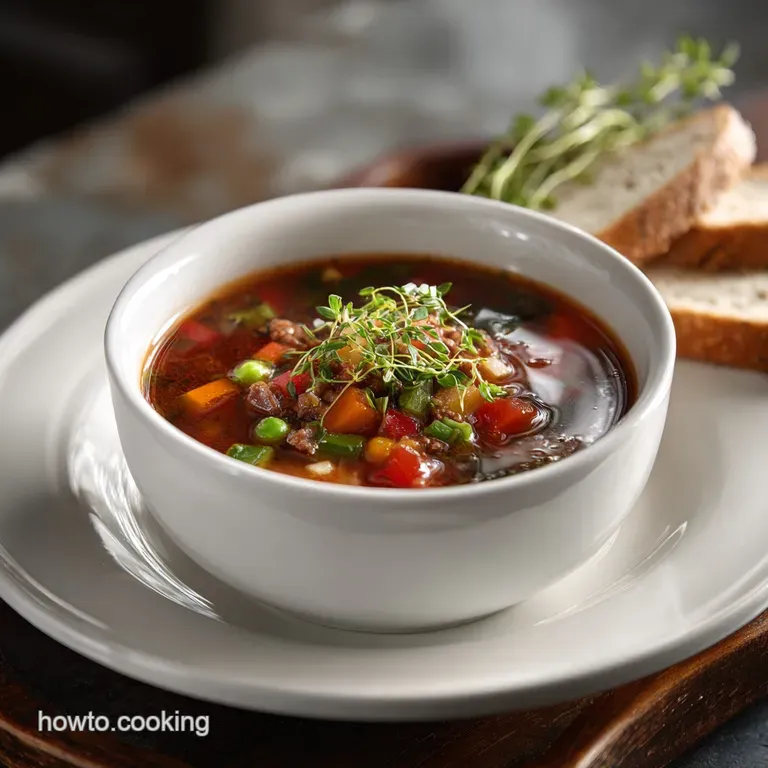
- Time: Active 20 minutes, Passive 90 minutes, Total 110 minutes
- Flavor/Texture Hook: Tender, melt in-your mouth beef and velvety potatoes
- Perfect for: Cozy Sunday family dinners or meal prepping for a busy week
- Secrets for Best Ever Easy Vegetable Beef Soup
- Why This Pot Works
- Recipe Specs and Timing
- Wholesome Ingredients and Smart Swaps
- Necessary Tools for Success
- Cooking the Perfect Pot
- Troubleshooting Your Soup Problems
- Adjusting the Batch Size
- Breaking Down Soup Myths
- Variations and Flavor Twists
- Storage and Freezing Tips
- Finishing Touches for Serving
- Very High in Sodium
- Recipe FAQs
- 📝 Recipe Card
Secrets for Best Ever Easy Vegetable Beef Soup
The sound of cold beef cubes hitting a hot, oiled Dutch oven is a noise I never get tired of hearing. It’s that initial sizzle that promises a deep, savory payoff later. I remember the first time I made a version of this, I was in such a rush that I skipped browning the meat entirely.
I just tossed everything in the pot and hoped for the best. The result? A grey, bland bowl of disappointment that tasted more like warm water than a hearty meal. It was a lesson learned the hard way, but it taught me that the secret isn't in a secret ingredient, but in a simple technique.
We are focusing on the beef chuck roast here because it is the undisputed champion of the soup pot. Unlike pre cut "stew meat," which is often a collection of random scraps that cook at different rates, a whole chuck roast allows you to control the size and quality of your beef cubes.
This specific cut is loaded with connective tissue that doesn't just get soft, it transforms into something silky and rich. When you take that first spoonful, you want the beef to give way without any resistance, and that only happens when you treat the chuck roast with the respect it deserves.
This recipe is designed to be approachable but uncompromising on flavor. We’re going to talk about why we use specific potatoes, how to get that mahogany color in your broth, and why frozen vegetables are actually your best friend in this scenario.
It is a wholesome, empowering way to feed your family something nutritious without spending your entire afternoon hovering over the stove. Let's get into the details of why this pot of comfort actually works.
Why This Pot Works
- Connective Tissue Transformation: Beef chuck contains high amounts of collagen which, when simmered slowly, melts into gelatin to give the broth a velvety mouthfeel.
- The Fond Factor: Browning the meat creates a layer of caramelized proteins on the bottom of the pot that dissolves into the liquid for deep color.
- Starch Controlled Thickening: Using Yukon Gold potatoes provides enough starch to slightly thicken the soup while maintaining their shape better than Russets.
- Acidic Balance: The fire roasted tomatoes provide a hit of acidity that cuts through the richness of the beef fat, keeping the flavor bright.
| Cooking Method | Total Time | Beef Texture | Best Used For |
|---|---|---|---|
| Dutch Oven (Classic) | 110 minutes | Extremely tender, silky | Maximum flavor development |
| Pressure Cooker (Fast) | 45 minutes | Soft but slightly drier | Last minute weeknight meals |
| Slow Cooker (Easy) | 8 hours | Fall apart shredded | Set it and forget it days |
Choosing the Dutch oven method allows for the most control over the browning process. While a pressure cooker is fast, it often misses that deep caramelization you get from searing the beef in open air.
If you have the time, the classic stovetop simmer is the gold standard for achieving a broth that looks like liquid mahogany.
| Component | Role in Pot | Pro Secret |
|---|---|---|
| Beef Chuck Roast | Primary protein and fat source | Pat it dry before searing to get a better crust |
| Tomato Paste | Concentrated umami and color | Cook it until it turns brick red to remove raw tinny taste |
| Yukon Gold Potatoes | Hearty starch and thickener | Leave the skins on for extra nutrients and texture |
| Worcestershire Sauce | Savory fermented depth | Add it at the start of the simmer to meld flavors |
Recipe Specs and Timing
This dish is all about the rhythm of the kitchen. You spend 20 minutes of active time getting everything seared and sautéed, then you let the heat do the heavy lifting for 90 minutes.
It's the kind of recipe that allows you to fold laundry or help with homework while the house fills with the aroma of simmering herbs and beef.
We are aiming for a total cook time of 1 hour 30 mins to ensure the beef is perfectly tender. If you pull it too early, the meat will be chewy and tough. If you go too long, the vegetables will turn to mush.
Following the timeline is the difference between a mediocre soup and the best ever easy vegetable beef soup you have ever served.
- Prep time:20 minutes
- Cook time:90 minutes
- Total time:110 minutes
- Yield: 8 servings
Wholesome Ingredients and Smart Swaps
For this recipe, we are using 2 lbs of beef chuck roast, which we will cube ourselves into 1 inch pieces. You will also need 2 tbsp of olive oil for browning and 6 cups of low sodium beef broth to keep the salt levels under control.
The aromatics include 1 large yellow onion, 3 cloves of garlic, 2 stalks of celery, and 3 large carrots.
For the heart of the soup, grab 1 lb of Yukon Gold potatoes, a 14.5 oz can of fire roasted diced tomatoes, 1 cup of frozen sweet corn, and 1 cup of frozen cut green beans. Seasoning is simple: 1 tsp salt, 0.5 tsp black pepper, 2 bay leaves, 1 tsp dried thyme, 1 tbsp Worcestershire sauce, and 2 tbsp tomato paste.
| Original Ingredient | Substitute | Why It Works |
|---|---|---|
| Beef Chuck Roast | Beef Short Ribs | Richer flavor but much higher fat content. Note: Requires skimming fat |
| Yukon Gold Potatoes | Red Bliss Potatoes | Stays firm and waxy. Note: Broth will be thinner |
| Fire Roasted Tomatoes | Plain Diced Tomatoes | Provides acidity. Note: Lacks the smoky depth of fire roasted |
| Beef Broth | Mushroom Broth | High umami levels. Note: Changes the flavor profile significantly |
Using low sodium broth is a choice I stand by because it gives you the power to adjust the salt to your family's preference at the very end. If you use full sodium broth, the evaporation during the 90 minute simmer can leave the soup tasting like a salt lick.
Necessary Tools for Success
You don't need a kitchen full of gadgets, but a heavy bottomed pot is non negotiable. A 6 quart Dutch oven (such as a Lodge or Le Creuset) is the best tool for this job because it retains heat evenly and provides enough surface area to brown the beef without steaming it.
If you use a thin stainless steel pot, you run the risk of scorching the bottom before the beef is even done.
A sharp chef's knife is your next priority. Cubing a chuck roast can be frustrating with a dull blade, as the fat and connective tissue can be slippery. I also recommend a good wooden spoon for scraping the "fond" off the bottom of the pot.
Those little brown bits are flavor gold, and you need a sturdy tool to lift them up once the broth hits the hot metal.
Chef's Tip: If your beef is hard to cube, pop it in the freezer for 15 minutes before cutting. The slight firming of the fat makes it much easier to get clean, even 1 inch cubes.
Cooking the Perfect Pot
- Pat the 2 lbs of beef cubes completely dry with paper towels. Note: Excess moisture causes steaming instead of browning.
- Heat 2 tbsp olive oil in a large Dutch oven over medium high heat. Brown the beef in two batches until a dark crust forms on the edges. Remove beef and set aside.
- Reduce heat to medium. Add the diced onion, 3 sliced carrots, and 2 sliced stalks of celery to the rendered fat. Sauté until onions are translucent.
- Stir in 2 tbsp tomato paste and 3 cloves of minced garlic. Cook for 3 minutes, stirring constantly, until the paste turns mahogany.
- Pour in a splash of the beef broth and use a wooden spoon to scrape all the brown bits from the bottom of the pot.
- Add the browned beef back into the pot along with the remaining 6 cups of beef broth, 1 lb cubed potatoes, 14.5 oz can fire roasted tomatoes, 2 bay leaves, 1 tsp dried thyme, and 1 tbsp Worcestershire sauce.
- Bring the mixture to a gentle boil, then reduce heat to low. Cover and simmer for 1 hour 20 minutes until the beef is tender.
- Stir in 1 cup frozen green beans and 1 cup frozen sweet corn. Simmer for an additional 10 minutes until all vegetables are soft.
- Adjust 1 tsp salt and 0.5 tsp black pepper to taste. Remove bay leaves before serving.
Troubleshooting Your Soup Problems
Sometimes, despite our best efforts, things don't go exactly as planned. The most common issue home cooks face is tough meat. This usually happens because the heat was too high or the simmer was too short. Beef chuck needs time for the collagen to break down; you cannot rush it by boiling it harder.
Another common complaint is a "thin" broth. If your soup feels more like water than a hearty meal, it might be because the potatoes didn't release enough starch or the broth didn't reduce enough. You can easily fix this by smashing a few of the cooked potato cubes against the side of the pot and stirring them back in.
Why Your Beef Is Tough
If the beef is still chewy after the 90 minute mark, it simply needs more time. Every cow is different, and some cuts have more stubborn connective tissue. Keep the lid on and give it another 15 minutes.
Ensure the liquid is at a "smile" (a very gentle bubble) rather than a rolling boil, which can actually toughen the muscle fibers.
Why Your Broth Is Bland
A bland broth usually stems from skipping the browning step or not cooking the tomato paste long enough. If you’re already at the end of the cooking process and it needs a boost, add an extra splash of Worcestershire sauce or a teaspoon of soy sauce.
These provide instant umami without making the soup taste like a completely different dish.
| Problem | Root Cause | Solution |
|---|---|---|
| Greasy surface | Excess fat from chuck roast | Skim the surface with a wide spoon or a piece of bread |
| Mushy potatoes | Overcooked or cut too small | Add potatoes 20 minutes later in the process next time |
| Bitter aftertaste | Burned garlic or tomato paste | Add a pinch of sugar to balance the bitterness |
Common Mistakes Checklist
- ✓ Pat the beef dry moist meat will never brown properly.
- ✓ Don't overcrowd the pan; work in batches so the beef sears, not steams.
- ✓ Scrape the bottom of the pot after adding liquid to capture all the flavor bits.
- ✓ Simmer, don't boil high heat makes beef tough and rubbery.
- ✓ Add frozen veggies at the very end to keep their color and snap.
Adjusting the Batch Size
If you are cooking for a smaller crowd, you can easily cut this recipe in half. Use a smaller pot, like a 3 quart saucepan, and reduce the cooking time by about 20% since the smaller volume of liquid will reach temperature faster.
When using half an egg in other recipes you'd beat it first, but here you just use half the beef and half the veggies.
When doubling the recipe for a party or big family gathering, be careful with the spices. Salt and dried herbs like thyme shouldn't be strictly doubled; start with 1.5 times the amount and taste as you go. You will also need to work in more batches when browning the beef to ensure each piece gets that crucial crust.
Breaking Down Soup Myths
One big myth is that you must use fresh vegetables for the best results. In reality, frozen green beans and corn are often more nutritious and have a better texture in soup because they are flash frozen at peak ripeness.
They also won't turn into grey mush during the long simmer since we add them in the final 10 minutes.
Another misconception is that searing the meat "locks in juices." Science tells us this isn't true; moisture still escapes. However, browning creates the Maillard reaction, which is responsible for that deep, savory flavor we crave.
We sear for the taste and the color of the broth, not for the moisture of the meat itself.
Variations and Flavor Twists
If you want to change things up, try a "Guinness Beef Soup" variation. Replace 2 cups of the beef broth with a can of stout. The bitterness of the beer mimics the depth of a long simmered bone broth and pairs beautifully with the beef chuck. Just make sure to simmer it long enough to cook off the raw alcohol flavor.
For a low carb alternative, you can swap the potatoes for cauliflower florets or diced turnips. Turnips, in particular, have a similar bite to potatoes when simmered in a rich broth. If you go this route, add them in the last 30 minutes of cooking so they don't disintegrate.
This is much lighter but still captures the essence of the vegetable beef soup.
If you find yourself craving a different kind of beef experience, you might enjoy learning how to make stir fry beef which uses a totally different technique for browning meat quickly over high heat. Both methods rely on that beautiful sear, just at different speeds.
Storage and Freezing Tips
This soup is actually better the next day. As it sits in the fridge, the flavors continue to meld, and the potatoes soak up even more of the savory broth. It will keep in an airtight container in the refrigerator for up to 4 days.
When reheating, you may need to add a splash of water or broth, as the potatoes will continue to thicken the liquid as it cools.
To freeze, let the soup cool completely first. Place it in heavy duty freezer bags or containers, leaving about an inch of space at the top for expansion. It stays fresh in the freezer for up to 3 months. To serve, thaw it overnight in the fridge and reheat gently on the stovetop.
Avoid the microwave if possible, as it can make the beef feel a bit rubbery.
For a zero waste approach, save your onion skins, carrot peels, and celery ends in a bag in the freezer. When the bag is full, simmer them with water for an hour to create a "scrap broth" that you can use for your next batch of soup. It’s a great way to squeeze every bit of nutrition out of your groceries.
Finishing Touches for Serving
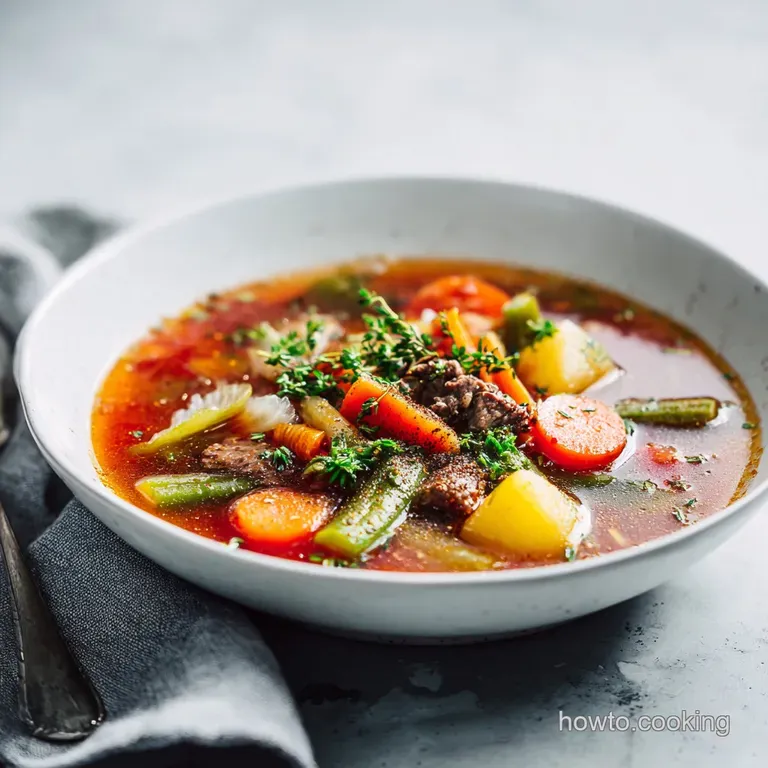
When it's time to eat, I love serving this in big, wide bowls. A sprinkle of fresh parsley or a few turns of the pepper mill right before serving adds a bright note that contrasts with the deep, heavy flavors of the beef. If you're feeling fancy, a dollop of horseradish cream on top can really wake up the palate.
A piece of crusty bread is mandatory for mopping up the bottom of the bowl. If you're looking for a more substantial side, this soup pairs beautifully with a velvety cabbage stirfry if you want to keep the meal veggie heavy. The crunch of the cabbage provides a nice textural contrast to the soft, simmered vegetables in the soup.
- If you want a thicker soup, mix 1 tbsp of cornstarch with 1 tbsp of cold water and stir it into the boiling soup at the very end.
- If you want a smokier flavor, add a teaspoon of smoked paprika along with the thyme.
- If you want a bit of heat, a pinch of red pepper flakes added with the garlic will do the trick without overwhelming the beef.

Very High in Sodium
840 mg 840 mg of sodium per serving (37% 37% of daily value)
The American Heart Association recommends a limit of no more than 2,300mg of sodium per day, with an ideal limit of no more than 1,500mg for most adults.
Tips to Reduce Sodium
-
Choose Low-Sodium Broth-30%
Replace the 6 cups of regular beef broth with low-sodium beef broth. This is one of the biggest contributors to sodium in the recipe and a simple swap can make a significant difference.
-
Halve the Added Salt-25%
Reduce the added 1 tsp salt to 0.5 tsp. You can always add more salt at the table if needed, but starting with less is key for sodium reduction.
-
Opt for No-Salt Added Tomatoes-20%
Choose a 14.5 oz can of no-salt added fire roasted diced tomatoes. Canned tomatoes can be surprisingly high in sodium.
-
Boost Flavor with Herbs and Spices
Utilize the existing herbs like dried thyme and bay leaves. Consider adding other unsalted herbs and spices such as garlic powder (without salt), onion powder (without salt), paprika, or a pinch of red pepper flakes to enhance flavor without sodium.
-
Use Low-Sodium Worcestershire Sauce-15%
Substitute the 1 tbsp of regular Worcestershire sauce with a low-sodium version. Many brands now offer reduced sodium options that provide similar flavor complexity.
Recipe FAQs
What is the secret ingredient in vegetable beef soup?
Tomato paste cooked to a dark brick color is the secret. By sautéing the paste until it reaches a mahogany shade before adding broth, you develop a deep, caramelized umami base that defines the entire dish.
Which soup is best for diabetics?
This recipe is highly suitable when you replace the potatoes. Substituting the Yukon Gold potatoes with cauliflower florets reduces the carbohydrate content while maintaining a hearty, textured consistency similar to our Silky Potato and Leek Soup.
What to add to vegetable beef soup for flavor?
Worcestershire sauce and fire roasted tomatoes provide the necessary depth. These ingredients add a complex acidity and smokiness that balances the savory beef and sweet vegetables without needing extra salt.
What are some common mistakes making beef soup?
Crowding the pan during searing is the most common error. If you don't brown the beef in batches, the meat steams instead of crusting, which prevents the development of the flavorful fond needed for the broth.
How to ensure the beef remains tender?
Simmer on low heat for the full 1 hour and 20 minutes. Collagen in beef chuck requires a gentle, low-temperature cook to break down; boiling the liquid too hard will result in tough, rubbery meat.
How to thicken the broth if it is too thin?
Smash a few of the cooked potato cubes directly in the pot. The starch released from the potatoes acts as a natural thickener, giving the soup a richer, heartier mouthfeel without requiring additional ingredients.
How to prep the beef for the best results?
Pat the beef cubes completely dry with paper towels before searing. Removing surface moisture is essential because wet meat prevents the Maillard reaction, which is required to create the deep brown crust that flavors the entire soup.
Best Ever Easy Vegetable Beef Soup
Ingredients:
Instructions:
Nutrition Facts:
| Calories | 426 kcal |
|---|---|
| Protein | 32.4 g |
| Fat | 23.5 g |
| Carbs | 21.2 g |
| Fiber | 3.8 g |
| Sugar | 5.1 g |
| Sodium | 840 mg |
