Cauliflower Mac and Cheese: Velvety Sauce
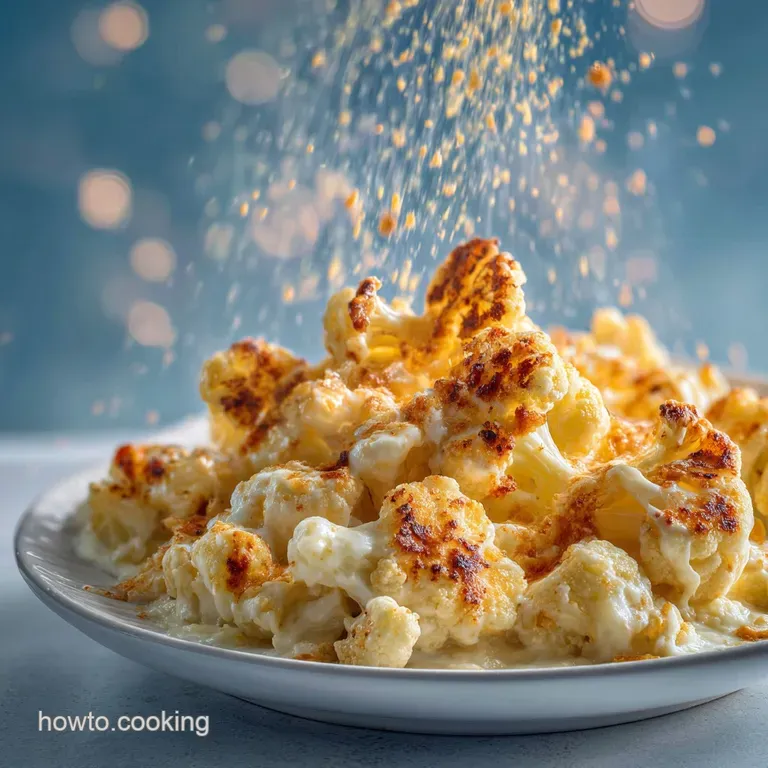
- Time: Active 20 mins, Passive 25 mins, Total 45 mins
- Flavor/Texture Hook: Nutty roasted florets blanketed in a sharp, silky cheese sauce with a crispy, salty finish.
- Perfect for: Low carb weeknight dinners, wholesome family comfort, or impressive holiday side dishes.
- Mastering My Favorite Cauliflower Mac and Cheese
- The Physics of Roasted Flavor
- Method Comparison for Busy Cooks
- Component Analysis for Creamy Results
- Quality Ingredients and Smart Swaps
- Reliable Steps for Consistent Success
- Fixing Common Texture Mistakes
- Scaling Portions for Every Family
- Debunking Popular Kitchen Tales
- Storage and Zero Waste Strategies
- Serving Suggestions for Wholesome Meals
- High in Sodium
- Recipe FAQs
- 📝 Recipe Card
Mastering My Favorite Cauliflower Mac and Cheese
The first time I tried to make a vegetable based version of my favorite childhood comfort food, it was a literal puddle on the plate. I had boiled the cauliflower, tossed it with a quick sauce, and hoped for the best. What I got was a watery mess where the cheese slid right off the florets.
It was a disheartening kitchen fail, but it taught me the most important lesson about this dish: moisture management is everything. Now, when I hear the sizzle of those florets hitting the hot roasting pan, I know I'm on the right track.
This version of Cauliflower Mac and Cheese isn't just a "healthy substitute." It stands on its own as a powerhouse of flavor. The aroma that fills the house when the garlic powder and smoked paprika hit the bubbling cream sauce is enough to bring everyone to the kitchen before the timer even goes off.
We are using a blend of sharp cheddar for that classic tang and Gruyère for a sophisticated, nutty melt that takes the whole experience to a new level.
I promise you that if you follow these steps, you will end up with a dish that is thick, cheesy, and satisfying. We are skipping the flour based roux to keep things low carb, but we're not sacrificing texture.
The combination of heavy cream and cream cheese creates a stable, silky base that holds its own even after it comes out of the oven. Let's get into the details of how to make this work every single time.
The Physics of Roasted Flavor
Moisture Reduction: Roasting the cauliflower at a high temperature evaporates internal water, preventing the sauce from thinning out during the final bake.
The Maillard Reaction: High heat browns the edges of the florets, creating complex, nutty flavor compounds that you simply cannot get from steaming or boiling.
Lipid Stabilization: Using full fat cream cheese provides a natural emulsifier that binds the fats in the cheddar to the liquid in the cream, ensuring a smooth finish.
Method Comparison for Busy Cooks
| Method | Time | Texture | Best For |
|---|---|---|---|
| Fresh Roasted | 45 mins | Firm florets, charred edges | Maximum flavor and best texture |
| Frozen Shortcut | 30 mins | Softer, more tender | Quick weeknight meals when time is short |
| Stovetop Only | 25 mins | Saucy and soft | When you don't want to turn on the oven |
Choosing between fresh and frozen depends entirely on your schedule, but I always advocate for fresh when you can. Fresh heads of cauliflower allow you to control the size of the florets, ensuring they are small enough to be "bite sized" like traditional macaroni.
If you do go the frozen route, make sure to thaw them completely and pat them extremely dry with paper towels, or you will end up with that dreaded watery sauce I mentioned earlier.
For another way to use creamy textures in your weekly rotation, you might enjoy my Tasty Protein Cottage recipe which uses similar principles of emulsification for a quick meal.
Component Analysis for Creamy Results
| Ingredient | Science Role | Pro Secret |
|---|---|---|
| Cauliflower | Structural Base | Cut into uniform pieces to ensure even roasting and consistent "bite." |
| Heavy Cream | Liquid Solvent | The high fat content prevents the sauce from curdling when mixed with acidic cheeses. |
| Cream Cheese | Emulsifying Binder | Acting as a bridge, it keeps the cheddar from separating into oil and solids. |
| Gruyère | Flavor & Melt | This cheese has a high oil to protein ratio, making it incredibly silky when melted. |
Quality Ingredients and Smart Swaps
For this recipe, we are using specific quantities to ensure the ratio of vegetable to sauce is balanced. You will need 2 large heads of cauliflower (approx. 2 lbs or 900g), cut into bite sized pieces. We'll toss these in 2 tbsp olive oil, 1 tsp sea salt, and 0.5 tsp black pepper before roasting.
The sauce is built with 1.5 cups heavy cream, 4 oz cream cheese (softened and cubed), 2 cups sharp yellow cheddar (freshly grated), and 1 cup Gruyère (freshly grated). For seasoning, we use 1 tsp Dijon mustard, 1 tsp garlic powder, 0.5 tsp smoked paprika, and a pinch of cayenne.
The topping is a mix of 0.25 cup Parmesan and 0.25 cup crushed pork rinds for that essential crunch.
| Original Ingredient | Substitute | Why It Works |
|---|---|---|
| Heavy Cream | Full fat Coconut Milk | Similar fat content. Note: Adds a distinct coconut flavor to the dish. |
| Gruyère | Swiss Cheese | Shares the same nutty profile and excellent melting properties. |
| Crushed Pork Rinds | Almond Flour | Provides a similar golden crust. Note: Texture is slightly denser, less "shatter." |
| Dijon Mustard | Ground Mustard Powder | Provides the same emulsifying acidity without the extra moisture. |
Using freshly grated cheese is one of those rules I never break. Pre shredded cheese is coated in potato starch or cellulose to keep it from clumping in the bag. While that’s convenient, it prevents the cheese from melting into a truly cohesive sauce, often leaving it feeling gritty or plastic like.
Take the extra five minutes to use a box grater; your taste buds will thank you.
Reliable Steps for Consistent Success
Phase 1: Roasting for Maximum Flavor
Preheat your oven to 200°C (400°F). Toss the florets with olive oil, salt, and pepper on a large baking sheet. Spread them out so they aren't crowded. Roast for 15-20 mins until the edges are charred and the stems are tender.
Note: Crowding the pan causes steaming rather than roasting.
Phase 2: Building the Emulsified Sauce
While the cauliflower roasts, add the heavy cream to a medium saucepan over medium heat. Bring it to a gentle simmer, but do not let it boil over. Add the cubed cream cheese. Whisk constantly until the mixture is completely smooth and no lumps remain.
Phase 3: Incorporating the Cheeses
Reduce the heat to low. Gradually stir in the grated cheddar and Gruyère one handful at a time. Continue stirring until the cheese has melted into a thick, velvety blanket. This slow addition prevents the fat from separating from the proteins.
Phase 4: Seasoning the Base
Whisk in the Dijon mustard, garlic powder, smoked paprika, and cayenne pepper. Taste the sauce now. The flavors should be bold, as the cauliflower will mellow them out once combined.
Phase 5: Combining the Elements
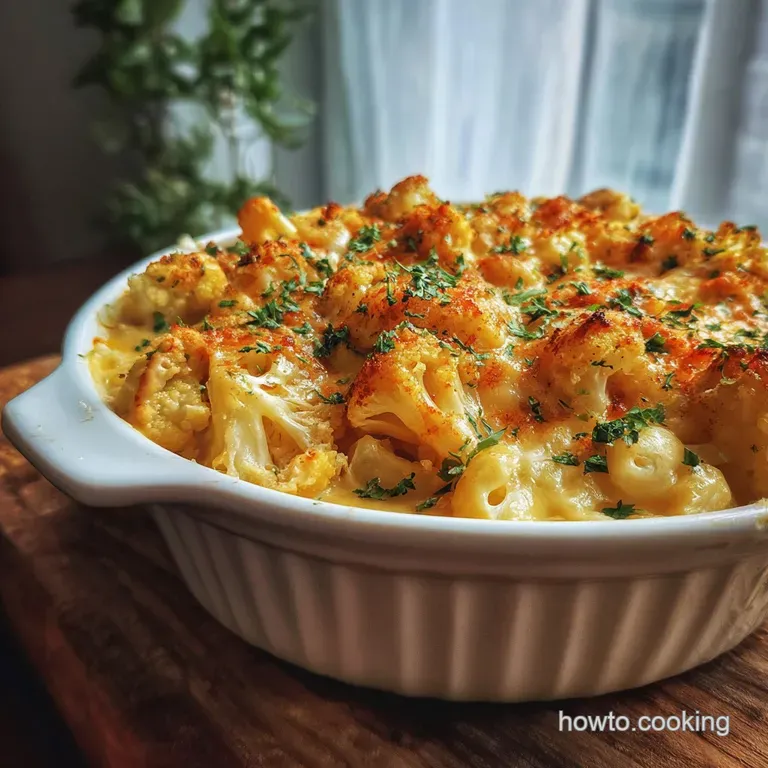
Place the roasted cauliflower into a 9x13 inch (23x33 cm) baking dish. Pour the warm cheese sauce over the top. Use a spatula to gently fold the pieces until every floret is thoroughly coated in gold.
Phase 6: Adding the Crunch
In a small bowl, mix the grated Parmesan and crushed pork rinds. Sprinkle this mixture evenly over the top of the dish. This layer provides the "shatter" texture that mimics the breadcrumbs in a traditional bake.
Phase 7: The Golden Bake
Place the dish in the oven and bake for 10-15 mins. You are looking for the edges to be bubbling and the top to be deeply golden and fragrant. If you want a darker crust, you can pop it under the broiler for the last 60 seconds.
Phase 8: The Essential Rest
Remove the dish from the oven and let it sit for 5 mins before serving. Note: This allows the sauce to thicken slightly and adhere to the cauliflower.
Fixing Common Texture Mistakes
Preventing Watery Sauce Issues
The most common complaint with any vegetable bake is the "soupy" bottom. This happens when the cauliflower isn't roasted long enough or if you use frozen florets without drying them. If you see liquid pooling, it means the vegetable is releasing steam into the fat based sauce.
Next time, roast until you see significant browning, which indicates the exterior cells have broken down and released their water.
Repairing Grainy Sauce Textures
If your sauce looks broken or feels sandy on the tongue, the heat was likely too high when you added the hard cheeses. High heat causes the proteins in cheese to tighten and squeeze out the fat.
You can sometimes save a broken sauce by adding a splash of warm heavy cream and whisking vigorously off the heat to re emulsify the mixture.
| Problem | Root Cause | Solution |
|---|---|---|
| Bland Flavor | Under seasoned cauliflower | Increase salt during the roasting phase. |
| Greasy Surface | Cheese separated from heat | Add 1 tbsp cream cheese and whisk to bind. |
| Mushy Florets | Over roasting or boiling | Keep roast time under 20 mins; florets should be fork tender. |
Common Mistakes Checklist
- ✓ Pat cauliflower completely dry before roasting to ensure it browns instead of steams.
- ✓ Use a room temperature cream cheese to ensure it melts quickly into the heavy cream.
- ✓ Grate your own cheese to avoid the gritty texture caused by anti caking starches.
- ✓ Let the finished bake rest for 5 minutes to allow the sauce to "set" before scooping.
- ✓ Don't skip the Dijon mustard; the acid helps balance the heavy fats and aids emulsification.
If you enjoy the process of layering flavors in a dish like this, you might also find success with my How to Bake recipe which uses similar techniques for a crowd pleasing result.
Scaling Portions for Every Family
When cutting this recipe in half, you can use a smaller 8x8 inch (20x20 cm) pan. You don't need to adjust the roasting time for the cauliflower, but the final bake might take 5 minutes less.
If you find yourself with half an egg from another recipe, don't worry this recipe doesn't use binders like eggs, so it's very forgiving when scaled down.
For a larger gathering, doubling the recipe works well, but you must use two separate baking sheets for roasting. If you pile 4 lbs (1.8 kg) of cauliflower onto one tray, they will steam and become mushy. When doubling the sauce, keep the spices at 1.5x the original amount first, then taste and adjust.
Spices can sometimes become overwhelming when doubled strictly by volume.
Debunking Popular Kitchen Tales
Some people claim that you must blanch cauliflower before roasting to get it soft enough. This is actually counterproductive. Blanching introduces more water into a vegetable we are trying to dry out.
The high heat of a 200°C oven is more than enough to soften the florets while providing that essential charred flavor.
Another myth is that you need a flour based roux to make a "real" cheese sauce. While a roux is traditional for macaroni, the combination of heavy cream and the stabilizers in cream cheese creates a sauce that is just as thick and much more flavorful.
It also keeps the dish naturally gluten-free without needing expensive specialty flours.
Storage and Zero Waste Strategies
Storage: This bake stays fresh in the fridge for up to 4 days. Store it in an airtight container to prevent the cheese from absorbing other fridge odors. When reheating, use the oven or an air fryer to help maintain some of the crispiness of the topping.
Freezing: You can freeze this for up to 2 months. However, be aware that the sauce may slightly lose its creamy emulsion upon thawing. Thaw it in the fridge overnight and stir in a tablespoon of heavy cream before reheating to bring back that velvety texture.
Zero Waste: Don't throw away those cauliflower leaves or the thick center stems! The leaves are delicious when roasted with the florets they turn into "chips." The stems can be peeled, diced, and added to the roasting pan, or saved in a freezer bag for your next batch of vegetable broth.
Serving Suggestions for Wholesome Meals
To make this a complete meal, I love serving it alongside a simple roasted protein. A lemon herb roasted chicken or a pan seared steak provides a great textural contrast to the soft, creamy bake.
Because this dish is quite rich, a bright, acidic side dish like a crisp arugula salad with a vinaigrette helps cut through the heaviness of the cheese.
If you're looking for more variety in your vegetable sides, consider pairing this with a Kale Caesar Salad recipe for a meal that feels balanced and nutritious.
- For a spicy kick: Add diced jalapeños to the cauliflower during the last 5 minutes of roasting.
- For a smoky version: Use smoked cheddar instead of sharp yellow cheddar.
- For extra protein: Stir in cooked, crumbled bacon or diced ham before the final bake.

High in Sodium
812 mg mg of sodium per serving (35% of daily value)
The American Heart Association recommends limiting sodium intake to 2,300mg per day for overall health.
Tips to Reduce Sodium in Cauliflower Cheese
-
Lower Sodium Cheese-15%
Substitute the sharp cheddar, Gruyère, and Parmesan with lower sodium cheese options like Swiss or fresh mozzarella. This simple switch can significantly reduce the overall sodium content.
-
Reduce Added Salt-25%
Halve the amount of sea salt added to the cauliflower before roasting. You can always add a pinch more at the end to taste, but starting with less is key to controlling sodium.
-
Skip the Pork Rinds-10%
Omit the crushed pork rinds as they contribute a significant amount of sodium. Consider topping with toasted breadcrumbs instead for a similar texture and flavor. They contain much less sodium than pork rinds.
-
Enhance with Herbs
Use fresh or dried herbs like thyme, rosemary, or chives to add flavor without adding sodium. Experiment with different combinations to find your favorite!
-
Spice it Up Differently
Instead of relying on salt for flavor, increase the smoked paprika and cayenne pepper to add depth and complexity to the dish. This can help offset the need for excessive sodium.
Recipe FAQs
Is cauliflower mac and cheese healthy?
Relatively, yes, it is healthier than the classic version. It significantly reduces carbohydrates and adds fiber and nutrients from the cauliflower base. However, the health factor still depends heavily on the amount of heavy cream and full fat cheese used in the sauce.
Can I make mac and cheese using only cauliflower instead of pasta?
Yes, cauliflower is an excellent substitute for pasta in this context. The key is roasting the florets first to remove excess moisture, ensuring the final dish doesn't become watery under the cheese sauce.
What does Gordon Ramsay put in his mac and cheese?
Gordon Ramsay typically emphasizes high-quality, aged cheeses and uses a classic Béchamel base. While his recipes vary, he often favors sharpness and often includes ingredients like Gruyère, fresh nutmeg, and a crunchy breadcrumb topping for texture.
Does cheese sauce go well with cauliflower?
Absolutely, cheese sauce is one of the best pairings for cauliflower. The mild, slightly earthy flavor of cauliflower acts as a perfect carrier for rich, sharp sauces, especially when the cauliflower is roasted first to develop nuttiness.
How do I prevent the cheese sauce from becoming gritty or oily?
Incorporate the shredded cheese slowly over very low heat, whisking constantly. High heat causes the cheese proteins to tighten and the fats to separate, leading to graininess.
If you master this stable emulsion here, you can apply the same temperature precision to achieving perfect texture in recipes like The Gruyère Au recipe.
What is the secret to getting a crispy topping on the bake?
Mix finely grated Parmesan with crushed pork rinds or panko breadcrumbs. Sprinkle this mixture over the sauce just before the final bake. The high fat pork rinds brown beautifully under the heat, giving you excellent crunch.
How can I make this dish low carb but still rich?
Omit the flour entirely and rely on cream cheese to emulsify the sauce. Cream cheese provides body and stabilization without adding starches, similar to how some techniques in modern sauces skip traditional thickening agents.
Cauliflower Mac And Cheese

Ingredients:
Instructions:
Nutrition Facts:
| Calories | 488 kcal |
|---|---|
| Protein | 22.4 g |
| Fat | 42.1 g |
| Carbs | 10.8 g |
| Fiber | 3.8 g |
| Sugar | 5.2 g |
| Sodium | 812 mg |
