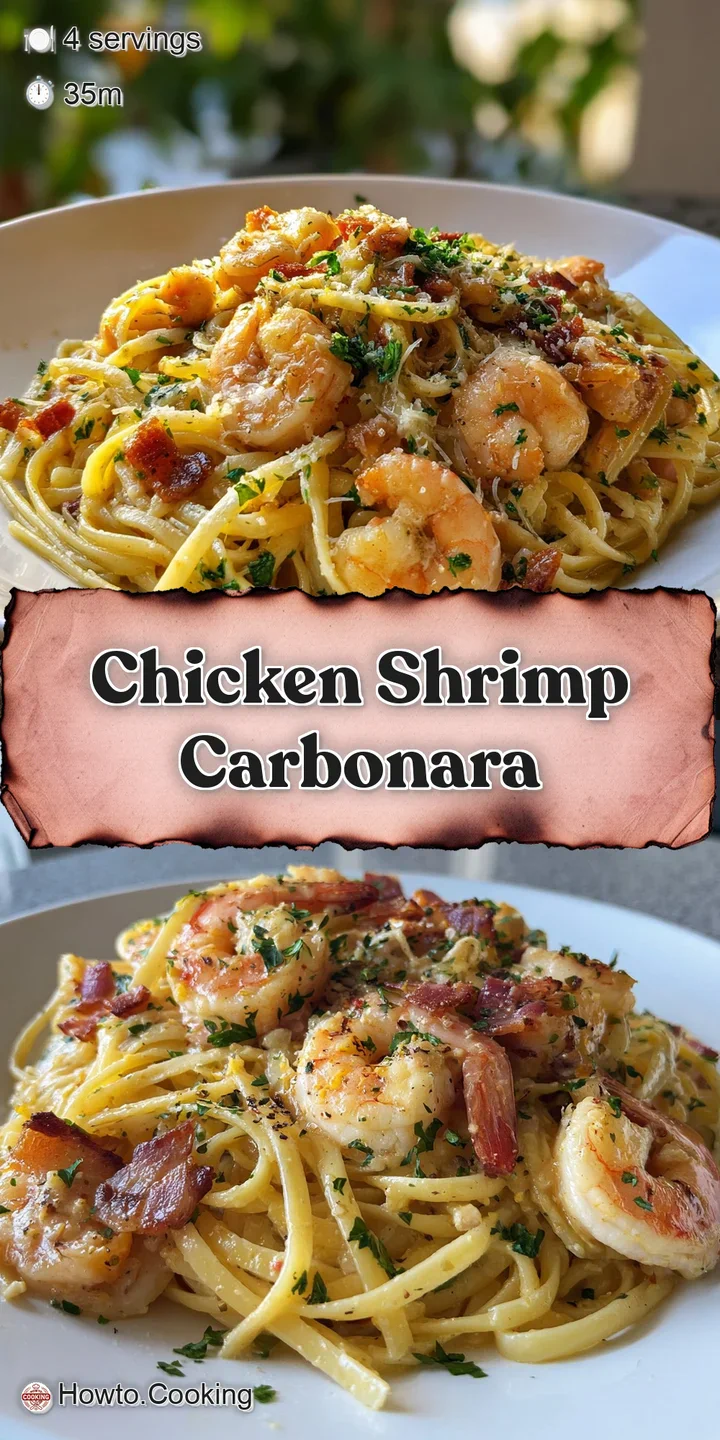
Chicken Shrimp Carbonara: Silky & Savory
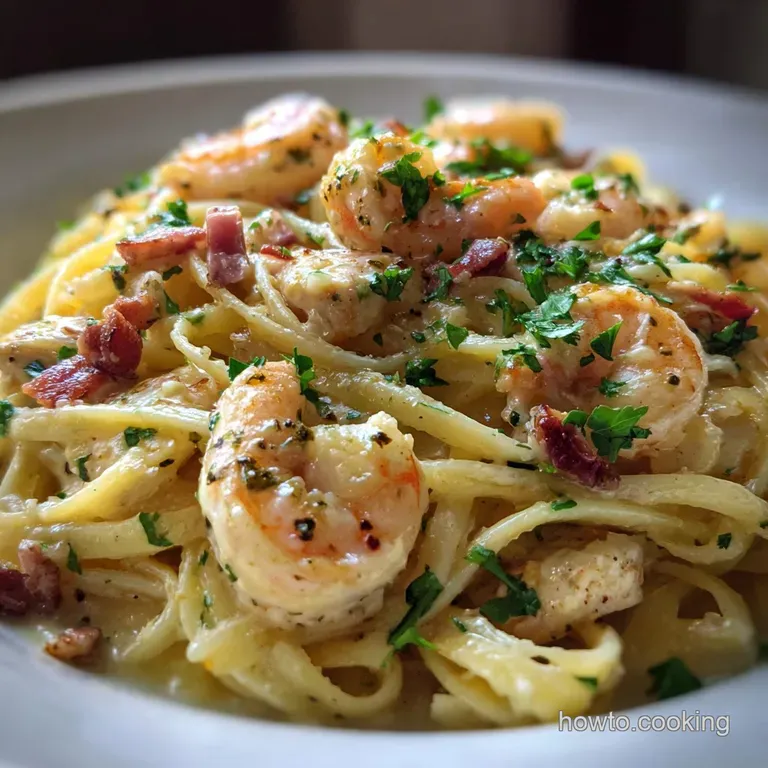
- Time: Active 15 minutes, Passive 20 minutes, Total 35 minutes
- Flavor/Texture Hook: Silky, savory, and pepper forward
- Perfect for: Saturday date nights or a confidence boosting family dinner
- Create the Best Chicken Shrimp Carbonara at Home
- The Science of the Silky Emulsion
- Practical Specs for Planning Success
- Quality Ingredients and Smart Swaps
- Tools for a Silky Finish
- Step-By-Step Cooking Method
- Troubleshooting Common Kitchen Errors
- Precision Checkpoints for Confidence
- Kitchen Wisdom and Myths
- Storage and Reheating Guidelines
- Final Touches and Plating Tips
- Very High in Sodium
- Recipe FAQs
- 📝 Recipe Card
Create the Best Chicken Shrimp Carbonara at Home
The first time I tried making carbonara, I ended up with a bowl of expensive, dry scrambled eggs and noodles. I was so frustrated because I could smell the toasted black pepper and the salty pancetta, but the texture was a total disaster.
It took me a dozen tries and a lot of wasted eggs to realize that the secret isn't just about heat; it's about the physics of the water you use. When you get it right, that first bite is a revelation of velvety sauce that clings to every strand of spaghetti.
Now, when I make this for my family, the house fills with that specific, mouth watering aroma of rendered pork fat and sharp cheese. There is something incredibly empowering about standing over a pan and watching a loose mixture of eggs and cheese suddenly transform into a glossy, golden emulsion.
This version, featuring both chicken and shrimp, adds a nutritious protein boost that turns a simple pasta dish into a complete, satisfying meal. We are skipping the stress of traditional methods and using a few smart tricks to ensure you get that silky finish every single time.
I want you to feel complete confidence when you step into the kitchen. We aren't just following a list of steps; we are learning the "why" behind the sizzle. Whether you are cooking for a partner or feeding hungry kids, this dish hits that sweet spot of being sophisticated yet deeply comforting.
Trust me, once you master the "liquid gold" sauce technique, you’ll never look at a jar of Alfredo sauce the same way again.
The Science of the Silky Emulsion
Protein Coagulation Control: Eggs begin to set at 145°F, so we use the residual heat of the pasta rather than direct stove heat to create a sauce instead of an omelet.
Starch Fat Bond: The salted pasta water contains released amylose, which acts as a molecular bridge between the fatty cheese/pork fat and the watery egg whites.
Thermal Buffering: Adding a small amount of heavy cream raises the curdling temperature of the egg yolks, providing a safety net for the home cook.
The Maillard Reaction: Searing the chicken medallions at a high temperature creates a savory crust that provides a deep flavor contrast to the creamy pasta.
| Feature | Stovetop Method | Oven Finished Protein |
|---|---|---|
| Texture | Shattering, crispy edges | Uniformly tender and juicy |
| Control | High; requires constant attention | Low; set a timer and wait |
| Flavor Profile | Intense caramelization from the pan | Subtle, clean protein taste |
This stovetop approach is my personal favorite because it allows you to build layers of flavor in a single pan. Using the rendered pancetta fat to sear the chicken ensures that every component of the dish tastes like it belongs together. If you find yourself needing to cook for a larger crowd, our Velvety Chicken Cabbage recipe offers a similar one pan efficiency with a lighter footprint.
Practical Specs for Planning Success
When we talk about nutrition and kitchen efficiency, having the right numbers matters. This recipe yields 4 generous servings, making it ideal for a family of four or a couple that loves leftovers.
The total time from "I'm hungry" to "dinner is served" is just 35 minutes, provided you have your ingredients prepped and ready to go.
Chef's Tip: Freeze your block of Pecorino for 10 minutes before grating. This makes the cheese much firmer and prevents it from clumping into a ball when it hits the warm pasta.
| Ingredient | Science Role | Pro Secret |
|---|---|---|
| Large Egg Yolks | Emulsifier and fat source | Use room temperature eggs to prevent "thermal shock" in the sauce |
| Pecorino Romano | Flavor and salt stabilizer | Microplane the cheese so it melts instantly without grit |
| Heavy Cream | Temperature buffer | Keeps the sauce fluid even as the pasta cools on the plate |
| Pasta Water | The "Glue" | Save twice as much as you think you need to adjust the final texture |
The balance of whole eggs and extra yolks is intentional. The whites provide structure and a lighter mouthfeel, while the extra yolks bring that signature golden color and rich, fatty texture. By understanding the role of each component, you can cook with more intuition and less stress.
Quality Ingredients and Smart Swaps
Building a wholesome meal doesn't always require the most expensive imported goods. While traditionalists might insist on guanciale and DOP cheeses, a budget smart cook knows how to achieve professional results with accessible items.
This recipe uses high-quality chicken breast and large shrimp to provide a variety of textures and a balanced protein profile.
- 1 lb chicken breast: Cut into 1 inch medallions for fast, even cooking. Why this? Breast meat stays lean while absorbing the savory pancetta fat.
- 0.5 lb large shrimp: Peeled and deveined. Why this? Shrimp adds a snappy texture contrast to the soft pasta.
- 4 oz pancetta: Diced into small batons.
- 2 large whole eggs + 2 large egg yolks: The heart of the sauce.
- 0.5 cup freshly grated Pecorino Romano: Adds a sharp, salty kick.
- 0.5 cup freshly grated Parmigiano Reggiano: Provides a nutty, mellow base.
- 0.33 cup heavy cream: This is our secret weapon for stability.
- 1 tsp freshly cracked black pepper: Use a coarse grind for the best aromatics.
- 1 lb spaghetti: The classic vessel for carbonara sauce.
- 3 cloves garlic: Minced fine.
- 0.25 cup flat leaf parsley: Chopped for a fresh, herbaceous finish.
- 1 pinch red pepper flakes: Just enough to wake up the palate.
| Original Ingredient | Substitute | Why It Works |
|---|---|---|
| Pancetta | Thick cut Bacon | Similar fat content. Note: Adds a smokier flavor than traditional pancetta |
| Pecorino Romano | Extra Sharp White Cheddar | High salt and fat. Note: Sauce will be slightly thicker and less "Italian" |
| Spaghetti | Fettuccine | Larger surface area. Note: Requires slightly more pasta water to maintain silkiness |
Using a mix of Parmigiano and Pecorino is a classic trick to balance intensity and nuttiness. If you are looking for a more herbaceous alternative to this heavy sauce, you might enjoy the flavors in our Light Herbaceous Greek recipe.
Tools for a Silky Finish
You don't need a professional kitchen to make a restaurant quality meal, but a few specific tools will make your life much easier. The goal is to move quickly once the pasta is drained, as heat is both your friend and your enemy in this recipe.
- Large Pasta Pot: You need plenty of space for the spaghetti to move, preventing it from sticking together.
- Stainless Steel or Cast Iron Skillet: These hold heat better, which is crucial for getting that shatter crisp sear on the chicken medallions.
- Microplane Grater: This creates a snowy, fine texture for the cheese, ensuring it dissolves into the sauce rather than clumping.
- Stainless Steel Tongs: These are essential for tossing the pasta and emulsifying the sauce without breaking the noodles.
- Whisk and Small Bowl: For pre mixing your egg and cheese base.
Chef's Tip: Add a teaspoon of espresso powder to your black pepper while it's in the grinder. It doesn't make the pasta taste like coffee, but it deepens the earthy notes of the pepper and makes the pancetta pop.
step-by-step Cooking Method
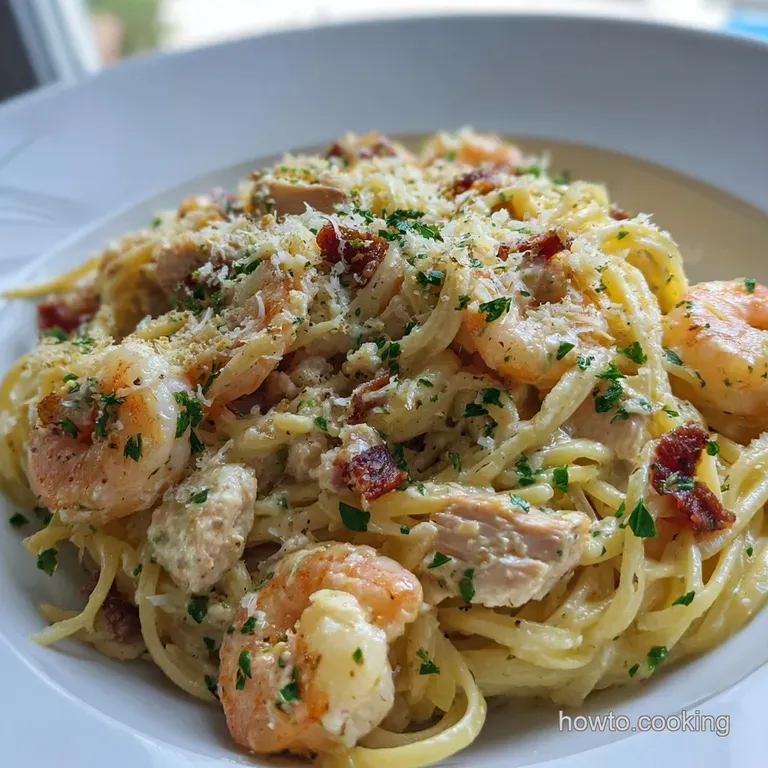
1. Prepare the sauce base. In a medium bowl, whisk together the 2 whole eggs, 2 egg yolks, Pecorino Romano, Parmigiano Reggiano, heavy cream, and black pepper. Note: Whisking early allows the cheese to begin hydrating in the egg proteins.
2. Boil the water. Fill a large pot with water and a generous palmful of salt. Cook 1 lb spaghetti 1 minute less than package directions until it is slightly firmer than al dente.
3. Render the pork. While the water boils, place 4 oz diced pancetta in a cold skillet over medium heat. Cook 5-7 mins until fat is rendered and edges are crispy.
4. Sear the chicken. Remove the pancetta with a slotted spoon, leaving the fat in the pan. Add 1 lb chicken medallions in a single layer. Cook 3 mins per side until golden and cooked through.
5. Sauté the shrimp. Push the chicken to the edges and add 0.5 lb shrimp, 3 cloves minced garlic, and red pepper flakes. Cook 2 mins until shrimp is pink and opaque.
6. Save the gold. Before draining the pasta, carefully dip a measuring cup into the pot. Reserve 1.5 cups of starchy pasta water.
7. Combine the elements. Add the cooked pasta and the crispy pancetta into the skillet with the chicken and shrimp. Toss over low heat for 1 min until the noodles are coated in fat.
8. Create the emulsion. Turn off the heat entirely and move the pan to a cool burner. Pour in the egg mixture while tossing the pasta constantly with tongs. Note: Constant motion is what creates the sauce instead of scrambled eggs.
9. Adjust the consistency. Slowly drizzle in the reserved pasta water, 1/4 cup at a time, while continuing to toss. Stop when the sauce is velvety and clings to the noodles.
10. Finish and serve. Fold in the 0.25 cup chopped parsley. Serve immediately while the sauce is at its peak silkiness.
If you love the process of building a flavorful base like this, you should also try our Homemade Wonton Soup recipe which uses a similar technique of layered aromatics to create a deep, wholesome broth.
Troubleshooting Common Kitchen Errors
Carbonara is a dish of timing. Most "disasters" happen because the pan is too hot or the pasta is too dry. If you see white clumps of cooked egg forming, your pan didn't cool down enough before you added the mixture.
If the sauce looks like it's disappearing into the pasta, you simply need more of that liquid gold pasta water.
Why Your Sauce Is Clumpy
This usually happens because the heat was too high or the cheese wasn't grated finely enough. If you see the sauce separating, it means the emulsion has "broken." You can sometimes save this by adding a tablespoon of very hot pasta water and whisking vigorously in a separate area of the pan.
Why Your Shrimp Is Rubbery
Shrimp cooks much faster than chicken. If you add them at the same time, the shrimp will be overdone by the time the chicken hits a safe internal temperature. Always add the shrimp during the last two minutes of the sautéing process.
| Problem | Root Cause | Solution |
|---|---|---|
| Scrambled Eggs | Pan temperature exceeded 150°F | Remove pan from heat 60 seconds before adding egg mixture |
| Dry/Sticky Pasta | Not enough starch water | Add water in 2 tbsp increments until glossy |
| Bland Flavor | Under salted pasta water | Ensure water tastes like the sea; it's the only chance to season the noodle |
Common Mistakes Checklist: ✓ Never drain your pasta in the sink without catching the water first. ✓ Don't use pre shredded cheese; the cellulose coating prevents a smooth melt. ✓ Ensure your shrimp are patted dry before adding to the pan to prevent steaming.
✓ Let the chicken rest for 2 minutes before cutting if you aren't using pre cut medallions. ✓ Work in batches if your skillet is too small; overcrowding drops the temperature and ruins the sear.
Precision Checkpoints for Confidence
- 1. Protein Temp
- Ensure the chicken reaches an internal temperature of 165°F before adding the pasta.
- 2. Water Reserve
- Save exactly 1.5 cups of pasta water, even if you think you'll only use half.
- 3. The 60 Second Rule
- Wait 60 seconds after turning off the burner before pouring in your egg mixture. This drop in temperature is your insurance policy against curdling.
If you find you have a lot of people to feed, scaling this recipe is simple. To double it, use 2 lbs of pasta but only 3 whole eggs and 4 yolks you don't need a straight 1:1 doubling of the eggs to get a great result.
For the spices, increase them to 1.5x rather than 2x to avoid overpowering the delicate shrimp.
Kitchen Wisdom and Myths
One of the biggest myths in the culinary world is that carbonara requires cream to be "creamy." While we use a small amount here as a stabilizer for the budget conscious cook, traditional carbonara relies entirely on the emulsion of fat and starch.
Adding the cream isn't "cheating"; it's a practical modification that makes the dish more reliable for a busy home cook who wants a nutritious, foolproof result.
Another common misconception is that you must use expensive guanciale (cured pork jowl). While delicious, it can be hard to find and quite pricey. high-quality pancetta or even a thick cut, center cut bacon provides a similar savory profile without the treasure hunt.
The goal is the salt and the fat, not the label on the package.
Storage and Reheating Guidelines
Carbonara is notoriously difficult to reheat because the egg based sauce tends to scramble when it hits a microwave or a hot pan for the second time. However, it can be done!
Fridge Storage: Keep leftovers in an airtight container for up to 2 days. The shrimp should not be kept longer than that for safety and texture reasons. Freezing: I do not recommend freezing this dish. The emulsion will break, and the pasta will become mushy upon thawing.
Reheating Pro Tip: To revive the silky texture, place the pasta in a skillet with a splash of milk or water over very low heat. Toss constantly. The goal is to gently warm the sauce without "cooking" the eggs further.
Zero Waste Tip: Don't throw away those extra egg whites! Store them in a small jar in the fridge for up to 4 days and use them for a nutritious breakfast scramble or a homemade meringue.
If you have leftover parsley stems, toss them into a bag in the freezer to use for making a wholesome chicken stock later.
Final Touches and Plating Tips
Presentation is the final step in feeling like a professional chef in your own home. When plating, use a large fork to twirl the spaghetti into a "nest" in the center of the bowl. This creates height and keeps the heat trapped inside the pasta for longer.
Arrange a few of the seared chicken medallions and pink shrimp on top of the nest rather than letting them get buried at the bottom. A final sprinkle of fresh parsley and a heavy dusting of extra black pepper provides a beautiful visual contrast.
Chef's Tip: Warm your serving bowls in a low oven (150°F) for 5 minutes before serving. This prevents the cold ceramic from shocking the delicate egg sauce and turning it thick and sticky before your family even sits down to eat.
A Decision Shortcut for Your Preferences
- If you want a thicker sauce, use 4 egg yolks and 1 whole egg instead of the 2/2 split.
- If you want a lighter version, swap the heavy cream for an equal amount of pasta water and increase the cheese by 2 tablespoons.
- If you want an extra crunch, toast a handful of panko breadcrumbs in a little olive oil and sprinkle them over the top before serving.
Cooking is about more than just following directions; it's about the confidence to make a dish your own. This Chicken Shrimp Carbonara is a testament to how simple, wholesome ingredients can be transformed into something extraordinary with just a little bit of science and a lot of heart. Now, go get that water boiling!
Very High in Sodium
1225 mg mg of sodium per serving (53% % of daily value)
The American Heart Association recommends limiting sodium intake to no more than 2,300mg per day for most adults.
Sodium Reduction Tips for Your Carbonara:
-
Lower Sodium Pancetta-25%
Choose a low-sodium pancetta, or reduce the amount used by half and supplement with sauteed mushrooms for a similar savory flavor.
-
Reduce Cheese Amount-15%
Both Pecorino Romano and Parmigiano Reggiano are high in sodium. Reduce the amount of each cheese by 25% and consider supplementing with nutritional yeast for a cheesy flavor without the sodium.
-
Unsalted Pasta Water-15%
Omit the salt when cooking the spaghetti. The pasta will still cook perfectly well, and you'll significantly reduce the overall sodium content.
-
Fresh Shrimp-10%
Ensure that the shrimp is fresh and hasn't been treated with sodium based preservatives (e.g., sodium tripolyphosphate). Rinse the shrimp thoroughly before cooking to remove any residual sodium.
-
Fresh Chicken-10%
Opt for fresh, unprocessed chicken breast, avoiding any pre-brined or seasoned options that may contain added sodium. Check the label carefully or ask your butcher.
-
Spice It Up!
Enhance the flavor with more freshly cracked black pepper, garlic, red pepper flakes, and parsley. These additions boost the taste and reduce the need for salt.
Recipe FAQs
What are the essential ingredients for a classic carbonara?
Eggs, Pecorino Romano cheese, pancetta, black pepper, and spaghetti are the traditional five ingredients. Some modern variations include garlic or a touch of cream.
What makes up a traditional carbonara sauce?
Traditional carbonara sauce is an emulsion of raw egg yolks and grated Pecorino Romano cheese, tempered by the heat of freshly cooked pasta and starchy pasta water. Black pepper is essential for flavor.
What's in Olive Garden's Chicken and Shrimp Carbonara?
Olive Garden's Chicken and Shrimp Carbonara typically features fettuccine, grilled chicken, sautéed shrimp, crispy pancetta, and a creamy sauce with garlic, Parmesan, and a hint of black pepper. It's a richer, creamier adaptation of the classic.
Are there only 4 core ingredients in carbonara?
No, typically there are five main ingredients. While you can make a simplified version, the classic and most flavorful carbonara includes eggs, Pecorino Romano, pancetta, black pepper, and spaghetti.
Can I substitute pancetta in carbonara?
Yes, you can substitute pancetta with thick cut bacon. While pancetta offers a distinct cured pork flavor, bacon provides a similar salty, fatty element that works well to build the sauce's foundation.
What's the secret to a silky carbonara sauce?
The key is tempering the eggs with residual heat and starchy pasta water. Never cook the egg mixture directly over high heat, as this will scramble them. Tossing constantly off the heat with warm pasta water creates a stable, glossy emulsion.
How do I prevent my carbonara sauce from becoming scrambled eggs?
Remove the pan from the heat entirely before adding the egg mixture. The residual heat from the pasta and the pan is enough to cook the eggs gently into a sauce. If you enjoyed mastering precise temperature control here, see how the same principle applies to our Roast Chicken recipe.
Chicken Shrimp Carbonara
Ingredients:
Instructions:
Nutrition Facts:
| Calories | 994 kcal |
|---|---|
| Protein | 78.4 g |
| Fat | 34.1 g |
| Carbs | 87.2 g |
| Fiber | 3.9 g |
| Sugar | 2.5 g |
| Sodium | 1225 mg |
