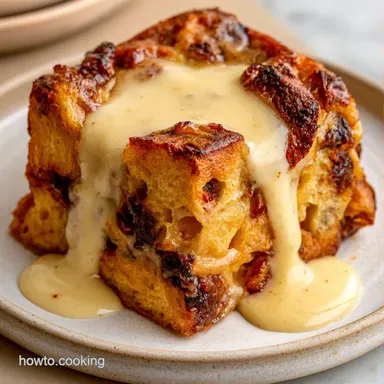
Christmas Bread Pudding with Brioche

- Time: 15 minutes active + 30 minutes soaking + 90 minutes baking
- Flavor & Texture: Buttery and spiced
- Perfect for: Holiday brunch or a cozy family dessert
Easy Christmas Bread Pudding Recipe
The smell of cinnamon and orange zest filling the kitchen is the best part of the holidays. It's a scent that makes the whole house feel cozy, even when it's freezing outside.
We're avoiding the common issue where the dessert turns into a soggy, flavorless mass. Instead, you get a structured, rich treat that holds its shape and offers a bit of a crunch on top. This christmas bread pudding is meant to be comforting, easy to prep, and shared with a crowd.
The key is the bread. By using a rich loaf and letting it soak properly, you get that ideal contrast between the caramelized edges and the soft, creamy middle.
The Soak Most People Skip
The secret to success with this holiday bread pudding lies in your choice of loaf. While a basic white bread tends to break down, enriched options like challah or brioche contain the fat and eggs necessary to hold their form. For those wanting a lighter alternative, try my tea time loaf recipe, though richer breads are ideal for this dish.
The Resting Period: Let the cubes soak for 30 minutes so the custard can penetrate every piece. This eliminates those frustrating dry spots in the center of each slice.
Low and Slow Heat: I recommend baking at 325°F (160°C) for a reason. This temperature allows the custard to set thoroughly without scorching the surface before the interior is fully cooked.
| Bread Status | Texture Result | Absorption Rate | Best For |
|---|---|---|---|
| Freshly Baked | Soft, potentially mushy | Slow | Quick snacks |
| Slightly Stale | Tender, maintains structure | Medium | Standard bakes |
| Fully Dried-Out | Defined cubes, custardy center | Fast | This recipe |
What You'll Need
Your bread base should be slightly dry to the touch. If your brioche is too fresh, simply cube it and let it sit on a baking sheet for a few hours to air dry; this ensures the pudding doesn't turn into a porridge.
For the custard, whole milk and heavy cream provide the necessary fat to carry the spices. Using skim milk would make the finished dish too watery and lean. The orange zest contributes a bright, citrusy lift that balances the buttery richness.
| Original Ingredient | Substitute | Why It Works |
|---|---|---|
| Brioche/Challah | Sourdough | Sturdier structure. Note: Adds a tangy flavor |
| Whole Milk | Oat Milk (Full Fat) | Comparable consistency. Note: Slightly nuttier taste |
| Raisins | Dried Cranberries | Similar chewiness. Note: Adds a tart contrast |
For the Pudding Base
- 450 g stale brioche or challah bread, diced into 1-inch squares Note: Richer crumb holds custard better
- 480 ml whole milk
- 240 ml heavy cream
- 150 g granulated sugar
- 4 large eggs
- 10 ml vanilla extract
- 2 g ground cinnamon
- 1 g ground nutmeg
- 3 g salt
- 150 g raisins
- 6 g orange zest
For the Rich Vanilla Sauce
- 115 g unsalted butter
- 100 g granulated sugar
- 240 ml heavy cream
- 5 ml vanilla bean paste Why this? More intense flavor than extract
- 1 g salt
Required Kitchen Tools
Use a 9x9 inch ceramic baking dish to keep things simple. Ceramic spreads heat evenly, helping the custard set without any hot spots. You will also want a medium saucepan for the sauce, a whisk, and a spacious mixing bowl.
Detailed Cooking Steps
Phase 1: Preparing the Base
- Thoroughly butter a 9x9 inch ceramic baking dish. Note: This prevents sticking and helps the edges caramelize.
- Spread the 450 g of bread cubes in the dish.
- In a large bowl, whisk 4 large eggs and 150 g of granulated sugar until the mixture pales. Gradually stir in 480 ml whole milk, 240 ml heavy cream, 10 ml vanilla extract, 2 g ground cinnamon, 1 g ground nutmeg, and 3 g salt until smooth.
- Fold in 150 g of raisins and 6 g of orange zest, then pour the custard evenly over the bread.

Phase 2: The Critical Soak
- Gently press the bread down with a spatula to ensure every piece is fully submerged.
- Leave the dish at room temperature for 30 minutes to let the bread absorb the liquid.
Phase 3: Baking to Perfection
- Preheat your oven to 325°F (160°C).
- Bake on the center rack for 75–90 minutes until the top is richly colored and the middle has a slight, firm wobble without being liquid; a knife test should yield no wet batter.

Phase 4: Creating the Vanilla Sauce
- While the pudding bakes, melt 115 g of unsalted butter in a saucepan over medium heat.
- Stir in 100 g of granulated sugar and 240 ml of heavy cream.
- Bring to a gentle simmer for 5–7 minutes, stirring constantly, until the sauce has thickened slightly.

- Remove from heat and stir in 5 ml of vanilla bean paste and 1 g of salt.
Quick Fixes
If the surface is browning too quickly while the middle stays liquid, there's no need to worry. Just place a sheet of aluminum foil loosely over the dish. This prevents the top from burning while the center finishes baking.
Another common concern is a center that feels slightly too soft. Since the pudding retains a lot of heat, it will firm up as it cools. Give it 10 minutes of resting time after it leaves the oven before you cut into it.
Fixing a Mushy Center
Fresh bread or a low oven temperature are often the culprits. If the pudding is underdone, continue baking in 10-minute intervals until a knife comes out clean.
Avoiding Burnt Tops
Should the edges darken too rapidly, relocate the dish to a lower rack. This reduces the direct heat from the oven's top element.
| Problem | Root Cause | Solution |
|---|---|---|
| Liquid center | Underbaked or fresh bread | Bake longer or use drier bread |
| Burnt top | Oven too hot or high rack | Cover with foil and lower rack |
| Dry pockets | Not enough soaking time | Let sit for full 30 minutes |
Bread Myths
Some people think you need to toast the bread in the oven before adding the custard. While this adds a crunch, it can actually make the bread too hard to absorb the liquid effectively. Air-drying at room temperature is a better way to get a tender, custardy result.
Storage and Reheating
Store the leftovers in a sealed box in the refrigerator for up to 4 days. This dessert is quite rich, so the flavors actually deepen after a night in the fridge.
To reheat, place a slice in a small baking dish and add a teaspoon of milk or cream on top. Cover it with foil and heat at 350°F (175°C) for about 10 minutes. This adds moisture back into the bread so it doesn't dry out. To be safe, ensure the internal temperature reaches 165°F (74°C) when reheating.
This homemade christmas bread pudding freezes well. Wrap individual squares in parchment paper and then foil, and they'll keep for up to 2 months. Thaw in the fridge overnight before reheating.
Flavor Variations
If you're looking for new christmas bread pudding ideas, try swapping the raisins for dried cranberries and chopped apricots. This gives the dish a tarter, more modern profile.
For a gingerbread twist, add 5 g of ground ginger and a pinch of cloves to the custard. I like adding a handful of chopped candied ginger for extra little bursts of heat.
If you want a heartier bread for your holiday spread, this Irish soda bread is a great side, though it's too dense for the pudding itself. For a fruitier version, fold in 100 g of finely diced Granny Smith apples. Just sauté the apples in a bit of butter first, otherwise they release too much water and make the base soggy.
Plating Suggestions

The presentation is all about the sauce. Instead of mixing it in, pour the luscious vanilla sauce over each warm square just before serving. The contrast of the white sauce against the deep golden bread looks beautiful.
I like to finish each plate with a light dusting of powdered sugar and a single fresh raspberry or a sprig of mint. It adds a pop of color that makes the dish look a bit more polished for a holiday dinner.
If you're serving this for brunch, a dollop of whipped cream or a scoop of vanilla bean ice cream on the side is a great touch.
Recipe FAQs
Is bread pudding the same as bread and butter pudding?
Yes, they are very similar. Both use bread soaked in a custard base, though the buttered version typically involves layering individual buttered slices.
How do you ensure every bread piece soaks up the custard evenly?
Use a spatula to gently press the bread down. Let the dish sit at room temperature for 30 minutes before baking to allow full absorption.
Why does the bread turn soggy instead of tender?
Using fresh bread often leads to a mushy texture. Stale brioche or challah is better because it absorbs the liquid without collapsing during the 75–90 minute bake.
Can shortening replace some of the butter in a steamed pudding?
Yes, it is a viable substitute. Shortening provides more stability, although you lose the flavor and richness of unsalted butter.
What can be used in place of mixed spice?
Combine ground cinnamon and ground nutmeg. These two spices create the warm, holiday flavor profile characteristic of most mixed spice blends.
Could this be prepared using a steamer?
This recipe is baked in the oven, so steaming is not part of the tested method. Place the mixture in a heatproof basin and steam over simmering water to achieve a denser, moister crumb.
Christmas Bread Pudding with Brioche