Tuna Salad: Velvety and Crisp
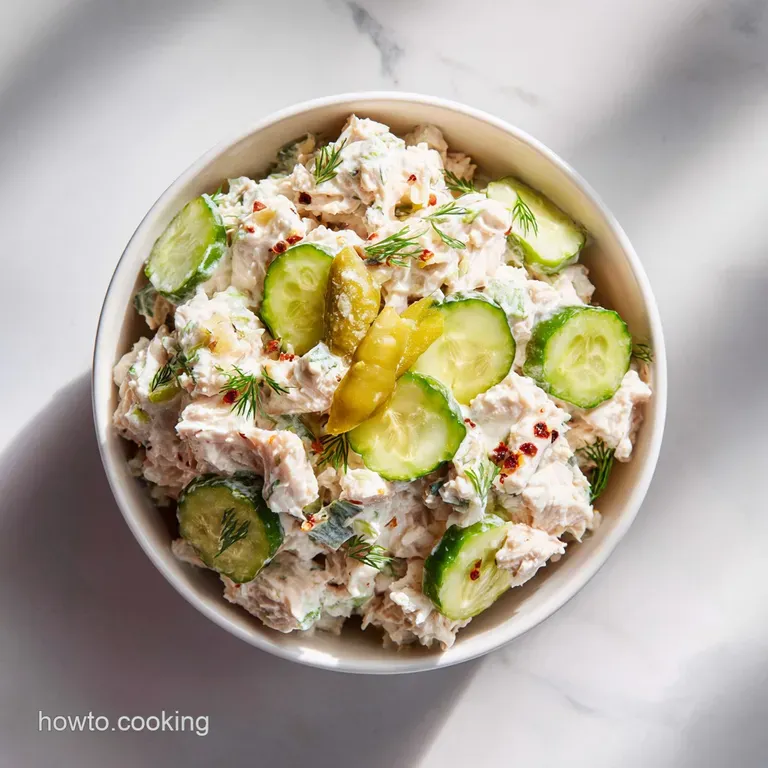
- Time: Active 10 minutes, Passive 30 minutes, Total 40 minutes
- Flavor/Texture Hook: Velvety dressing with a crisp, vegetal crunch
- Perfect for: Nutritious weekday lunches or a reliable family meal prep
Secrets for a Perfect Tuna Salad
I still remember the soggy sandwich disaster of 1998. We were at a community picnic, and I had volunteered to bring the sandwiches. By the time we opened the cooler, the bread had turned into a wet sponge, and the filling was swimming in a sad, grey puddle. It was mortifying.
I spent the rest of the afternoon apologizing and eating plain crackers, but that failure started my obsession with fixing the texture of this classic dish once and for all.
The mistake most of us make is treating the can of fish like a finished product. We just pop the lid, give it a half hearted squeeze, and dump it in. But to get that restaurant quality flake that stays firm and flavorful, you have to treat the tuna like a fresh ingredient.
It's about respecting the protein and understanding how it interacts with the fats and acids in your bowl.
We've all had those cafeteria versions that are over processed and bland. This version is the opposite. It’s wholesome, bright, and has a structural integrity that makes it feel like a real meal.
Once you learn the trick to prepping the aromatics and the protein, you’ll never settle for a mushy sandwich again. Trust me, the extra two minutes of prep changes everything.
The Physics of the Flake
Capillary Action Control: Pressing the tuna dry creates empty space between the protein fibers, allowing the dressing to be absorbed into the meat rather than sitting on top. This prevents the moisture from the vegetables from leaching out and turning the salad into a soup.
| Texture Choice | Preparation Method | Resulting Mouthfeel | Best Application |
|---|---|---|---|
| Chunky Flake | Fork crushed gently | Substantial, meaty bites | Green salads or wraps |
| Fine Emulsion | Mashed with a whisk | Smooth, spreadable, velvety | Tea sandwiches or crackers |
| Shredded Ribbon | Pulled with two forks | Light, airy, integrated | Low calorie lettuce cups |
Whether you want a hearty bite or a smooth spread, the way you break down the fish determines the final character of the meal. Most people over work the mixture, but I find that a gentle hand keeps the fibers intact, which feels much more nutritious and satisfying.
Core Recipe Planning Metrics
Building a consistent meal requires more than just guessing at quantities. I've found that the ratio of "crunch" to "cream" is the most important factor in whether a salad feels balanced. If you have too much celery, it feels like a snack tray, but too much mayo makes it feel heavy and greasy.
We are aiming for a wholesome middle ground where every ingredient has a purpose.
| Aspect | Metric | Sensory Checkpoint |
|---|---|---|
| Prep Time | 10 minutes | All aromatics minced to 5mm |
| Chill Time | 30 minutes | Flavors are cohesive and cool |
| Protein Weight | 10 oz | Pressed dry to a firm puck |
A quick note on timing: while you can eat this immediately, the red onions and lemon juice need a little time to "tame" each other. The acid in the lemon softens the sharp bite of the onion, making the whole dish taste much more sophisticated after a short rest in the fridge.
Choosing Your Wholesome Ingredients
Selecting quality components is the foundation of any nutritious meal. I prefer water packed Albacore because it has a cleaner flavor and a firmer texture than oil packed varieties.
When you choose your fish, look for "pole and line caught" labels, as they tend to yield larger, more intact flakes that stand up better to the dressing.
- 10 oz Albacore tuna: Drained and pressed dry. Why this? Provides a firm, meaty foundation that doesn't turn into mush when mixed.
- 1/3 cup high-quality mayonnaise: The binder. Why this? Creates a silky emulsion that carries the flavors of the seasonings evenly.
- 1 tbsp Dijon mustard: For depth. Why this? Adds a subtle tang and acts as a natural emulsifier for the dressing.
- 1 tbsp lemon juice: Freshly squeezed. Why this? Brightens the fish and cuts through the richness of the mayonnaise.
- 1/2 tsp cracked black pepper: For warmth. Why this? Provides a gentle heat that balances the cool, creamy elements.
- 1/4 tsp celery salt: The secret seasoning. Why this? Enhances the natural vegetal notes of the fresh celery.
- 1/2 cup celery: Finely diced. Why this? Essential for structural crunch and a refreshing, watery contrast.
- 1/4 cup red onion: Minced. Why this? Offers a sharp, pungent kick that prevents the salad from being flat.
- 2 tbsp fresh dill or parsley: Chopped. Why this? Adds a burst of herbal freshness and a vibrant green color.
- 2 tbsp sweet pickle relish: For balance. Why this? Provides a tiny hit of sugar and vinegar to round out the salt.
| Original Ingredient | Substitute | Why It Works |
|---|---|---|
| high-quality Mayo | Plain Greek Yogurt | Adds a tangy probiotic boost. Note: Slightly more acidic and less rich. |
| Sweet Relish | Chopped Capers | Provides a salty, briny punch instead of sweetness. |
| Red Onion | Shallots | A much milder, more delicate onion flavor for sensitive palates. |
Using fresh herbs like dill or parsley is non negotiable for me. Dried herbs just don't have the same aromatic punch, and they can sometimes feel gritty in a cold salad. If you have some extra dill, it’s also fantastic in a Healthy Tuna Salad recipe which uses yogurt for an even lighter profile.
Essential Tools for Prep
You don't need a pantry full of gadgets to make a great salad, but a few specific items make the process much more efficient. I always use a fine mesh strainer to drain the fish. If you just use the lid of the can, you leave behind about two tablespoons of liquid that will eventually separate and ruin your dressing.
A sharp chef's knife is also vital. We want the celery and onion to be uniform in size, roughly 5mm cubes. This ensures that you get a bit of everything in every forkful. If the pieces are too big, they dominate the texture, and if they are too small, they get lost in the creaminess.
I also recommend a glass or stainless steel mixing bowl, as plastic can sometimes retain odors from previous meals.
Chef's Tip: Use a clean kitchen towel or several layers of paper towels to squeeze the tuna after draining it in the strainer. You want it to feel almost like a dry sponge before it hits the bowl.
step-by-step Production Flow
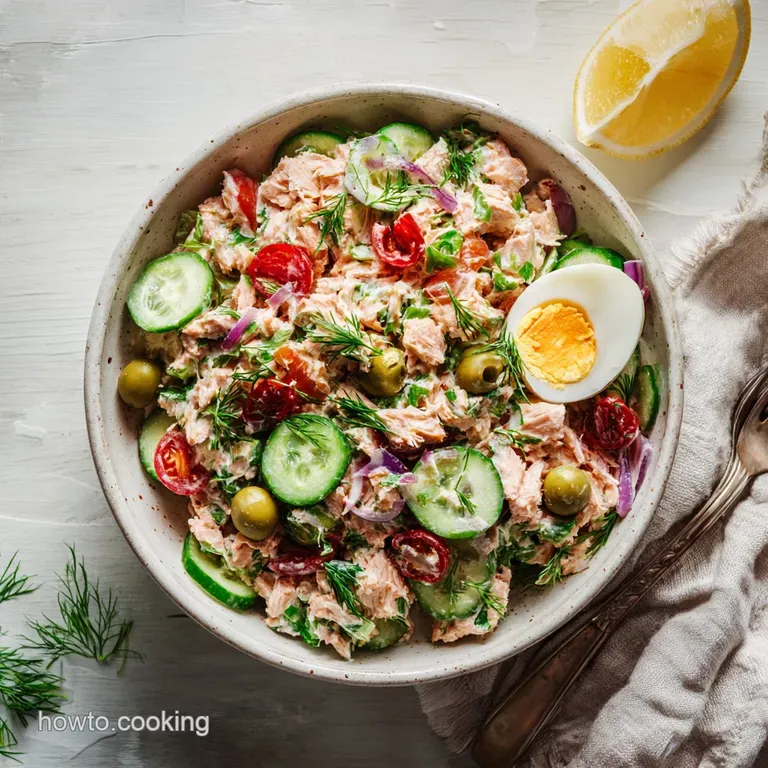
The secret to a wholesome result is the order of operations. We don't just throw everything in at once. We build the dressing first, then add the structural elements, and finally fold in the protein to keep the flakes as large as possible.
- Drain the tuna. Open the cans and press the fish against a fine mesh strainer until no more liquid drips through.
- Dry the protein. Transfer the fish to a clean towel and squeeze firmly until the texture is flaky and dry.
- Mince the aromatics. Cut the celery and red onion into uniform 5mm pieces until you have a pile of crisp, even cubes.
- Whisk the dressing base. In a large bowl, combine the mayonnaise, Dijon, lemon juice, pepper, and celery salt until the mixture is velvety and smooth.
- Incorporate the flavorings. Fold in the relish and fresh herbs until the green flecks are evenly distributed.
- Add the crunch. Toss the celery and onions into the dressing until every piece is lightly coated.
- Fold the fish. Add the dried tuna and use a fork to gently break it apart until the dressing is fully absorbed into the flakes.
- Taste and adjust. Check for brightness and seasoning until the flavors feel balanced and vibrant.
- Chill for synergy. Cover the bowl and refrigerate for 30 minutes until the salad is cold and the onion has softened.
Solving Textural and Flavor Issues
Even the simplest recipes can have a bad day. The most common complaint I hear from friends is that their salad tastes "too fishy" or ends up watery by the next morning. Usually, these issues come down to moisture management and the age of the ingredients.
Fixing a Watery Base
If you notice liquid pooling at the bottom of your bowl, it's because the salt in the dressing is drawing water out of the vegetables. This is why drying the tuna is so critical. If the tuna is dry, it will actually soak up that extra moisture instead of letting it sit in the bottom of the bowl.
| Problem | Root Cause | Solution |
|---|---|---|
| Soupy Consistency | Excess moisture in tuna or veggies | Fold in an extra tablespoon of tuna or a few crushed crackers. |
| Harsh Onion Bite | Red onion was too pungent | Stir in a teaspoon of honey or extra lemon juice to neutralize. |
| Bland Flavor | Lack of acidity or salt | Add a splash of pickle juice or an extra pinch of celery salt. |
Balancing Strong Fishy Tones
Sometimes a particular batch of fish has a stronger aroma than usual. To fix this, increase the lemon juice slightly. The citric acid reacts with the amines (the compounds responsible for the smell) and turns them into non volatile salts, effectively "locking" the scent away so you only taste the clean flavor of the sea.
Common Mistakes Checklist ✓ Never skip the "squeeze" step - dry tuna is the only way to avoid a watery salad. ✓ Dice your onions as small as possible to avoid overwhelming pungent bites.
✓ Use fresh lemon instead of bottled - the aromatic oils in the peel add a dimension you can't get from a plastic bottle. ✓ Let the salad rest; the flavors are always better 30 minutes later. ✓ Don't over mix - you want flakes, not a paste.
Customizing Your Nutritious Meal
This recipe is a canvas. Once you have the basic ratio down, you can adapt it to fit whatever you have in the fridge. I often think about the different ways my family likes to eat, and I've found a few variations that keep things interesting without losing that wholesome feel.
If you are looking for a My GoTo Healthy recipe, try swapping half the mayo for mashed avocado. It adds a beautiful green hue and a dose of healthy fats that makes the salad feel even more substantial.
- For a Lighter Twist (Low Calorie): Use Greek yogurt instead of mayo and add an extra tablespoon of lemon juice. It’s tangy and high in protein.
- Making a Hearty Pasta Variant: Fold in 2 cups of cooked rotini or farfalle. You'll need to double the dressing to ensure the pasta stays moist.
- Adding a Spicy Kick: Stir in a teaspoon of sriracha or finely minced jalapeños for a modern, zesty finish.
| Method | Time | Texture | Best For |
|---|---|---|---|
| Cold Salad | 0 min | Crisp and fresh | Sandwiches and wraps |
| Stovetop (Melt) | 5 min | Gooey and warm | Sourdough tuna melts |
| Oven (Bake) | 12 min | Toasted and melty | Casseroles or open face melts |
I personally love the stovetop method for a quick lunch. There is something so comforting about a crispy, buttery piece of bread against the cool, creamy filling. But if I'm feeding the whole family, an oven baked version with a bit of cheddar on top is always a winner.
Storage and Waste Tips
Proper storage is the key to maintaining that crisp texture we worked so hard for. Always keep your salad in an airtight glass container. It will stay fresh in the fridge for up to 3 days. I don't recommend freezing it, as the mayonnaise and the celery will separate and lose their structural integrity upon thawing.
For a zero waste approach, don't throw away those celery leaves! They are packed with flavor. Mince them up and toss them in with the parsley and dill for an extra punch of herbal notes. Also, the leftover liquid from the sweet relish jar is liquid gold.
Use a spoonful of it in your next vinaigrette or to macerate some sliced cucumbers.
If you find yourself with just a small scoop left that isn't enough for a sandwich, stir it into some scrambled eggs the next morning. It sounds strange, but the creaminess of the salad and the saltiness of the fish make for a very flavorful omelet filling.
Ideal Serving and Pairing
While the classic sandwich is hard to beat, I often serve this as a "deconstructed" platter. Put a big scoop in the center of a plate and surround it with cucumber slices, radishes, and some high-quality whole grain crackers. It makes for a very nutritious lunch that feels a bit more special than a standard wrap.
For a refreshing side, this pairs beautifully with a Sunny Chicken Coleslaw recipe. The vinegar in the slaw cuts through the creaminess of the fish perfectly. You can also serve it inside a hollowed out tomato or a halved avocado for a low carb presentation that looks beautiful on the table.
When packing this for a lunchbox, I always suggest keeping the salad in a separate small container and assembling the sandwich right before eating. This keeps the bread perfectly dry and the salad perfectly cold.
If you must pre assemble, a thin layer of butter or a large lettuce leaf on the bread acts as a moisture barrier, ensuring you never have to relive my 1998 picnic disaster!
Actually, that's the most empowering part of cooking learning from those little messes. Now, you have all the tools to make a version that is consistently delicious, wholesome, and exactly the way you like it. Go ahead and give it a try; your future lunch self will thank you.
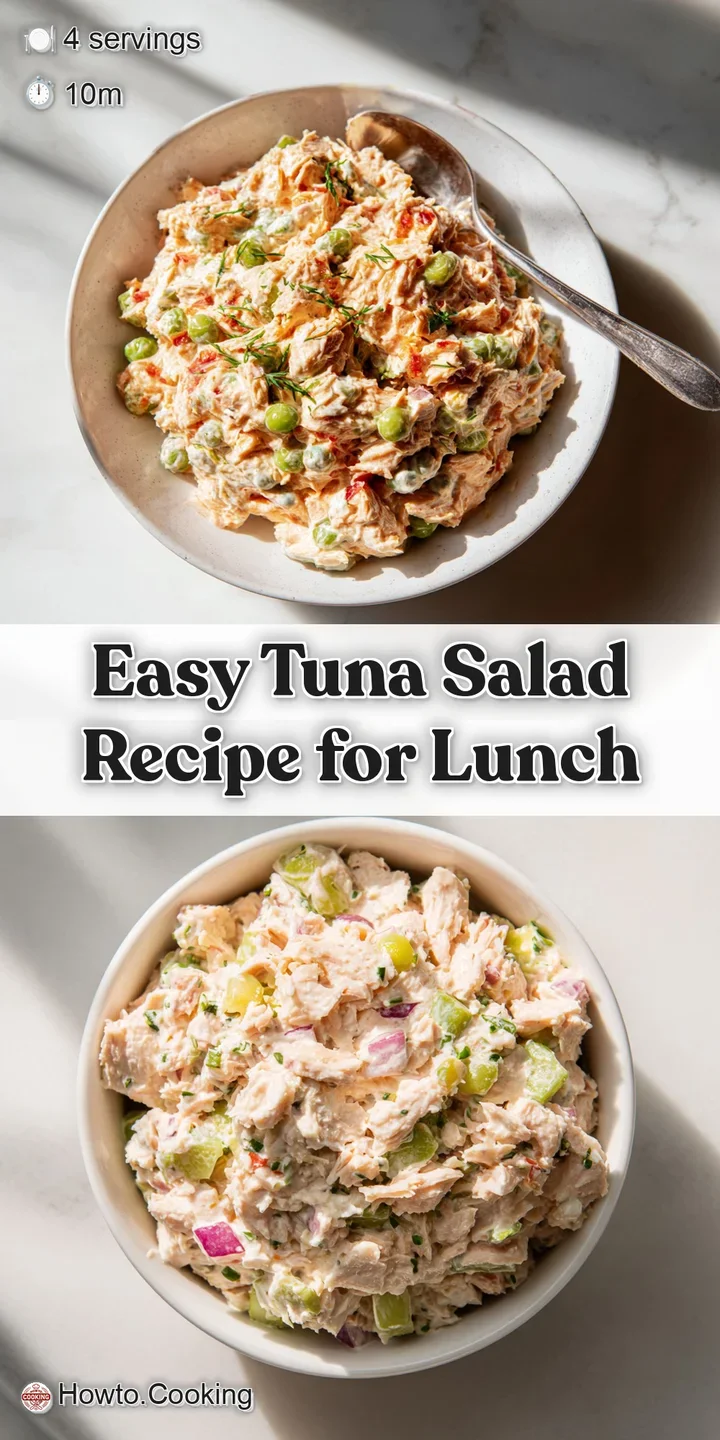
Recipe FAQs
What ingredients are in a standard tuna salad?
Tuna, mayonnaise, celery, onion, mustard, lemon juice, and seasoning. A standard mix requires flaked, pressed tuna bound with a creamy base like mayo, providing crunch from celery and sharpness from fresh onion and lemon. I also include Dijon mustard and celery salt for depth.
What is the secret to a good, non-watery tuna salad?
Press the tuna until it is almost dry before mixing. Most recipes fail because excess moisture from the can sits on top, leaching out later. You must drain it thoroughly, ideally squeezing the protein between paper towels to maximize absorption later.
What is Matthew McConaughey's tuna salad recipe?
There is no officially published, specific recipe attributed to him. While he enjoys clean eating, his exact ingredient ratio for tuna salad remains private lore. The principles of quality protein and balancing acid/fat are likely key to any quality version.
Can a diabetic person eat tuna salad?
Yes, with moderation and ingredient substitution. Tuna itself is excellent; focus on controlling the carbohydrate content from relish or added sweeteners. Try substituting the mayonnaise with plain Greek yogurt for a lower carb, higher protein binder, similar to the method in our Healthy Chicken Salad recipe.
How to improve the flavor if the onion bite is too harsh?
Stir in a small amount of sweetener or extra acid. A teaspoon of honey or a small addition of pickle relish juice counteracts the sharp sulfuric compounds in the raw onion. This balancing act of sweet, sour, and savory is vital; if you enjoy that concept, look at the sweet tart logic in our Mediterranean Chickpea Salad recipe.
How to make the tuna salad texture suitable for delicate tea sandwiches?
Mash the tuna thoroughly with a fork until it forms a fine emulsion before mixing in binders. Use less celery, finely minced, or omit it entirely for a completely smooth texture. This requires working the protein until it's almost paste like rather than gently flaking it.
Is using oil-packed tuna acceptable for this preparation?
No, water packed Albacore is highly recommended for texture. Oil-packed tuna often carries a heavier flavor and releases more residual fat, which can separate from the mayonnaise binder, leading to a greasy final product rather than a cohesive salad.
Easy Tuna Salad Recipe
Ingredients:
Instructions:
Nutrition Facts:
| Calories | 214 kcal |
|---|---|
| Protein | 14.6 g |
| Fat | 14.8 g |
| Carbs | 4.2 g |
| Fiber | 0.6 g |
| Sugar | 2.4 g |
| Sodium | 312 mg |
