Homemade Brown Sugar: Moist and Aromatic
- Time: Active 5 minutes, Passive 0 minutes, Total 5 minutes
- Flavor/Texture Hook: Velvety, moist mahogany granules
- Perfect for: High end baking, pantry emergencies, and gift giving
- Crafting the Most Velvety Homemade Brown Sugar
- Essential Recipe Performance Specs
- Components for Rich Molasses Flavor
- Tools for a Seamless Mix
- From Prep to Perfect Staple
- Fixes for Clumpy Sugar Mistakes
- Adaptations for Unique Dietary Needs
- Storage Tips for Lasting Freshness
- Styling Your Sugar for Gifts
- Recipe FAQs
- 📝 Recipe Card
Crafting the Most Velvety Homemade Brown Sugar
Have you ever pulled out a bag of store-bought brown sugar only to find it has turned into a literal brick that could break a kitchen window? Or even worse, you are halfway through mixing a batch of cookie dough and realize the "brown sugar" you bought is actually just white sugar sprayed with a weird caramel coloring that tastes vaguely like chemicals.
I have been there, staring at a crumbly, dry mess that refuses to incorporate into softened butter, leaving my final cookies gritty and sad instead of chewy and velvety.
This homemade brown sugar recipe is the targeted fix for that pantry panic. By taking control of the process, we are not just saving a trip to the store; we are creating a superior ingredient with a higher moisture content and a more complex mineral profile than anything you will find in a plastic bag on a shelf.
When you make it yourself, you ensure the molasses is fresh and the sugar crystals are perfectly coated, which is the secret to getting that shatter crisp edge and fudgy center in your favorite bakes.
We are going to walk through exactly how to balance these two simple ingredients to achieve a mahogany finish that smells like toasted marshmallows and warm spice. Trust me, once you feel the damp, sandy texture of a fresh batch of this staple, you will never want to go back to the mass produced stuff.
It is about more than just sweetness; it is about bringing wholesome confidence back to your mixing bowl.
Essential Recipe Performance Specs
When we talk about creating staples from scratch, understanding the physical changes is key. We are looking for a specific weight and feel. Commercial brown sugar is often dried out during the packaging process to prevent clumping on the shelf, but that actually robs the sugar of its humectant properties.
By making this in 5 minutes, you are retaining the natural hydration that makes brown sugar so essential for chewy textures.
The ratio here is precise because too much liquid will make the sugar greasy, while too little leaves it pale and one dimensional. We are aiming for a uniform mahogany color that holds its shape when squeezed in your palm. If it crumbles instantly like dry sand, it needs more molasses.
If it sticks to your hand like wet clay, it has too much. We want that perfect middle ground where the crystals feel like damp velvet between your fingers.
| Premium Ingredient | Budget Alternative | Flavor Impact | Savings |
|---|---|---|---|
| Organic Blackstrap Molasses | Standard Unsulphured Molasses | Blackstrap is more bitter/salty; standard is sweeter | Save $3-5 per bottle |
| Pure Cane Granulated Sugar | Standard Beet Sugar | Cane sugar has a cleaner, floral finish | Save $1-2 per bag |
| Dark Muscovado | This Homemade Recipe | Very similar moisture; homemade is more versatile | Save $6 per pound |
Getting the consistency right depends heavily on the quality of your base. I always recommend using a standard granulated sugar rather than a super fine or caster sugar for this specific project.
The slightly larger surface area of standard granules allows the molasses to cling more effectively without turning into a slurry. It is a simple mechanical bond that we are creating with our hands or a fork.
Components for Rich Molasses Flavor
The beauty of this process lies in the simplicity of the components, but don't let that fool you into thinking any old sugar will do. We are looking for high purity granulated white sugar and a high-quality molasses.
The science here is fascinating because molasses isn't just a flavor; it is an acidic liquid that reacts with baking soda to create lift and browning in your oven.
In the world of sugar chemistry, molasses acts as a humectant, meaning it literally pulls moisture from the air and holds onto it. This is why brown sugar stays soft (until it evaporates) and why it makes cookies so much chewier than white sugar alone.
When you use this homemade brown sugar ratio, you are ensuring the perfect pH balance for your leavening agents to work their magic.
| Component | Science Role | Pro Secret |
|---|---|---|
| Granulated Sugar | Structural Crystalline Base | Use cane sugar for better caramelization |
| Unsulphured Molasses | Humectant & Acidic Agent | Room temperature molasses flows more evenly |
| Mechanical Friction | Emulsification | Use a stiff fork to "shred" the liquid into the solids |
The molasses you choose matters immensely. Always look for "unsulphured" molasses. Sulphured molasses is made from young green sugarcane and treated with sulfur dioxide, which can leave a medicinal, unpleasant aftertaste.
Unsulphured molasses comes from mature sugarcane and has a much cleaner, more wholesome sweetness that allows the natural minerals to shine through in your finished bakes.
Tools for a Seamless Mix
While you might be tempted to reach for a high powered food processor, I actually find that a manual approach yields a better texture. High speed blades can heat the sugar, causing the molasses to become too thin and potentially melting the edges of the sugar crystals.
This leads to a sticky mess rather than a fluffy, sandy sugar. A simple stainless steel bowl and a sturdy fork or silicone spatula are your best friends here.
Using a bowl with enough room is the first step toward success. You want plenty of surface area to press the sugar against the sides. This friction is what breaks the surface tension of the molasses droplets and forces them to coat each individual grain of sugar.
If the bowl is too small, you will end up with molasses clumps on the bottom and white sugar on top.
Chef's Tip: Freeze your molasses for just 5 minutes before measuring. It sounds counterintuitive, but a slightly thicker molasses is actually easier to "cut" into the sugar with a fork, preventing it from immediately sinking to the bottom of the bowl.
If you are making a double or triple batch, a stand mixer with the paddle attachment can work, but keep it on the lowest speed possible. You are looking for a gentle rubbing motion rather than a whipping action.
The goal is to mimic the "rubbing in" method used for biscuits or pie crusts, ensuring every crystal is hugged by a microscopic layer of molasses.
From Prep to Perfect Staple
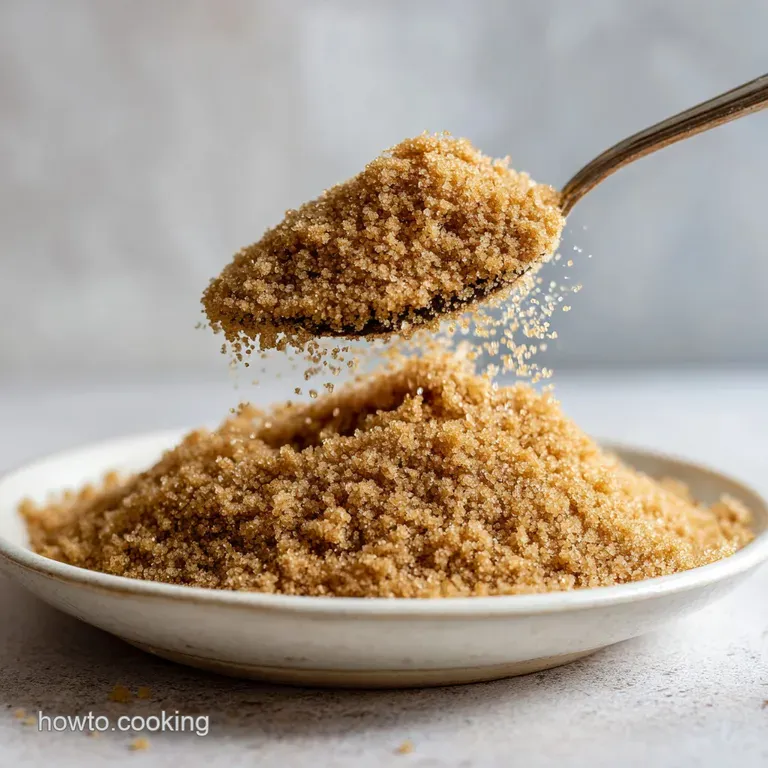
Start by placing your 1 cup (200g) of granulated white sugar into your mixing bowl. I like to use a wide, shallow bowl because it gives me more "crushing" space. Make a small well in the center of the sugar, almost like you are making pasta dough.
This prevents the molasses from running straight to the bottom and sticking to the stainless steel, which can be a nightmare to scrape off later.
Pour the 1.5 tablespoons (30g) of molasses directly into that center well. This specific homemade brown sugar recipe relies on the gradual incorporation of the liquid into the solid. Use your fork to pull small amounts of sugar from the edges into the center, mashing them down.
You will see little dark clumps start to form. This is exactly what we want.
As you continue to stir and press for about 3 to 5 minutes, the sugar will transform. It starts looking speckled, like a dalmatian, before eventually turning into a uniform mahogany. If you notice any stubborn dark spots, do not be afraid to get your hands in there.
The warmth from your fingertips helps to slightly liquify the molasses, making it spread much more easily than a cold utensil ever could.
Once the color is consistent, you have successfully learned how to make brown sugar from scratch. It should feel damp and heavy. This fresh batch is perfect for recipes that require a lot of moisture, like my homemade brown sugar pop tarts, where the filling needs to be gooey rather than gritty. This process is so fast that you can literally do it while your butter is softening for a recipe.
Fixes for Clumpy Sugar Mistakes
Even with a simple two ingredient process, things can occasionally go sideways. The most common issue I see is streakiness. This usually happens if the molasses was too cold or if the mixing wasn't aggressive enough. If you see white streaks, keep mashing!
It just means there are still "naked" sugar crystals that haven't been coated yet.
Another frustration is the sugar feeling too wet. This often happens in humid kitchens or if the measurement of molasses was a bit heavy handed. If your sugar feels more like a paste than a powder, simply add more granulated sugar, one tablespoon at a time, until the texture corrects itself.
It is a very forgiving process, so do not panic if the first minute of mixing looks like a disaster.
Correcting Speckled or Streaky Sugar
When you see dark spots or "freckles" in your sugar, it is usually a sign of uneven distribution. This often happens if the molasses was drizzled over the top rather than placed in a central well. To fix this, use the "palm rub" technique. Take a handful of the speckled sugar and rub your hands together over the bowl.
The friction and heat will break those molasses beads and distribute them perfectly.
Saving Rock Hard Brown Sugar
If you have some older homemade or store-bought sugar that has turned into a stone, do not throw it away! Place the hardened sugar in a bowl and cover it with a damp paper towel. Microwave it in 10 second bursts.
The moisture from the towel will turn into steam, which the sugar will greedily soak up, returning it to its soft, velvety state in less than a minute.
| Problem | Root Cause | Solution |
|---|---|---|
| Sandy/Dry Texture | Low molasses ratio | Add molasses in 1/2 tsp increments and remix |
| Sticky/Clumpy | High humidity or too much molasses | Add 1 tbsp white sugar and use hand rubbing method |
| Dark Spots | Poor distribution | Sift through a coarse mesh or use the palm rub technique |
Common Mistakes Checklist
- ✓ Avoid using a whisk; the molasses will just get stuck inside the wires and never mix.
- ✓ Never use "blackstrap" molasses unless a recipe specifically asks for it, as it is too bitter.
- ✓ Ensure your mixing bowl is completely dry before starting; even a drop of water can cause the sugar to dissolve.
- ✓ Don't stop mixing until the color is 100% uniform; streaks will cause "hot spots" in your cookies.
- ✓ Use a glass jar for storage rather than plastic to better maintain the moisture levels.
Adaptations for Unique Dietary Needs
Sometimes you might find yourself needing an easy homemade brown sugar but you are completely out of molasses. While molasses is the gold standard for that authentic flavor, you can use maple syrup in a pinch.
Just be aware that maple syrup has a higher water content and lower acidity, so your cookies might spread a bit more and won't have that same deep "burnt sugar" backnote.
For those looking for a brown sugar substitute recipe that is a bit lower on the glycemic index, you can actually apply this same technique to coconut sugar. While coconut sugar is already brown, adding a tiny bit of molasses to it creates a "dark" coconut sugar that behaves much more like traditional brown sugar in baking, providing that essential moisture that plain coconut sugar often lacks.
Molasses Impact on Cookie Texture
The amount of molasses you use dictates whether you are making "light" or "dark" brown sugar. Light brown sugar (the version we are making today) provides a delicate caramel flavor. If you want a more intense, almost gingerbread like depth, increase the molasses to 2 tablespoons.
This "dark" version will result in a much softer, denser crumb in cakes and a more "bendy" chew in cookies.
Manual Mixing for Even Distribution
I cannot stress enough how much better the texture is when mixed by hand. When we use a machine, we often lose the sensory feedback of the sugar. By using a fork or your fingers, you can feel exactly when the crystals go from being separate and dry to being cohesive and "fluffy." This tactile connection is what builds confidence in the kitchen and ensures a wholesome result every time.
Storage Tips for Lasting Freshness
The biggest enemy of any brown sugar, especially a fresh homemade one, is air. When air gets to the molasses coated crystals, the moisture evaporates, and the sugar molecules bond together into a solid mass. To prevent this, always store your sugar in a glass jar with a tight sealing lid.
Press the sugar down firmly into the jar to remove as much air as possible before sealing.
If you plan on keeping it for more than a month, you can toss in a "sugar saver" usually a small piece of terra cotta that has been soaked in water. This acts as a perpetual humidifier for your jar.
If you don't have one, a simple marshmallow or a small slice of white bread placed in the top of the jar works just as well. The sugar will pull the moisture from the bread, keeping itself soft while the bread becomes a crouton.
In terms of zero waste, don't ever wash out a molasses jar that is "empty." Instead, pour your measured white sugar directly into the nearly empty molasses jar and shake it vigorously. The sugar will act as an abrasive, scrubbing every last bit of that liquid gold off the sides of the jar.
It is a great way to ensure you are getting every bit of nutrition and flavor out of your ingredients.
Styling Your Sugar for Gifts
There is something incredibly charming about a jar of homemade brown sugar, especially when it is still fresh and fragrant. If you are giving this as a gift, I suggest layering it.
You can put white sugar on the bottom, a layer of this mahogany brown sugar in the middle, and then top it with some whole spices like cinnamon sticks or star anise. It looks artisanal and wholesome, showing a level of care that a store-bought gift never could.
For a beautiful presentation, you can also use this sugar to top desserts. Because it is more moist than commercial sugar, it holds its shape better. You can press it into small molds or even use it as a decorative rim for a festive drink. Imagine a glass rimmed with this mahogany sugar for a spiced cider or used as a deep, flavorful topping for Southern charm butter pecan ice cream. The contrast between the cold cream and the sandy, molasses rich sugar is absolute perfection.
Wait, what about the leavening? A common myth is that brown sugar is just for flavor. In reality, the molasses is what reacts with baking soda to make your cakes rise.
If you try to swap white sugar for brown without adding an acid (like the molasses in our recipe), your bake will likely come out flat and dense. Always stick to the ratio to ensure your kitchen chemistry stays balanced and your results stay consistent. Now, go grab that bowl and get mashing!
Recipe FAQs
How to make brown sugar at home?
Combine 1 cup of granulated white sugar with 1.5 tablespoons of unsulphured molasses in a stainless steel bowl. Mash the mixture with a fork or silicone spatula for 3 to 5 minutes until it achieves a uniform mahogany color, rubbing any remaining molasses clumps between your fingertips to ensure even
coating.
How to turn regular sugar to brown sugar?
Create a well in the center of your granulated sugar, pour in the molasses, and press it against the bowl sides. Keep mixing until the color is completely uniform to avoid streaks, which can create localized flavor inconsistencies in your baked goods.
How to make a 1/2 cup of brown sugar?
Mix 1/2 cup of granulated white sugar with exactly 2.25 teaspoons of unsulphured molasses. Follow the standard mashing technique until the color is consistent, and if you enjoyed mastering this specific ratio for flavor depth, you will appreciate applying similar precision to our tangy homemade BBQ sauce.
Can brown sugar be used by diabetic patients?
No, it is not recommended. Brown sugar is primarily sucrose, the same as white sugar, and will have a similar impact on blood glucose levels.
Is it true I should use a whisk to mix the sugar and molasses?
No, this is a common misconception. A whisk is ineffective because the thick molasses will simply get trapped inside the wires, preventing it from ever fully incorporating into the sugar crystals.
Why is my homemade brown sugar clumping into a solid mass?
Moisture evaporation caused by exposure to air is the primary culprit. Always pack the sugar tightly into an airtight glass jar to minimize air pockets, which helps maintain the natural moisture of the molasses.
Can I use blackstrap molasses instead of unsulphured?
No, avoid blackstrap molasses for general use. It has a much more bitter, intense flavor profile that will overpower your recipe unless specifically called for by a professional baker.
Homemade Brown Sugar Guide
Ingredients:
Instructions:
Nutrition Facts:
| Calories | 54 kcal |
|---|---|
| Protein | 0 g |
| Fat | 0 g |
| Carbs | 13.9 g |
| Fiber | 0 g |
| Sugar | 13.9 g |
| Sodium | 1.5 mg |
