Soft Golden Sourdough Loaf: Honey and Tangzhong
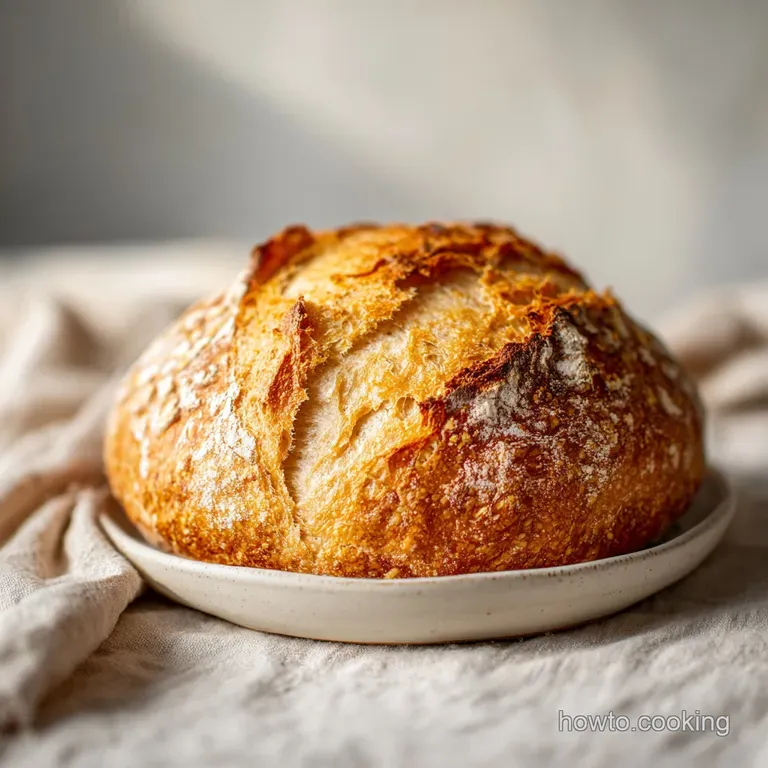
- Time: Active 45 minutes, Passive 40 minutes, Total 85 minutes
- Flavor/Texture Hook: Silky, honey kissed crumb with a thin, shimmering golden crust
- Perfect for: School lunches, artisanal French toast, or beginner bakers wanting a reliable win
- Bake a Soft Golden Sourdough Loaf with Honey using a Loaf Pan
- Mastering the Science of Bread Moisture
- Component Analysis for Superior Results
- Essential Ingredients and Smart Substitutions
- Specialized Tools for Bread Success
- Step-by-Step Soft Sourdough Baking Guide
- Avoiding Common Sourdough Bread Mistakes
- Creative Ways to Flavor Your Loaf
- Sourdough Myths and Realities
- Storage and Freshness Preservation Tips
- Perfect Pairings for Honey Sourdough Slices
- Recipe FAQs
- 📝 Recipe Card
Bake a Soft Golden Sourdough Loaf with Honey using a Loaf Pan
I used to think sourdough had to be a crusty, jaw breaking boule that shattered into a thousand shards the moment you tried to make a sandwich. You know the ones they look gorgeous on Instagram but tear up the roof of your mouth.
Everything changed when I started playing with wildflower honey as a primary ingredient. The first time the aroma of that warm, floral sweetness hit the kitchen, mingling with the yeasty tang of my starter, I knew I was onto something special.
Honey isn't just a sweetener here; it's a structural powerhouse. Unlike refined sugar, wildflower honey brings a complex moisture attracting quality that keeps the crumb velvety and prevents that dreaded second day staleness.
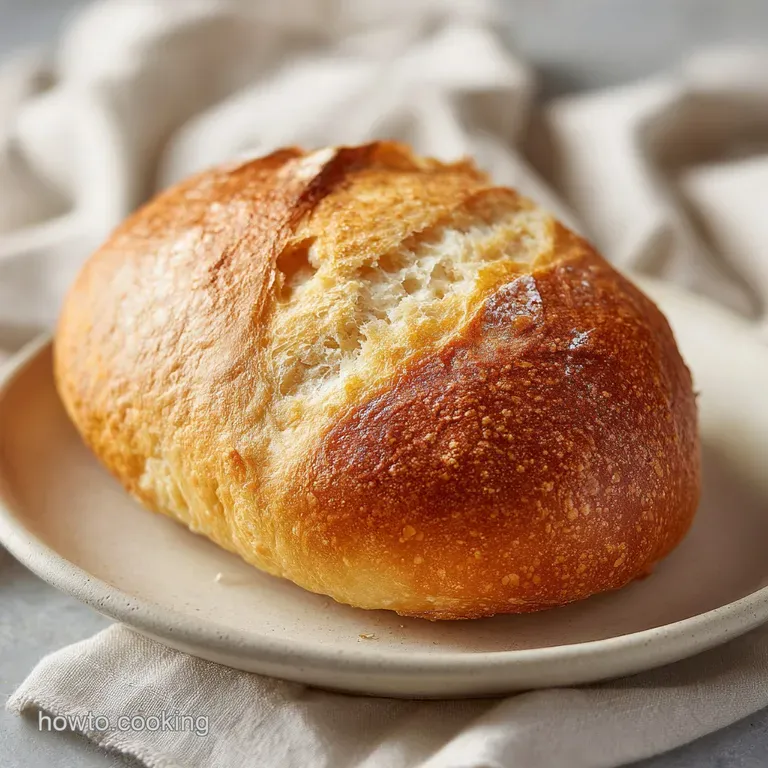
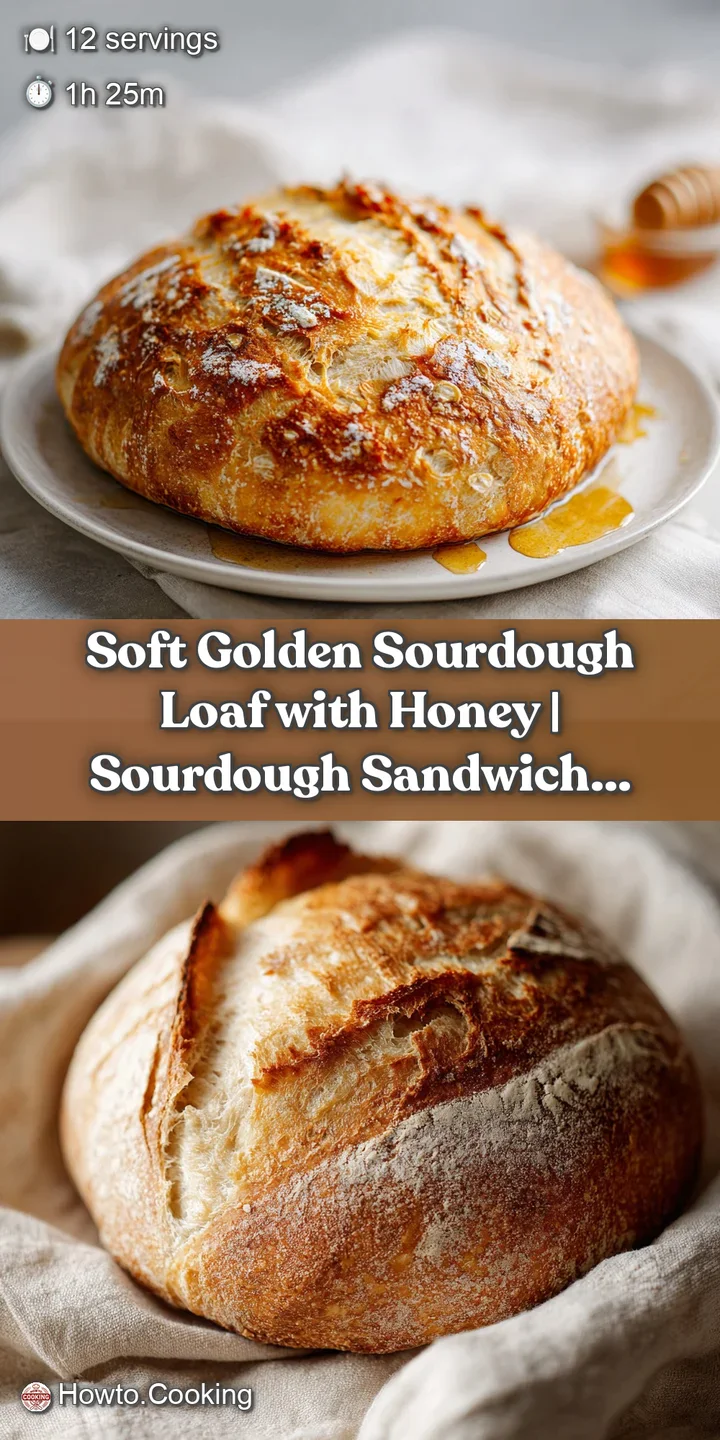
When you pull this soft golden sourdough loaf with honey using a loaf pan out of the oven, the crust isn't thick or hard; it has this delicate, paper thin shimmer that yields easily to a serrated knife.
Discover how to bake a perfect soft golden sourdough loaf with honey, all in your trusty loaf pan. This recipe is my go to for family brunches because it's dependable. It’s the kind of bread that makes the house smell like a professional patisserie and gives you the confidence to stop buying the plastic wrapped stuff from the store.
We’re going to use a simple chemistry trick called a Tangzhong to ensure that "squish" factor we all crave in a proper sandwich slice.
Mastering the Science of Bread Moisture
The Tangzhong Moisture Trap: By pre cooking a small portion of flour and milk into a thick paste, we gelatinize the starches, allowing them to hold onto much more liquid throughout the baking process without making the dough sticky or unmanageable.
Honey as a Natural Humectant: Honey is "hygroscopic," meaning it literally pulls moisture from the air into your bread, which is why this loaf stays soft on the counter much longer than standard sourdough.
Controlled Gluten Development: The addition of softened butter coats the gluten strands, keeping them flexible rather than rigid, which results in a tighter, more uniform crumb that doesn't crumble when you spread cold butter on it.
Enzymatic Browning: The natural sugars in the honey and the proteins in the milk react during the bake to create that deep, burnished gold color without requiring a dangerously high oven temperature.
| Thickness | Internal Temp | Rest Time | Visual Cue |
|---|---|---|---|
| 1 inch slice | 200°F (93°C) | 60 minutes | Golden, matte crust |
| 1.5 inch slice | 205°F (96°C) | 90 minutes | Deep bronze shimmer |
| 2 inch (Texas Toast) | 195°F (90°C) | 45 minutes | Light tan, soft sides |
Using a loaf pan is actually a smart move for beginners because it provides "training wheels" for your dough. Instead of the dough spreading out into a flat pancake (the classic sourdough heartbreak), the walls of the pan force the energy of the yeast upward. This creates a consistent shape every single time, which is exactly what you want for uniform sandwiches or even tangy sourdough butter crackers if you ever have leftovers to repurpose.
Component Analysis for Superior Results
| Ingredient | Science Role | Pro Secret |
|---|---|---|
| Active Sourdough Starter | Natural leavening and acid development | Use it right at its peak height for the mildest, sweetest flavor profile. |
| Wildflower Honey | Humectant and yeast fuel | Avoid "clover" honey if you want the deep floral notes; wildflower has more complexity. |
| High Protein Bread Flour | Structural integrity | Look for at least 12.7% protein to ensure the loaf can support the weight of the honey and butter. |
| Whole Milk | Fat and lactose for softness | Never use skim; the fat in whole milk is vital for that velvety mouthfeel. |
Choosing the right flour is where many people trip up. While you can technically use all purpose, the high protein bread flour provides the "muscle" needed to hold up all that glorious moisture from the Tangzhong. If the flour is too weak, the loaf might collapse under its own weight after it comes out of the oven.
We also add a tiny bit of whole wheat flour just 50g not enough to make it heavy, but just enough to give the starter something "toothy" to snack on, which helps with the rise.
Essential Ingredients and Smart Substitutions
To get started, gather these exact amounts to ensure your soft golden sourdough loaf with honey using a loaf pan turns out exactly like the photos. Precision is your best friend when dealing with hydration levels and natural ferments.
- 25g bread flourWhy this? Essential for the Tangzhong paste.
- 100g whole milkWhy this? Provides the liquid base for the roux.
- 350g high protein bread flourWhy this? The foundation of the loaf's structure.
- 50g whole wheat flourWhy this? Adds depth and nutrients for the yeast.
- 100g active sourdough starterWhy this? Must be bubbly and fed within 6-8 hours.
- 160g lukewarm waterWhy this? Hydrates the dough without shocking the yeast.
- 40g wildflower honeyWhy this? For that signature golden glow and softness.
- 40g unsalted butter, softenedWhy this? Creates a tender, silky crumb texture.
- 9g sea saltWhy this? Tightens gluten and balances the honey sweetness.
- 1 tbsp melted butter (for the glaze)
- 1 tsp honey (for the glaze)
| Original Ingredient | Substitute | Why It Works |
|---|---|---|
| Whole Milk | Oat Milk (Full Fat) | Similar creamy consistency; maintains the soft crumb beautifully. |
| Wildflower Honey | Maple Syrup | 1:1 swap. Note: Result will be slightly less golden and have a woodsy flavor. |
| Unsalted Butter | Coconut Oil (Solid) | Provides the necessary fat. Note: Adds a very faint tropical aroma. |
I've tried making this with low-fat milk once when I was in a pinch, and honestly, don't even bother. You lose that richness that makes this bread feel like a treat. If you're looking for a dairy-free option, a high-quality, creamy oat milk is your best bet because it has the natural sugars and fats that mimic cow's milk better than almond or soy ever could.
Specialized Tools for Bread Success
You don't need a kitchen full of gadgets, but a few specific items will make your life much easier. First, a digital scale is non negotiable. Measuring flour by the cup is a recipe for a dry, heavy loaf because everyone scoops differently. We're aiming for accuracy here to keep that hydration perfectly balanced.
A 9x5 inch loaf pan is the standard for this recipe. If you use a smaller 8.5x4.5 inch pan, the dough will likely spill over the sides like a mushroom cloud. A bench scraper is also a lifesaver for shaping. It helps you tuck the dough under itself to create tension without the dough sticking to your warm hands.
Finally,, a small saucepan for the Tangzhong is necessary I prefer stainless steel so I can see the color and texture of the paste as it thickens.
step-by-step Soft Sourdough Baking Guide
- Prepare the Tangzhong. In a small saucepan over medium heat, whisk 25g bread flour and 100g milk constantly until it forms a thick, pudding like paste. Note: Do not let it boil; just wait for the whisk to leave distinct tracks in the mixture.
- Initial Mix. In a large bowl, whisk the lukewarm water, 40g honey, cooled tangzhong, and active starter until the starter is fully dissolved and the mixture is milky.
- Autolyse. Add the bread flour and whole wheat flour to the wet mixture. Mix until no dry flour remains and a shaggy mass forms. Cover and let rest for 30 minutes.
- Incorporate Salt and Butter. Add the 9g sea salt and 40g softened butter to the dough. Knead by hand or with a mixer until the dough is smooth, elastic, and passes the windowpane test.
- Bulk Fermentation. Cover and let the dough rise in a warm spot (about 75°F/24°C) until doubled in size. Perform stretch and folds every 30 minutes for the first 2 hours to build strength.
- Shaping. Gently degas the dough on a lightly floured surface. Shape it into a tight log by rolling it up and pinching the seam. Place in a greased 9x5 inch loaf pan.
- Final Proof. Let the dough rise until the highest point reaches 1 inch above the rim of the loaf pan. This usually takes 2 to 4 hours depending on your kitchen's temperature.
- Baking. Bake at 375°F (190°C) for 35-40 minutes until the crust is deep golden and the internal temperature hits 200°F.
- Glaze. Immediately brush the top with the mixture of 1 tbsp melted butter and 1 tsp honey until the crust is shimmering and soft.
Letting the bread cool for at least an hour is the hardest part, but it's essential. If you cut into it while it's steaming hot, the internal structure hasn't finished setting, and you'll end up with a gummy, squashed crumb.
The honey and butter glaze will soak in as it cools, creating a "soft touch" finish that is absolutely irresistible.
Avoiding Common Sourdough Bread Mistakes
The biggest hurdle with this recipe is usually the timing of the sourdough starter. If your starter isn't at its peak meaning it hasn't doubled or tripled in size and isn't full of bubbles the bread will be dense. A weak starter struggles to lift the heavy fats and sugars from the butter and honey.
If you're unsure, do the "float test": drop a teaspoon of starter into a glass of water. If it floats, you're good to go.
Why Your Loaf Stayed Flat
If your dough didn't rise above the rim of the pan, it’s usually one of two things: temperature or time. Sourdough is a slow dance. If your kitchen is cool (below 70°F), that final proof might take 6 hours instead of 3.
Don't rush it into the oven just because the timer went off. Wait for that visual cue the dough needs to be peeking over the edge of the pan like it's looking for the sun.
| Problem | Root Cause | Solution |
|---|---|---|
| Gummy internal texture | Sliced while too hot | Wait at least 60-90 minutes for the starches to set. |
| Sour/Acidic taste | Over proofing or old starter | Use starter 6 hours after feeding and shorten bulk rise. |
| Cracking on the side | Improper shaping tension | Ensure the log is rolled tightly with a sealed bottom seam. |
Common Mistakes Checklist
- ✓ Always use a digital scale for flour and water (volume is too inconsistent).
- ✓ Ensure the Tangzhong is cooled to room temperature before adding the starter (heat kills yeast).
- ✓ Don't skip the stretch and folds; they are what give the bread its "shreddable" layers.
- ✓ Test your oven temperature with a separate thermometer to ensure it's actually 375°F.
- ✓ Grease your loaf pan thoroughly, even if it's non stick, to prevent the honey from caramelizing and sticking.
Creative Ways to Flavor Your Loaf
When you want to scale this recipe down for a smaller household, you can easily halve the ingredients. For a 1/2 batch, use a small mini loaf pan and reduce the baking time by about 10 minutes.
If you're scaling up to make two loaves, simply double everything, but I recommend doubling the spices or salt by only 1.5x to keep the flavors from becoming overwhelming.
If you’re feeling adventurous, you can turn this into a "Seeded Harvest" loaf by adding 50g of toasted sunflower and pumpkin seeds during the final stretch and fold. The honey provides a beautiful backdrop for those nutty flavors.
For a "Cinnamon Swirl" version, roll the dough out flat before shaping, sprinkle with cinnamon sugar, and then roll it into the log shape. It makes the most incredible breakfast toast you've ever had.
| Feature | Fresh Homemade | store-bought Shortcut |
|---|---|---|
| Preservatives | None (Natural acidity only) | Calcium propionate and chemicals |
| Texture | Velvety and dense | Airy but often "foamy" |
| Shelf Life | 4-5 days | 10+ days (due to additives) |
Sourdough Myths and Realities
There is a huge misconception that sourdough must always be sour. In reality, the "sourness" is a choice. By using a young, active starter and including honey and milk, we neutralize those sharp acetic acids. This results in a "creamy" sourdough profile that is much more kid friendly and versatile for sweet toppings.
Another myth is that honey "kills" the natural yeast in sourdough. While honey has antibacterial properties, at this concentration, it actually acts as a fantastic fuel for the wild yeast. It provides easily accessible sugars that help the dough rise more vigorously than a plain flour and water mix would.
Storage and Freshness Preservation Tips
To keep your soft golden sourdough loaf with honey using a loaf pan at its peak, store it in a breathable linen bag or a bread box for the first 2 days. Avoid the refrigerator at all costs the cold temperature actually accelerates "retrogradation," which is just a fancy word for the starches crystallizing and making the bread go stale and tough.
If you can't finish it within 4 days, this bread freezes beautifully. Slice the loaf entirely, place parchment paper between the slices, and seal them in a heavy duty freezer bag. You can pop a single slice directly into the toaster whenever the craving hits.
For zero waste, take the crusty ends (which some people skip) and blitz them in a food processor to make the most incredible honey sourdough breadcrumbs for topping mac and cheese.
Perfect Pairings for Honey Sourdough Slices
This loaf is the absolute king of the breakfast table. My favorite way to serve it is toasted with a thick layer of salted butter and a sprinkle of flaky sea salt to contrast the wildflower honey notes.
If you're looking for something more substantial, it makes a world class base for avocado toast or a classic croque monsieur.
For a true holiday feast, this bread is the secret ingredient for my rustic sourdough thanksgiving stuffing. The honey in the bread adds a subtle sweetness that balances out savory herbs like sage and rosemary. Whether you're making a simple ham and cheese sandwich or an elaborate French toast casserole, this loaf provides a wholesome, nutritious foundation that will give you the confidence to keep your sourdough starter bubbling on the counter for years to come.
Recipe FAQs
Can I cook my sourdough bread in a loaf pan?
Yes, absolutely. Using a loaf pan is an excellent way to achieve a soft, sandwich style crumb rather than the hard, crunchy crust typical of round boules baked in a Dutch oven.
What does honey do in a sourdough loaf?
Honey acts as a natural sweetener and tenderizer. It also aids in the Maillard reaction during baking, which gives the crust that signature golden color and helps keep the loaf soft for several days.
Is it true I must use a fancy Dutch oven to get a good crust?
No, this is a common misconception. While a heavy pot traps steam, you can achieve professional results in a loaf pan by ensuring your oven is correctly preheated to 375°F and using the butter honey glaze immediately after baking for a soft, premium finish.
What is the best loaf pan to use for sourdough bread?
A standard 9x5 inch metal pan is ideal. These pans conduct heat efficiently, ensuring the bottom of your loaf bakes through without requiring the intense, localized steam environment of a cast iron pot.
How to know if the dough is proofed enough for the pan?
Wait until the dough rises to 1 inch above the rim of your loaf pan. If you enjoyed mastering the shaping and proofing techniques used here, you will find they are the exact same principles needed for other enriched dough recipes.
How to prevent the bread from sticking to the pan?
Grease your pan thoroughly before adding the dough. Because the honey content makes the crust more prone to caramelizing, a good coat of oil or butter is essential to ensure the loaf releases perfectly every time.
How to store this bread so it stays soft?
Store your loaf in a linen bag or bread box at room temperature. Never put sourdough in the refrigerator, as the cold environment causes the starch molecules to crystallize, which will turn your soft bread tough and stale within hours.
Honey Sourdough Loaf
Ingredients:
Instructions:
Nutrition Facts:
| Calories | 208 kcal |
|---|---|
| Protein | 5.4 g |
| Fat | 4.6 g |
| Carbs | 36.2 g |
| Fiber | 1.8 g |
| Sugar | 4.5 g |
| Sodium | 298 mg |
