Mississippi Pot Roast: Fork Tender Perfection

- Time: Active 10 minutes, Passive 8 hours, Total 8 hours 10 mins
- Flavor/Texture Hook: Velvety, melt in-your mouth beef with a tangy, buttery finish
- Perfect for: Stress free Sunday dinners or busy weekday meal prep
- Why My Family Demands This Mississippi Pot Roast Every Sunday
- The Science of Slow Heat and Collagen Breakdown
- A Precise Look at Preparation and Yield Ratios
- Choosing the Best Elements for Flavor and Texture
- Essential Kitchen Tools for a Flawless Braising Process
- A Step by Step Guide to Perfect Pot Roast
- Solving Common Flavor and Texture Problems
- Creative Variations to Suit Your Personal Taste
- Debunking Slow Cooking Misconceptions
- Guidelines for Keeping Your Leftovers Safe and Fresh
- Professional Plating Techniques for a Beautiful Family Meal
- Very High in Sodium
- Recipe FAQs
- 📝 Recipe Card
Why My Family Demands This Mississippi Pot Roast Every Sunday
I still remember the first time I pulled the lid off my slow cooker after eight hours of waiting. The aroma was so thick and savory it practically felt like a warm hug. I had heard the whispers about this legendary "Mississippi" style dish, but I was skeptical.
How could a few packets of seasoning and some pickled peppers create something so complex? One bite of that beef, which literally shattered under the slightest pressure of my fork, and I was a believer. It wasn't just food; it was a triumph of convenience and flavor that I knew I had to master for my own kitchen.
Since that first experiment, I’ve made this more times than I can count. I've learned that while it’s a "dump and go" recipe at heart, a few small tweaks can take it from good to truly nutritious and wholesome.
Adding fresh Yukon Gold potatoes and thick cut carrots makes it a complete, one pot meal that feels balanced. It’s the kind of dish that gives you confidence in the kitchen because it’s nearly impossible to mess up.
Whether you’re hosting a casual get together or just trying to survive a rainy Tuesday, this is the meal that delivers every single time.
We aren't just making dinner here; we're creating a centerpiece for family conversation. There’s something about the way the butter emulsifies with the juices from the meat and the brine from the peppers that creates a sauce so silky you’ll want to eat it with a spoon.
Trust me, once you see your family's faces when you set this on the table, you'll understand why it's a permanent fixture in my rotation.
The Science of Slow Heat and Collagen Breakdown
Hydrolytic Cleavage: The sustained low temperature converts tough collagen fibers in the chuck roast into liquid gelatin over 8 hours.
Emulsification Stability: The fats from the butter and beef combine with the starches in the gravy mix to create a velvety, thickened sauce.
| Thickness of Roast | Cook Time (Low) | Visual Cue | Texture Goal |
|---|---|---|---|
| 2-3 inches | 6-7 hours | Fibers begin to separate | Tender but holds shape |
| 4-5 inches | 8 hours | Meat pulls apart with a fork | Fork tender/shredded |
| Cubed (2 inch) | 5-6 hours | Sauce darkens significantly | Soft but chunky |
The chemistry of this dish relies on the magic of time. When we cook beef at a high heat, the muscle fibers contract and squeeze out moisture, leaving you with something resembling a shoe sole. However, by keeping the temperature low, we allow the connective tissues to slowly melt.
This not only keeps the meat moist but also enriches the surrounding liquid with a body and mouthfeel that you simply can't get from a quick sear.
It's similar to the patience required for a long simmered stew, much like the process I use in my The Creamy Red recipe, where time is the most important ingredient in the pot. The ranch seasoning adds a hidden layer of complexity with its dried herbs and buttermilk solids, while the au jus mix provides the deep, umami rich backbone that ties the whole dish together.
A Precise Look at Preparation and Yield Ratios
| Component | Science Role | Pro Secret |
|---|---|---|
| Beef Chuck Roast | Primary fat/protein source | Pat it dry before searing to trigger the Maillard reaction |
| Unsalted Butter | Emulsifier and flavor carrier | Use cold butter to slow the melting process for a silkier sauce |
| Pepperoncini Juice | Acidic tenderizer | The vinegar breaks down surface proteins before the heat takes over |
While many people just throw everything in the pot, understanding why we choose these specific components will give you much more confidence. The chuck roast is the gold standard here because of its heavy marbling. As that fat renders, it bastes the meat from the inside out.
Using unsalted butter is a strategic choice; the seasoning packets already contain a fair amount of salt, and we want to control the final flavor profile without it becoming overwhelming.
Choosing the Best Elements for Flavor and Texture
- 4 lbs beef chuck roast: Look for heavy marbling and a thick cut. Why this? The fat content ensures the meat remains succulent during the long cook.
- Substitute: Beef brisket (point cut) - It's equally fatty and holds up well to braising.
- 1 packet (1 oz) dry ranch seasoning mix: Provides herb notes and tang. Why this? Buttermilk solids in the mix help tenderize the beef fibers.
- Substitute: 1 tbsp dried dill, 1 tbsp onion powder, and 1 tsp garlic powder.
- 1 packet (1 oz) au jus gravy mix: The source of deep beefy flavor. Why this? It creates a savory base for the gravy without needing a roux.
- Substitute: Brown gravy mix or 1.5 tbsp beef bouillon base.
- 0.5 cup unsalted butter: Adds richness and creates the signature "velvety" sauce. Why this? It balances the sharp acidity of the peppers.
- Substitute: Ghee or high-quality olive oil for a different fat profile.
- 8 whole pepperoncini peppers: For a mild, vinegary bite. Why this? The heat is subtle, but the acid is essential for balance.
- Substitute: Sliced banana peppers or mild pickled jalapeños.
- 2 tbsp pepperoncini juice: Extra acidity for the braising liquid. Why this? It seasons the vegetables from the inside out.
- Substitute: Apple cider vinegar.
- 1.5 lbs Yukon Gold potatoes, quartered: These hold their shape perfectly. Why this? They absorb the sauce without turning into mush.
- Substitute: Red potatoes or halved fingerlings.
- 3 large carrots, cut into 2 inch chunks: Adds sweetness and color. Why this? Provides a wholesome, nutritious contrast to the rich beef.
- Substitute: Parsnips or thick cut celery stalks.
| Original Ingredient | Substitute | Why It Works |
|---|---|---|
| Au Jus Packet | Beef Bone Broth (1 cup) | Adds liquid and deep flavor. Note: Sauce will be thinner than the packet version. |
| Ranch Packet | Greek Yogurt + Herbs | Tangy and creamy. Note: Add at the very end to prevent curdling. |
| Chuck Roast | Pork Shoulder | Similar fat to lean ratio. Note: Creates "Mississippi Pork," which is sweeter. |
Choosing the right potato is actually a bigger deal than most people think. Yukon Golds are my go to because they have a naturally buttery texture that mimics the sauce we're building.
If you use russets, they tend to disintegrate, which can thicken the sauce but leaves you without those delicious, whole bites of vegetable.
Essential Kitchen Tools for a Flawless Braising Process
For this recipe, your primary tool is a 6 quart or larger slow cooker. A larger pot ensures that the 4 lbs of beef and the vegetables aren't crammed too tightly, which allows the heat to circulate evenly.
If you have a slow cooker with a "sear" function, that's a massive bonus, but a standard cast iron skillet (like a Lodge) works wonders for getting that initial crust on the meat.
You'll also want a solid pair of tongs to handle the heavy roast and a sharp chef's knife for those carrots and potatoes. Don't forget a fat separator if you prefer a leaner gravy, though honestly, the fat is where a lot of that "confidence building" flavor lives.
Having a reliable meat thermometer is also helpful, not just for the beef, but to ensure your vegetables have reached that perfectly soft, nutritious state.
A step-by-step Guide to Perfect Pot Roast
- Prepare the meat. Pat the 4 lbs beef chuck roast dry with paper towels. Note: Moisture on the surface prevents a good sear.
- Sear the roast (Optional). Heat a skillet over high heat and brown the beef for 3-4 minutes per side until a dark, crusty bark forms.
- Layer the vegetables. Place the 1.5 lbs quartered Yukon Gold potatoes and 3 large carrots at the bottom of the slow cooker. Note: This creates a rack for the meat and helps the veggies cook faster.
- Position the beef. Place the seared roast directly on top of the vegetables.
- Season the surface. Sprinkle the 1 oz ranch seasoning and 1 oz au jus gravy mix evenly over the meat.
- Add the liquids. Pour the 2 tbsp pepperoncini juice into the bottom of the pot, avoiding washing the seasoning off the meat.
- Add the aromatics. Place the 8 whole pepperoncini peppers around the roast and top the meat with the 0.5 cup unsalted butter.
- Begin the slow cook. Cover and cook on low for 8 hours until the beef shreds effortlessly with a fork.
- Rest the meat. Remove the beef and let it sit on a platter for 10 minutes. Note: This allows the juices to redistribute so the meat stays moist.
- Final shred. Shred the beef into large chunks and return to the pot, stirring gently until the sauce becomes glossy and coats everything.
Chef's Tip: If you want an even deeper flavor, add a teaspoon of espresso powder to the au jus mix. It won't taste like coffee, but it will make the beef taste "beefier" and darken the color of your gravy beautifully.
The sizzle of the meat hitting the pan in step two is your first indicator of a successful meal. While it's tempting to skip the searing step, that Maillard reaction creates flavor compounds that a slow cooker simply cannot replicate at low temperatures. It's the difference between a good roast and a legendary one.
Solving Common Flavor and Texture Problems
The Sauce Is Too Thin
Sometimes the vegetables release more water than expected, leaving your gravy looking like a watery soup. This often happens if the potatoes were particularly large or if the roast had a very high water content.
The Meat Is Tough
If your beef isn't falling apart after 8 hours, it's almost certainly a temperature issue. Either the slow cooker wasn't on the correct setting, or the lid was opened too many times, allowing the precious heat to escape.
The Dish Is Too Salty
With two seasoning packets and butter, the sodium can ramp up quickly. This is why using unsalted butter is non negotiable for a balanced, wholesome result.
| Problem | Root Cause | Solution |
|---|---|---|
| Greasy Gravy | Too much rendered fat | Use a fat separator or chill the sauce and skim the top. |
| Bland Vegetables | Layering error | Ensure veggies are submerged in the juices for the last 2 hours. |
| Mushy Potatoes | Wrong variety | Switch to waxy potatoes like Yukon Gold or Red Bliss next time. |
Common Mistakes Checklist
- ✓ Don't add extra water: The meat and vegetables provide all the liquid you need; adding more will dilute the flavor.
- ✓ Keep the lid closed: Every time you "peek," you add 15-20 minutes to the total cook time.
- ✓ Use unsalted butter: The salt in the seasoning packets is sufficient; extra salt can ruin the balance.
- ✓ Quarter the potatoes properly: Keeping them in large chunks ensures they finish at the same time as the beef.
- ✓ Check for marbling: A lean cut of beef (like round) will turn out dry and stringy instead of velvety.
Creative Variations to Suit Your Personal Taste
If you want to scale this recipe down for a smaller family, you can easily use a 2 lb roast. In that case, use a smaller slow cooker (3-4 quarts) and reduce the cook time by about 20%. For the seasoning, use half of each packet, but keep the full amount of butter it's essential for the texture. If you're looking for another great way to use up meat, my Leftover Turkey Pasta recipe is a fantastic template for turning roast leftovers into a completely new meal.
When scaling up for a large party (using an 8 lb roast), don't simply double the seasonings. Use 1.5 times the ranch and au jus mixes, or it may become too salty. You will likely need to cook it in a large roasting pan in the oven at 275°F (135°C) for about 5-6 hours, as most home slow cookers can't handle that much volume safely.
Decision Shortcut
- If you want a thicker gravy: Whisk 1 tbsp cornstarch with a little cold water and stir it into the pot for the last 30 minutes.
- If you want it spicier: Slice the pepperoncinis before adding them to release more of their seeds and heat.
- If you want a leaner meal: Trim the large fat caps off the beef before searing, but leave the internal marbling.
| Cooking Method | Total Time | Texture | Best For |
|---|---|---|---|
| Slow Cooker | 8 hours 10 mins | Very soft, shredded | Minimum effort, busy days |
| Dutch Oven | 3 hours 30 mins | Tender, large chunks | Deeper caramelization, weekends |
| Instant Pot | 1 hour 15 mins | Firm but tender | Last minute dinner needs |
Cooking in a Dutch oven is a fantastic alternative if you have the afternoon free. I find that the heavy cast iron lid provides a more consistent braising environment than some slow cookers, and you can sear the meat directly in the pot. If you're curious about other hearty, "from scratch" sides, my Green Bean Casserole Recipe features homemade shallots that provide a perfect crunch to contrast this soft roast.
Debunking Slow Cooking Misconceptions
One major myth is that "High" and "Low" on a slow cooker are different temperatures. Actually, on most modern models, both settings eventually reach the same simmering point (about 209°F). The "High" setting just gets there much faster.
For a chuck roast, the slower climb to that temperature is better for the meat's texture, as it allows the fat to render before the protein fibers tighten too much.
Another common belief is that you must submerge the meat in liquid to keep it moist. This isn't true for a fatty roast. The meat will release plenty of juices, and the steam trapped inside the pot does most of the work. If you drown the meat in broth, you end up with boiled beef rather than a rich braise.
Guidelines for Keeping Your Leftovers Safe and Fresh
Storage: Store any leftovers in an airtight container in the fridge for up to 4 days. The flavor actually improves on day two as the spices have more time to penetrate the meat.
Freezing: This dish freezes beautifully for up to 3 months. I recommend freezing the beef and sauce together, but be aware that the potatoes might become slightly grainy after thawing. To prevent this, you can freeze just the meat and whip up some fresh potatoes when you're ready to eat.
Zero Waste: Don't you dare throw away that leftover gravy! It is liquid gold. I use it as a base for a beef barley soup or pour it over open faced sandwiches the next day.
The leftover carrots can be mashed into a nutritious side for a different meal, and any shredded beef bits are perfect for tacos or topped on a salad for a quick lunch.
Professional Plating Techniques for a Beautiful Family Meal
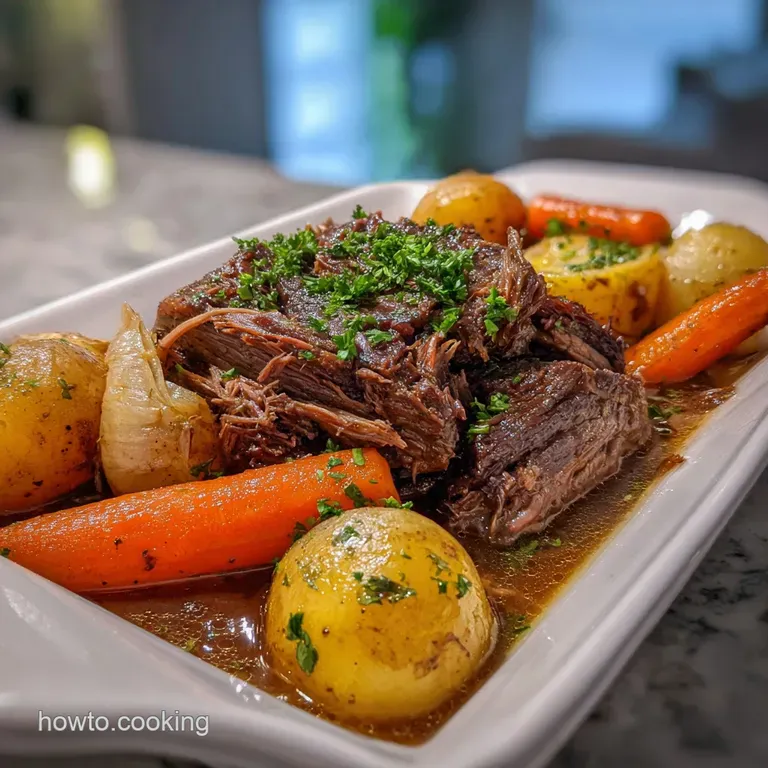
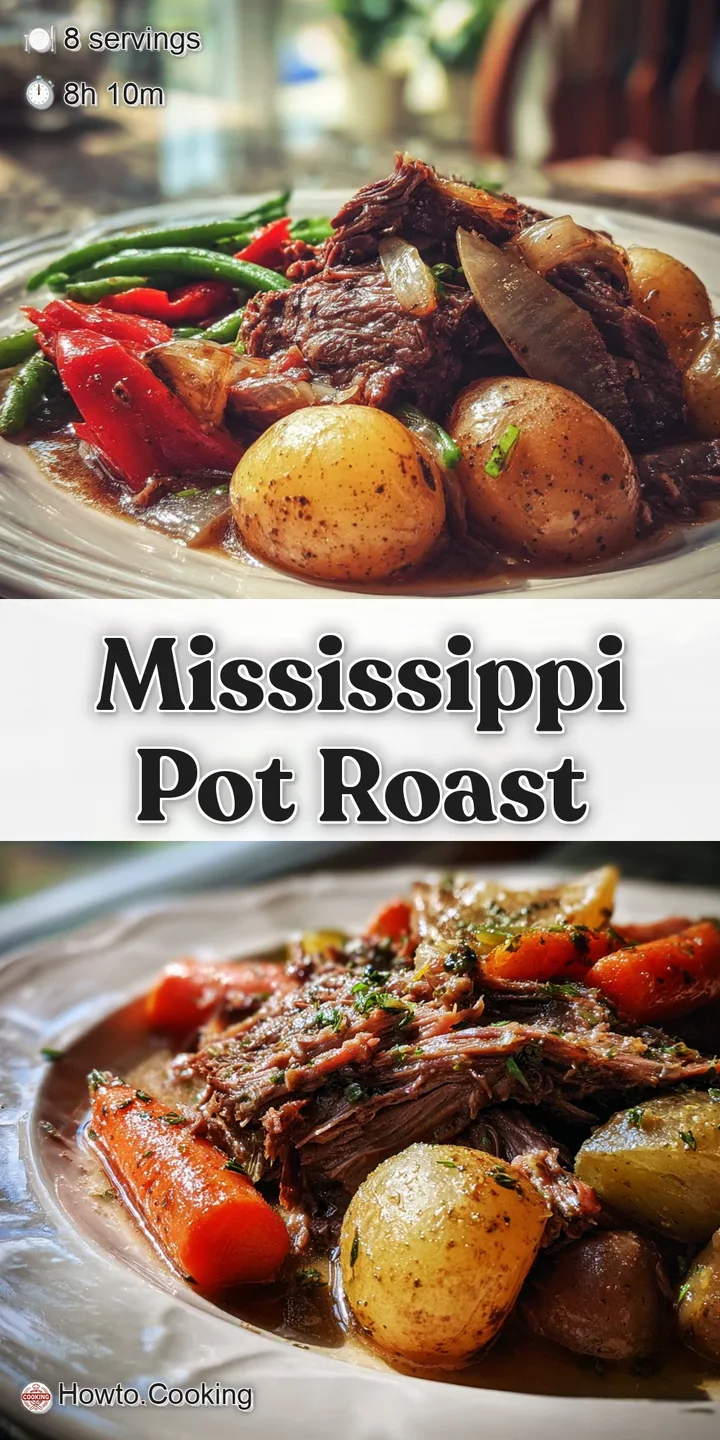
When it comes to serving, I like to keep things rustic but intentional. Instead of shredding the beef into tiny bits, leave it in large, succulent chunks. This shows off the beautiful grain of the meat and makes the meal feel more substantial.
Place a generous portion of the meat in the center of a wide, shallow bowl, then arrange the potatoes and carrots around the perimeter.
Drizzle several spoonfuls of the glossy sauce over the top, making sure it pools slightly around the base. For a bright finish, a sprinkle of fresh parsley or a few fresh pepperoncini rings adds a pop of color that cuts through the richness.
It’s a simple presentation that looks as good as it tastes, giving you the confidence that you've truly created a restaurant quality meal right in your own kitchen. This nutritious, hearty dish is more than just a recipe; it’s a reliable favorite that brings everyone to the table with a smile.
Very High in Sodium
1180 mg mg of sodium per serving (51% of daily value)
The American Heart Association recommends limiting sodium intake to about 2,300mg per day for most adults.
Tips to Reduce Sodium in this Mississippi Pot Roast:
-
Skip the Ranch & Au Jus Mixes-30%
Eliminate the dry ranch seasoning mix and au jus gravy mix. These are very high in sodium. Use herbs and spices to create flavor instead.
-
Control Pepperoncini Sodium-15%
Reduce the amount of pepperoncini juice added or eliminate it entirely. The juice adds flavor, but it also significantly contributes to the overall sodium content.
-
Unsalted Butter is Key
Continue using unsalted butter. This is already a good choice for reducing sodium, so maintain this ingredient.
-
Spice It Up!
Enhance flavor with sodium free herbs and spices like garlic powder, onion powder, smoked paprika, black pepper, and dried oregano to compensate for the reduction of salt.
-
Meat matters-5%
Consider different cuts of beef. Though 4 lbs beef chuck roast is good, ask your butcher to find the freshest with the least amount of additives.
Recipe FAQs
What is a Mississippi pot roast?
Yes, it's a specific slow cooker method. It involves a chuck roast seasoned with ranch and au jus packets, butter, and pepperoncini, cooked low and slow until fork tender.
What's the difference between regular pot roast and Mississippi pot roast?
The seasoning packets and pepperoncini. A traditional pot roast relies on mirepoix and beef broth for flavor, while Mississippi pot roast uses dried seasoning mixes and the tangy brine of pepperoncini for a unique, deeply savory profile.
How long does Mississippi roast take in a crock pot?
About 8 hours on low. This extended cooking time is crucial for breaking down the tough connective tissues in the chuck roast, ensuring it becomes incredibly tender and flavorful.
What's the best cut of meat for Mississippi pot roast?
Beef chuck roast is ideal. Its high fat marbling renders down during the long cook, basting the meat and creating a rich, velvety sauce, similar to how fat is essential in achieving perfect texture in our The Ultimate Gruyère Au Gratin Potatoes Recipe A True Classic.
Can I make Mississippi pot roast without the seasoning packets?
Yes, but it requires careful substitution. You'd need to replicate the flavors of ranch (herbs, onion, garlic, buttermilk powder) and au jus (beefy umami) with individual spices, or use a good quality beef bouillon and herb blend.
How do I thicken the sauce for Mississippi pot roast?
Whisk in a cornstarch slurry at the end. Mix 1 tablespoon of cornstarch with 2 tablespoons of cold water, then stir it into the hot liquid in the slow cooker during the last 30 minutes of cooking until thickened.
What are good side dishes for Mississippi pot roast?
Simple starches and vegetables complement it well. Mashed potatoes, egg noodles, or rice soak up the rich sauce beautifully, and a fresh green salad or steamed broccoli adds a nice contrast. This dish also pairs wonderfully with a classic Green Bean Casserole: Homemade Cream of Mushroom Bake From Scratch.
Mississippi Pot Roast
Ingredients:
Instructions:
Nutrition Facts:
| Calories | 714 kcal |
|---|---|
| Protein | 45 g |
| Fat | 50 g |
| Carbs | 21 g |
| Fiber | 3 g |
| Sugar | 4 g |
| Sodium | 1180 mg |
