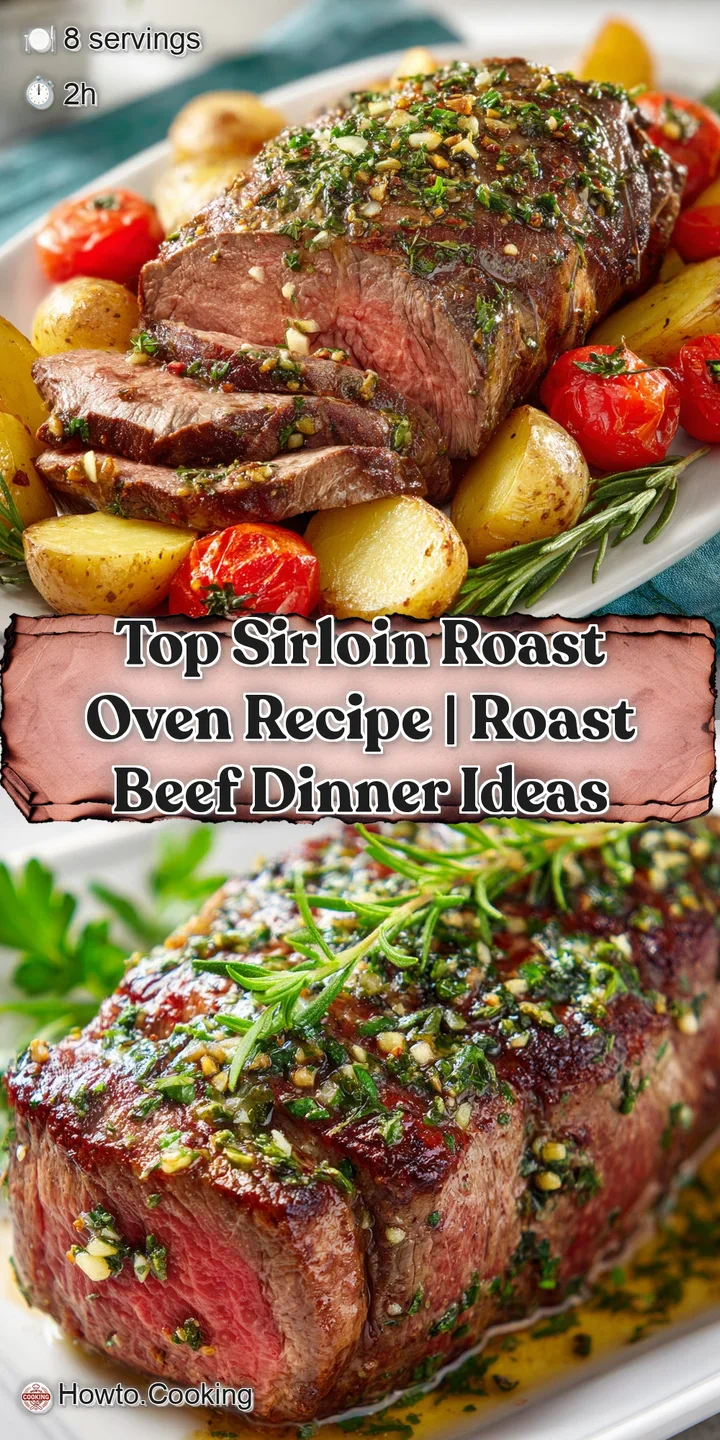
Top Sirloin Roast: Succulent Herb-Crusted Finish
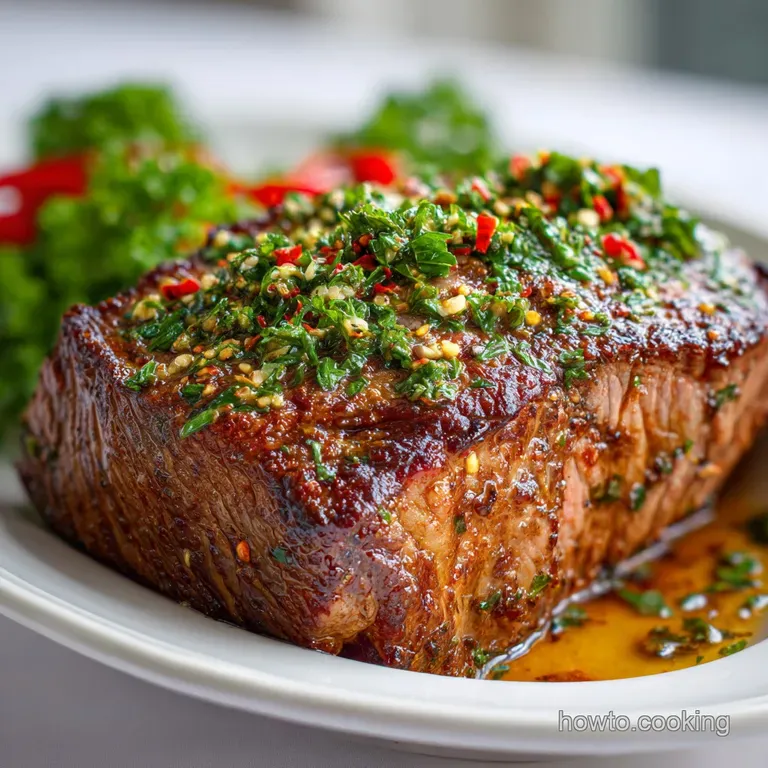
- Time: Active 20 minutes, Passive 1 hour 40 mins, Total 2 hours
- Flavor/Texture Hook: A golden, garlic herb crust that yields to a buttery, pink interior.
- Perfect for: Wholesome Sunday family dinners or stress free holiday hosting.
Mastering the Perfect Top Sirloin Roast
Imagine walking into your kitchen and being greeted by the heady, aromatic sizzle of garlic and rosemary hitting hot fat. There is something deeply grounding about a roast in the oven; it turns a house into a home.
I remember the first time I tried to cook a large piece of beef I was so worried about undercooking it that I left it in until it looked like a grey, uninspiring brick. We had to use an embarrassing amount of ketchup just to get it down.
It was a humbling lesson in the importance of temperature control and patience.
After years of tinkering, I have found that the secret to a wholesome Top Sirloin Roast lies in the preparation of the surface and the respect we give the meat after it leaves the heat. We are going to treat this lean cut with the care it deserves, ensuring every slice is velvety and full of natural juices.
You do not need a kitchen full of gadgets or a professional degree to pull this off. All you need is a reliable meat thermometer and the confidence that we are going to do this right.
This recipe is about more than just food; it is about providing a nutritious, flavorful centerpiece for the people you love. Whether you are serving this alongside a vibrant Green Bean Casserole Recipe or just some simple roasted potatoes, the result will be a dish that feels special without the fuss. Let's walk through the steps to ensure your next roast is the talk of the table for all the right reasons.
Why This Method Succeeds
The Physics of the Crust
The initial over high heat exposure triggers the Maillard reaction, creating a savory, brown exterior that locks in complexity. By dropping the temperature, we allow the heat to migrate slowly toward the center without over toughening the outer protein fibers.
- Osmotic Seasoning: Salt draws moisture to the surface where it dissolves the crystals, then the concentrated brine is re absorbed deep into the muscle fibers for internal flavor.
- Enzymatic Tenderization: Allowing the meat to temper on the counter before roasting lets natural enzymes begin breaking down tough connective tissues.
- Fat Soluble Infusion: The butter acts as a vehicle, carrying the volatile oils from the rosemary and thyme into the nooks and crannies of the meat's surface.
- Carry Over Kinetics: Internal energy continues to cook the center even after the roast is removed, which is why we pull the meat 5-10 degrees before our target.
| Thickness | Internal Temp | Rest Time | Visual Cue |
|---|---|---|---|
| 3 inches | 135°F (Med Rare) | 15 mins | Warm red center |
| 4 inches | 145°F (Medium) | 20 mins | Pink throughout |
| 5 inches | 155°F (Med Well) | 25 mins | Mostly brown/slight pink |
Selecting the right thickness is vital because it determines how much heat can penetrate the center before the outside becomes dry. A thicker roast generally requires a longer, slower cook time to reach that buttery consistency we are looking for.
Flavor Component Analysis
Understanding how these specific ingredients interact is the key to kitchen confidence. We aren't just adding things for the sake of it; every element has a structural or chemical job to do to ensure the final result is as wholesome as possible.
| Ingredient | Science Role | Pro Secret |
|---|---|---|
| 3.5 lb Top Sirloin | Lean Protein | Pat bone dry for crust |
| 4 tbsp Unsalted Butter | Heat Conductor | Freeze 10 mins before mixing |
| 1 tbsp Dijon Mustard | Emulsifying Glue | Bonds herbs to the meat |
| 2 tsp Kosher Salt | Moisture Retention | Season 24 hours early |
Each of these ingredients contributes to the structural integrity of the roast. For instance, using unsalted butter allows us to control the sodium levels precisely with the kosher salt. This ensures the seasoning is balanced rather than overwhelming, which is a hallmark of a well prepared, nutritious meal.
Essential Ingredients and Substitutions
To make this Top Sirloin Roast, you will need a few pantry staples and fresh herbs. If you find yourself missing something, don't panic. There are always ways to adapt while keeping the dish flavorful and satisfying.
- 3.5 lb top sirloin roastWhy this? Leaner than ribeye but incredibly flavorful when cooked properly.
- Substitute: Tri tip roast (slightly more fat, similar cooking profile).
- 2 tsp kosher saltWhy this? Large grains allow for even distribution and better moisture control.
- Substitute: Sea salt (use 1.5 tsp as it is finer and saltier by volume).
- 1 tsp freshly cracked black pepperWhy this? Adds a sharp, floral bite that pre ground pepper lacks.
- Substitute: White pepper (for a milder, more earthy heat).
- 4 tbsp unsalted butter, softenedWhy this? Creates a rich, golden crust and prevents the garlic from burning.
- Substitute: Ghee (higher smoke point, dairy-free alternative).
- 4 cloves fresh garlic, mincedWhy this? Provides the foundational savory aroma for the herb rub.
- Substitute: 1 tsp garlic powder (if fresh isn't available).
- 1 tbsp fresh rosemary, finely choppedWhy this? Robust, piney notes that pair perfectly with beef.
- Substitute: 1 tsp dried rosemary (crush it in your palm first).
- 1 tbsp fresh thyme, finely choppedWhy this? Lends a subtle, earthy sweetness to the crust.
- Substitute: 1 tsp dried thyme.
- 1 tbsp Dijon mustardWhy this? Tangy acidity that cuts through the richness of the butter.
- Substitute: Stone ground mustard (for more texture).
When substituting fresh herbs for dried, remember that dried herbs are more concentrated. Always reduce the amount by about two thirds to keep the flavors from becoming medicinal or overpowering.
step-by-step Cooking Guide
Mastering the Temperature Gradient
Remove your 3.5 lb top sirloin roast from the fridge at least 45 minutes before cooking. Note: Tempering ensures the center doesn't stay ice cold while the outside overcooks.
Preparing the Surface
Pat the meat completely dry with paper towels. Note: Moisture is the enemy of a shatter crisp crust.
Creating the Flavor Armor
In a small bowl, combine the 4 tbsp softened butter, 4 cloves minced garlic, 1 tbsp rosemary, 1 tbsp thyme, 1 tbsp Dijon mustard, 2 tsp salt, and 1 tsp pepper.
Applying the Herb Rub
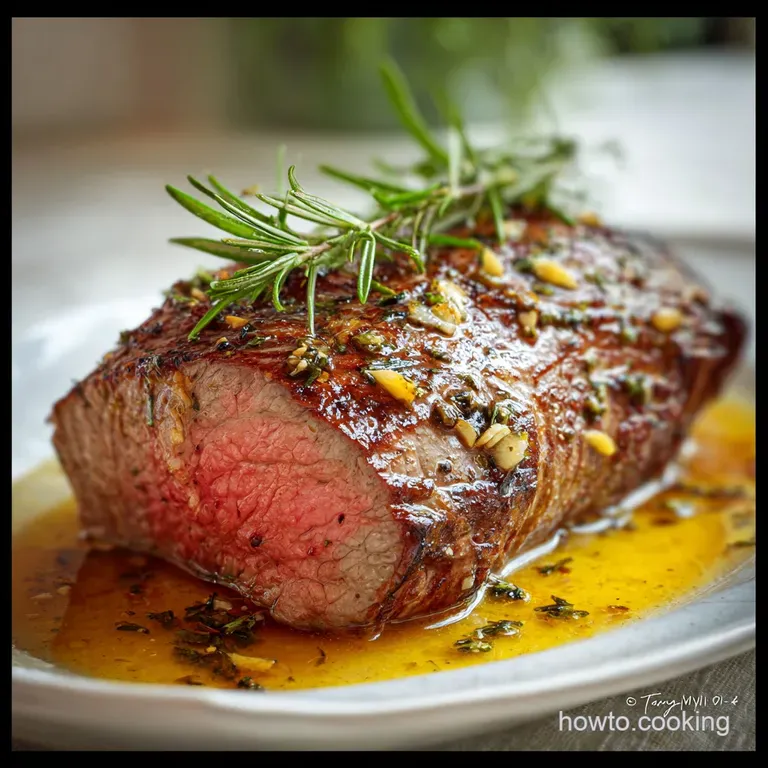
Massage the butter mixture over all sides of the beef. Rub it in until every inch is covered in green flecked gold.
The Initial over High heat Sear
Preheat your oven to 450°F (230°C) and place the roast on a rack in a shallow pan. Roast for 15 minutes until the outside begins to sizzle and brown.
The Slow Finish
Reduce the oven temperature to 325°F (160°C). Note: Low heat prevents the muscle fibers from seizing up and becoming tough.
Monitoring the Internal Temp
Continue roasting for approximately 1 hour 15 mins to 1 hour 30 mins. Cook until a thermometer reads 135°F for medium rare.
The Essential Rest
Transfer the roast to a cutting board and tent loosely with foil. Let it rest for 20 minutes before slicing to allow the juices to redistribute.
Chef's Tip: Freeze your butter for 10 minutes before grating it into your herb mix; this creates tiny pockets of fat that melt slowly, creating a more textured, "shatter" style crust.
Solving Common Roasting Problems
Why Your Roast Toughened
Usually, this happens because the meat was sliced immediately after leaving the oven. When meat is hot, the muscle fibers are tight and the juices are fluid. If you cut it too soon, all that moisture runs out onto the board, leaving the meat dry and fibrous.
Always give it at least 15 to 20 minutes of rest.
Dealing with Uneven Cooking
If one side of your roast is hitting 145°F while the other is still at 120°F, your oven likely has hot spots. Rotating the pan halfway through the cooking process is a simple fix. Also, ensure the roast is centered on the middle rack for the most consistent airflow.
| Problem | Root Cause | Solution |
|---|---|---|
| Grey, bland exterior | Surface was too wet | Pat dry with paper towels before seasoning. |
| Tough, chewy texture | Overcooked or no rest | Use a probe thermometer and rest for 20 mins. |
| Rub slid off meat | No binder used | Use Dijon mustard as an "adhesive" for the rub. |
Common Mistakes Checklist ✓ Skipping the tempering step (leads to a cold, raw center). ✓ Using a dull knife to slice (tears the fibers instead of cutting them). ✓ Peeking in the oven too often (drops the temp by 25 degrees each time).
✓ Forgetting to slice against the grain (makes even tender meat feel chewy). ✓ Placing the meat directly on the pan bottom (steams the bottom instead of roasting).
Scaling for Large Crowds
When you are cooking for a big family gathering, scaling a Top Sirloin Roast requires a bit of math but mostly just a bit of extra space. If you are doubling the recipe to a 7 lb roast (or two smaller ones), do not simply double the cooking time.
Two 3.5 lb roasts in the same oven will take roughly the same time as one, provided there is enough space for air to circulate between them.
If you are moving up to a single massive 7 lb cut, increase the slow roasting time by about 50%, but rely entirely on your internal thermometer. For the salt and herbs, you can safely double the amounts. However, I usually scale the liquids (like the mustard) by about 1.75x to avoid a soggy crust. If you find yourself with leftovers, they make an incredible addition to a Hearty Zuppa Toscana recipe for a protein packed lunch the next day.
| Premium | Budget | Flavor Impact | Savings |
|---|---|---|---|
| Prime Top Sirloin | Choice Top Sirloin | Slightly less marbling | Save $15-20 |
| Fresh Herbs | Dried Herbs | Less vibrant aroma | Save $5-8 |
| Organic Butter | Store Brand Butter | Minimal in a heavy rub | Save $3-4 |
Using a Choice grade cut is a fantastic way to keep the meal wholesome and nutritious without overspending. The herb butter rub adds so much flavor and moisture that you likely won't even notice the difference from the more expensive Prime cuts.
Debunking Popular Meat Myths
One of the most persistent myths is that searing meat "seals in the juices." Science has proven this false; moisture loss happens regardless of the sear. What the sear actually does is create a Maillard reaction, which develops hundreds of new flavor compounds. We sear for taste, not for moisture retention.
Another common misconception is that you should always cook beef to a specific time per pound. In reality, the shape of the roast matters more than the weight. A long, thin roast will cook much faster than a thick, round one of the same weight. Always trust your thermometer over a kitchen timer.
Finally, many believe that "resting" meat is optional. Resting is actually the final "cooking" step; it allows the temperature to equalize and the proteins to relax, which is what gives you that velvety texture.
Storage and Using Scraps
Store any leftover Top Sirloin Roast in an airtight container in the fridge for up to 4 days. When reheating, do it gently in a pan with a splash of beef broth or in a low temperature oven (250°F) to prevent the meat from turning tough and grey.
You can also freeze sliced roast for up to 3 months just make sure to wrap it tightly in plastic wrap then foil to prevent freezer burn.
Don't toss the trimmings! The fat caps and herb crusted bits that fall off during carving are kitchen gold. I love to toss these into a pan to crisp them up, then use them as "croutons" for a steak salad.
If you have the bone or large connective scraps, simmer them with some onion skins and carrot tops to create a rich, nutritious beef stock for your next soup or stew. This zero waste approach ensures you get the most value and flavor out of every wholesome ingredient.
Recipe FAQs
How to cook a top sirloin roast so it is tender?
Cook low and slow after searing. Sear the exterior at 450°F for 15 minutes, then immediately drop the oven temperature to 325°F and finish until the internal temperature hits your target (e.g., 135°F for medium rare).
Which is better, top round or top sirloin?
Top sirloin is generally better for roasting. Sirloin has better marbling and tenderness than the leaner top round, resulting in a juicier final product when cooked using the sear and-roast method.
How to cook the perfect sirloin roast?
Massage the roast heavily with a salt, herb, and Dijon mustard rub. Ensure the meat is completely dry before rubbing to maximize the crust development, and then use an internal thermometer to pull it precisely at 135°F for medium rare.
How long to cook a 2 lb top sirloin roast?
Expect about 60 to 75 minutes total cooking time after searing. For a 2 lb roast, aim to remove it from the oven when the internal temperature registers 130°F, allowing carryover cooking to bring it up to a perfect medium rare while resting.
Is it true you must baste the roast every 15 minutes?
No, frequent basting is unnecessary and detrimental. Opening the oven door frequently drops the ambient temperature, increasing the total cooking time and potentially drying the crust; the butter rub provides sufficient fat coverage.
What is the most critical step for juicy roast results?
Allowing the roast to rest tented for at least 20 minutes post cooking is critical. This resting period allows the tightened muscle fibers to relax and reabsorb the internal juices; slicing too early guarantees a dry serving.
Can I substitute butter in the rub with oil?
Yes, you can substitute ghee, which has a higher smoke point than standard butter. If you master the flavor balancing technique in this rub, you will achieve great results in other dishes, similar to how we balance acid in our Hearty Potato Soup recipe.
Top Sirloin Roast Oven Recipe
Ingredients:
Instructions:
Nutrition Facts:
| Calories | 318 kcal |
|---|---|
| Protein | 41.5 g |
| Fat | 16.2 g |
| Carbs | 1.2 g |
| Fiber | 0.2 g |
| Sugar | 0.1 g |
| Sodium | 615 mg |
