Brown Sugar Soy Salmon: Mahogany Glaze
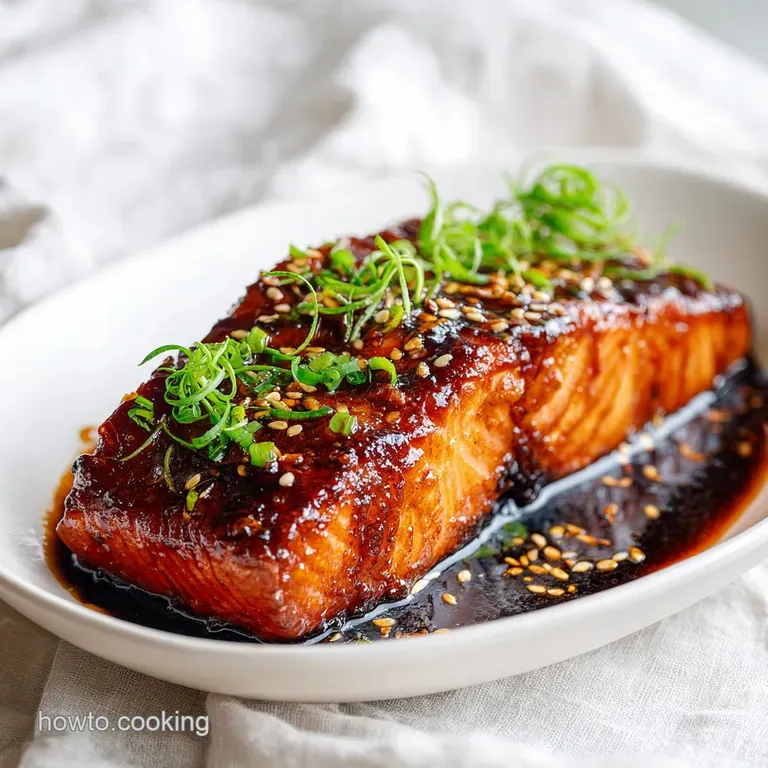
- Time: Active 10 minutes, Passive 12 minutes, Total 22 minutes
- Flavor/Texture Hook: Flaky, buttery salmon beneath a sticky, crackling glaze
- Perfect for: High protein weeknight dinners or impressive date nights
- Master the Ultimate Brown Sugar Soy Salmon
- Why This Mahogany Glaze Works
- Component Analysis
- Essential Ingredients for Perfect Flavor
- Minimal Tools for Busy Cooks
- Steps for the Perfect Lacquer
- Avoid These Common Cooking Pitfalls
- Creative Flavor Variations to Try
- Myths About Salmon Glazes
- Storage and Zero Waste Ideas
- Professional Plating and Presentation Tips
- High in Sodium (⚠️)
- Recipe FAQs
- 📝 Recipe Card
Master the Ultimate Brown Sugar Soy Salmon
You know that specific sound when a sugary glaze hits a hot surface and starts to bubble and spit? That high pitched hiss is the soundtrack of a perfect dinner. As the oven warms up, the scent of microplaned garlic and fresh ginger starts to fill the room, mixing with the deep, molasses heavy aroma of dark brown sugar.
It is a smell that promises a hearty meal, and honestly, it’s one of the reasons I keep coming back to this specific method.
Forget the myth that you need to drown your fish in a marinade for four hours to get any flavor. That is a total waste of time and usually just turns the delicate texture of the salmon into mush. We are busy people, and we want fresh flavors without the wait.
This recipe relies on a thick, lacquer like glaze applied in stages, which gives you that restaurant quality crust without destroying the integrity of the fish itself.
I used to think that marinating was the only way to infuse flavor, but I was wrong. The salt in the soy sauce actually starts to "cook" the fish if it sits too long, making it tough.
By switching to this glazing technique, you get a much better contrast between the crispy, sticky exterior and the silky, velvety interior. It’s all about working with the heat rather than against it.
Why This Mahogany Glaze Works
The magic here happens because of how sugar and protein interact under high heat. While many people worry about burning the sugar, we are actually aiming for a specific stage of caramelization that creates a protective barrier.
- Sugar Surface Tension: The high concentration of dark brown sugar creates a viscous layer that clings to the salmon, preventing the natural juices from escaping into the pan.
- Acidic Balance: Rice vinegar breaks through the heavy fat of the salmon, ensuring the sweetness doesn't become cloying or overwhelming.
- Two Stage Application: Adding a second layer of glaze halfway through the bake ensures the first layer sets while the second stays glossy and fresh.
- Aromatic Infusion: Because we use microplaned garlic and ginger, the surface area is maximized, releasing oils instantly as the heat hits the tray.
Cook Method Comparison
| Method | Time | Texture | Best For |
|---|---|---|---|
| Oven Baked | 12 minutes | Evenly flaky and glossy | Beginners and meal prep |
| Stovetop Sear | 8 minutes | Crispy skin, high char | Experienced cooks |
| Air Fryer | 10 minutes | Maximum glaze crunch | Quick single servings |
When choosing your method, consider how many people you are feeding. The oven is the clear winner for a family of four because it allows for consistent heat distribution across all 170g fillets simultaneously.
If you try to crowd a pan on the stovetop, you lose that vital heat, and the salmon ends up steaming instead of searing. This is why the parchment lined baking sheet is a busy cook's best friend it handles the mess and the heat perfectly.
Component Analysis
| Ingredient | Science Role | Pro Secret |
|---|---|---|
| Dark Brown Sugar | Provides molasses for deep color | Pack it tight for accurate moisture |
| Low Sodium Soy Sauce | Supplies umami without over salting | Always use low sodium to control salt |
| Rice Vinegar | Denatures surface proteins for crust | Keeps the glaze from being too thick |
| Fresh Ginger | Provides heat and digestive enzymes | Grate it frozen for easier handling |
Using the right components is the difference between a "fine" dinner and one that people actually ask for again. For instance, if you run out of the dark variety, you can actually make homemade brown sugar by mixing granulated sugar with a bit of molasses. It is a lifesaver when you are halfway through a recipe and realize the pantry is bare.
Essential Ingredients for Perfect Flavor
This list is streamlined for efficiency. We are using 100g of dark brown sugar because it has a higher moisture content than light brown sugar, which helps prevent the glaze from turning into hard candy in the oven.
The 60ml of low sodium soy sauce provides that essential savory base without making the dish an inedible salt bomb.
- 100g dark brown sugar, packed Why this? High molasses content creates a darker, richer lacquer.
- 60ml low sodium soy sauce Why this? Provides umami while letting you control the final saltiness.
- 15ml rice vinegar Why this? The mild acidity balances the heavy sugar and fish fats.
- 2 cloves garlic, microplaned Why this? Microplaning turns it into a paste that blends into the glaze.
- 5g fresh ginger, grated Why this? Adds a fresh, peppery zing that cuts through the richness.
- 1g cracked black pepper Why this? Adds a subtle floral heat to the background.
- 4 center cut salmon fillets (approx. 170g each) Why this? Center cut pieces have uniform thickness for even cooking.
- 15ml neutral oil (avocado or grapeseed) Why this? High smoke point prevents the skin from sticking or burning.
- 2g kosher salt Why this? Larger crystals provide a more controlled seasoning than table salt.
- 1 green onion, thinly sliced Why this? Freshness and color to contrast the dark glaze.
- 1 tsp toasted sesame seeds Why this? Adds a tiny bit of nutty crunch to every bite.
For the salmon itself, I always look for fillets that are roughly the same thickness. If one is an inch thick and the other is a half inch, one will be dry as a bone while the other is still raw. If you are looking for a quicker version that uses similar flavors, check out this soy glazed salmon that utilizes a different heat application.
Minimal Tools for Busy Cooks
I am a huge fan of the "less is more" philosophy when it comes to kitchen gear. You don't need a fancy salmon poacher or a specialized fish spatula to make this work. A standard rimmed baking sheet is the primary heat conductor we need.
I prefer a heavy duty aluminum one because it doesn't warp at 400°F (204°C).
Chef's Tip: Use a microplane for both the garlic and the ginger. It’s faster than chopping and creates a much smoother glaze that won't have chunky bits of garlic burning on the surface of your fish.
You will also need a small whisk and a silicone pastry brush. The silicone brush is better than the natural bristle ones because it’s easier to clean and won't shed "hairs" onto your dinner. Finally, parchment paper is non negotiable here.
The sugar in this recipe will caramelize and if it hits the bare metal of your pan, you’ll be scrubbing for an hour.
Steps for the Perfect Lacquer
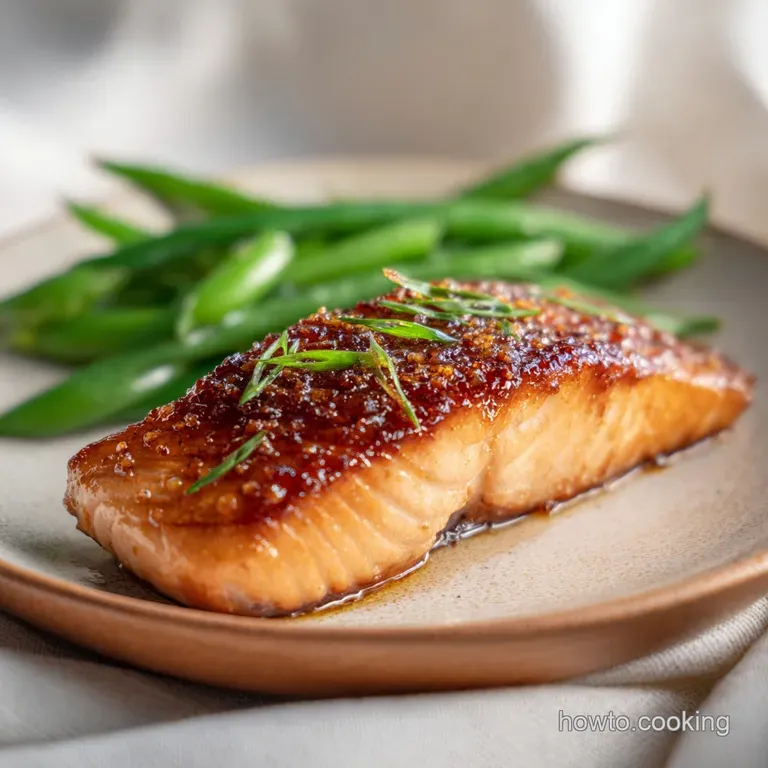
1. Whisk and Infuse Glaze
Combine the 100g dark brown sugar, 60ml soy sauce, 15ml rice vinegar, garlic, and ginger in a small bowl. Use a small whisk to break up the sugar clumps. Note: Letting this sit for 5 minutes allows the garlic and ginger to release their oils into the liquid.
2. Prep and Prime Fillets
Pat the four 170g salmon fillets completely dry with paper towels. Note: Moisture is the enemy of a good sear; if the fish is wet, it will steam rather than bake.
3. Oil the Skin
Lightly rub the skin side of the fillets with 15ml of neutral oil. Place them skin side down on a parchment lined baking sheet.
4. Season the Tops
Sprinkle 2g of kosher salt and 1g of black pepper over the tops of the salmon. Preheat your oven to 400°F (204°C) now.
5. First Glaze Layer
Use your pastry brush to apply a thick, even coating of the sugar soy sauce mixture over the top and sides of each fillet.
6. Initial Bake Phase
Slide the tray into the center of the oven and bake for 6 minutes until the glaze starts to look tacky.
7. Second Glaze Layer
Carefully remove the tray and brush on the remaining glaze. Note: This second layer builds the "mahogany" color we are looking for.
8. Final Bake Phase
Return the salmon to the oven for another 4-6 minutes until the fish is opaque and the edges are bubbling.
9. Resting and Garnish
Let the salmon rest on the tray for 2 minutes before moving them. Sprinkle with sliced green onions and 1 tsp of sesame seeds.
10. Check the Flake
Press the side of a fork against the thickest part of the fillet; if it flakes easily, it is done.
Avoid These Common Cooking Pitfalls
The biggest mistake people make is overcooking the fish. Salmon is very forgiving up to a point, but once you cross that line, it becomes chalky. Another frequent issue is the "white gunk" that appears on the surface.
That is actually albumin, a protein that gets pushed out of the muscle fibers when they contract too quickly from high heat.
Why Your Salmon Is Dry
The main reason for dry salmon is simply leaving it in the oven too long. Remember that the fish will continue to cook for a minute or two after you take it out of the heat. This is called carryover cooking. If it looks 95% done, it is time to pull it out.
| Problem | Root Cause | Solution |
|---|---|---|
| Burnt Glaze | Oven rack too high | Move rack to the center position |
| Pale Glaze | Not enough sugar | Ensure you use full 100g of dark sugar |
| Soggy Skin | Fish was too cold | Let salmon sit at room temp for 10 mins |
Common Mistakes Checklist
- ✓ Always pat the fish dry before applying oil or seasoning to ensure the glaze sticks.
- ✓ Ensure the oven is fully preheated to 400°F (204°C) before the tray goes in.
- ✓ Don't skip the second coat of glaze; it is the secret to the deep mahogany color.
- ✓ Use a meat thermometer if you are unsure; 135°F is the sweet spot for medium well.
- ✓ Avoid light soy sauce (the watery kind), as it doesn't have the body needed for a thick glaze.
Creative Flavor Variations to Try
If you want to change things up, the base of sugar and soy sauce is incredibly versatile. You can lean into a spicy profile or something more citrus driven depending on what you have in the fridge.
Honey Garlic Brown Sugar Salmon
Replace half of the brown sugar with honey. The honey provides a different kind of shine and a floral note that works beautifully with the garlic. You might need to bake it for an extra minute as honey has a slightly higher water content.
The Spicy Umami Kick
Whisk in a tablespoon of Sriracha or gochujang into the glaze. The fermented funk of gochujang pairs perfectly with the molasses in the sugar. It creates a much darker, almost charred look that is fantastic with a side of steamed bok choy.
Scaling the Recipe
- Down (2 Servings): Use 2 fillets and exactly half the glaze ingredients. You can use a smaller toaster oven sized pan to save energy. Keep the cook time the same.
- Up (8 Servings): Double everything but the salt. For the salt, use 1.5x the amount (approx 3g) to avoid over seasoning. You will need two baking sheets; swap their positions halfway through the 12 minute cook time to ensure even browning.
- Large Batches: If making for a party, you can prep the glaze 3 days in advance and keep it in a jar.
Myths About Salmon Glazes
One major misconception is that you need to "seal" the salmon by searing it in a pan before baking. In reality, searing doesn't seal in juices it just creates flavor through browning.
Because our glaze is so sugar heavy, the oven at 400°F (204°C) provides plenty of heat to create that flavor without the extra step of a stovetop sear.
Another myth is that wild salmon and farmed salmon cook the same. Wild salmon (like Sockeye or King) is much leaner and will cook significantly faster usually 2-3 minutes less than farmed Atlantic salmon. If you are using wild caught fish, start checking for doneness at the 8 minute total mark.
Storage and Zero Waste Ideas
Salmon is best eaten fresh, but if you have leftovers, they can be stored in an airtight container in the fridge for up to 2 days. I don't recommend freezing cooked salmon as the texture becomes quite grainy once thawed.
However, you can freeze the raw fillets in the glaze for up to 2 months for a quick "dump and bake" meal.
For a zero waste approach, if your fillets came with the skin on and you aren't a fan of eating it, don't throw it away! You can peel the skin off the cooked leftovers and crisp it up in a dry pan until it’s like a cracker. It makes a salty, savory snack or a garnish for a salad.
Also, any leftover glaze that hasn't touched raw fish can be simmered in a small saucepan for 2 minutes and used as a sauce for rice or roasted broccoli.
Professional Plating and Presentation Tips
We eat with our eyes first, and a dark mahogany salmon can look a bit "flat" on a white plate. To make it pop, use high contrast garnishes. The bright green of the scallions is a classic for a reason it cuts through the dark brown lacquer visually.
The Visual Contrast
Place the salmon on a bed of fluffy white jasmine rice or vibrant green blanched snap peas. The contrast between the dark, sticky fish and the bright sides makes the meal look much more expensive than it actually is.
The Final Flourish
When you apply the sesame seeds, do it from about 12 inches above the plate. This "rain" technique ensures the seeds are distributed evenly and don't clump in one spot. A final drizzle of the thickened pan juices right before serving gives the fish a professional "wet" look that stays glossy even as it sits on the table.
If you're feeling fancy, a few curls of carrot or a wedge of lime on the side adds that final pop of color that screams "restaurant quality."
High in Sodium (⚠️)
820 mg of sodium per serving (36% of daily value)
The American Heart Association recommends a limit of 2,300mg per day, ideally moving toward 1,500mg for most adults.
Tips to Reduce Sodium
-
Swap Soy Sauce-20%
Replace the 60ml low-sodium soy sauce with 60ml of coconut aminos. Coconut aminos offer a similar savory flavor with significantly less sodium.
-
Reduce Added Salt-10%
Omit the 2g kosher salt entirely. The soy sauce (or coconut aminos) and other flavorful ingredients will provide sufficient taste.
-
Boost Aromatics
Increase the amount of garlic, ginger, and black pepper. These ingredients add immense flavor without contributing sodium.
-
Flavorful Garnish
Use the green onion and toasted sesame seeds as a garnish to add visual appeal and flavor. Ensure they are unsalted.
Recipe FAQs
How to ensure the glaze achieves a mahogany lacquer?
Brush a second coat of glaze on the fillets halfway through the cooking process. Applying the glaze in two layers at 6-minute intervals allows it to thicken properly into a deep, glossy coating without burning.
Can I use light soy sauce instead of the recommended low-sodium version?
No, avoid light soy sauce for this recipe. The watery consistency of light soy lacks the body required to build a thick, sticky glaze that clings to the salmon.
Is it true I can freeze the cooked leftovers for later?
No, this is a common misconception. Freezing cooked salmon results in a grainy, unpleasant texture, so it is best to store leftovers in the fridge for up to 2 days or freeze the raw, marinated fillets instead.
How to tell when the salmon is perfectly cooked?
Check for an internal temperature of 135°F. Using a thermometer is the most reliable way to hit that medium well sweet spot where the fish remains opaque and tender.
How to prevent the glaze from sliding off the fish?
Pat the salmon fillets completely dry with paper towels before applying any oil or glaze. Removing surface moisture is essential for the glaze to adhere, much like how we prioritize dry surfaces to master efficient protein searing in other dishes.
Why must I let the glaze sit for 5 minutes before applying?
Allowing the mixture to sit ensures the brown sugar granules fully dissolve into the soy sauce and vinegar. This infusion step creates a smooth, uniform consistency that prevents a gritty texture in the final lacquer.
How to handle the salmon skin if I prefer not to eat it?
Peel the skin off after cooking and crisp it in a dry pan until it reaches a cracker like texture. This zero waste technique transforms the skin into a crunchy, savory snack rather than discarding it.
Brown Sugar Soy Salmon
Ingredients:
Instructions:
Nutrition Facts:
| Calories | 495 calories |
|---|---|
| Protein | 34 g |
| Fat | 26 g |
| Carbs | 27 g |
| Fiber | 0.4 g |
| Sugar | 25 g |
| Sodium | 820 mg |
