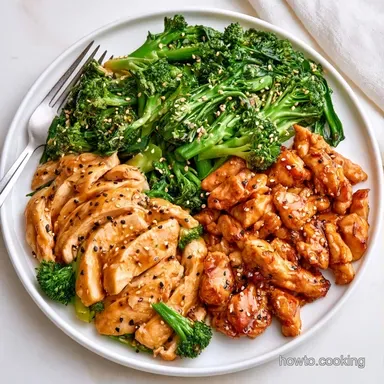
Chicken and Chinese Broccoli Stir Fry

- Time: 15 min active + 10 min cooking + 10 min resting
- Flavor & Texture: Savory, glossy, and crisp
- Perfect for: Busy weeknight dinners
Chicken Chinese Broccoli
Many home-cooked stir-fries result in rubbery chicken or broccoli that's either underdone in the stem or overcooked in the leaves. It's a common struggle to replicate that specific restaurant quality in a home kitchen.
This technique bridges that gap by decoupling the cooking stages. By preparing the meat and greens separately before tossing them together in a high-heat glaze, you ensure perfect textures.
The end result is a chicken Chinese broccoli dish that tastes like it came from a professional chef, yet it's ready in only 35 minutes.
Why the Texture Works
The Cornstarch Barrier: Coating the meat in a slurry creates a thin layer that protects the protein. This keeps the juices inside and gives the chicken a smooth, glossy finish. You can see this same logic in a velvety cabbage stir-fry.
The Cold Shock: Boiling the greens for 90 seconds and then hitting them with ice water locks in the bright green color. It ensures the stems are cooked through without the leaves turning into a soggy mess.
The Ingredient Breakdown
- 1½ lb chicken breast, thinly sliced across the grain
- 1 tbsp cornstarch
- 1 tbsp water
- 1 large egg white
- 1/4 tsp salt
- 1/4 tsp white pepper
- 1½ lb Chinese Broccoli (Gai Lan), cut into 2-inch pieces
- 3 tbsp vegetable oil
- 1 tsp salt
- 1/4 cup low-sodium soy sauce
- 3 tbsp halal oyster sauce
- 1 tbsp brown sugar
- 1 tsp sesame oil
- 1 tbsp cornstarch
- 1/2 cup chicken broth
- 3 cloves garlic, minced
- 1 tbsp fresh ginger, grated
| Ingredient | Role | If You Don't Have It |
|---|---|---|
| Chicken Breast | Main Protein | Chicken thighs (juicier but higher fat) |
| Chinese Broccoli | Bitter-sweet crunch | Broccolini or regular broccoli |
| Halal Oyster Sauce | Salty umami base | Mushroom stir-fry sauce (approximation) |
| Cornstarch | Thickens the glaze | Arrowroot powder (1:1 swap) |
Gear for the Wok
You need a wok or a wide stainless steel skillet. A wide pan is key because it allows the chicken to sear in a single layer. If the pan is too small, the meat will crowd and steam instead of browning. You'll also need a large bowl for the ice bath.
How to Cook It
Phase 1: Prepping and Velveting
- In a medium bowl, mix the sliced chicken with 1 tbsp cornstarch, 1 tbsp water, egg white, 1/4 tsp salt, and 1/4 tsp white pepper. Toss until well-coated and let it sit for 10 minutes. Note: This resting time allows the cornstarch to hydrate and bond to the meat.
- Whisk together the low-sodium soy sauce, halal oyster sauce, brown sugar, sesame oil, 1 tbsp cornstarch, and chicken broth in a small bowl until the cornstarch is completely dissolved.
Phase 2: The Quick Blanch
- Bring a pot of water to a rolling boil and stir in 1 tsp salt. Add the Chinese broccoli and boil for 60–90 seconds until stems are bright green. Immediately drain and plunge into ice water to stop the cooking process, then pat dry.

Phase 3: High-Heat Searing and Glazing
- Set a wok over high heat and add 2 tablespoons of vegetable oil until shimmering. Spread the chicken in a single layer and sear without moving for 2 minutes until a golden crust forms, then stir-fry for another 2 minutes until it reaches 165°F (74°C). Remove the chicken from the pan and set aside.
- In the same pan, add the remaining 1 tablespoon of oil if needed, then stir in the minced garlic and ginger for 30 seconds until fragrant.
- Return the blanched broccoli and seared chicken to the wok.
- Give the sauce one final whisk and pour it over the chicken and broccoli. Toss constantly for 1–2 minutes until the sauce thickens into a glossy glaze.

If Something Goes Wrong
Sauce Stays Watery
This happens if the pan isn't hot enough to activate the cornstarch or if it settled at the bottom of the bowl. Mix 1 tsp of cornstarch with 1 tbsp of water and stir it into the simmering pan for 30 seconds.
Chicken Turns Rubbery
Rubbery meat usually comes from overcooking or slicing the chicken with the grain. Always slice across the grain and pull the chicken off the heat as soon as it hits 165°F (74°C).
Broccoli Loses Color
If the greens turn a dull olive brown, they stayed in the boiling water too long or didn't hit the ice bath immediately. Keep the boil under 90 seconds and use plenty of ice.
Twists and Swaps
If you want a different vibe for your variation of chicken Chinese broccoli, try these changes.
| Original Ingredient | Substitute | Why It Works |
|---|---|---|
| Chicken Breast | Firm Tofu | Same texture once seared. Note: Pat tofu very dry first |
| Halal Oyster Sauce | Black Pepper Sauce | Adds a punchy heat. See my black pepper sauce recipe for a guide |
| Brown Sugar | Honey | Similar sweetness. Note: Honey thickens faster, so watch the heat |
Chef Tip: For a deeper flavor, add a pinch of white pepper to the sauce as well as the marinade. It provides a floral heat that's classic in Cantonese cooking.
Keeping It Fresh
Keep extra chicken Chinese broccoli in a tight-fitting container in the fridge for 3–4 days.
Freezing this dish isn't recommended. Due to the high water content, the broccoli often releases moisture and becomes mushy upon thawing. For reheating, warm it in a skillet over medium heat with a little chicken broth to refresh the sauce, until the chicken reaches 165°F (74°C) inside.
Skip the microwave to ensure the greens stay crisp. When reheating cooked leftovers, check with a food thermometer that the centre reaches 165°F (74°C); the appliance temperature and time alone do not confirm this.
Plating Your Meal

To present your chicken Chinese broccoli, first arrange the greens on a platter and place the glazed chicken on top. This ensures the broccoli stays intact and highlights the meat's glossy finish. I suggest serving this alongside steamed jasmine rice to soak up the flavorful sauce.
Add a few toasted sesame seeds for a bit of visual appeal.
Critical in Sodium
1350 mg of sodium per serving (59% of daily value)
To help prevent heart-related conditions, the American Heart Association suggests limiting daily sodium to 2,300 mg, though 1,500 mg is the preferred maximum for most adults.
Tips to Reduce Sodium
-
Swap Soy Sauce
Use coconut aminos instead of low-sodium soy sauce; it provides a similar taste with much less salt.
-
Limit Oyster Sauce
Try a reduced-sodium version of halal oyster sauce or use a smaller amount to lower the salt in the glaze.
-
Omit Added Salt
Avoid the extra teaspoons of salt in the chicken seasoning and during cooking, as the sauces are already savory enough.
-
Use Unsalted Broth
Replace the chicken broth with no-salt-added broth or water to cut out hidden sodium from the liquid base.
-
Boost Aromatics
Add extra fresh garlic, ginger, and white pepper to deepen the flavor without needing more salt.
Before You Start Cooking
How to keep the chicken tender in this recipe?
Coat the sliced meat in a slurry of cornstarch, egg white, and water. This velveting technique creates a protective barrier that keeps the protein juicy under high heat.
Does this use a traditional stir-fry method?
Yes, it uses high-heat searing and a thickened glaze. Treating the protein and vegetables separately before combining them mimics professional kitchen techniques for better texture.
Is this dish suitable for weeknights?
Yes, it takes about 35 minutes total. Most of the time is spent on preparation, while the actual wok cooking is very fast.
Can I use regular broccoli for a similar result?
Yes, broccolini or standard broccoli work well. The flavor profile differs slightly, but the cooking method and results remain consistent.
What makes the sauce glossy?
The cornstarch in the mixture. When whisked into the liquids and heated in the wok, it thickens the sauce into a professional-style glaze.
Where should I store leftovers?
Keep them refrigerated. Because this dish contains cooked chicken, it must be stored in the cold to remain safe for consumption.
Chicken Chinese Broccoli Stir Fry