Chicken Ramen Stir Fry: Silky Chicken Glaze
- Time: Active 10 minutes, Passive 10 minutes, Total 20 minutes
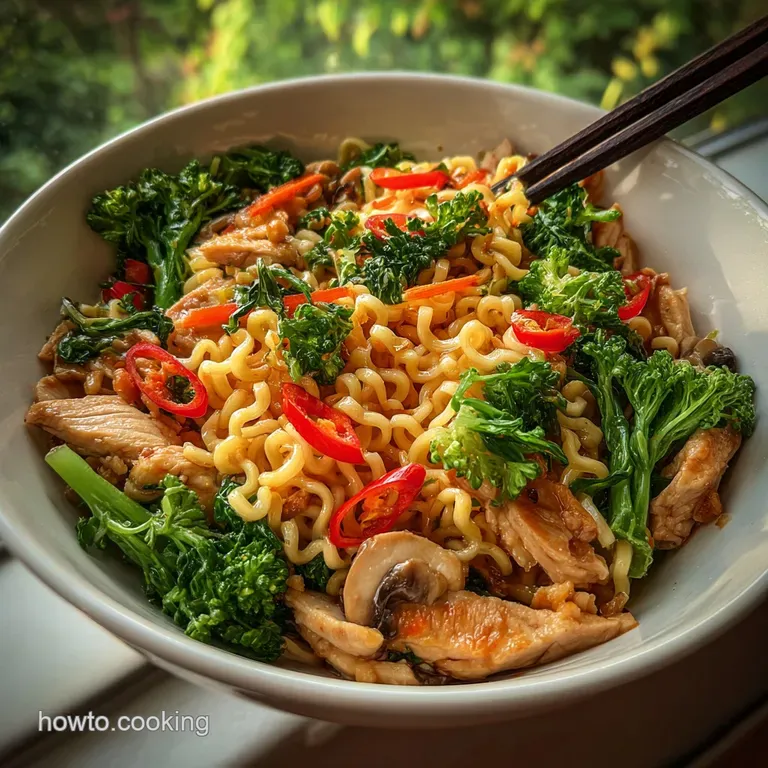
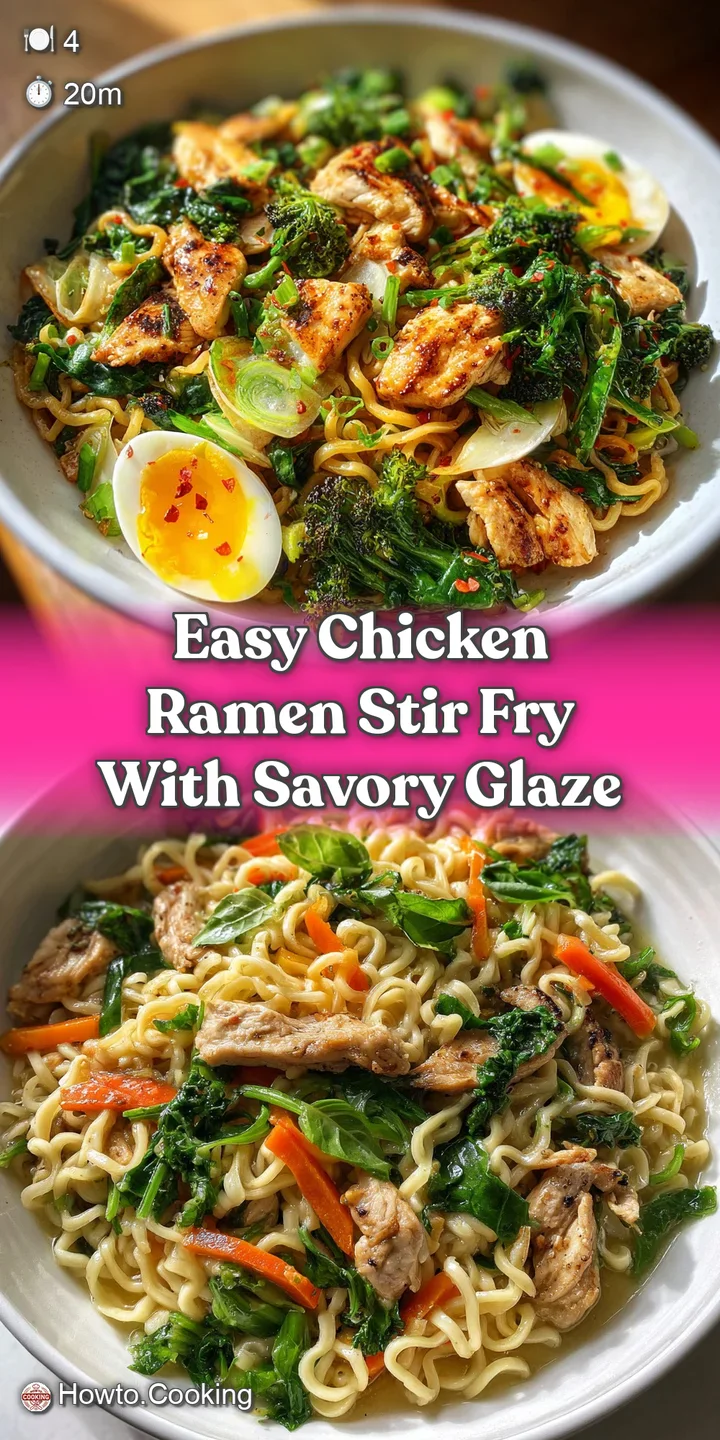
- Flavor/Texture Hook: Silky chicken and snappy vegetables coated in a glossy, savory sweet glaze.
- Perfect for: Busy weeknight dinners or high protein meal prep.
- Fast and Savory Chicken Ramen Stir Fry
- The Science of Noodle Spring
- Essential Recipe Statistics
- Fresh Components and Pantry Staples
- Minimal Kitchen Tools
- Bringing Everything Together
- Avoiding Common Kitchen Errors
- Creative Recipe Variations
- Scaling For Different Groups
- Sticking to the Truth
- Storage and Zero Waste
- Final Presentation Techniques
- Recipe FAQs
- 📝 Recipe Card
Fast and Savory Chicken Ramen Stir Fry
The unmistakable aroma of toasted sesame oil and sizzling ginger hitting a hot pan is enough to wake up anyone in the house. I remember my first attempt at this dish years ago, back when I thought the little silver flavor packets were the only way to eat ramen.
I ended up with a salty, soggy mess that looked more like gray sludge than dinner. It was a total disaster, but it taught me one vital lesson: the noodles are just a canvas, and the real magic happens in the prep.
We are going for that specific over high heat sear that makes the broccoli stay bright green and the snap peas retain their characteristic pop. You want a sauce that clings to every curly noodle without making them heavy or gummy.
It is about speed and sequence, making sure each component hits the pan at the right moment to maintain its integrity.
By the time you finish this, you'll have a bowl that looks like it came from a professional kitchen but took you less time than waiting for a delivery driver. We are skipping the boiling pot of water and using a smarter hydration method that keeps the noodles bouncy.
Trust me on this, once you nail the velveting technique, you will never look at chicken breast the same way again.
The Science of Noodle Spring
The Secret to these Chicken Ramen Stir Fry
Starch Gelatinization Control: By soaking the noodles in hot water instead of boiling them, we prevent the starch from over expanding and becoming mushy. This leaves the noodles with a "toothsome" structure that allows them to absorb the sauce during the final toss without losing their shape.
- Protein Denaturation: The cornstarch coating on the chicken creates a physical barrier that prevents the fibers from tightening too much under high heat.
- Emulsification Stability: Honey and cornstarch in the sauce act as binders, ensuring the fat and water based liquids merge into a glossy coating rather than separating.
- Maillard Reaction: Using avocado oil with its high smoke point allows for rapid browning on the chicken, creating complex savory notes in seconds.
- Hygroscopic Balance: Soy sauce and honey create a concentrated solute that draws just enough moisture out of the vegetables to soften them while keeping the core crisp.
| Thickness | Internal Temp | Rest Time | Visual Cue |
|---|---|---|---|
| 1/4 inch strips | 165°F | 2 minutes | Opaque and golden edges |
| 1/2 inch cubes | 165°F | 3 minutes | No pink in the center |
| Thin shavings | 160°F | 1 minute | Firm with a slight bounce |
Finding the right balance of heat and timing is what separates a soggy stir fry from a crisp one. If you slice your chicken too thick, the outside will burn before the inside finishes, so keep those strips consistent for even cooking.
Essential Recipe Statistics
| Component | Science Role | Pro Secret |
|---|---|---|
| Cornstarch | Texture Modifier | Use half for velveting and half for the sauce to ensure silkiness. |
| Toasted Sesame Oil | Aromatic Lipid | Add at the end of the sauce build to preserve the volatile scent. |
| Fresh Ginger | Enzyme Break down | Grate it while frozen to get a fine paste that melts into the sauce. |
| Rice Vinegar | pH Balancer | The acidity cuts through the honey's sugar to brighten the overall profile. |
Choosing the right ingredients is only half the battle; knowing why they are there helps you cook with more confidence. For instance, the cornstarch isn't just a thickener; it is the key to that velvety mouthfeel we all crave.
It creates a micro thin layer of "gel" around the meat that keeps the juices locked inside while providing a surface for the sauce to grab onto.
This is similar to the technique used in my Velvety Chicken Cabbage recipe where the protein remains incredibly tender despite the high heat of the wok.
Fresh Components and Pantry Staples
- 1 lb chicken breast: Thinly sliced against the grain. Why this? Slicing against grain ensures the meat stays tender, not chewy.
- Substitute: Chicken thighs (boneless) for a juicier, higher fat alternative.
- 1/4 cup low sodium soy sauce: The base of our umami flavor. Why this? Controls salt levels while providing deep color.
- Substitute: Tamari for a gluten-free version.
- 1 tbsp honey: For sweetness and shine. Why this? Honey caramelizes faster than white sugar.
- Substitute: Brown sugar or maple syrup.
- 1 tbsp rice vinegar: Adds essential brightness. Why this? It is milder than white vinegar and won't overpower.
- Substitute: Apple cider vinegar.
- 1 tsp toasted sesame oil: For that signature nutty aroma. Why this? Toasted oil has significantly more flavor than plain.
- Substitute: Peanut oil with a drop of tahini.
- 1 tbsp fresh ginger: Grated finely. Why this? Provides a sharp, spicy bite that cuts through fat.
- Substitute: 1 tsp ground ginger (though fresh is far superior).
- 1 tsp cornstarch (for sauce): To thicken the glaze.
- Substitute: Arrowroot powder.
- 3 cloves garlic: Minced.
- Substitute: 1 tsp garlic powder.
- 3 stalks green onions: Separated whites and greens.
- Substitute: Chives or shallots.
- 1 tbsp cornstarch (for velveting): To coat the chicken.
- 2 tbsp avocado oil: For over high heat frying.
- Substitute: Grapeseed oil or canola oil.
- 2 blocks ramen noodles (6 oz): Discard the flavor packets.
- Substitute: Soba noodles or thin spaghetti.
- 2 cups broccoli florets: Cut into bite sized pieces.
- 1/2 cup shredded carrots: For color and sweetness.
- 1 cup snap peas: Sliced into halves.
Minimal Kitchen Tools
You don't need a fancy wok to make this happen, though a seasoned carbon steel one is great if you have it. A large, heavy bottomed stainless steel or cast iron skillet works just as well because it holds onto heat effectively.
The key is surface area; you want the ingredients to have enough room to touch the hot metal rather than piling on top of each other and steaming.
Chef's Tip: Freeze your ginger for 10 minutes before grating. It prevents the ginger from turning into a stringy mess and allows you to get a much finer, snow like texture that incorporates perfectly into the sauce.
A microplane is your best friend here for the garlic and ginger, but a standard box grater's fine side will do the trick in a pinch. You will also need a pair of tongs or a wide spatula. Tongs are particularly helpful for tossing the curly ramen noodles with the vegetables without breaking them into small bits.
Bringing Everything Together
Phase 1 Prep Steps
Place the dry ramen blocks in a large bowl and cover them with very hot (not boiling) water. Let them sit for about 5 to 7 minutes until they are pliable but still firm. Drain and set aside.
Phase 2 Searing Protein
In a medium bowl, toss the sliced chicken with 1 tbsp of cornstarch. Heat the avocado oil in your skillet over high heat until a drop of water sizzles and evaporates instantly. Add the chicken in a single layer and sear for 3 minutes without moving it to get a deep golden crust.
Flip and cook for another 2 minutes, then remove from the pan.
Phase 3 Flash Frying
In the same pan, add a splash more oil if needed, then toss in the broccoli, carrots, and snap peas. Stir fry for 3 to 4 minutes until the broccoli turns a vibrant, neon green. Add the garlic, ginger, and the white parts of the green onions, cooking for just 30 seconds until fragrant.
Phase 4 Final Emulsification
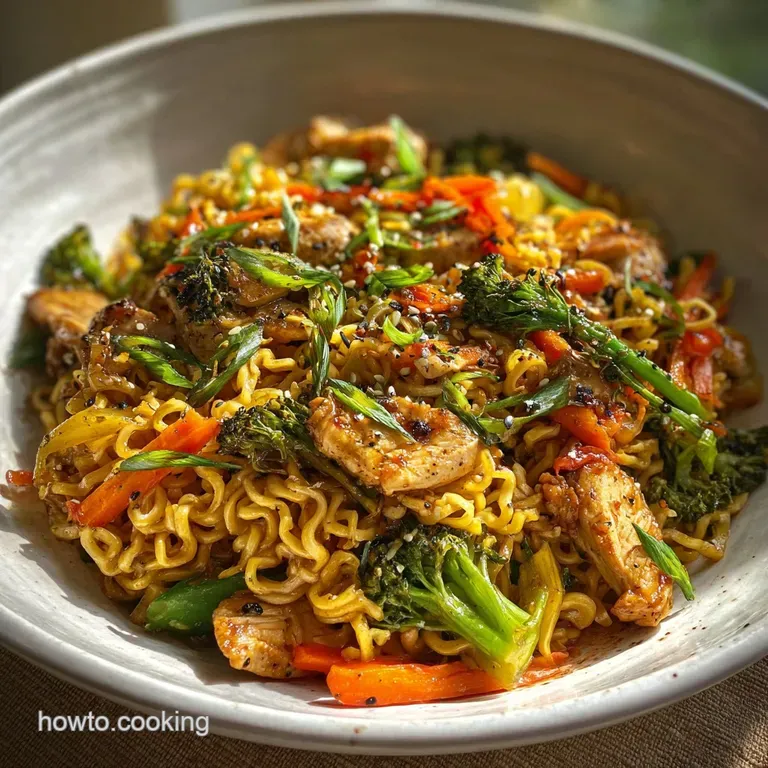
Whisk the soy sauce, honey, rice vinegar, sesame oil, and the remaining 1 tsp of cornstarch together. Pour this into the pan along with the drained noodles and the cooked chicken. Toss vigorously for 1 to 2 minutes until the sauce thickens and coats every strand in a glossy sheen.
Turn off the heat and garnish with the green parts of the onions.
Avoiding Common Kitchen Errors
Why Your Stir Fry Is Soggy
This usually happens when the pan isn't hot enough or you have overcrowded the space. When you dump a mountain of cold vegetables into a lukewarm pan, the temperature drops, and the vegetables release water instead of searing. This creates steam, which leads to that limp, sad texture.
Why Your Noodles Clumped
Ramen noodles are starch heavy. If you boil them too long or let them sit in a heap without rinsing or tossing with a tiny bit of oil, they will bond together. The trick is to undercook them slightly during the soak so they finish "drinking" the sauce in the pan, which keeps them separated and slippery.
| Problem | Root Cause | Solution |
|---|---|---|
| Rubbery Chicken | Overcooked or sliced with grain | Slice against grain; remove from pan immediately after searing. |
| Burnt Garlic | Added too early | Add aromatics only in the last 30 seconds of veg cooking. |
| Thin, Watery Sauce | Cornstarch didn't activate | Ensure the sauce reaches a simmer to trigger the thickening agent. |
Common Mistakes Checklist
- ✓ Pat the chicken dry with paper towels before adding cornstarch to ensure a crisp sear.
- ✓ Do not use the flavor packets; they contain too much sodium and hide the fresh flavors.
- ✓ Keep the heat on high throughout the process; stir fry is meant to be fast and hot.
- ✓ Have all ingredients chopped and ready near the stove; you won't have time to prep once the pan is hot.
- ✓ Use a neutral oil with a high smoke point like avocado or grapeseed, not olive oil.
Creative Recipe Variations
If you want a low carb swap, you can easily replace the ramen blocks with spiralized zucchini or "zoodles." Just keep in mind that zucchini releases a lot of water, so you should only toss it in for the last 30 seconds of cooking to prevent the sauce from thinning out.
For a spicy kick, add a teaspoon of chili garlic sauce or sriracha to the liquid sauce mixture. This adds heat without muddling the other flavors. If you are feeling adventurous, a dollop of peanut butter whisked into the sauce creates a Satay style profile that is incredibly rich and hearty.
- If you want a crunchier texture, add toasted peanuts or cashews at the very end.
- If you want a vegetarian version, swap the chicken for extra firm tofu that has been pressed and cubed.
- If you want more volume, add thinly sliced red bell peppers or bok choy to the vegetable mix.
| Method | Time | Texture | Best For |
|---|---|---|---|
| Stovetop Skillet | 10 mins | Crispy and charred | Most authentic flavor |
| Instant Pot | 5 mins | Soft and tender | One pot convenience |
| Sheet Pan | 15 mins | Roasted and caramelized | Hands off bulk cooking |
Scaling For Different Groups
When you need to feed a crowd, doubling this recipe is straightforward, but you must work in batches. Never try to cook 2 lbs of chicken and 4 blocks of ramen in one skillet at once. The pan will lose all its heat, and you'll end up with a boiled mess.
Cook the chicken in two rounds, then the vegetables in two rounds, and finally combine everything for the sauce toss.
Reducing the recipe for one or two people is even easier. You can use half a pound of chicken and one block of ramen. When scaling down spices and salt, keep the ratios the same but be careful with the honey, as it can become overly sweet in smaller volumes.
For those who enjoy more complex meat preparations, you might find the scaling techniques in my Rosemary Chicken Sauce recipe helpful, as it also focuses on maintaining pan temperature for the best results.
Sticking to the Truth
One common misconception is that you must use a wok to get "wok hei" or that smoky restaurant flavor. While a wok helps, you can achieve a similar effect in a heavy skillet by letting the pan get ripping hot before adding the oil. The smoke point of your oil is the limiting factor here, not the shape of the pan.
Another myth is that you need to marinate the chicken for hours to get it tender. The velveting technique used here tossing with cornstarch works almost instantly to protect the protein. Long marinations in acidic liquids like vinegar can actually turn the meat mushy if left for too long.
Storage and Zero Waste
Fridge and Freezer Storage This stir fry keeps well in the fridge for up to 3 days in an airtight container. The noodles will continue to absorb the sauce, so they might be a bit softer the next day.
To reheat, add a tablespoon of water or chicken broth to a pan and toss over medium heat to loosen the sauce. I don't recommend freezing this dish as the noodles and broccoli often become mushy upon thawing.
Zero Waste Strategies Don't throw away those broccoli stems! Peel the woody outer layer and slice the tender inner core into matchsticks; they have a wonderful crunch and a sweet flavor that matches the carrots perfectly.
The white parts of the green onions are packed with flavor, so use them like shallots at the start of your aromatics phase, and save the greens for the final pop of color. If you have leftover sauce, it makes a great marinade for grilled shrimp the next day.
Final Presentation Techniques
To get those restaurant quality visuals, don't just dump the pan onto a plate. Use tongs to twirl a portion of the noodles into a high mound in the center of the bowl. Place the colorful snap peas and bright broccoli florets around the edges and on top, making sure the golden pieces of chicken are visible.
A final sprinkle of toasted sesame seeds or a few thin slices of red radish can add a professional touch. The contrast between the dark, glossy sauce and the bright green onions is what makes this dish look as good as it tastes.
Serving it in a shallow bowl rather than a flat plate helps keep the heat in and allows the sauce to pool slightly at the bottom, making every bite as flavorful as the first.
Recipe FAQs
Can I use pre-cooked chicken to save time?
No, you should avoid it for this specific recipe. Pre-cooked chicken will become dry and stringy when reintroduced to the high heat required for stir frying the vegetables and setting the sauce.
How to prevent the noodles from becoming mushy in the sauce?
Soak the ramen in hot water until pliable but still firm, not fully cooked. The final minute of cooking should happen directly in the hot pan while absorbing the sauce, which controls starch gelatinization.
Is it necessary to coat the chicken with cornstarch (velveting)?
Yes, this is crucial for the ideal texture. The cornstarch creates a protective barrier that locks in moisture during the sear, resulting in the signature silky mouthfeel.
How to achieve that thick, glossy sauce coating without being gloppy?
Whisk the cornstarch into the cold liquid ingredients before adding to the hot pan. You must bring the entire sauce to a simmer to activate the thickening power, which is an essential step in emulsification.
Can I substitute the ramen noodles with an egg noodle or spaghetti?
Yes, but you must adjust the initial hydration time. If you enjoyed mastering the texture control here, see how the same principle applies to other high starch items in our Creamy Chicken Lasagna recipe, though the cooking window will differ.
What is the best oil to use given the high cooking temperature?
Use a neutral oil with a high smoke point like avocado or grapeseed oil. Olive oil burns too quickly under the required high heat, leading to bitter flavors instead of a proper sear.
How long should the chicken cook before removing it from the pan?
Sear the chicken for three minutes undisturbed on the first side until deeply golden. Total cooking time should not exceed five minutes before setting it aside to prevent the protein from becoming tough.
Chicken Ramen Stir Fry
Ingredients:
Instructions:
Nutrition Facts:
| Calories | 518 kcal |
|---|---|
| Protein | 41 g |
| Fat | 15 g |
| Carbs | 54 g |
| Fiber | 4 g |
| Sugar | 6 g |
| Sodium | 695 mg |
