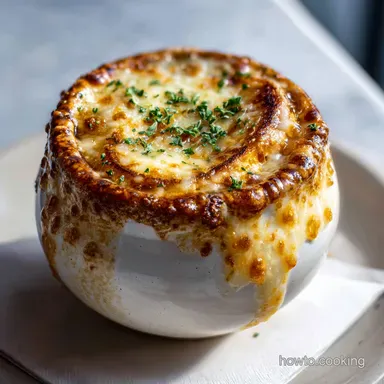
French Onion Soup: Rich and Caramelized
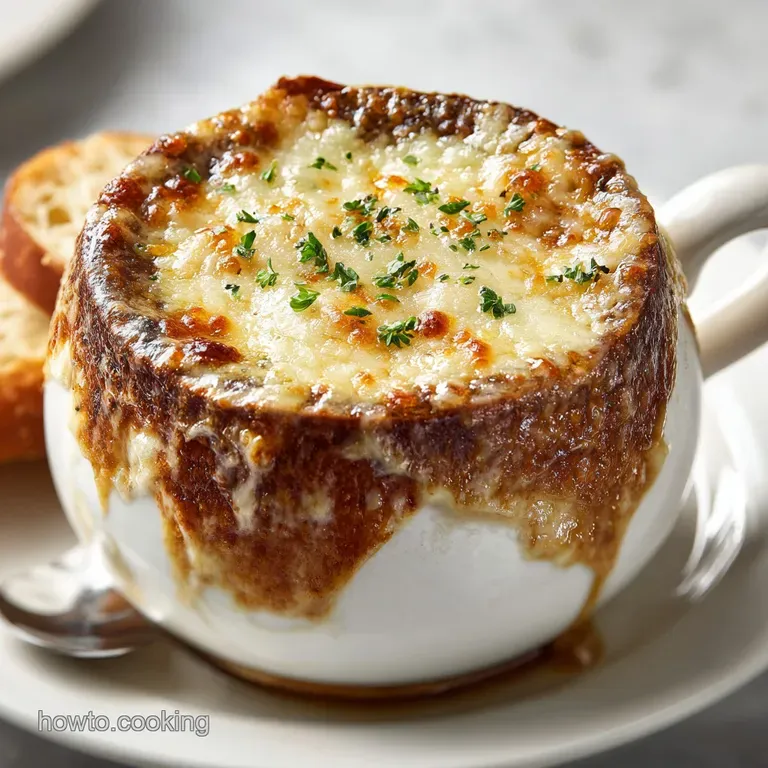
- Time: 10 min active + 70 min cook = Total 80 mins
- Flavor/Texture Hook: Velvety broth with a shatter crisp cheesy crust
- Perfect for: Rainy weekends or a cozy dinner for six
French Onion Soup
The first thing you notice isn't the taste, it's the smell. About twenty minutes into cooking, your kitchen starts to smell like a professional bistro. That heavy, sweet, almost jammy aroma of onions hitting the heat is the heartbeat of this entire dish.
I remember the first time I tried to make this, I rushed the onions. I thought "translucent" was enough, and the result was basically onion flavored water. It was a disaster.
The real magic happens when you stop treating the onions like a vegetable and start treating them like candy. You want them to collapse into a dark, sticky concentrate. That's where the depth comes from.
When you finally ladle the broth over those onions and top it with a thick slice of toasted baguette, you're not just making a meal, you're making a mood.
This French Onion Soup is designed for people who want the authentic, deep flavor but don't have six hours to stir a pot. We're using a few smart shortcuts that don't sacrifice the soul of the recipe.
It's about working with the ingredients, not fighting them, to get that velvety consistency and rich, salty finish that makes this a classic.
Why You'll Love This
Right then, let's get into why this version actually works for a home kitchen. Most recipes tell you to just "caramelize" the onions, but they don't tell you how to do it without burning the bottom of your pot.
The Browning Boost: A tiny bit of baking soda raises the pH level, which helps the onions break down their cell walls faster and brown more evenly. This cuts your caramelization time significantly while keeping the flavor deep.
The Deglaze Secret: Using white wine doesn't just add acidity, it lifts all those browned bits (the fond) off the bottom of the pot. That's where the concentrated "meatiness" of the soup lives.
The Cheese Blend: Using both Gruyère and Parmesan ensures you get the stretch and nuttiness of the former with the salty, sharp punch of the latter. It creates a crust that doesn't just melt, it browns.
Balanced Salt: By using low sodium beef stock, we control the salt levels. Between the stock, the cheese, and the salt we add early on, it's easy for this dish to become a salt bomb if you aren't careful.
Texture Contrast: The toasted baguette acts as a raft. It keeps the cheese from sinking into the broth and provides a crunch that cuts through the richness of the soup.
| Approach | Time Investment | Flavor Depth | Texture | Best For |
|---|---|---|---|---|
| Slow Traditional | 3-4 hours | Maximum | Very Silky | Special Occasions |
| This Shortcut | 80 minutes | High | Velvety | Busy Weeknights |
| Instant Pot | 45 minutes | Medium | Thinner | Meal Prep |
If you're in the mood for other cozy options, this pairs beautifully with a side of garlic butter green beans to add some freshness to the meal.
Component Analysis
Before we start chopping, it's helpful to understand what each ingredient is actually doing in the pot. This isn't just a list; it's a system.
| Ingredient | Science Role | Pro Secret |
|---|---|---|
| Yellow Onions | Natural Sugar Source | Slice them uniformly so they caramelize at the same rate |
| Baking Soda | pH Modifier | Don't add too much or the onions get "mushy" rather than "jammy" |
| Beef Stock | Umami Base | Warm the stock slightly before adding to prevent cooling the pot |
| Gruyère | Fat & Emulsion | Grate it yourself; pre shredded cheese has starch that prevents a smooth melt |
The Shopping List
I've found that using the right type of onion is the difference between a soup that tastes like a cafeteria and one that tastes like Paris. Yellow onions are the gold standard here because they have a balanced sugar to sulfur ratio. Red onions are too sweet, and white onions can be too sharp.
The Core Ingredients:
- 5 lbs yellow onions, thinly slicedWhy this? High sugar content for deep browning
- 2 tbsp extra virgin olive oilWhy this? High smoke point for searing
- ½ tsp baking sodaWhy this? Accelerates browning
- 1 tsp saltWhy this? Draws out moisture early
- 6 cups low sodium beef stockWhy this? Prevents over salting
- ½ cup dry white wineWhy this? Adds necessary acidity
- 3 cloves garlic, mincedWhy this? Adds aromatic depth
- 1 tbsp fresh thyme leavesWhy this? Earthy contrast to sweet onions
- 2 bay leavesWhy this? Subtle herbal backbone
- ½ tsp black pepperWhy this? Gentle heat
- 1 French baguette, sliced into 1 inch roundsWhy this? Sturdy enough to hold cheese
- 1 ½ cups shredded Gruyère cheeseWhy this? Classic nutty melt
- ¼ cup grated Parmesan cheeseWhy this? Adds salt and golden color
Ingredient Swaps:
| Original Ingredient | Substitute | Why It Works |
|---|---|---|
| Dry White Wine | Beef Broth + 1 tsp Lemon Juice | Similar acidity. Note: Lacks the fermented complexity of wine |
| Gruyère Cheese | Swiss or Comté | Similar melting point. Note: Swiss is milder; Comté is nuttier |
| Beef Stock | Mushroom Broth (Veg) | High umami. Note: Lighter body, best for vegetarians |
| Fresh Thyme | 1 tsp Dried Thyme | Same herb profile. Note: Use slightly less as dried is more concentrated |
Honestly, don't even bother with low-fat cheese here. The fat is what carries the flavor and gives you that luxurious, stretchy pull when you lift the spoon.
The Tool Kit
You don't need a professional kitchen for this, but one specific tool makes it a whole lot easier. I always use a Dutch oven because it holds heat evenly and can go straight from the stove to the broiler.
- Dutch Oven: A heavy bottomed pot is a must. If you use a thin pot, the onions will burn in the center before the edges even soften.
- Sharp Chef's Knife: You're slicing 5 pounds of onions. A dull knife will make you cry more than the onions will.
- Oven Safe Crocks: You can use ramekins or small bowls, but they must be able to handle the broiler's heat.
- Wooden Spoon: For constant scraping of the bottom of the pot.
Making the Soup
Let's crack on. The goal here is patience during the first phase and precision during the last. Trust the process, especially when the onions look like they've stopped browning, then suddenly turn dark mahogany.
- Heat olive oil in your Dutch oven over medium heat. Add the sliced onions and salt. Stir in the baking soda.
- Cook the onions, stirring every few minutes, for 30–40 minutes until they are a deep, mahogany colored jam. Note: If they start to stick too much, add a splash of water.
- Stir in the minced garlic and thyme. Cook for 60 seconds until the garlic is fragrant but not brown.
- Pour in the white wine. Stir and scrape all the browned bits from the bottom until the liquid has reduced by half.
- Pour in the beef stock and add the bay leaves.
- Simmer on low for 20 minutes until the broth is rich and cohesive. Remove the bay leaves and stir in the black pepper.
- Preheat your broiler. Toast the baguette slices in the oven for 3 minutes per side until they are crisp and golden.
- Ladle the French Onion Soup into oven safe crocks. Place a toasted bread slice on top of each.
- Top each slice with a generous amount of Gruyère and Parmesan.
- Broil for 2–4 minutes until the cheese is bubbling and has brown spots.
Chef's Note: To get a truly shatter crisp crust, toast your bread slightly longer than you think you need to. This prevents the bread from turning into a soggy sponge the moment it hits the soup.
Solving Common Issues
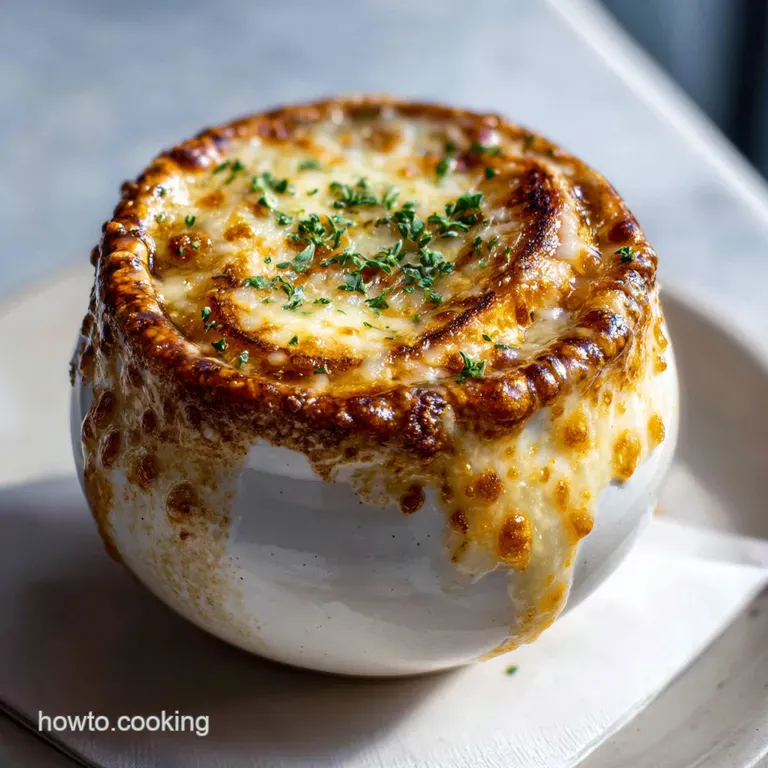
Even with a great recipe, things can go sideways. Most problems with French Onion Soup happen during the caramelization phase or the final broiling.
Troubleshooting Common Issues
| Issue | Solution |
|---|---|
| Why Your Onions Burnt | If your onions turned black instead of brown, the heat was too high or you didn't stir enough. Once they burn, the bitterness permeates the whole pot. You can't "fix" burnt onions; you have to start o |
| Why Your Bread Is Soggy | This happens when the bread isn't toasted enough or if you let the soup sit too long before eating. Toasting the bread until it's almost a rusk creates a moisture barrier. Also, make sure you're using |
| Why The Soup Is Too Salty | Since we're reducing liquids and adding salty cheese, the sodium can climb quickly. If it's too salty, stir in a teaspoon of sugar or a splash of apple cider vinegar. The acidity and sweetness help ma |
Common Mistakes Checklist:
- ✓ Did you slice the onions thinly and consistently?
- ✓ Did you scrape the bottom of the pot after adding wine?
- ✓ Is your oven safe bowl actually oven safe (not just microwave safe)?
- ✓ Did you wait for the onions to reach a dark brown color, not just golden?
- ✓ Did you use low sodium stock to account for the cheese?
Swaps and Variations
This recipe is a great canvas. Depending on what you have in the pantry, you can tweak the flavor profile without losing the essence of the dish.
The Wine Free Path If you don't use alcohol, you can substitute the wine with an equal amount of beef broth mixed with a teaspoon of lemon juice or balsamic vinegar. This provides the acidity needed to cut through the richness of the onions.
Going Plant Based For a vegan version, use a high-quality mushroom broth and replace the cheese with a cashew based mozzarella or a vegan Gruyère alternative. To get the "crust," you can brush the toasted baguette with olive oil and garlic before adding the vegan cheese.
Boosting the Umami If you want an even deeper flavor, add a teaspoon of Worcestershire sauce or a tablespoon of soy sauce to the broth. This mimics the depth of a long simmered bone broth.
Decision Shortcut:
- If you want it richer → Add a knob of butter during the onion stage.
- If you want it lighter → Use a mix of beef and vegetable stock.
- If you're short on time → Use a wide skillet for onions to increase surface area.
For a different kind of comfort, you might enjoy my potato leek soup, which uses a similar aromatic base but offers a creamier texture.
Scaling Adjustments
Making a massive pot of French Onion Soup for a party requires a few tweaks. You can't just multiply everything by four and expect the same result.
Scaling Down (Half Batch) When cutting the recipe in half, use a smaller pot. If the pot is too wide, the liquids will evaporate too quickly, and your soup will become overly salty. Reduce the simmering time by about 20% since there's less mass to heat through.
Scaling Up (Double or Triple) If you're doubling the recipe, work the onions in batches or use two separate pots. If you crowd 10 pounds of onions into one pot, they will steam rather than caramelize, and you'll never get that mahogany color.
Scaling the Cheese Cheese doesn't scale linearly. You generally need slightly less cheese when making larger batches because the heat from the larger volume of soup keeps the cheese melted more effectively. Stick to about 1.5x the cheese for a 2x batch.
| Batch Size | Pot Type | Onion Method | Simmer Time |
|---|---|---|---|
| Single (6) | Dutch Oven | Single Batch | 20 mins |
| Double (12) | Extra Large Pot | Two Batches | 25 mins |
| Half (3) | Medium Pot | Single Batch | 15 mins |
Debunking Kitchen Myths
There's a lot of "lore" around this soup, but some of it is just outdated advice.
Myth: You must use butter for the onions. While butter tastes great, it has milk solids that burn at a lower temperature than olive oil. Using olive oil allows you to get the onions hotter and browner without the fat itself tasting burnt. You can always stir in a pat of butter at the end for flavor.
Myth: Searing the onions "seals in" the flavor. Searing doesn't seal anything in; it creates new flavors. The browning process (caramelization) transforms starches into sugars. You're not keeping flavor in, you're creating flavor out of the onion's structure.
Myth: You need a professional torch for the cheese. A home broiler is actually superior to a torch because it heats the bread and cheese simultaneously, ensuring the bread stays warm while the cheese bubbles.
Storage and Waste
This is one of those rare dishes that actually tastes better the next day. The flavors have time to marry, and the broth thickens slightly.
Fridge Storage Store the soup base (without the bread and cheese) in an airtight container in the fridge for up to 4 days. When you're ready to eat, reheat it on the stove, then do the bread and cheese topping fresh. Never store the soup with the bread already in it, or you'll have a soggy mess.
Freezing Tips You can freeze the soup base for up to 3 months. Let it cool completely before freezing. When reheating, thaw it in the fridge overnight and simmer it gently. The flavor remains remarkably intact.
Zero Waste Tips
- Onion Skins: Don't toss your onion peels! Dry them out and simmer them with your beef stock for a deeper golden color and extra nutrients, according to Serious Eats guidelines on stock making.
- Baguette Ends: If you have the crusty ends of the baguette, dice them into small cubes and sauté them in the leftover onion oil for a savory crouton snack.
- Leftover Cheese: Any leftover Gruyère is fantastic in an omelet or melted over a grilled cheese sandwich.
Serving Ideas
While the soup is the star, the right pairings turn it into a full meal. Because the soup is so rich and salty, you need something to cut through that intensity.
The Fresh Balance A crisp green salad with a sharp lemon vinaigrette is the classic choice. The acidity of the lemon cleanses your palate between spoonfuls of the rich cheese and beef broth.
The Protein Add on If you want to make it heartier, serve it alongside some grilled shrimp or a lean steak. The savory nature of the soup acts as a great companion to grilled meats.
Beverage Pairings A dry white wine, like the one used in the recipe, is perfect. If you prefer red, go for a Pinot Noir. It's light enough not to overwhelm the onions but has enough structure to stand up to the Gruyère.
The Dipping Strategy I always suggest leaving a few extra toasted baguette slices on the side. Once you finish the soup, there's always a bit of that golden, melted cheese left at the bottom of the crock, it's the best part, and you'll want extra bread to scoop it up.
Recipe FAQs
What is the secret to French onion soup?
Patience and baking soda. Slow-caramelizing the onions for 30–40 minutes with a pinch of baking soda ensures a deep mahogany color and a jammy texture without burning.
What is Julia Child's recipe for French onion soup?
This version follows a more streamlined approach. Rather than using traditional thickeners, this recipe relies on the natural reduction of beef stock and white wine for a concentrated flavor profile.
What are some common mistakes making French onion soup?
Cooking the onions over too high heat. If the onions turn black instead of brown, they become bitter and the flavor cannot be corrected. Another common error is under-toasting the baguette, which causes the bread to become soggy too quickly.
Why does my stomach hurt after eating French onion soup?
It is likely due to the high concentration of onions. Some people are sensitive to the fructans in yellow onions, which can cause bloating or digestive distress when consumed in large quantities.
How to store leftover French onion soup?
Store the soup base in an airtight container for up to 4 days. Keep the bread and cheese separate to avoid a soggy mess; simply reheat the broth and broil the toppings fresh before serving.
What can I serve as a side dish with this soup?
A crisp green salad provides a refreshing balance. If you enjoyed the process of browning aromatics here, see how we use a similar approach for the crispy shallots in our casserole.
Is it true I must use butter to caramelize the onions?
No, this is a common misconception. Extra virgin olive oil works perfectly and allows the onions to reach a deep mahogany color without the risk of scorching milk solids.
French Onion Soup: Caramelized