Proper Little Nibblers Classic Quiche Lorraine Bites
- Why Shrink the Classic? Perfecting Quiche Lorraine Bites for Entertaining.
- The Showstopper Snack: French Bistro Flavor in Two Perfect Bites.
- Gathering Your Cast of Classic Quiche Characters.
- Essential Tools for Bite-Sized Baking Success.
- From Prep Bowl to Perfect Pastry: Assembling Your Bites.
- Baking Chemistry: Achieving the Golden Dome.
- Troubleshooting and Perfecting Your Quiche Lorraine Bites.
- Storage, Freezing, and Serving Suggestions.
- Recipe FAQs
- 📝 Recipe Card
Why Shrink the Classic? Perfecting Quiche Lorraine Bites for Entertaining.
Quiche Lorraine is undeniably the queen of the brunch table, beloved for its luxurious, creamy custard and rich, smoky filling. Yet, serving a full sized quiche at a party often presents a logistical challenge the messy slicing, the difficulty of maintaining a crisp crust edge, and the general fuss involved in maneuvering a delicate pastry among mingling guests.
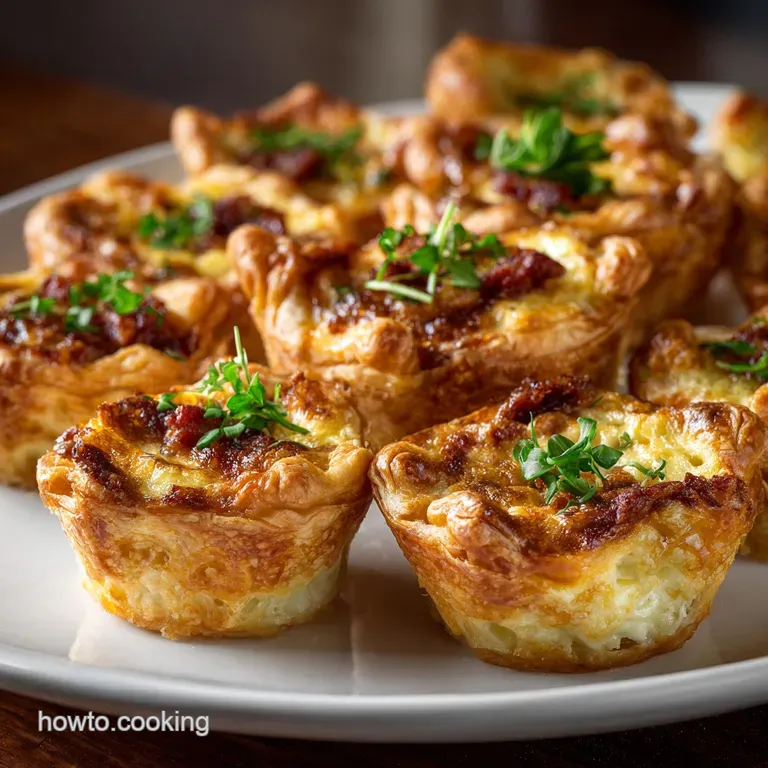
By transforming this classic French dish into perfectly portioned Quiche Lorraine Bites , we unlock its full potential as a sophisticated entertaining centerpiece. This miniaturization isn't just a gimmick; it delivers the full, authentic flavor profile of Gruyère, smoky bacon, and delicate pâté brisée in a form factor that is elegant, portable, and supremely easy to consume standing up.
This format turns a casual brunch item into a genuine showstopper, whether you're hosting a sophisticated cocktail hour or providing delicious Bite Size Appetizers for a gathering.
The Showstopper Snack: French Bistro Flavor in Two Perfect Bites.
The secret to a transcendent quiche, regardless of its size, lies in the balance of textures: the shattering crispness of the pastry base meeting the velvety smooth, almost impossibly light custard.
Our goal with this quiche bites recipe easy method is to retain that integrity while making the preparation approachable for the home cook. We adhere strictly to the traditional Lorraine ingredients specifically focusing on high-quality cured pork and Gruyère to ensure that every single mini quiche delivers a concentrated burst of true French bistro flavour in just one or two perfect nibbles.
The result is savory, satisfying, and far more refined than any store-bought alternative.
The Magic of Miniaturization: Convenience Meets Cuisine.
The greatest benefit of these mini quiche lorraine bites is the unmatched convenience they offer both the host and the guest. Unlike larger formats, these small savory pastries require no utensils or serving plates, making them the ultimate finger food.
This accessibility means they disappear quickly at events, perfect for everything from an informal afternoon tea to a packed house during the holidays. They are also incredibly resilient, holding their shape and flavour beautifully at room temperature, which is a major advantage when juggling multiple catering tasks.
Achieving the Perfect Flaky Shell.
The foundation of any great quiche is the crust. To achieve that signature flake and melt-in-the-mouth texture necessary for a truly authentic bite, we rely on a precise preparation of pâté brisée (shortcrust pastry), ensuring the butter remains ice-cold throughout the mixing process.
The small scale of the muffin tin means that precise pre-baking, or blind baking, is absolutely critical. This step ensures that the base remains structurally sound and crisp, preventing the dreaded 'soggy bottom' even when faced with the generous liquid custard.
While making the pastry from scratch elevates the difficulty to medium, the resulting quality is well worth the 45– 50 minutes of focused effort.
The Ultimate make-ahead Appetizer Strategy.
For anyone hosting a significant event, like a Bridal Shower Brunch or a large party requiring many individual items, these pastries are a hosting lifeline. They are stellar make-ahead Appetizers .
The entire batch can be baked, cooled completely, and stored securely in the refrigerator for up to three days without any detriment to their flavour or texture. This strategy allows hosts to spread out the preparation time, tackling the pastry one day and the assembly and baking the next, leading to a stress free serving experience when guests arrive.
Gathering Your Cast of Classic Quiche Characters.
Authenticity begins with the ingredients. To create that unmistakable Quiche Lorraine profile, we move beyond basic bacon and cheese. We require 4 ounces (115g) of high-quality, thickly cut bacon or traditional French lardons , diced finely for even distribution.
Shallots, rather than onions, provide a milder, sweeter aromatic base, preventing the filling from becoming overly sharp. Central to the filling is the cheese: 4 ounces (115g) of freshly grated Gruyère delivers the necessary nutty, earthy notes and superior melting quality essential for the classic flavour.
Finally, the custard demands a dairy duo of heavy cream and whole milk specifically a ¾ cup to ¼ cup ratio to ensure both richness (from the cream) and structural lightness (from the milk).
Essential Tools for Bite Sized Baking Success.
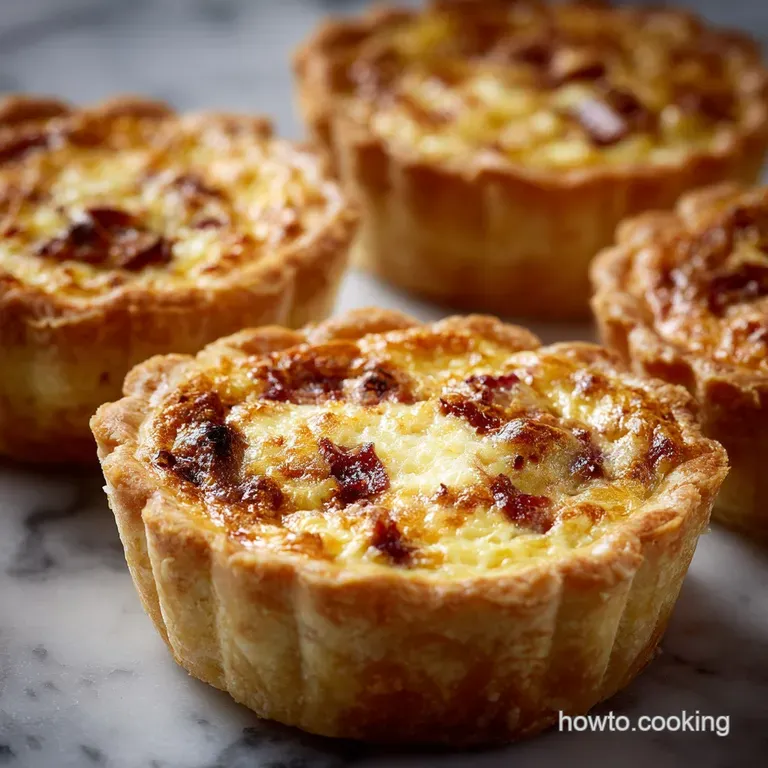
While the recipe is simple in concept, the execution requires precision tools due to the miniature scale. The most important piece of equipment is a 24-cup capacity mini muffin tin, which defines the perfect size for these bites.
To efficiently cut the 24 pastry rounds needed, a 2 inch round or fluted cutter, or even the rim of a small glass, is necessary. Plus,, a fine mesh sieve and a good quality whisk are crucial for preparing the custard, and of course, baking weights are indispensable for stabilizing the fragile pastry during blind baking.
Selecting the Star: The Best Bacon for a Smoky Filling.
The quality of the cured pork dictates the overall flavour of the quiche. Choose a bacon that is smoky but not overly sweet, avoiding thin slices that will simply disintegrate. Dicing the 4 ounces of bacon/lardons very small allows the flavour to permeate the entire custard and prevents the pieces from weighing down the delicate base.
Remember to render the bacon until crisp, removing it immediately with a slotted spoon and draining thoroughly to avoid excess grease soaking into the finished quiches.
Dairy Duo: Achieving That Silky Custard Texture.
The custard’s texture is the difference between a dry, scrambled egg filling and a smooth, silky interior. Our specified blend of ¾ cup heavy cream (35% fat minimum) and ¼ cup whole milk provides the ideal fat content needed to stabilize the egg proteins during baking.
This richness prevents the custard from becoming rubbery or watery. If you attempted to substitute with low-fat dairy, the resulting texture would lack the required luxurious structure.
The Secret Ingredient You Must Not Skip (The Nutmeg Touch).
In the region of Lorraine, the addition of nutmeg is non-negotiable for authenticity. A mere pinch (about ⅛ teaspoon) is enough to add a layer of warmth and subtle aromatic complexity that perfectly complements the savory, salty nature of the bacon and Gruyère.
Do not underestimate this small addition; it is the true marker of classic French cuisine .
The Right Muffin Tin Matters: Choosing Your Vessels.
Using a non-stick mini muffin tin is highly recommended, as releasing the fragile shells can be tricky. Ensure the tin is well oiled or lightly sprayed even if it is non-stick. The small 2 inch cutter size is perfectly scaled to line the cups of a standard 24-cup mini muffin tin, providing just enough pastry to cradle the rich filling without becoming overly doughy.
The Case for Blind Baking: Prepping the Crust.
Blind baking the shortcrust pastry shells is a non-negotiable step to guarantee crispness. After rolling the dough thinly (⅛ inch thickness), cutting the rounds, and carefully pressing them into the cups, they must be docked (pricked) with a fork to prevent bubbling.
Line each shell with a small square of parchment or foil, fill with baking weights, and bake at 375° F ( 190° C) for an initial 12 minutes.
Removing the weights and baking for an additional 3– 5 minutes sets the base just enough to handle the wet custard filling without collapsing.
Related Recipes Worth Trying
- Ultimate Garlic Bread Crostini Recipe Crispy Homemade Bites — Elevate your nibbles This easy Garlic Bread Crostini recipe delivers shatteringly crisp buttersoaked bread perfect for dipping Get the foolproof method here
- The Ultimate Garlic Butter Steak Bites and Mash Recipe — Forget fancy restaurants This Garlic Butter Steak Bites and Mash recipe delivers tender juicy steak tips smothered in garlic butter over a creamy mash Get...
- Ultimate NoBake Peppermint Cheesecake Bites Recipe — Forget the oven These NoBake Peppermint Cheesecake Bites use a simple Oreo crust for a quick dazzling holiday dessert Ready in minutes
From Prep Bowl to Perfect Pastry: Assembling Your Bites.
With the pastry shells cool and the bacon and shallots cooked, assembly is quick and methodical. This stage is all about even distribution. The goal is to layer the solid fillings first the Gruyère, the drained bacon, and the softened shallots at the base of the shells.
This prevents them from floating to the surface. Next, the liquid custard is introduced. Taking a moment to strain the egg, cream, and milk mixture through a fine mesh sieve ensures that the final product is flawlessly smooth.
A measuring jug with a spout is the best vessel for controlled pouring into the tiny shells, preventing messy spills over the edges.
Baking Chemistry: Achieving the Golden Dome.
Baking these Quiche Lorraine Bites requires a moderate, consistent oven temperature of 375° F ( 190° C). This heat is high enough to properly set the custard and crisp the pastry edges without forcing the liquid to boil too aggressively.
The final bake typically takes between 15 and 18 minutes. Look for a lovely pale golden dome on the surface; the center should be just set with a slight wiggle remaining.
Building the Base: Layering the Fillings.
Start by placing a small amount of the grated Gruyère into the bottom of each blind baked shell. This acts as a moisture barrier between the pastry and the wet custard. Follow this with a scattering of the crisp, drained bacon/lardons and the sautéed shallots.
Aim for visual balance; overcrowding the shells at this stage will prevent the custard from flowing correctly and setting evenly.
Mixing and Pouring the Silken Custard.
As mentioned earlier, running the whisked eggs, dairy, salt, pepper, and essential nutmeg through a sieve is critical for achieving a velvety texture. It removes any undissolved spices or tough bits of egg membrane (chalazae). Once strained into a pouring jug, gently fill the prepared shells.
The Critical Importance of Avoiding Overfilling.
Never fill the shells completely to the rim. Leave about ⅛ inch of headspace in each cup. When the custard heats, it expands slightly, and filling it too high guarantees spillage, which can lead to burnt bits on the tin and difficulty unmolding the delicate pastries later on. Precise pouring is key here.
Resting Time: Cooling and Setting the Quiche.
Do not attempt to remove the quiches immediately upon exiting the oven. Like many custards, they need a short period to "set up." Allow them to cool in the muffin tin for 5 to 10 minutes.
This resting period lets the steam escape and the structure solidify, making them much easier to handle without cracking or tearing.
The Easiest Way to Unmold Your Delicate Treats.
After the initial cooling period, gently run a very thin offset spatula or the tip of a small paring knife around the inner edge of each quiche. If the tin was properly prepared, they should lift out easily.
Placing the tip of the knife under the base and giving a very gentle twist usually releases them cleanly onto a cooling rack or serving platter.
Troubleshooting and Perfecting Your Quiche Lorraine Bites.
Achieving perfection in miniature baking involves addressing a few common pitfalls. If your pastry shrinks significantly during blind baking, your dough was likely overworked or not chilled long enough; always ensure the butter and dough are kept very cold.
If the custard is taking forever to set, your oven temperature might be inaccurate; invest in an oven thermometer to ensure the full 375° F ( 190° C) is reached.
Finally, if the tops are browning too quickly before the center is set, loosely tent the muffin tin with aluminum foil for the last five minutes of baking time.
Storage, Freezing, and Serving Suggestions.
These beautiful little pastries are excellent keepers. Cooled, baked Quiche Lorraine Bites can be stored in an airtight container in the refrigerator for up to three days.
For longer storage, they freeze exceptionally well, making them ideal for rapid deployment during the busy New Year's Eve Appetizers season.
Why Is My Custard Weeping? Common Mistakes and Fixes.
Weeping (where the custard releases a watery layer) typically occurs for one of two reasons: overbaking or too high a baking temperature. When egg proteins are subjected to excessive heat, they shrink and expel moisture.
If you notice the quiches puffing dramatically in the oven a sign the internal temperature is too high immediately drop the oven temperature by 25° F ( 15° C). The goal is a gentle set, not a vigorous boil.
Flavor Variations: Taking These Bites Beyond Bacon and Cheese.
While the classic is divine, these small vessels are excellent canvases for culinary creativity. For a vegetarian option, substitute the bacon with 2 ounces of thoroughly drained, chopped spinach and a hint of garlic for delicious Florentine Bites.
For those who prefer a simpler, faster version, you could experiment with crustless quiche lorraine bites baked directly in oiled cups, or utilize pre-made alternatives like mini Phyllo Cups for a different texture entirely.
Alternatively, try swapping the bacon for smoked salmon and dill, or add a luxurious whisper of truffle oil to the custard for a gourmet finish.
Nutritional Snapshot: How Do These Compare?
Given the richness of the pastry and the heavy cream/Gruyère combination, these are hearty, satisfying Bite Size Appetizers . While exact nutritional values will vary based on ingredient brand, an estimated 160 180 kcal per bite provides a substantial serving of protein and healthy fats, making them a filling addition to any spread.
Reheating Previously Frozen Mini Quiches.
To reheat frozen bites, first allow them to thaw overnight in the refrigerator. Preheat your oven to a gentle 300° F ( 150° C).
Arrange the quiches on a baking sheet and heat for approximately 8 to 10 minutes, or until warmed through and the crust is crisp again. Avoid the microwave, which turns the pastry soggy and the custard tough.
Suggested Pairings for a Truly French Appetizer Spread.
These rich, savory pastries shine when paired with something bright and acidic to cut through the richness. Serve them alongside a simple green salad dressed with sharp vinaigrette or a sweet and-sour condiment like artisanal tomato chutney.
Beverages should complement the celebratory feel; a chilled, dry Champagne, a classic Mimosa for brunch, or a light Sauvignon Blanc are excellent choices.

Recipe FAQs
Can I make these Quiche Lorraine Bites ahead of time for a party, and do they freeze well?
Absolutely! These little showstoppers are perfect for batch cooking. Bake them completely, allow them to cool fully, and then store them airtight in the fridge for up to 3 days, or tuck them away in the freezer for up to 2 months.
Reheat gently from chilled or frozen in a moderate oven (around 300°F/150°C) until piping hot no one wants a lukewarm mini quiche!
My quiche bottoms went soggy what's the trick to getting a proper flaky base?
Ah, the bane of every home baker! The secret to avoiding a soggy bottom is meticulous blind baking don't skimp on the time or the baking weights. Ensure you prick (dock) the pastry shells thoroughly before blind baking to allow steam to escape, and bake the empty shells until they are just beginning to turn pale gold.
This full pre-cook is the only way to guarantee the shell stands up to the liquid custard.
I don't have Gruyère; is there a decent cheese I can use instead for the filling?
Don't panic, dear! While Gruyère offers that distinct, nutty French character that elevates the quiche, you have options. high-quality Emmenthaler or Comté are perfect French stand ins.
If you're going British, a sharp, mature white Cheddar (the punchier the better) will provide essential richness without altering the structure of the custard too much.
How do I stop the filling from cracking or bubbling over while baking?
Cracking often happens when the oven is running too hot, causing the eggs to set too rapidly. Make sure you strain the custard through a fine mesh sieve before pouring to remove any air bubbles or chunky bits (Tip 2).
If you notice the quiches puffing up like little soufflés during the final minutes, drop the oven temperature immediately by 25°F/15°C to ensure a silky, smooth finish.
Do I need to fry the bacon until it’s super crisp before adding it to the shells?
Yes, you want the bacon nicely crisp, but not charred, before adding it to the pastry. Pre-cooking it thoroughly is essential, as this step prevents the fat from rendering into the custard during the quick bake, which would make the entire Quiche Lorraine Bites greasy.
Once cooked, remember to drain it thoroughly pat it dry on paper towels like you're blotting lipstick!
Classic Quiche Lorraine Bites Proper Nibblers
Ingredients:
Instructions:
Nutrition Facts:
| Calories | 388 kcal |
|---|---|
| Protein | 3.1 g |
| Fat | 11.8 g |
| Carbs | 9.0 g |
| Fiber | 2.1 g |
| Sodium | 3385 mg |
