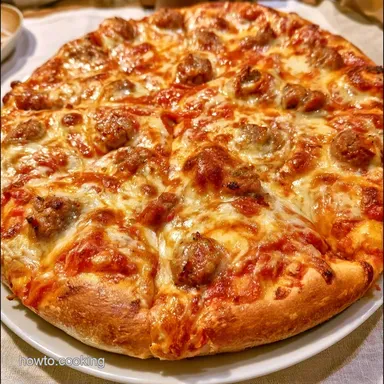
Beginner-Friendly Homemade Pizza

- Total1 Hrs 37 Mins
- Servings2 medium pizzas
- Calories1423 kcal
- Time: 20 min active + 12 min cooking + 1 h 5 min resting
- Texture: Chewy interior with a deep golden brown, crispy crust
- Serve with: Garlic knots or a fresh arugula salad
- Make ahead: The dough stays fresh when refrigerated for 3 days
Making Great Homemade Pizza
Pizza started as a simple meal for the poor in Naples, Italy. It was designed to be fast, filling, and cheap, using whatever was on hand. That tradition is exactly what makes this version work, focusing on fresh ingredients and high heat rather than fancy equipment.
You can expect a crust that has a professional snap and a sauce that tastes like fresh summer tomatoes. This approach skips the processed jars and uses a few simple pantry staples to get a result that beats delivery.
This homemade pizza recipe focuses on the balance between the dough's hydration and the oven's temperature. When you get that ratio right, you get those characteristic charred bubbles on the crust and a center that stays tender.
Why the Dough Rises
- Heat Shock: Using a preheated stone creates a burst of steam, which forces the dough to rise quickly. This is the trick for a crispy pizza dough without a wood-fired oven.
- Sugar Feed: The honey provides immediate food for the yeast, which helps the crust brown and develop flavor.
- Gluten Network: Kneading for several minutes organizes the proteins in the flour, giving the crust its necessary chew.
What Each Ingredient Does
| Component | Purpose | Substitute Notes |
|---|---|---|
| Bread Flour | Provides structure and chew | AP flour works but results in a softer crust |
| Active Dry Yeast | Creates the lift and bubbles | Instant yeast works, but skip the blooming step |
| Honey | Feeds yeast and aids browning | Granulated sugar is a 1:1 swap |
| Roma Tomatoes | Base for a fresh, bright sauce | Canned crushed tomatoes are a good alternative |
Pantry Staples
- 3 cups (375g) bread flour Why this? More protein allows for a better chew
- 1 tbsp (12g) active dry yeast
- 1 cup (235ml) warm water (105-115°F)
- 1 tbsp (15g) granulated sugar or honey
- 1 tsp (6g) salt
- 2 tbsp (30ml) extra virgin olive oil
- 1 lb (450g) Roma tomatoes, diced fresh
- 2 cloves (6g) garlic, minced
- 1 tbsp (15ml) olive oil
- 1 tsp (1g) dried oregano
- 1/2 tsp (3g) salt
- 1/4 tsp (1g) black pepper
- 8 oz (225g) low-moisture mozzarella cheese, shredded
- 4 oz (115g) slices of seasoned beef sausage
- 4-6 fresh basil leaves, torn
| Original Ingredient | Substitute | Why It Works |
|---|---|---|
| Bread Flour | All-Purpose Flour | Lower protein. Note: Crust will be less chewy |
| Honey | Brown Sugar | Comparable sweetness. Note: Adds a slight molasses hint |
| Roma Tomatoes | Canned Plum Tomatoes | Similar acidity. Note: May need 5 extra mins of simmering |
Essential Kitchen Gear
You can skip the professional deck oven, but a pizza stone or a heavy baking sheet is required. A digital thermometer ensures your water reaches the precise temperature needed to activate the yeast. For a smoother transfer to the stone, use parchment paper.
From Prep to Plate
Step 1: Activating the Yeast
Heat 1 cup (235ml) water to roughly 110°F. Stir in 1 tbsp (15g) honey or sugar and 1 tbsp (12g) active dry yeast. Allow the mixture to rest for 5-10 minutes until frothy. Note: Froth indicates the yeast is alive and ready.
Step 2: Mixing the Dough
In a large bowl, mix 3 cups (375g) bread flour with 1 tsp (6g) salt. Add the yeast mixture and 2 tbsp (30ml) extra virgin olive oil, stirring until a shaggy ball forms.

Step 3: Kneading and Rising
Transfer the dough to a floured surface and knead for 5-7 minutes until smooth and elastic. Place it in a greased bowl covered by a damp cloth. Let it proof for 60 to 90 minutes until it has doubled in size.
Step 4: Simmering the Sauce
Heat 1 tbsp (15ml) olive oil in a saucepan over medium heat. Sauté 2 cloves (6g) minced garlic for 1 minute, then add 1 lb (450g) diced Roma tomatoes. Cook for 10-15 minutes, mashing the tomatoes with a spoon until the sauce thickens.
Stir in 1 tsp (2g) oregano, 1/2 tsp (3g) salt, and 1/4 tsp (1g) black pepper, then remove from heat.

Step 5: Preparing the Oven
Preheat the oven to 475°F (245°C). Keep a pizza stone in the oven during preheating so it becomes piping hot.
Step 6: Shaping the Crust
Separate the risen dough into two equal balls. On parchment paper, roll or stretch each ball into a circle approximately 1/4 inch thick.

Step 7: Adding Toppings
Coat the dough with a thin layer of tomato sauce, leaving a 1/2 inch border. Add 4 oz (112g) shredded mozzarella and 2 oz (57g) seasoned beef sausage slices to each pizza.
Step 8: Baking the Pie
Slide the pizza and parchment onto the hot stone or a baking sheet. Bake for 10 to 15 minutes until the cheese is golden brown and the crust is rich brown. Use a thermometer to verify the beef sausage has hit an internal reading of 160°F (71°C).

Step 9: The Final Touch
Remove from the oven and immediately garnish with torn fresh basil leaves.
Avoiding Kitchen Disasters
If your dough keeps shrinking back while you stretch it, it means the gluten is too tight. Just cover it with a towel and let it relax for 10 minutes, then try again. It will flatten out much more easily.
When your yeast doesn't foam, it's usually because the water was too hot, which kills the cells, or too cold, which keeps them dormant. Always use a thermometer to stay in that 105-115°F window.
To prevent a wet center, keep your sauce thick. If you use watery toppings, like raw mushrooms, sauté them first to remove the moisture before they go on the dough.
| Problem | Fix |
|---|---|
| Dough snaps back | Let it rest for 10 mins |
| Yeast doesn't froth | Check water temp (110°F) |
| Soggy bottom | Preheat stone and reduce sauce |
Fun Topping Ideas
You can easily switch up the flavors based on what's in your fridge. For a white version, swap the tomato sauce for a mixture of ricotta and minced garlic. If you want more greens, add baby spinach or sliced bell peppers.
If you want a different sauce base, a pizza sauce recipe using roasted garlic can add a deeper flavor to your homemade pizza. For those who prefer a thinner crust, roll the dough out to 1/8 inch instead of 1/4.
Keeping Slices Fresh
Store uncut slices in an airtight container in the fridge for up to 4 days, following USDA guidelines on leftovers.
If you want to freeze your homemade pizza, flash-freeze individual slices on a baking sheet for one hour. Once they are hard, move them to a freezer bag so they don't stick together.
To reheat, skip the microwave, as it makes the crust rubbery. Instead, place slices in a skillet over medium heat for 3-5 minutes. Finish them under the broiler for 60 seconds to re-crisp the cheese. Ensure leftovers are reheated to 165°F (74°C).
When reheating cooked leftovers, check with a food thermometer that the center reaches 165°F (74°C); the appliance temperature and time alone do not confirm this.
Perfect Side Pairings

A homemade pizza is quite rich, so it pairs well with something acidic. A simple salad with balsamic vinaigrette or some marinated olives cuts through the cheese. If you have extra dough, you can roll it into small strips, brush them with garlic butter, and bake them as quick breadsticks.
Critical in Sodium
2475 mg of sodium per serving (108% of daily value)
American Heart Association recommendation: no more than 2,300 mg of sodium per day
Tips to Reduce Sodium in Your Pizza
-
Swap the Sausage
Replace seasoned beef sausage with fresh ground beef or a low-sodium sausage alternative to avoid highly processed salts.
-
Adjust the Cheese
Use fresh mozzarella, which typically contains less sodium than low-moisture varieties, or reduce the total amount used.
-
Reduce Dough Salt
Cut the salt in the bread flour mixture in half or omit it entirely, as the toppings will provide sufficient seasoning.
-
Eliminate Topping Salt
Remove the salt from the tomato and garlic mixture and let the natural acidity of the Roma tomatoes lead the flavor.
-
Enhance with Herbs
Increase the amount of fresh basil and dried oregano to create a robust flavor profile without relying on sodium.
Frequently Asked Questions
How to make a basic pizza at home?
Combine bread flour, yeast, honey, and olive oil to create the dough. After proofing, top with homemade tomato sauce, mozzarella, and beef sausage, then bake at 475°F (245°C) on a preheated stone.
Can you make pizza from scratch in a regular oven?
Yes, a standard oven is sufficient. Preheat it to 475°F (245°C) and use a pizza stone or baking sheet to ensure the bottom gets a professional crisp.
Why isn't the yeast foaming, and what should I check?
The water temperature was likely incorrect. Check that your water is around 110°F, as temperatures that are too high kill the yeast and those that are too low will not activate it.
What if the dough is too dry or too sticky to handle?
Add small increments of bread flour or warm water. Incorporate flour for stickiness or water for dryness until the dough is smooth. If you enjoyed mastering dough handling here, see how the same principle works in our fluffy pita bread.
Homemade Pizza