Irish Coffee: Master the Floating Cream Recipe
- Crafting the Authentic Caife Gaelach: An Executive Chef's Guide
- The Science of the Perfect Sip: Temperature, Density, and Texture
- Essential Components: Ingredients and Sourcing Notes
- Mastering the Method: Step-by-Step Assembly
- Troubleshooting and Expert Advice from the Kitchen
- Practical Prep: Making Components Ahead (Storage Guide)
- Elevating the Experience: Presentation and Pairings
- Recipe FAQs
- 📝 Recipe Card
Crafting the Authentic Caife Gaelach: An Executive Chef's Guide
There is nothing quite like the first sip of a truly great Irish Coffee . That intoxicating mix of steam hitting your face, the dark, rich aroma of strong coffee and mellow whiskey rising up, followed by the velvety cool barrier of cream.
It’s a sensory masterpiece, a cocktail that feels like a hug on a chilly evening. If you think the perfect Irish Coffee is hard to make, you’ve been misled; the magic lies entirely in mastering three incredibly simple, yet often overlooked, technical details.
Honestly, I used to spend way too much money buying decent spiked coffee drinks out. Then I realized that making a restaurant quality version at home is actually faster, cheaper, and infinitely more satisfying.
When you need that instant lift whether it’s after a big, cozy meal or just to chase away the post work chill this recipe is your ultimate lifesaver. You can whip up two of these beauties in under ten minutes flat.
Forget everything you’ve tried before that resulted in grainy, weak coffee and cream sinking straight to the bottom like a little white torpedo. We’re going to tackle the science of buoyancy and temperature control.
Trust me, once you understand the simple logic behind this specific method, you will be making the kind of Irish Coffee that would make Joe Sheridan himself proud.
The Science of the Perfect Sip: Temperature, Density, and Texture
This isn't just a recipe; it's an engineering lesson in a glass. The reason this particular Irish Coffee stands above the rest is that it respects the laws of physics.
We are creating a density layer, ensuring the base is intensely hot and sweet, while the topping remains cold, thick, and unsweetened. When these two layers meet, the cold, lighter cream refuses to mix with the hot, heavier base. It’s brilliant science, really.
The Legacy of Foynes: A Brief History of Irish Coffee
Did you know this drink was invented purely out of hospitality? Back in the 1940s, a chef named Joe Sheridan at the Foynes airbase (which preceded Shannon Airport) concocted this drink to warm a group of transatlantic passengers whose flight had been delayed by bad weather.
Legend says when a passenger asked if it was Brazilian coffee, Sheridan replied: "No, that's Irish Coffee !" The story alone makes it taste better, doesn't it? This history reminds us that the drink is fundamentally about warmth and generosity.
What Defines Truly Great Irish Coffee?
A truly great Irish Coffee must deliver two distinct sensations simultaneously: the burning heat of the coffee/whiskey base and the chilled velvet of the cream collar. If you stir it, you lose the contrast, and you simply have hot, alcoholic cream which is fine, but not the goal.
The flavor should be strong coffee first, a mellow hint of whiskey second, and the dark sweetness of molasses third. It’s structured, layered, and complex.
Why Floating the Cream is Non-Negotiable
This is the whole point, isn't it? The elegant white band of cream is visually stunning, but functionally, it’s what cools the coffee as you drink it. If you blend the cream in, you lose that textural journey.
My first attempt at Irish Coffee ended in failure because I used store-bought whipped cream in a can. It was messy, it tasted weird, and it absolutely, positively sank. Don't ever use canned whipped cream for this. Ever.
Achieving the Crucial Hot-Cold Contrast
The key to keeping the base hot is twofold. First, the coffee must be brewed immediately before assembly. Second, you absolutely must pre-warm the glassware. I use boiling water right from the kettle to scald the inside of the glass.
This simple trick prevents the cold glass from instantly dropping the temperature of the coffee and allows the beautiful contrasting textures of the Irish Coffee to shine.
Density Secrets: How to Float the Unsweetened Cream
The base liquid must be denser than the cream. How do we make the coffee base dense? By adding dissolved sugar. Sugar not only provides sweetness but, chemically speaking, it increases the specific gravity of the liquid.
The cream, conversely, should be kept cold and airy (whipped to soft peaks) and, critically, unsweetened or only very lightly sweetened . A lighter, colder topping floats on a heavier, hotter base. That’s the magic of true Irish Coffee .
Balancing the Four Core Elements: Coffee, Sugar, Spirit, and Dairy
We are dealing with a quadrilateral of flavor here. If the coffee is too weak, the whiskey dominates. If the sugar is too light, the density fails and the cream sinks. If the cream is too stiff, it sinks. Every ingredient in this traditional Irish Coffee recipe plays a specific, structural role.
Chef’s Note: Never use lukewarm or day-old coffee. If your coffee isn't scalding hot, the cream will struggle to float and the drink will lack that warming comfort the original inventor intended.
Essential Components: Ingredients and Sourcing Notes
Sourcing the right ingredients is half the battle. This recipe for the perfect Irish Coffee uses only four major elements, so quality matters tremendously. Don't skimp on the whiskey!
| Component | Standard Ingredient | Viable Substitute |
|---|---|---|
| Spirit | Quality Irish Whiskey (Jameson, Bushmills) | Aged Bourbon (sweeter) or Aged Dark Rum (deeper molasses) |
| Sweetener | Dark Brown Sugar | Maple Syrup (use slightly less) or Simple Syrup |
| Coffee | Strong Filter Coffee | Espresso + Hot Water (Americano strength) |
| Cream | Heavy Whipping Cream (35%+ fat) | Full fat canned Coconut Cream (chilled, top layer only) |
Selecting the Ideal Irish Whiskey (Not Just Any Spirit)
We use Irish Whiskey because it is typically triple distilled and matured in wooden casks, resulting in a smooth, mellow flavor that doesn't overpower the coffee. Scotch, while delicious, is often smoky and steals the show. Bourbon is too sweet.
You want a middle-of-the-road, reliable Irish Whiskey for your homemade Irish Coffee .
- Substitution Tip: If you are out of Irish Whiskey, an aged dark rum can provide a delicious depth, though then you’d really have a Jamaican Coffee. (For an even deeper coffee experience, check out my recipe for The Fireside Festive Coffee Punch Recipe Spiced Brandy Brew ).
The Importance of Freshly Brewed, Strong Coffee
You need depth. This is not a casual breakfast brew. Use a dark roast or a high-quality medium roast brewed strong, perhaps a 1:15 coffee-to-water ratio. The bitterness of the strong coffee cuts beautifully through the sweetness of the sugar and the richness of the cream, creating balance in the Irish Coffee .
Brown Sugar vs. Simple Syrup: Choosing Your Sweetener
Dark brown sugar (Muscovado or Demerara) adds a crucial caramel molasses note that granulated white sugar just can't touch. Because we dissolve the sugar directly into the hot coffee, the resulting base tastes richer and more complex.
If you must use simple syrup, make sure it is hot when added, or it will cool the base too much.
Cream Prep: Whipping to the Perfect Soft Peak
This is the most crucial preparation step for the success of your Irish Coffee . The cream must be very cold. Use a cold bowl and whisk it just until it reaches soft peaks . If you lift the whisk, the peak should flop over gently, like the peak of a soft serve ice cream.
If it stands straight up, it is too stiff, too dense, and will certainly sink!
Mastering the Method: step-by-step Assembly
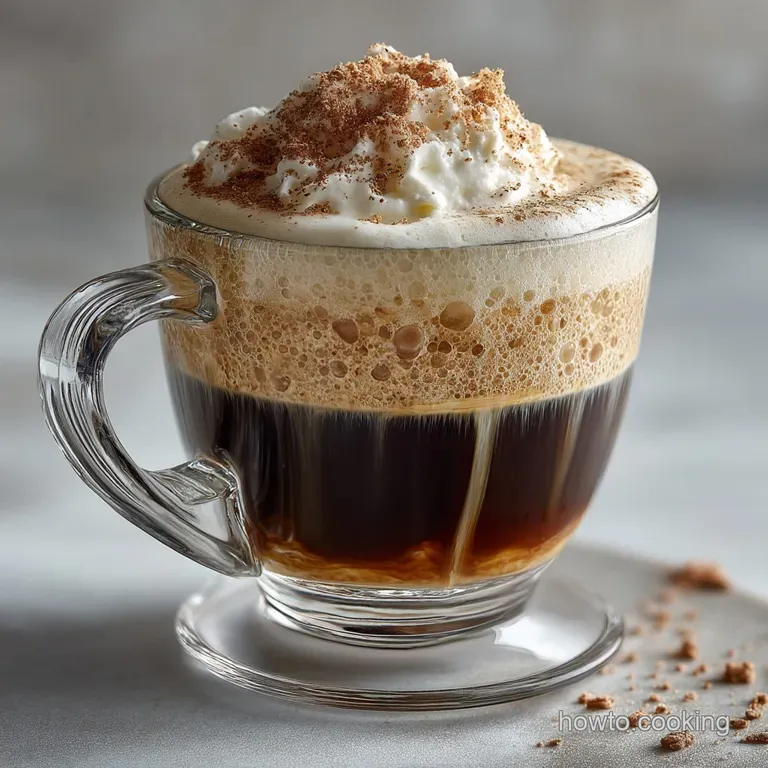
Let's crack on and assemble this masterpiece. These steps are designed specifically to maximize heat retention and ensure proper floatation for your homemade Irish Coffee .
Pre-Warming the Glassware: Setting the Stage
First, heat your clear Irish Coffee mugs. Fill them entirely with boiling water, let them sit for 30 seconds, and then pour the water out. Immediately add 1 teaspoon of dark brown sugar to the bottom of each glass. This warm start prevents the final product from becoming lukewarm, which ruins the experience.
Integrating the Whiskey and Sweetener
Pour the piping hot, strong coffee over the sugar in the warmed glasses. Stir vigorously until you can no longer see any sugar granules sticking to the bottom or sides usually 30 seconds or so. This sugar dissolution is critical for density. Once dissolved, add 1.5 fl oz of the Irish whiskey.
Stir gently to combine.
The Technique for Gently Layering the Cream
Retrieve your soft peak cream from the fridge. Take a small, round backed spoon (like a dessert spoon) and hold it upside down just over the surface of the hot liquid. It should barely skim the top. Slowly, painstakingly, pour the cream over the back of the spoon.
The spoon slows the cream's descent and distributes the weight evenly, allowing it to layer perfectly. This technique is essential for a beautiful Irish Coffee .
Service Instructions for Maximum Warmth
Do not stir! The beauty of an authentic Irish Coffee is the distinct layers. You want the drinker to sip the cold cream first, followed by the intensely hot and spiked coffee beneath. Serve immediately. I often pair this gorgeous drink with a slice of my The Best Moist Pumpkin Coffee Cake Recipe with Crunchy Brown Butter Streusel during the cooler months.
Troubleshooting and Expert Advice from the Kitchen
We all make mistakes. I once forgot to warm my glasses and ended up with a cold, sludgy mess a wasted glass of beautiful Irish Whiskey! Here’s how you avoid my disasters when making your next Irish Coffee .
Why Your Cream Sinks (And How to Fix It)
There are three main culprits when the cream sinks:
- The Base is Too Cold: You didn't warm the glass, or your coffee wasn't hot enough. Fix: Use boiling water to pre-heat the glass and ensure your coffee is fresh off the brew.
- The Cream is Too Stiff: You over whipped it to stiff peaks, making it too dense. Fix: Next time, stop whipping at soft peaks. If you have time, you can add a tablespoon of fresh, unwhipped heavy cream to your stiff cream and gently fold it in to loosen the texture.
- No Density Difference: You skimped on the sugar, or the sugar didn't dissolve. Fix: Make sure the sugar is fully dissolved and consider adding a tiny bit more to the base to increase its specific gravity. You need the density for a successful Irish Coffee .
Adjusting the Whiskey Proof for Smoother Flavor
The standard 1.5 oz pour of Irish Whiskey provides a strong kick. If you find the alcohol too sharp, try lowering the whiskey to 1.25 oz and increasing the coffee slightly. Conversely, if you prefer a really strong, bold Irish Coffee , feel free to push it up to 2 oz, but make sure your coffee base is strong enough to handle it!
The Ideal Temperature for the Coffee Base
The coffee needs to be above 175°F (80°C) after the whiskey and sugar are incorporated. This high heat is essential for activating the whiskey's aromatics and maintaining the density difference needed for the perfect Irish Coffee .
Common Missteps When Preparing the Ingredients
One common mistake I see is using white granulated sugar and then wondering why the flavor is flat. White sugar is fine for density, but dark sugar provides crucial complexity. Another error is neglecting to chill the cream bowl; cold tools help the cream whip faster and retain a better, lighter structure, which is key for floating successfully in your Irish Coffee .
Practical Prep: Making Components Ahead (Storage Guide)
While the final assembly of the Irish Coffee must be done immediately before serving, you can definitely prepare the components ahead of time to make serving a crowd effortless.
Storing Pre-Whipped Cream Safely
The soft peak cream can be stored in an airtight container in the refrigerator for up to 12 hours. If it looks like it has started to deflate slightly, gently whisk it 2 3 times right before serving to reintroduce air, but be extremely cautious not to over whip it into butter!
Best Practices for Reheating Coffee Base
You should not pre-mix the coffee, whiskey, and sugar base. The coffee should be freshly brewed and hot. However, if you need to hold a batch of brewed coffee (no whiskey added yet!) for up to 30 minutes, keep it in a thermos or a small carafe on a warming plate. Never boil the coffee base once the whiskey is added, or you will boil off the alcohol and ruin the spirit's nuance. You could use leftover coffee to make my Rich Caramel Coffee Fudge Recipe Smooth Swirled Treat instead!
Elevating the Experience: Presentation and Pairings
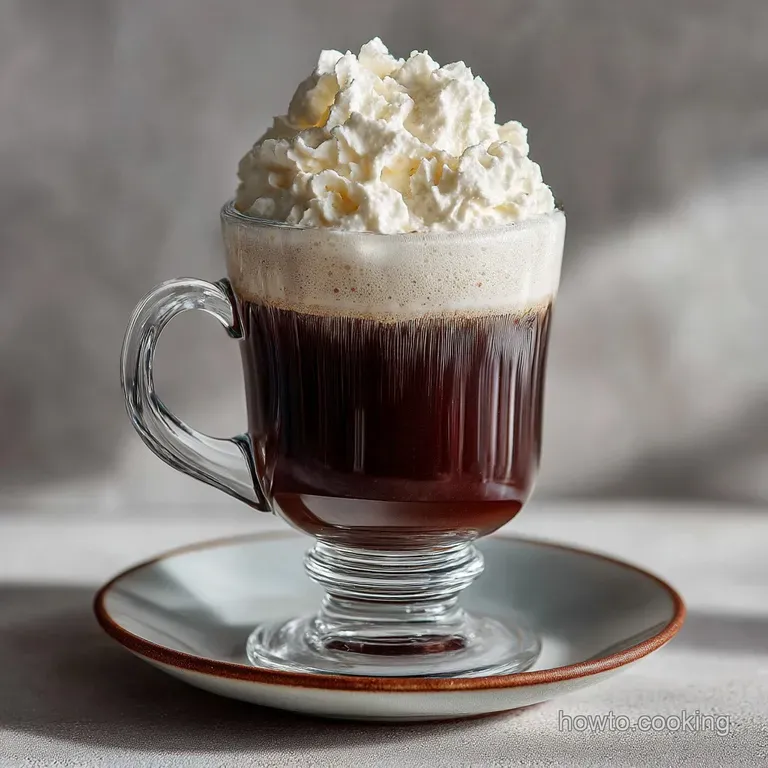
The classic presentation for the Irish Coffee is simple and elegant: the clear glass, the dark liquid, and the pristine white cream collar. Sometimes, less is truly more.
For pairing, since this drink is rich, bitter, and warming, it works best with something textural. Think crunchy biscotti or simple, buttery shortbread. If you want to lean into the St. Patrick's Day theme, this pairs wonderfully with the subtle whiskey flavor found in my St Patricks Day Cupcakes Irish Cream Whiskey Magic . Remember, the goal of this perfect Irish Coffee isn't complicated garnish; it's the perfect hot-cold, bitter sweet sip. Enjoy! This drink is always a winner.

Recipe FAQs
What are the essential ingredients for an authentic Irish Coffee?
An authentic Irish Coffee requires only four distinct components: strong, hot black coffee, high-quality Irish whiskey (preferably pot still), brown sugar, and lightly whipped, unsweetened fresh cream.
The use of brown sugar is non-negotiable, as it increases the density of the base liquid, which is crucial for achieving the perfect float.
What is the secret to getting the cream to float perfectly on top?
The key lies in two factors: density and careful pouring technique. Ensure the brown sugar is fully dissolved in the hot coffee and the cream is only lightly whipped to soft, flowing peaks, not stiff ones.
Hold a warmed spoon upside down just above the liquid, and pour the cold cream very slowly over the back of the spoon onto the surface.
Does Irish Coffee use a coffee liqueur, or must it be Irish whiskey?
A traditional Irish Coffee strictly uses Irish whiskey, which lends a bright, spicy warmth essential to the classic flavor profile. While some modern dessert variations might incorporate coffee liqueurs like Kahlúa or similar creams, these are not used in the original recipe created at Shannon Airport.
Why is brown sugar required, and can I substitute granulated white sugar?
Brown sugar is critical because it imparts a deep molasses complexity that pairs beautifully with the aged whiskey. More importantly, dissolving brown sugar significantly increases the density of the liquid base, ensuring the lighter, cold cream layer remains suspended rather than sinking immediately.
Can I make Irish Coffee ahead of time, or can it be stored?
No, Irish Coffee must be assembled immediately before drinking to preserve the crucial temperature contrast between the piping hot coffee and the cold cream layer. If you need to prep, you can whip the cream ahead of time and keep it chilled, but the drink itself is best enjoyed fresh.
What is the typical price range for an Irish Coffee at a professional bar?
The price for a quality Irish Coffee usually ranges between $12 and $18, depending heavily on the establishment and the quality of the whiskey used. Making this drink at home is significantly more cost effective, typically costing less than $4 per serving for premium ingredients.
Perfect Fireside Irish Coffee
Ingredients:
Instructions:
Nutrition Facts:
| Calories | 325 kcal |
|---|---|
| Fat | 20 g |
| Fiber | 0 g |
