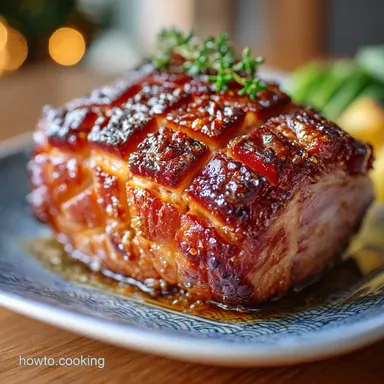
The Great British Glaze Sticky Marmalade English Mustard Baked Ham
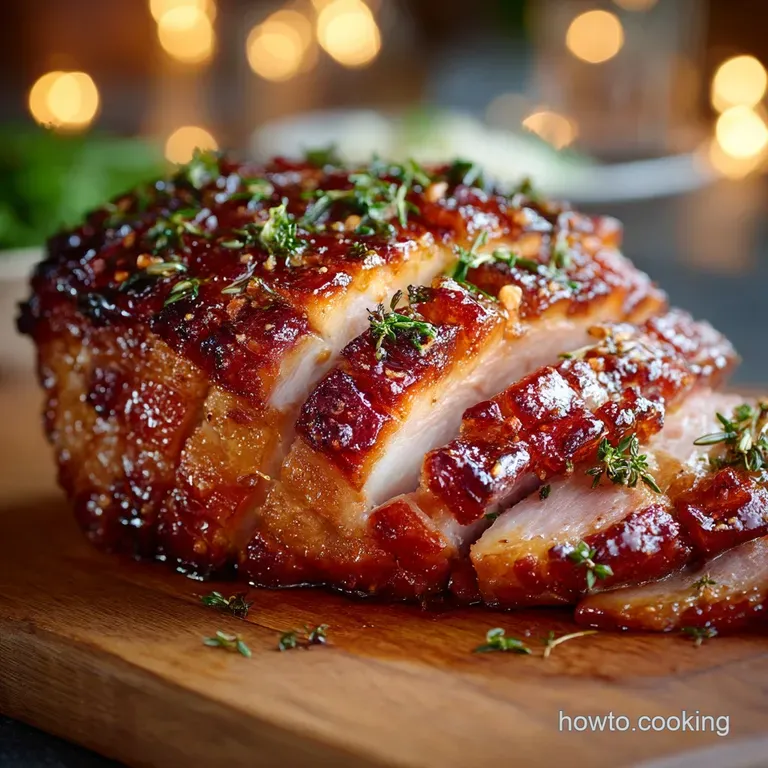
- Elevating the Holiday Centrepiece: Why This Glaze is a Must-Try
- The Simple Secret to a Tender, Festive Baked Ham Roast
- Essential Provisions for Your Perfect Sticky Ham
- Gear Check: Tools Required for Effortless Roasting
- Preparing the Canvas: Scoring and Setting Up the Ham
- Achieving the Ultimate Bronzed Crust
- The Crucial Phase: Resting and Carving
- Troubleshooting and Expert Tips for Your Next Baked Ham
- Maximising the Leftovers and Storage
- Serving Suggestions: Perfect Pairings
- Recipe FAQs
- 📝 Recipe Card
Elevating the Holiday Centrepiece: Why This Glaze is a Must-Try
The Baked Ham is the quintessential holiday centerpiece, equally welcome on the table for Ham For Christmas Dinner as it is for the Best Thanksgiving Ham . Yet, simply warming a cured ham doesn't make it memorable.
The true magic lies in the glaze, that sticky, bronzed crust that locks in moisture while delivering an explosive sweet-and-spicy finish. Our Great British Glaze, featuring rich honey, bright orange marmalade, and the fiery kick of English mustard, transforms this classic cut into a showstopper.
This Sticky Glazed Ham Recipe delivers maximum flavour impact, promising tender meat beneath a perfectly caramelized shell, making your Glazed Ham the star of any celebratory spread.
The Simple Secret to a Tender, Festive Baked Ham Roast
The secret to a truly perfect baked ham recipe lies in understanding that the cut you are working with is already fully cooked and cured. Our primary goal is not to cook it, but to reheat it slowly and evenly without drying it out, and then apply high heat only at the end to set the glaze.
This straightforward process minimizes hands-on time and ensures a moist interior every time you cook a ham in the oven.
Unveiling the Great British Glazed Tradition
This particular recipe draws inspiration from the classic British holiday preparation, where robust savoury flavours are often balanced with sharp, fruity notes. The blend of sticky runny honey and the tartness of quality orange marmalade creates a complex sugar base that caramelizes beautifully.
Crucially, the addition of Dijon and English mustard powder cuts through the sweetness, providing a necessary earthy warmth that complements the cured pork. This careful balance is what elevates this from a sweet glaze to a truly magnificent coating.
Why This Marmalade & Mustard Glaze Stands Out
Unlike simple brown sugar washes, the inclusion of fruit preserves and two types of mustard (Dijon for smoothness, English powder for intensity) gives the glaze stability and depth. When baked at high heat, the sugars caramelize rapidly, forming a deep, resonant crust rather than simply dripping away.
This complexity ensures that every slice of ham offers both intense sweetness and savoury depth.
Cured vs. Uncured: Choosing the Best Starting Point
For this method, always select a fully cooked, cured ham. These are typically smoked or salt-cured, which gives them their characteristic flavour and texture. While bone-in offers superior flavour and moisture retention, many cooks prefer a spiral-sliced ham as the cuts allow the sticky glaze to penetrate deeper, ensuring even seasoning across the meat surface and making carving effortless later on.
We recommend aiming for a 7-8 pound (3.2–3.6 kg) bone-in, spiral-sliced ham, which yields 12 to 16 generous servings.
Essential Provisions for Your Perfect Sticky Ham
Creating the ultimate glaze requires specific ingredients designed for stickiness and depth of flavour. For the ham itself, you'll need one 7–8 lb fully cooked ham, and about a tablespoon of whole cloves if you plan on studding the fat cap.
The magic glaze formula requires a syrupy base built upon: 1 cup of packed light brown sugar, half a cup of runny honey, and half a cup of quality orange marmalade. To provide the necessary heat and acidity, incorporate 2 tablespoons of smooth Dijon mustard, 1 teaspoon of English mustard powder (or dry mustard), and 2 tablespoons of apple cider vinegar or fresh orange juice, which assists in thinning the glaze slightly before simmering.
Gear Check: Tools Required for Effortless Roasting
While the process is simple, having the right equipment ensures success. A heavy-duty roasting pan is necessary, and ideally, one with a rack to allow heat to circulate evenly around the ham and keep the meat elevated above the sugary glaze runoff.
Aluminium foil is mandatory for the initial moisture phase, and a small saucepan will be used for preparing the syrupy glaze. Finally, the most crucial tool is a digital meat thermometer.
Achieving the ideal internal temperature of 140° F ( 60° C) is non-negotiable for tender results, and only a reliable thermometer can confirm this.
The Ideal Cut: Bone-In or Boneless?
A bone-in ham is highly recommended, as the bone conducts heat slowly and acts as an insulator, significantly contributing to the ham's moistness and imparting deeper flavour. If you choose boneless, you must monitor the internal temperature even more closely, as it will cook much faster.
Spiral-sliced cuts are a brilliant compromise, offering the flavour of the bone-in cut with the easy access for carving and glaze penetration.
Calculating Carvings: How Much Ham Per Person?
When hosting a holiday meal, planning servings is vital. A general rule of thumb for a bone-in ham is to calculate approximately 1/2 pound (about 225 g) per person. Therefore, a substantial 7–8 lb ham will easily cater to 12 to 16 people, with plenty of delicious leftovers.
The Three-Ingredient Magic Glaze Formula
While the full recipe has six components, the foundational flavour trio that creates this incredible sticky coating is brown sugar, honey, and marmalade. These three ingredients, when gently simmered, create a rich, viscous syrup that adheres perfectly to the scored fat cap, ensuring a thick, caramelized crust.
The Roast Pan Debate: Foil vs. Rack
For optimal How To Cook A Ham In The Oven technique, use both. Line your roasting pan with heavy-duty aluminium foil first, this makes the cleanup of sticky, caramelized glaze runoff far easier.
Then, use a rack if available, as elevating the ham allows the heat to circulate underneath, resulting in a more evenly heated and crisper exterior when the glazing phase begins.
Preparing the Canvas: Scoring and Setting Up the Ham
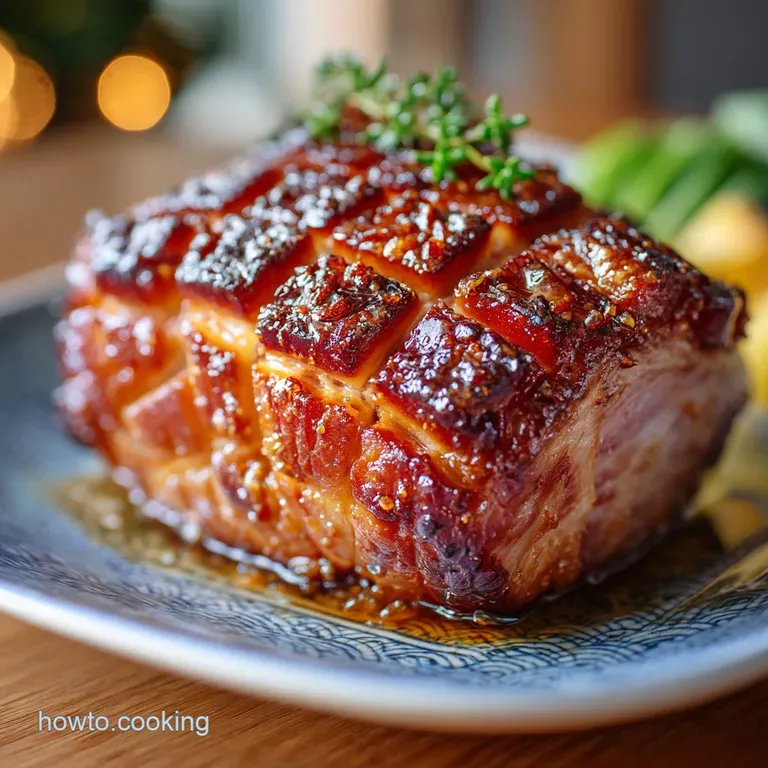
Preparation is straightforward. Preheat your oven to 325° F ( 160° C) and place the ham cut-side down in the prepared roasting pan.
The Diamond Scoring Technique Explained
If your ham is not spiral-sliced, you must score the fat cap. Using a sharp utility knife, slice diagonal lines across the fat cap, ensuring the cuts are about one inch apart. Repeat the process in the opposite direction, creating a clean diamond pattern.
The goal is to cut only about 1/4 inch (6 mm) deep, just through the fat, avoiding the muscle meat. This technique allows the glaze to seep deeply into the surface and encourages the fat to render beautifully. If desired, a whole clove can be pressed into the centre of each diamond for extra fragrance.
Prepping for Perfection: Achieving the Optimal Internal Temperature
To start the baking process while ensuring moisture retention, pour about half a cup of water or ginger ale into the bottom of the roasting pan. This creates a steamy environment. Wrap the ham loosely but securely in heavy-duty foil.
This wrapping stage is critical for preventing the outer meat from drying out during the initial low-temperature cook. Bake for approximately 1. 5 hours, until the internal temperature reaches 120° F ( 49° C).
This allows the ham to warm through before the sugar is introduced.
Related Recipes Worth Trying
- The Best Baked Lemon Cheesecake with Homemade Lemon Curd — This foolproof recipe delivers the Best Lemon Cheesecake Recipea dense New Yorkstyle bake topped with silky homemade Lemon Curd A real showstopper
- Gloriously Cheesy Baked Beef Pasta Casserole Recipe — Ditch the takeaways This recipe elevates Cheesy Baked Beef Pasta with a slowsimmered ragu and creamy béchamel for the ultimate comfort
- The Ultimate Stovetop Baked Macaroni and Cheese Recipe — Forget the box This Homemade Macaroni and Cheese Recipe delivers a velvety Béchamel sauce and golden baked topping Your new favourite comfort food awaits
Achieving the Ultimate Bronzed Crust
Once the ham has reached 120° F ( 49° C), remove it from the oven and carefully peel back the foil. Now, it’s time to prepare the ultimate finish.
Increase the oven temperature significantly to 400° F ( 200° C) to facilitate rapid caramelization.
The Glaze Schedule: When to Apply and Baste
While the ham rests briefly, combine all glaze ingredients (brown sugar, honey, marmalade, mustards, and vinegar) in a saucepan. Bring it to a gentle boil, stirring until the sugar dissolves completely, then simmer for 3 to 5 minutes until it achieves a slightly thick, syrupy texture.
The key to a truly Sticky Glazed Ham Recipe is multi-stage application.
- First Glaze: Brush one-third of the glaze generously over the warm, scored ham, ensuring it drips into the diamonds or spiral cuts. Return to the 400° F oven and bake for 15 minutes until the glaze sets.
- Second Glaze: Remove the ham and brush with the next one-third of the glaze. Return for another 15 minutes.
- Final Glaze: Apply the remaining glaze and continue baking. This final stage requires careful monitoring.
Monitoring the Temperature During Baking
The total cooking time will depend on the weight, but estimate 13- 15 minutes per pound (0.5 kg). Given that the ham is already cooked, the final temperature is critical. Begin checking frequently after the second glaze application.
The ham is perfectly finished when the digital meat thermometer inserted into the deepest part of the meat (avoiding the bone) registers 140° F ( 60° C) .
The Crucial Phase: Resting and Carving
Congratulations, you have mastered How To Cook A Ham In The Oven ! But the job isn't quite done.
The Golden Rule: Why Rest Time Matters
Once the ham hits the target temperature of 140° F ( 60° C), remove it immediately. Tent it loosely with foil and let it rest on the carving board for a mandatory minimum of 30 minutes.
Resting allows the superheated muscle fibres to relax and reabsorb the internal juices that were pushed towards the centre during the cooking process. Skipping this step results in dry, disappointing slices. The internal temperature will safely rise a few degrees during this time.
Troubleshooting and Expert Tips for Your Next Baked Ham
Preventing Dryness: Moisture Secrets
The single greatest mistake when making Christmas Ham Recipes is overcooking. Since the ham is already cured, you are simply reheating it, not cooking raw meat. Never push the internal temperature past 140° F.
Remember that foil wrapper during the initial 325° F bake is your best defence against a dry exterior, trapping steam and keeping the meat lush before the high-heat glazing begins.
Handling the Glaze Runoff and Cleanup
The delicious, sticky glaze inevitably melts and collects at the bottom of the pan. This residue can burn, so using the foil lining in your roasting pan is essential for easy cleanup. After removing the ham, degrease the juices in the pan (scoop off the fat layer).
These savoury, concentrated pan juices are packed with flavour and can be whisked into any unused portion of the glaze or served warm as a rich, savoury-sweet dipping sauce.
Maximising the Leftovers and Storage
The beauty of a large Baked Ham is the guaranteed bounty of leftovers.
Shelf Life and Reheating Best Practices
Store leftover ham slices tightly wrapped in the refrigerator for up to 3 to 4 days. When reheating, place slices in an ovenproof dish with a tablespoon of water or broth, cover tightly with foil, and warm slowly at 300° F ( 150° C).
This gentle reheating method prevents the meat from drying out.
Creative Uses for Ham Bones and Scraps
Do not discard the ham bone! The bone and any meaty scraps are the foundation for incredible flavour. Freeze the bone and use it later to make the most complex and delicious split pea soup, ham and bean soup, or a rich stock perfect for seasoning winter greens.
Serving Suggestions: Perfect Pairings
The intense flavour profile of this Glazed Ham —sweet, tart, and spicy, needs accompanying sides that provide either a creamy contrast or a sharp, palate-cleansing tang. This answers the question: What To Eat With Glazed Ham ?
Traditional Sides That Complement the Sweet and Spicy Glaze
Pair the rich pork and sticky crust with comforting, creamy sides like decadent Dauphinoise Potatoes (Gratin) or simple, buttery crushed new potatoes. For vegetables, choose items with some acidity or char, such as roasted asparagus or Brussels sprouts tossed with balsamic vinegar and crispy pancetta.
Finally, offer strong condiments, a sharp, traditional cranberry sauce or a fiery, vinegary piccalilli provide an outstanding counterpoint to the sugary marmalade glaze.
Recipe FAQs
How do I stop my Baked Ham from ending up as dry as a vicar's sermon?
The cardinal sin of ham cooking is overdoing it. Since most hams are pre-cooked, you are really just reheating; use a meat thermometer and pull the ham out exactly when it hits 140°F (60°C).
Crucially, tent the ham loosely with foil and let it rest for at least 30 minutes before carving; this allows the juices to settle back into the meat, ensuring every slice is moist and tender.
My glaze keeps burning before the ham is ready. What's the secret to that perfect sticky, bronzed crust?
The secret is managing the heat and timing the glazing process properly. Start the ham loosely wrapped in foil at a lower temperature (325°F) to ensure it heats through gently without drying.
Only unwrap and raise the oven temperature to 400°F (200°C) for the final 45–60 minutes, applying the glaze in three thin layers during this high-heat blast. This slow build-up of the glaze guarantees a sticky, caramelised finish rather than a charred disaster.
This recipe calls for a "fully cooked" ham. Can I use an uncooked joint instead?
While you certainly can use an uncooked or 'green' ham, it's a completely different cooking kettle of fish and requires much more time. Uncooked ham must reach a safe internal temperature of 145°F (63°C), meaning you would need to cook it for several hours longer before even beginning the glazing stage.
Stick to a fully cooked, cured ham for the timings provided in this sticky marmalade recipe, otherwise, you might miss lunch!
I've made enough ham to feed the five thousand! How long does leftover ham keep, and what are the best ways to use it?
Leftover ham is a glorious thing! Store tightly wrapped slices in the refrigerator for 3 to 4 days, or freeze large portions for up to two months. The ultimate use for leftovers is a proper ham and pease pudding sandwich, or you can cube it for classic ham and pea soup or a fantastic holiday quiche.
Don't forget to boil the leftover bone (if you used a bone-in ham) to make a rich, flavourful stock.
I love the flavour of this Baked Ham, but that sticky glaze seems like a total sugar overload. Are there healthier alternatives?
It's true the sticky glaze is high in sugar, but you have options! For a drastically reduced carbohydrate count, swap out the wet glaze entirely for the low-sugar dry rub variation listed in the notes (smoked paprika, garlic, and spice).
If you still want a bit of sweetness, you can simply reduce the brown sugar quantity in the original recipe by half and let the acidity of the vinegar and mustard powder balance the flavour profile.
Sticky Marmalade Honey Glazed Baked Ham The Great British Glaze