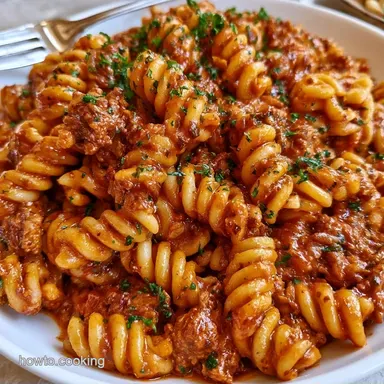
Dutch Oven Pasta Meat Sauce with Beef Chuck

- Total5 Hrs 15 Mins
- Servings6
- Calories554 kcal
- Time: 15 min active + 5 hours cooking
- Flavor & Texture: Rich, hearty, and thick
- Perfect for: Sunday family dinners or meal prep
Dutch Oven Pasta Meat Sauce
Achieving a rich, ragu-like depth doesn't require premium meat or a professional kitchen. While many assume a 12-hour stovetop simmer or a specific stock is necessary to avoid a thin, acidic flavor, a low-temperature oven is actually the secret.
It provides the consistent, surrounding heat required to break down tough proteins without scorching the bottom of your pot.
This recipe features beef chuck, a cut frequently overlooked for pasta. Since it's a hardworking muscle, it contains plenty of connective tissue. When cooked at 250°F for several hours, that tissue melts into gelatin, giving the sauce a thick, glossy consistency that clings to the pasta.
Expect a sauce that is hearty and savory. Your home will be filled with the aroma of a traditional Italian kitchen by the time the timer goes off.
Recipe Specs
| Feature | Detail |
|---|---|
| Total Time | 5 hours 15 mins |
| Yield | 6 servings |
| Meat Temp | 200°F (93°C) |
| Heat Source | Oven (250°F) |
Ingredient Deep Dive
- 2 lbs beef chuck, diced into small cubes
- 2 tbsp olive oil
- 1 large yellow onion, finely diced
- 3 medium carrots, finely diced
- 2 stalks celery, finely diced
- 4 cloves garlic, minced
- 1 can (28 oz) crushed tomatoes
- 1 can (6 oz) tomato paste
- 1 cup beef broth
- 1 tsp vinegar
- 1 tsp granulated sugar
- 2 bay leaves
- 1 tsp dried oregano
- 1 tsp dried basil
- 1 tsp salt
- 1/2 tsp black pepper
- 1/2 cup grated Parmesan cheese
- 1/4 cup fresh parsley, chopped
The beef is the focal point of this dish. It is essential to use beef chuck, as leaner meats like sirloin tend to become dry and grainy during a five-hour cook. The collagen and fat found in the chuck keep the meat succulent.
A mixture of celery, carrots, and onion creates an aromatic base with a balanced sweetness that offsets the beef's richness. The tomato paste is utilized for more than just color; it delivers a concentrated, savory depth.
The beef broth and vinegar serve as the deglazing liquid. The vinegar provides a tangy brightness that cuts through the heavy fats of the pot. Finishing the dish with Parmesan cheese adds a nutty, salty quality.
Equipment Needed
A 5-quart Dutch oven is the main tool. You need one with a heavy lid to keep the moisture trapped inside. A pair of tongs and a wooden spoon for scraping the bottom are also helpful.
From Prep to Plate
Phase 1: The Deep Sear
Preheat the oven to 250°F (120°C). Warm 2 tbsp olive oil in a 5-quart Dutch oven over medium-high heat. Sear the beef chuck in batches until a chestnut brown crust forms on all sides. Remove the meat to a plate. Note: Searing in batches prevents the meat from steaming in its own juices.

Phase 2: Building the Aromatics
Lower the heat to medium. Sauté the diced onion, carrots, and celery in the remaining beef fat for 6–8 minutes until softened and translucent. Stir in the minced garlic and tomato paste, cooking for 2 minutes until the paste turns deep brick red.

Phase 3: The Slow Braise
Deglaze the pot by pouring in the beef broth and 1 tsp vinegar, stirring to loosen the caramelized fond. Mix in the crushed tomatoes, sugar, oregano, basil, salt, pepper, and bay leaves. Return the seared beef to the pot. Cover with the lid and transfer to the oven.
Simmer undisturbed for 4 to 5 hours until the beef registers 200°F (93°C) and breaks apart easily with a fork.

Phase 4: The Final Finish
Take the pot out of the oven and remove the bay leaves. Stir in the grated Parmesan cheese and chopped fresh parsley before serving.
Problems and Solutions
Fixing Acidic Sauce
Should the tomato flavor seem overly sharp or biting, it is typically due to the acidity of the canned tomatoes. To correct this, stir in a teaspoon of butter or an extra pinch of sugar. This mellows the acidity without making the sauce taste sweet.
Handling Excess Oil
You may notice some orange-tinted oil on the surface after braising. This is simply rendered beef fat. Use a large spoon to skim the fat away before stirring in the cheese.
Fixing Thin Sauce
If the sauce is too watery, simmer it uncovered on the stovetop over medium heat for 15 to 20 minutes. This evaporates the excess liquid and intensifies the flavors.
Flavor Twists

For a bit of heat, stir in some crushed red pepper during the garlic stage. To make this dairy-free, replace the Parmesan with a tablespoon of nutritional yeast for a similar savory richness.
If you don't have five hours to spare, a Spaghetti Meat Sauce recipe made with ground beef is a faster choice. This sauce also pairs perfectly with a Baked Ziti Casserole for those who enjoy a baked finish.
| Method | Texture | Time |
|---|---|---|
| Oven Braise | Melt-in-mouth | 5 hours |
| Stovetop | Chewier | 1 hour |
Freezing and Reheating
Store the sauce in a glass jar in the fridge up to 4 days. The flavors often settle and improve after 24 hours.
This meat sauce freezes well. Let it cool completely, then transfer it to freezer-safe bags. It stays good for 3 months.
To reheat, thaw it overnight in the fridge. Warm it in a saucepan over medium-low heat until it reaches 165°F (74°C) in the center. If the sauce has thickened too much during freezing, add a splash of water or beef broth to return it to a velvety consistency.
The Technique
Low-Temp Braising: Cooking at 250°F prevents the liquids from boiling violently, which keeps the meat from toughening.
Collagen Conversion: Long exposure to gentle heat turns the connective tissues in beef chuck into gelatin, which naturally thickens the sauce.
Chef Note: Don't skip the searing step. Those brown bits on the bottom of the pot, called the fond, contain the most concentrated flavor in the whole dish.
High in Sodium
817 mg of sodium per serving (36% of daily value)
American Heart Association recommendation: no more than 2,300 mg of sodium per day
Tips to Reduce Sodium
-
Swap the Broth
Replace the beef broth with low-sodium or no-salt-added beef broth to reduce a major source of hidden salt.
-
Reduce Added Salt
Omit or significantly reduce the 1 tsp of salt, as the other ingredients provide enough flavor.
-
Select No-Salt-Added Tomatoes
Choose no-salt-added versions of both the crushed tomatoes and the tomato paste.
-
Limit Parmesan Cheese
Reduce the amount of grated Parmesan cheese used for topping, as aged cheeses are naturally high in sodium.
-
Enhance with Herbs
Increase the dried oregano and basil or add more fresh parsley to build flavor without relying on salt.
Your Questions, Answered
Is a Dutch oven the best choice for pasta sauce?
It is ideal because the heavy walls provide steady, surrounding heat that prevents scorching during long braises.
Tip: Use an enameled pot for easier cleanup.
How to prepare this sauce in a Dutch oven?
Sear beef chuck in oil, sauté vegetables, stir in tomato paste, deglaze with broth and vinegar, then oven-simmer at 250°F for 4 to 5 hours.
Tip: Sear the meat in batches to ensure a deep golden brown crust.
Is it true that tomato acidity damages enameled pots?
This one's false: Enameled coatings are non-reactive and specifically designed to handle acidic ingredients like tomatoes.
Tip: Avoid using metal utensils to prevent scratching the enamel.
Why is the oven better than the stovetop?
Oven heat surrounds the pot entirely, allowing the beef chuck to tenderize without the risk of scorching the bottom.
Tip: Keep the lid tightly closed to maintain moisture.
Can fresh tomatoes be substituted for crushed ones?
Yes, but you will need to simmer the sauce longer to reduce the extra water content.
Tip: Blanch and peel the fresh tomatoes first for a smoother texture.
What creates the dark golden color and rich taste?
Searing the beef chuck until crusty and simmering it for five hours develops the deep color and savory depth.
Tip: Don't crowd the pot when searing to ensure a proper crust.
Dutch Oven Pasta Meat Sauce