The Queen of Puddings Strawberries and Cream Sweet Rolls
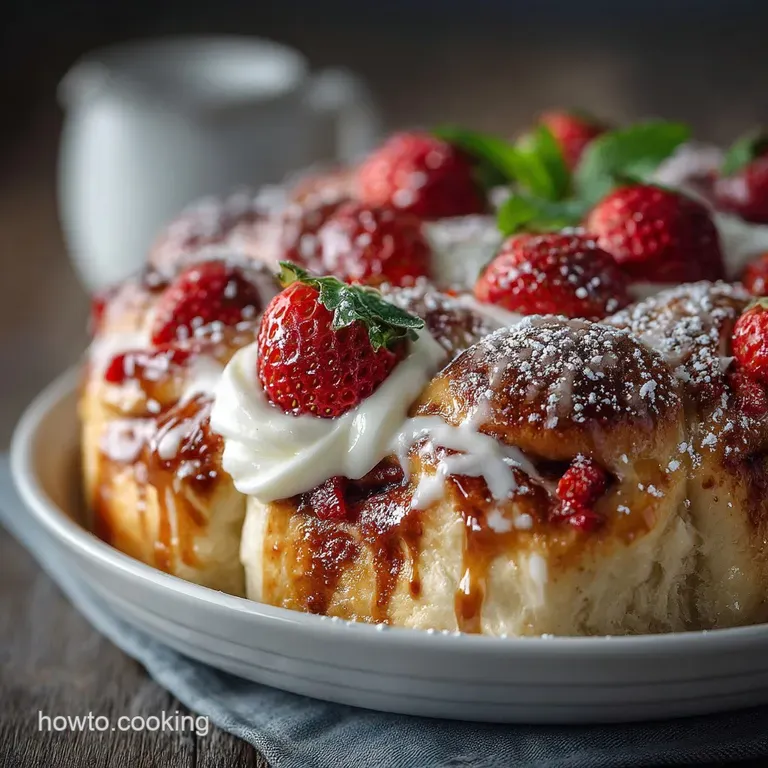
- Elevating the Sweet Roll: Why These Aren't Your Grandmother’s Cinnamon Buns
- The Quintessential Taste of Summer in a Single Swirl
- The Essential Components for Luscious Strawberries and Cream Sweet Rolls
- Required Tools and Preparation Notes Before You Begin
- Mastering the Rise: Preparing and Proofing Your Enriched Yeast Dough
- Assembly Tactics: How to Roll, Fill, and Slice Without Losing Your Filling
- Troubleshooting Your Sweet Rolls and Answering Key Baking Questions
- Making Ahead and Preservation: Storing Strawberries and Cream Sweet Rolls
- Recipe FAQs
- 📝 Recipe Card
Elevating the Sweet Roll: Why These Aren't Your Grandmother’s Cinnamon Buns
When most people think of a classic sweet roll, they picture a heavy, spice-laden bun drenched in a sickly sweet icing. While delightful in its own right, this Sweet Roll Recipe is anything but traditional.
We are embarking on a baking journey to create the ultimate fusion dessert: Strawberries and Cream Sweet Rolls . This sophisticated adaptation replaces the heavy spice profile with the vibrant freshness of summer berries and a tangy cream cheese backbone, transforming a comforting breakfast into an elegant afternoon treat.
This recipe is designed to produce rolls that are incredibly light and fluffy, thanks to an enriched dough that ensures a tender crumb, perfectly balancing the bright, slightly acidic fruit filling.
The Quintessential Taste of Summer in a Single Swirl
These remarkable rolls capture the essence of a British summer garden party, reminiscent of fresh berries served with clotted cream. The process of creating this bake, while a medium-difficulty weekend project, yields an unparalleled textural experience.
You get the soft, yielding chew of the perfect yeast dough coupled with the burst of fruit, all held together by a decadent, smooth swirl of sweet cream. If you are looking for the absolute best Strawberry Cream Cheese Sweet Rolls , this comprehensive guide provides the blueprint for achieving moist, flavorful results every time.
Deconstructing the Layers: Dough, Compote, and Cream Dream
Success in this bake relies on three distinct components working in harmony. First, we have the enriched dough, made rich with butter and eggs, which provides the tender, cloud-like foundation.
Second, the filling features a dual layer: a creamy, vanilla-infused butter base (using half a stick of very soft butter combined with half a cup of powdered sugar) for moisture and richness, topped with a homemade, thickened strawberry compote.
This bright, cooked berry filling is the core flavour element of the Strawberry and cream cinnamon rolls with strawberry filling . Finally, the luscious, tangy cream cheese glaze ties the whole experience together.
Is This Recipe Worth the Weekend Baking Effort?
The preparation for these glorious rolls is certainly an active commitment, totaling around 3 hours and 40 minutes, including two crucial rising periods. This is not a quick-fix pastry; it involves working precisely with yeast and ensuring optimal proofing.
However, the reward is twelve large, show-stopping Strawberries and Cream Breakfast Rolls baked in a standard 9x13 inch pan. The deep flavour achieved through slow fermentation and the vibrant, homemade compote easily justify the time spent in the kitchen.
The Essential Components for Luscious Strawberries and Cream Sweet Rolls
Baking with yeast requires attention to detail, particularly regarding ingredient temperatures and quantities. For this enriched dough, precision is key. We utilize 4 ½ cups (540 grams) of strong bread flour, which provides the necessary gluten structure to support the fat content (113 grams of melted butter) and ensure a superior, chewy-yet-tender crumb.
For the vibrant filling, we require two cups (250 grams) of strawberries, which will be cooked down into a dense, flavor-packed compote. Finally, the iconic topping requires 4 ounces (115 grams) of full-fat cream cheese combined with 1 ½ cups of sifted powdered sugar to achieve the signature creamy finish.
Required Tools and Preparation Notes Before You Begin
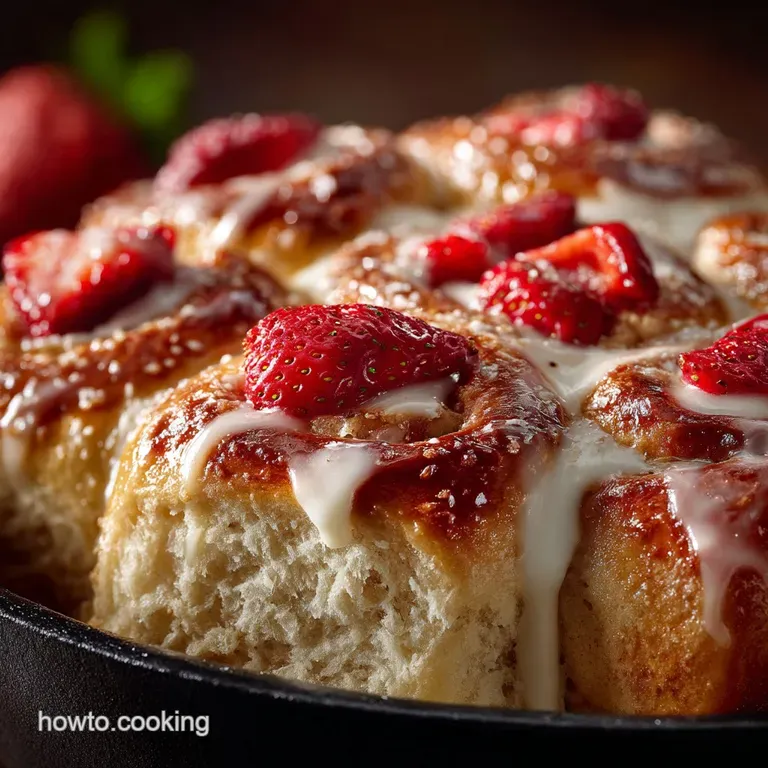
A well-organized workspace minimizes stress when dealing with enriched yeast doughs. While not mandatory, a stand mixer with a dough hook attachment is highly recommended, as it saves significant time during the crucial kneading phase.
Essential equipment also includes a small saucepan for the compote, a rolling pin, and a 9x13 inch baking pan for baking the 12 resulting rolls.
Building the Fluffy Foundation: Ingredients for the Enriched Dough
The secret to light, airy sweet rolls is proper yeast activation and hydration. Start by warming 1 cup (240 ml) of whole milk precisely between 105° F and 115° F.
This specific temperature range is vital for activating the 2 ¼ teaspoons of active dry yeast without scorching it. Once the yeast has bloomed, incorporating the remaining sugar, salt, two room-temperature eggs, and the ½ cup of cooled, melted butter allows the gluten to develop into a supple, elastic dough over 8 to 10 minutes of mechanical kneading.
Creating the Perfect Tang: Sweet Cream Cheese Filling
Unlike standard cinnamon rolls that only rely on a butter-sugar mix, these Strawberry and cream cheese cinnamon rolls feature both an internal creamy swirl and an external glaze.
The internal swirl, made from ½ cup of very soft butter, powdered sugar, and vanilla, provides a layer of protective moisture for the dough and ensures the final texture is lush.
The glaze requires both softened butter and full-fat cream cheese to be whipped together until perfectly smooth before adding the copious amount of powdered sugar and a touch of milk for thinning.
Choosing Your Berries: Fresh vs. Frozen Strawberries for Compote
When preparing the strawberry compote filling, bakers can use either fresh or frozen strawberries (250 grams total), hulled and diced. If using frozen, there is no need to thaw them beforehand.
The key is to simmer the fruit with granulated sugar and lemon juice for 5 to 7 minutes until softened, then use a slurry of 1 tablespoon of cornstarch mixed with cold water to thicken the mixture dramatically.
Remember: this compote must be completely chilled before being spread onto the dough, a tip crucial for preventing soggy rolls.
Must-Have Equipment for a Stress-Free Roll Assembly
Besides the standard baking tools, the most important piece of equipment for a clean, professional finish is a roll-cutting device. While a very sharp knife works, unflavoured dental floss or a bench scraper are the most effective tools for slicing the rolled log into 12 uniform 1 ½ inch rolls without compressing or squishing the delicate layers.
Related Recipes Worth Trying
- Proper Beefy Mexican Rice Soup Hearty Quick and Easy Weeknight Comfort — This deeply flavourful Beefy Mexican Rice Soup is the ultimate quick and easy soup for busy evenings Rich ground beef and tender rice make it incredibly...
- Loaded Brussels Sprouts Salad Shaved Slaw with Bacon and MapleDijon — This Loaded Brussels Sprouts Salad is a proper crowd pleaser Shaved paperthin and tossed in a creamy mapleDijon dressing with crispy bacon and Parmesan No...
- Savoury German Corn Pudding The Creamy Bavarian Bacon Bake — Forget sweet corn casserole This proper savory German Corn Pudding is baked in a 9x13 dish until golden Rich creamy and packed with smoky bacon Perfect...
Mastering the Rise: Preparing and Proofing Your Enriched Yeast Dough
After the yeast is activated and the remaining dough ingredients are incorporated, the kneading process is critical. The dough should transition from shaggy to smooth, elastic, and ready to pull away cleanly from the stand mixer bowl walls. Once ready, the dough undergoes its first rise, or bulk fermentation.
Placed in a lightly oiled, covered bowl in a warm place, it needs about 60 to 90 minutes to double in size. This slow, proper rise builds flavor and ensures the final rolls are airy, not dense.
Assembly Tactics: How to Roll, Fill, and Slice Without Losing Your Filling
This is the stage that defines the final presentation. Once the dough has completed its bulk fermentation, punch it down gently and roll it out precisely into an 18 x 12 inch rectangle, aiming for a thickness of about ¼ inch. Achieving uniform thinness is essential for getting those beautiful, tight swirls.
Simmering Perfection: Making the Vibrant Strawberry Compote
The compote preparation must be done early as it must be fully chilled before assembly. Combining the diced berries, sugar, and lemon juice in a small saucepan and simmering for just under ten minutes concentrates the natural strawberry flavor.
Once the cornstarch slurry is stirred in and the mixture thickens, transfer it immediately to a shallow dish and refrigerate for at least 30 minutes. Spreading a warm filling guarantees the butter in the cream layer will melt, causing leakage and mess.
The First Proof: Achieving That Cloud-Like Texture
Once the dough is rolled and flattened, spread the fluffy creamy butter swirl evenly over the surface, maintaining a small, half-inch border along the farthest long edge. Next, gently spoon the cold strawberry compote over the cream layer, spreading carefully to cover most of the surface.
Starting from the long edge closest to you, roll the dough as tightly as possible, pinching the final seam shut to seal the magnificent swirl of Strawberries and cream cinnamon rolls .
Uniform Slicing: The Secret to Evenly Baked Rolls
Once sealed, use the dental floss technique described previously to cut the log into 12 even pieces. Place these rolls, cut-side up, into the prepared 9x13 inch pan. They should be snugly placed, but not squashed. This leads to the second, or final, proof, which takes 45 to 60 minutes.
The rolls should look puffy and almost doubled before they are ready for the oven, which should be preheated to 375° F ( 190° C) halfway through this rise.
Achieving the Golden Crown: Baking Times and Temperatures
The standard baking time is 22 to 27 minutes. The rolls are done when they are deeply golden brown and their internal temperature registers between 200° F and 205° F.
Checking the internal temperature is the most reliable way to confirm they are cooked through and will not be doughy in the center. Allow them to cool slightly before generously spooning or drizzling the vanilla cream cheese glaze over the warm tops.
Troubleshooting Your Sweet Rolls and Answering Key Baking Questions
Solving the Ooze: Preventing Filling Leakage During Baking
Filling leakage, or "ooze," during baking is the bane of every sweet roll baker, but it is entirely preventable. The primary culprit is often using a warm or wet filling. By diligently chilling the strawberry compote until it is firm and cold, you ensure it holds its shape when rolled into the dough.
Plus,, tight rolling and ensuring the seam is properly pinched shut helps contain the filling during the second proof and in the high heat of the oven.
Can I Prepare the Dough the Night Before? (A Guide to Cold Proofing)
Absolutely. To streamline your morning, you can perform a cold proof. After the kneading stage, instead of letting the dough rise in a warm spot for 60- 90 minutes, place the covered bowl directly into the refrigerator overnight (up to 12 hours).
The cold temperature slows the yeast activity, deepening the flavour. The next day, punch the dough down gently, proceed with the filling and rolling steps, and then allow the shaped rolls to come to room temperature and complete their final proof (which may take up to 90 minutes after chilling) before baking.
This makes the perfect How To Make Strawberry Sweet Rolls schedule for brunch.
Scaling Up or Down: Adapting the Recipe for Different Pan Sizes
This recipe is perfectly scaled for a standard 9x13 inch pan, yielding 12 generous rolls. If you need a smaller batch, the recipe can be halved and baked in an 8x8 inch square pan (yield: 6 rolls). Always ensure the rolls are snugly fitted, too much space allows them to spread out rather than rise upwards.
Flavor Substitutions: Swapping Out Berries and Glazes
While the strawberry flavour profile is iconic, this base sweet roll recipe is highly adaptable. For a different fruit experience, swap the strawberries for raspberries and add white chocolate chips to the roll-up for a Raspberry & White Chocolate variation.
Alternatively, replace the compote entirely with a high-quality, tart lemon curd for a zesty Lemon Sweet Roll. You can also omit the cream cheese from the glaze for a simpler, buttery vanilla icing, though the tanginess of the cream cheese truly complements the berries.
Making Ahead and Preservation: Storing Strawberries and Cream Sweet Rolls
These sweet rolls are best enjoyed the day they are baked, especially immediately after glazing. However, if you have leftovers, they should be stored in an airtight container at room temperature for up to two days. If you plan to keep them longer, refrigerate them for up to four days.
To reheat, warm individual rolls briefly in the microwave or a low oven ( 300° F / 150° C) until warmed through. Note that the glaze may melt slightly upon reheating, so if you anticipate leftovers, you might want to leave a few rolls unglazed until serving time.
For maximum indulgence, pair these rich bakes with a robust cup of hot Earl Grey Tea to cut through the sweetness, or, for a celebratory feel, serve alongside a chilled glass of sparkling Rosé. A small dollop of clotted cream next to the warm roll provides a truly British finishing touch.
Recipe FAQs
I want these for Sunday brunch, can I make the Strawberries and Cream Sweet Rolls ahead of time?
Yes, absolutely! Sweet rolls are brilliant for preparing in advance. After the rolls are cut and placed in the pan (Stage 3, Step 13), cover them tightly with cling film and stick them in the fridge overnight (up to 12 hours). This is called a cold proof, and it actually helps the flavour develop beautifully.
In the morning, take them out and let them warm up on the counter for 45–60 minutes before baking as usual. Allowing them to come back to temperature ensures they bake evenly and puff up correctly; otherwise, you risk dense, undercooked rolls.
My dough didn't double during the first rise. Do I need to bin it and start over?
Don't fret, you likely just need a bit more patience or a warmer spot! Enriched doughs, which are heavy with butter and eggs, often take longer to proof than plain bread dough. If you’ve waited 90 minutes and nothing much has happened, check your milk temperature to confirm the yeast wasn't killed off.
If the yeast bloomed initially, simply find a cosier spot: try placing the covered bowl inside a cold oven with just the light switched on, which provides a lovely, gentle warmth perfect for proofing dough that's being a bit stubborn.
The strawberry compote filling ran out all over the pan and made the bottom soggy. What went wrong?
That's a classic bake-day tragedy! The main culprit is usually the compote being too warm or too thin. Ensure your strawberry compote is completely chilled, nearly fridge-cold, before spreading it on the butter layer, as warm filling will melt the surrounding butter and make the dough sticky and leaky.
Also, make sure you used the cornstarch slurry to thicken the compote substantially; it should resemble thick jam when cold. Lastly, roll the dough log as tightly as possible before slicing, which helps contain the filling like a little pocket.
It's the middle of winter, and fresh strawberries are rubbish. Can I use frozen ones?
You’re spot on, using subpar berries is definitely not cricket! Frozen strawberries are perfectly acceptable for the compote and often hold more flavour out of season. They can be used straight from the freezer without thawing first.
Just bear in mind that frozen berries release more liquid as they cook, so you might need an extra minute of simmering time before adding the cornflour slurry to ensure you achieve that thick, jammy consistency vital for the rolls.
The recipe seems quite rich. Can I adjust the sweetness or skip the cream cheese glaze?
You can certainly dial back the indulgence a notch. For a slightly less sweet roll, reduce the sugar in the dough by one tablespoon, and use only half of the luscious cream cheese glaze provided.
Alternatively, ditch the full glaze altogether and opt for a simple milk and powdered sugar 'wash', just enough to give a sheen, but between you and me, the tangy cream cheese glaze is truly what balances the fruit and makes these rolls show-stopping.
Fluffy Strawberries and Cream Sweet Rolls The Ultimate Summer Bake