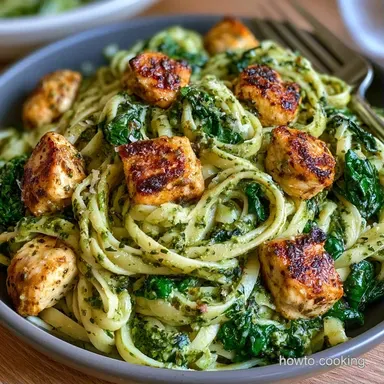
Quick and Creamy Spinach Chicken Pesto Pasta
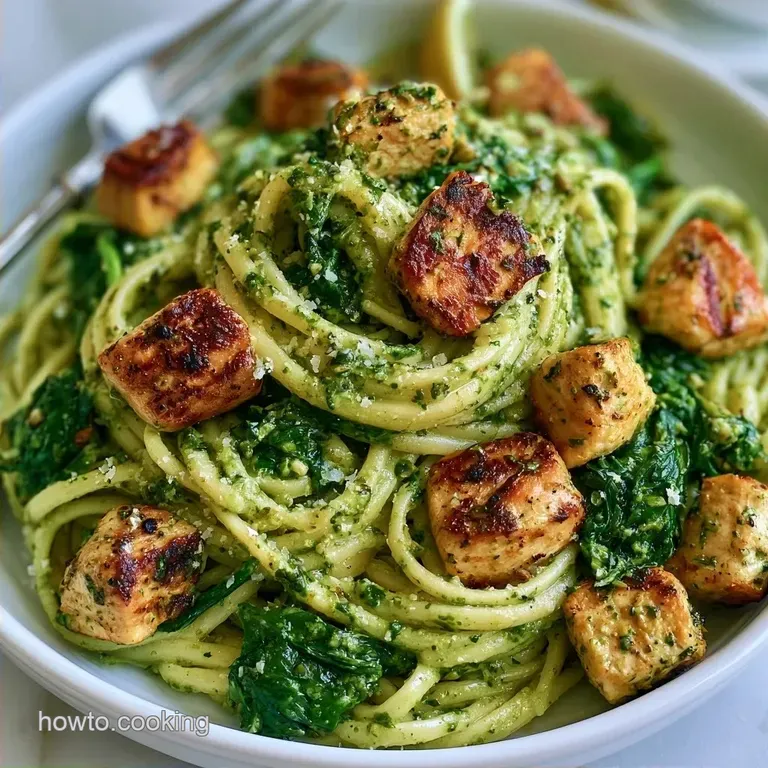
- Time: 10 min active + 20 min cooking
- Flavor/Texture Hook: Nutty, bright, and creamy
- Perfect for: Busy weeknight dinners or family meal prep
- Easy Spinach Chicken Pesto Pasta
- How the Flavors Balance
- Ingredient Breakdown and Roles
- The Bare Minimum Tools
- Cooking the Pasta and Chicken
- Fixing Common Sauce Issues
- Customizing Your Pasta Bowl
- Scaling Your Meal
- Common Kitchen Myths
- Storing and Using Leftovers
- Best Sides for Pesto
- Recipe FAQs
- 📝 Recipe Card
The smell of toasted pine nuts hitting a hot pan always reminds me of my first attempt at a pesto based dish. I remember thinking that more garlic was always the answer, only to realize I'd completely drowned out the basil.
It took a few tries to realize that the balance comes from the acid in the lemon and the earthiness of the greens.
That's where the baby spinach comes in. While basil provides that classic punch, the spinach adds a subtle, nutty depth and a vivid color that keeps the dish from feeling one dimensional. It makes the sauce feel more wholesome without needing a side salad to feel healthy.
You can expect a meal that feels cohesive. The Spinach Chicken Pesto Pasta doesn't just taste like chicken and noodles; it tastes like a deliberate pairing of salty Parmesan and bright, fresh herbs.
Easy Spinach Chicken Pesto Pasta
The magic happens when you combine the high heat of the sear with the raw freshness of the pesto. If you're used to a Traditional Pesto Pasta, you'll notice this version feels heartier because of the protein and the cream.
Starchy Water: Reserved pasta water contains starch that acts as a bridge between the oil in the pesto and the pasta. Heavy Cream: A small amount of cream stabilizes the sauce, preventing the olive oil from separating.
| Method | Time | Texture | Best For |
|---|---|---|---|
| Stovetop | 30 min | Glossy & Fresh | Weeknights |
| Oven Bake | 50 min | Cheesy & Gooey | Sunday Dinner |
How the Flavors Balance
The components in this Spinach Chicken Pesto Pasta work together to hit different parts of your palate. You have the fat from the olive oil, the salt from the Parmesan, and the acid from the lemon juice.
Searing the Chicken: Browning the meat first adds a deep, savory note that raw or poached chicken lacks. The Lemon Touch: A squeeze of lemon doesn't make it taste like lemonade, but it cuts through the richness of the pine nuts and cream.
Ingredient Breakdown and Roles
Every part of this dish serves a specific purpose. If you remove the nuts, you lose the texture. If you skip the lemon, the sauce feels heavy.
| Ingredient | What It Does | Best Swap |
|---|---|---|
| Baby Spinach | Adds earthiness & color | Kale (massage first) |
| Pine Nuts | Provides buttery crunch | Toasted Walnuts |
| Heavy Cream | Binds oil to pasta | Greek Yogurt (tangier) |
| Parmesan | Adds salty, umami depth | Pecorino Romano |
The Bare Minimum Tools
You don't need a professional kitchen for this. A few basic tools get the job done without adding a mountain of dishes.
- A large pot for the pasta
- A wide skillet or sauté pan
- A food processor or high speed blender
- Tongs or a pasta fork
- A measuring cup (for that vital pasta water)
Cooking the Pasta and Chicken
This Spinach Chicken Pesto Pasta comes together quickly if you time your steps. The goal is to have the pesto ready and the chicken seared by the time the pasta hits the al dente stage.
The Quick Blitz Pesto
- Pulse the spinach, basil, toasted nuts, Parmesan, garlic, and lemon juice in a food processor until coarsely chopped. Note: Don't over process or the nuts will turn into paste.
- Stream in the olive oil while the processor runs on low until the sauce is smooth.
- Set the pesto aside in a bowl.
Searing the Protein
- Bring a large pot of salted water to a boil and cook the penne or fusilli according to the package directions.
- Heat 2 tbsp of olive oil in a large skillet over medium high heat.
- Season chicken cubes with salt and pepper, then add them to the pan.
- Sear for 5-7 minutes until golden brown and cooked through. Note: Avoid crowding the pan to ensure the chicken browns instead of steams.
- Remove the chicken from the pan and set it aside on a plate.
The Final Emulsion
- Scoop out 1/4 cup of starchy pasta water before draining the noodles.
- Toss the cooked pasta with the pesto, seared chicken, halved cherry tomatoes, and heavy cream.
- Stir in the reserved pasta water until the sauce is silky and clings to the noodles.
- Garnish with extra Parmesan and serve immediately.
Chef's Note: If the sauce looks too thick, add an extra tablespoon of pasta water. It should look glossy, not clumpy.
Fixing Common Sauce Issues
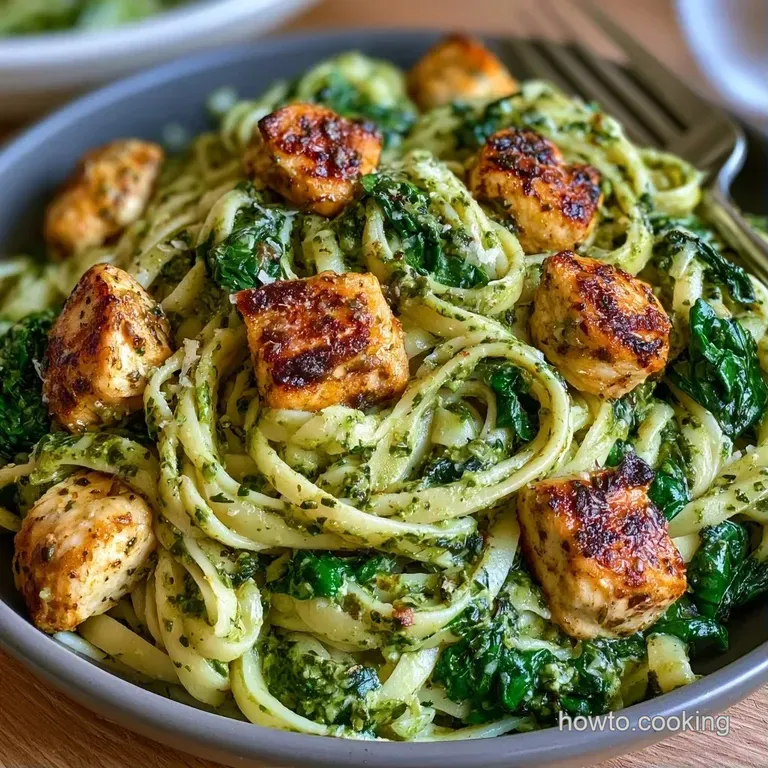
Even experienced cooks run into trouble with emulsions. When making Spinach Chicken Pesto Pasta, the most common issue is the sauce "breaking," where the oil separates from the solids.
Why Sauce Separates
This usually happens if the pan is too hot when you add the pesto. Basil and spinach are delicate; high heat can cause the oil to split and the herbs to lose their brightness.
Darker Green Leaves
If your pesto turns an olive drab color, it's usually due to oxidation or overcooking. Adding the pesto at the very end of the process keeps the color vibrant.
The Dry Pasta
Pesto is thick. If you don't use enough pasta water, the noodles will soak up all the moisture, leaving you with a sticky mess.
| Problem | Root Cause | Solution |
|---|---|---|
| Oily Sauce | Too much heat | Stir in cream and pasta water off heat |
| Bland Taste | Not enough salt | Add a pinch of salt or extra Parmesan |
| Mushy Pasta | Overcooked | Drain 1 minute before package says |
Customizing Your Pasta Bowl
One of the best things about Spinach Chicken Pesto Pasta is how easily it adapts. You can shift the flavor profile based on what's in your fridge.
The Baked Version
Toss everything in a baking dish, top with mozzarella, and broil for 3-5 minutes until the cheese bubbles. This creates a more comforting, casserole style meal.
The Cold Salad
Skip the heavy cream and serve the pasta chilled. This version works great for lunches. If you're looking for other high protein options, a Protein Cottage Cheese Pasta Sauce can be a great alternative for a different kind of creamy hit.
The Low Carb Way
Use zoodles (zucchini noodles) or spaghetti squash. Sauté them for 2 minutes before tossing with the sauce to avoid excess water.
The Vegan Route
Replace the Parmesan with nutritional yeast and the heavy cream with a splash of coconut milk or cashew cream.
| Original Ingredient | Substitute | Why It Works |
|---|---|---|
| Penne (1 lb) | Chickpea Pasta (1 lb) | Higher protein. Note: Cooks faster, watch for mushiness |
| Pine Nuts (1/3 cup) | Pumpkin Seeds (1/3 cup) | Similar crunch. Note: More earthy, less buttery |
| Chicken (1.5 lb) | Firm Tofu (1.5 lb) | Absorbs pesto well. Note: Press tofu first to remove water |
Scaling Your Meal
Adjusting the size of your Spinach Chicken Pesto Pasta batch requires a few tweaks to the ratios.
Scaling Down (Half Batch): Use a smaller skillet for the chicken. If you use a pan that's too large, the olive oil will spread too thin, and the chicken won't brown properly. Reduce the cooking time for the chicken by about 1-2 minutes.
Scaling Up (Double Batch): Don't double the garlic or salt immediately. Start with 1.5x the amount and taste as you go. Cook the chicken in two batches so the pan stays hot. If you crowd the skillet, the meat will release moisture and boil rather than sear.
Common Kitchen Myths
Searing meat does not "seal in the juices." It's a common belief, but moisture loss happens regardless of how you start the cook. The sear is actually about creating flavor through the browning of proteins, which adds a depth that raw meat lacks.
Another myth is that you must use a mortar and pestle for "real" pesto. While it gives a chunkier texture, a food processor is faster and more consistent for a family friendly meal.
Storing and Using Leftovers
Spinach Chicken Pesto Pasta keeps well, but the herbs can fade over time.
In the Fridge: Store in an airtight container for up to 3 days. The pasta will absorb the sauce as it sits, so it may look drier when you open the container.
In the Freezer: This dish isn't ideal for freezing because the cream and fresh basil can separate or lose flavor. However, you can freeze the pesto alone for up to 3 months.
Reheating for Freshness: Avoid the microwave if possible. Reheat the pasta in a skillet over medium heat with a splash of water or milk. This loosens the sauce and brings back the glossy texture.
Zero Waste Tip: Don't throw away the basil stems. You can toss them into a simmering pot of pasta water to infuse the noodles with more flavor, or blend them into the pesto for extra nutrients.
Best Sides for Pesto
Since this is a rich dish, you want sides that provide contrast. Something acidic or crisp cuts through the creaminess of the Spinach Chicken Pesto Pasta.
The Perfect Sides: A simple arugula salad with lemon vinaigrette is a winner. The peppery greens mirror the basil in the pasta. Alternatively, roasted carrots or charred broccoli add a sweetness that balances the salty Parmesan.
If you want a lighter start, a bowl of fresh tomato and cucumber salad with a splash of balsamic vinegar works perfectly. The acidity resets your palate between bites of the creamy pasta.
Right then, you've got everything you need to get this on the table. It's a solid, nourishing meal that feels fancy but doesn't require you to spend your whole night in the kitchen. Trust me on the pasta water - it's the one thing that makes or breaks the texture.
Enjoy your Spinach Chicken Pesto Pasta!
Recipe FAQs
What kind of pasta goes well with pesto chicken?
Penne or fusilli. These shapes have ridges or spirals that allow the creamy pesto sauce to cling to the pasta effectively.
Does pesto go on chicken before or after cooking?
After cooking. Sear the chicken cubes first until golden brown, then toss them with the pesto and pasta at the end to prevent the fresh basil from burning.
How to make this pesto pasta?
Pulse spinach, basil, nuts, Parmesan, garlic, and lemon juice in a food processor. Stream in olive oil while blending, then combine the sauce with cooked pasta, seared chicken, and heavy cream.
Does spinach go well with pesto pasta?
Yes, it adds earthy depth. Blending baby spinach into the pesto increases the nutritional value and enhances the vibrant green color of the dish.
What can I do with leftover homemade pesto?
Use it as a dip or spread. It also works great as a marinade; for more ways to customize your sauce, see our homemade pesto recipe.
Can you have pesto with GERD?
Generally no, as it often triggers symptoms. The combination of garlic, lemon juice, and olive oil can be highly acidic or fatty, which typically triggers acid reflux.
What is chicken pesto pasta?
A savory dish combining seared chicken and pasta in a creamy basil spinach sauce. It features toasted nuts and Parmesan for a rich, nutty flavor profile.
Spinach Chicken Pesto Pasta